To embed our video on your website copy and paste the code below:
<iframe src="https://www.youtube.com/embed/0DPRA35ySr0?modestbranding=1&rel=0" width="970" height="546" frameborder="0" scrolling="auto" allowfullscreen></iframe>
Charlotte Kan, TelecomTV (00:07):
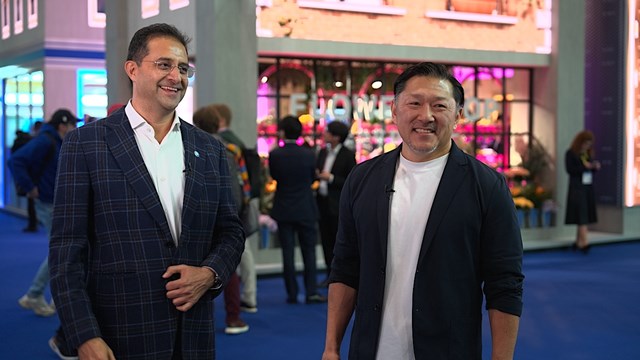
Hello and welcome to Mobile World Congress 2026 in Barcelona, where the biggest topic of conversation is artificial intelligence, of course, but we're not here to discuss proofs of concept or pilots. We're here to discuss what happens after experimentation and how AI becomes core to how telcos operate, compete, and grow, of course. So joining us today are industry leaders, Tatsuya Hamada, who is CEO at KDDI Digital Life, and Sanjay Kaul, who is Chief Revenue Officer at Circles. Gentlemen, thank you for joining us.
Tatsuya Hamada, KDDI Digital Life (00:47):
Thank you very much, you too. Thank you.
Charlotte Kan, TelecomTV (00:49):
So together you are advancing what you call AI-nization. It's a fundamentally different approach to how telcos operate. First of all, Hamada-san, could you tell us what you mean by AI-nization when the rest of the industry is talking about AI adoption and why this goes far beyond innovation labs?
Tatsuya Hamada, KDDI Digital Life (01:09):
Thank you for asking this very important, trendy question at MWC. It's surprising that I've been here quite many years, maybe almost 10 times joining the MWC, but I never thought in the past I'd be talking about AI 10 years ago. So AI-nization, I think everywhere is talking about it now at MWC, many booths, many telco operators, many tech companies are talking about AI. But how I'm thinking of AI-nization is not just implementation or embedding AI into your business. More like AI native business model structure and building up. That is, I think, what AI-nization is, what I'm thinking of. And it's not just like AI newly implemented. We need to think of redesign, rebuild of traditional and conventional business model itself. Not implement there, but from scratch, redesign, rethink of business process based on AI. That's what I think AI-nization means.
Charlotte Kan, TelecomTV (02:32):
Sanjay, your company, Circles, works with telcos globally. So tell us what's different about KDDI Digital Life's approach.
Sanjay Kaul, Circles (02:41):
So as Hamada-san was saying, AI was not another feature or a tool on the top. AI was embedded in the core thinking of the business strategy. So what KDDI has really done is they have brought in AI in the central thinking of setting up what we call "speedboat telco". And I think they've been very successful the last four years in implementing that. And there's a way to go. I mean, we're not done yet, but clearly AI is weaved into every aspect of telco operations. Whether it is backend, whether it's customer experience, whether it is hyper-personalisation or creating offers using AI capability. So AI is central to everything they do.
Charlotte Kan, TelecomTV (03:33):
Hamada-san, let's talk about outcomes now. Tell us what AI-nization has really changed for you at KDDI Digital Life.
Tatsuya Hamada, KDDI Digital Life (03:40):
Honestly speaking, even though I talk about AI-nization, however, there are so many still conventional traditional business processes and also human mindset in my company. However, step-by-step since last year, changing the model of a business model process. And for example, time to develop product speed and marketing analytics and designing advertisement in various types of business unit, we started utilising AI. I said utilising, still the RE stage before full AI-nization. So time saving and also human resource saving and the efficiency was far developed and improved. That's why as a result, customers saved a lot. Then of course, if we could design and develop new product sooner than before by AI designing, in that case, we can launch the service in the market sooner than before, means it will lead to revenue growth and generation. That's why again, what I want to say is still RE stage before full AI-nization, but efficiency, cost saving, time saving, human resource saving was already completed. And step-by-step, we will grow further more.
Charlotte Kan, TelecomTV (05:17):
Sanjay, you often emphasise partnership over a traditional vendor model. Why is it critical to AI?
Sanjay Kaul, Circles (05:23):
If you go with the vendor approach, it becomes another toolbox that you build on the top. And that's a fundamental flaw of making AI as part of your enterprise core. So that is why when the two partners come together, I think we are a technology partner to Hamada-san and KDDI. But we work like a joint team. We have the same ambitions, same ethos. Of course, AI is not all done. It is, as he said, it's a journey, but we are into this together thinking the strategy, thinking all steps of the execution. And I believe that's fundamental to leverage AI fully for the benefit of our customers, for the benefit of making it efficient, for the benefit of really realising the goal of AI-nization that you talked about. So partnership is the only way to do it, doing it together long term.
Charlotte Kan, TelecomTV (06:21):
Hamada-san, Japan really is a unique market. So how relevant is this AI-nization approach globally for everyone out there?
Tatsuya Hamada, KDDI Digital Life (06:33):
My parent company is KDDI and since many years ago, KDDI is providing a telecom service as the core competence business. But not limited in core competence business of telco, gradually added more various types of business like financial banking business and content delivery and also microlon, whatever it is. Not like one single industry business model, more complications coming up. Then we, KDDI Digital Life, like to accelerate much more, first speed because traditional telco, giant and global system they have. In order to improve, in order to develop new business, new model, working with someone outside people, it takes really long time. Always sustainability will be more important part. But for us, like a speedboat you mentioned, right? As a speedboat, we challenge more and more and more and collaborate with different industrial people. In that sense, human work itself, it's not enough. We can't increase the human brain more and more.
(07:54):
That's why AI is needed. AI-nization is needed for us. Not limited in telco business. Barriers to type of new business we like to combine. For that, we need AI. That's how we are thinking.
Charlotte Kan, TelecomTV (08:12):
So this is not just a Japan story, is it?
Tatsuya Hamada, KDDI Digital Life (08:15):
Typically in Japan, our company, parent company KDDI was really successful for that bundle business model, but we like to accelerate it and it's not only Japanese unique, maybe common in the world. It will happen.
Charlotte Kan, TelecomTV (08:32):
Sanjay, looking ahead, how do you see AI-nization changing competition amongst telcos?
Sanjay Kaul, Circles (08:40):
Telcos, you've been coming here for a few years. I've been coming here for the last 20 years and every year there's a buzz, something new. I think unless AI is weaved in the fundamentals of setting up a telco, you don't get the holistic benefit of it. Because if you take AI and you bolt on the three layers of legacy, you will never get the benefit out of this. So hence, I believe the thinking that KDDI group have had for creating the speedboat and we were fortunate partners to be in the journey with them, was that AI thinking was at the core. We started talking about digital first. Now digital has evolved to AI,
(09:27):
But for sure, whatever we do with AI, it will be embedded in every part of the operations. And for me, if I have to set a vision for us, let's say two, three years down the line, we shouldn't have people thinking of offers. AI should think about what is the new offer Charlotte needs based on what Charlotte needs and wants are. We should adjust pricing automatically. It should happen in the system itself. We should define what are the new features and functionality that should be added, bolted onto your offer. So that means it's a self-sustained model which is ever increasingly becoming efficient. So I think that's really Nirvana for implementing AI fully into the core enterprise architecture of a telco. And that's the challenge really. But what they have thought about is creating a speedboat because it's smaller to manage. And for the group, it becomes kind of a role model to replicate across all businesses.
Tatsuya Hamada, KDDI Digital Life (10:34):
Sanjay mentioned a really good point. Yeah. In the beginning, we aimed to digitalise the telco business, but now we are stepping into AI native Techco, right?
Sanjay Kaul, Circles (10:45):
Absolutely.
Charlotte Kan, TelecomTV (10:46):
And finally, I have a question for both of you. Why is this time now around MWC the right time for you to share this story?
Tatsuya Hamada, KDDI Digital Life (10:56):
Wow. Yes. I think since some years ago, AI implementation was talked about a lot by many people, but I came here last year and now I'm here year by year, really rapidly AI business model, AI native business models develop, evolving. That's why we are in the stage to start talking about practical use case, business model case, not just what's AI, more like what's a business, based on AI native model. That's why we are talking about it now.
Sanjay Kaul, Circles (11:45):
I mean, look, for us, for me, I mean, obviously, how do you bolt on the new revenues every day? I mean, it's not looking inside your operations. As I said earlier, AI should take care of that. So we should have an ability to go create new partnerships. Today, he's a telco business. He can embed with anything that's benefiting from a connection, whether it's retail, whether it's fintech, whether it's media, whether it is even Japan rail. So you are extending your AI framework to other partners that can benefit from it. So that is why I think now is the time. Now is the time when telco industry in general, the ARPUs are going down, CapEx is under threat. I believe a system and a framework like this is going to be a role model.
Charlotte Kan, TelecomTV (12:37):
Well, gentlemen, many thanks to both of you for your very valuable insights, a very compelling story indeed around AI-nization. Thank you.
Sanjay Kaul, Circles (12:46):
Thank you very much.
Tatsuya Hamada, KDDI Digital Life (12:47):
Thank you very much. Thank you.
Hello and welcome to Mobile World Congress 2026 in Barcelona, where the biggest topic of conversation is artificial intelligence, of course, but we're not here to discuss proofs of concept or pilots. We're here to discuss what happens after experimentation and how AI becomes core to how telcos operate, compete, and grow, of course. So joining us today are industry leaders, Tatsuya Hamada, who is CEO at KDDI Digital Life, and Sanjay Kaul, who is Chief Revenue Officer at Circles. Gentlemen, thank you for joining us.
Tatsuya Hamada, KDDI Digital Life (00:47):
Thank you very much, you too. Thank you.
Charlotte Kan, TelecomTV (00:49):
So together you are advancing what you call AI-nization. It's a fundamentally different approach to how telcos operate. First of all, Hamada-san, could you tell us what you mean by AI-nization when the rest of the industry is talking about AI adoption and why this goes far beyond innovation labs?
Tatsuya Hamada, KDDI Digital Life (01:09):
Thank you for asking this very important, trendy question at MWC. It's surprising that I've been here quite many years, maybe almost 10 times joining the MWC, but I never thought in the past I'd be talking about AI 10 years ago. So AI-nization, I think everywhere is talking about it now at MWC, many booths, many telco operators, many tech companies are talking about AI. But how I'm thinking of AI-nization is not just implementation or embedding AI into your business. More like AI native business model structure and building up. That is, I think, what AI-nization is, what I'm thinking of. And it's not just like AI newly implemented. We need to think of redesign, rebuild of traditional and conventional business model itself. Not implement there, but from scratch, redesign, rethink of business process based on AI. That's what I think AI-nization means.
Charlotte Kan, TelecomTV (02:32):
Sanjay, your company, Circles, works with telcos globally. So tell us what's different about KDDI Digital Life's approach.
Sanjay Kaul, Circles (02:41):
So as Hamada-san was saying, AI was not another feature or a tool on the top. AI was embedded in the core thinking of the business strategy. So what KDDI has really done is they have brought in AI in the central thinking of setting up what we call "speedboat telco". And I think they've been very successful the last four years in implementing that. And there's a way to go. I mean, we're not done yet, but clearly AI is weaved into every aspect of telco operations. Whether it is backend, whether it's customer experience, whether it is hyper-personalisation or creating offers using AI capability. So AI is central to everything they do.
Charlotte Kan, TelecomTV (03:33):
Hamada-san, let's talk about outcomes now. Tell us what AI-nization has really changed for you at KDDI Digital Life.
Tatsuya Hamada, KDDI Digital Life (03:40):
Honestly speaking, even though I talk about AI-nization, however, there are so many still conventional traditional business processes and also human mindset in my company. However, step-by-step since last year, changing the model of a business model process. And for example, time to develop product speed and marketing analytics and designing advertisement in various types of business unit, we started utilising AI. I said utilising, still the RE stage before full AI-nization. So time saving and also human resource saving and the efficiency was far developed and improved. That's why as a result, customers saved a lot. Then of course, if we could design and develop new product sooner than before by AI designing, in that case, we can launch the service in the market sooner than before, means it will lead to revenue growth and generation. That's why again, what I want to say is still RE stage before full AI-nization, but efficiency, cost saving, time saving, human resource saving was already completed. And step-by-step, we will grow further more.
Charlotte Kan, TelecomTV (05:17):
Sanjay, you often emphasise partnership over a traditional vendor model. Why is it critical to AI?
Sanjay Kaul, Circles (05:23):
If you go with the vendor approach, it becomes another toolbox that you build on the top. And that's a fundamental flaw of making AI as part of your enterprise core. So that is why when the two partners come together, I think we are a technology partner to Hamada-san and KDDI. But we work like a joint team. We have the same ambitions, same ethos. Of course, AI is not all done. It is, as he said, it's a journey, but we are into this together thinking the strategy, thinking all steps of the execution. And I believe that's fundamental to leverage AI fully for the benefit of our customers, for the benefit of making it efficient, for the benefit of really realising the goal of AI-nization that you talked about. So partnership is the only way to do it, doing it together long term.
Charlotte Kan, TelecomTV (06:21):
Hamada-san, Japan really is a unique market. So how relevant is this AI-nization approach globally for everyone out there?
Tatsuya Hamada, KDDI Digital Life (06:33):
My parent company is KDDI and since many years ago, KDDI is providing a telecom service as the core competence business. But not limited in core competence business of telco, gradually added more various types of business like financial banking business and content delivery and also microlon, whatever it is. Not like one single industry business model, more complications coming up. Then we, KDDI Digital Life, like to accelerate much more, first speed because traditional telco, giant and global system they have. In order to improve, in order to develop new business, new model, working with someone outside people, it takes really long time. Always sustainability will be more important part. But for us, like a speedboat you mentioned, right? As a speedboat, we challenge more and more and more and collaborate with different industrial people. In that sense, human work itself, it's not enough. We can't increase the human brain more and more.
(07:54):
That's why AI is needed. AI-nization is needed for us. Not limited in telco business. Barriers to type of new business we like to combine. For that, we need AI. That's how we are thinking.
Charlotte Kan, TelecomTV (08:12):
So this is not just a Japan story, is it?
Tatsuya Hamada, KDDI Digital Life (08:15):
Typically in Japan, our company, parent company KDDI was really successful for that bundle business model, but we like to accelerate it and it's not only Japanese unique, maybe common in the world. It will happen.
Charlotte Kan, TelecomTV (08:32):
Sanjay, looking ahead, how do you see AI-nization changing competition amongst telcos?
Sanjay Kaul, Circles (08:40):
Telcos, you've been coming here for a few years. I've been coming here for the last 20 years and every year there's a buzz, something new. I think unless AI is weaved in the fundamentals of setting up a telco, you don't get the holistic benefit of it. Because if you take AI and you bolt on the three layers of legacy, you will never get the benefit out of this. So hence, I believe the thinking that KDDI group have had for creating the speedboat and we were fortunate partners to be in the journey with them, was that AI thinking was at the core. We started talking about digital first. Now digital has evolved to AI,
(09:27):
But for sure, whatever we do with AI, it will be embedded in every part of the operations. And for me, if I have to set a vision for us, let's say two, three years down the line, we shouldn't have people thinking of offers. AI should think about what is the new offer Charlotte needs based on what Charlotte needs and wants are. We should adjust pricing automatically. It should happen in the system itself. We should define what are the new features and functionality that should be added, bolted onto your offer. So that means it's a self-sustained model which is ever increasingly becoming efficient. So I think that's really Nirvana for implementing AI fully into the core enterprise architecture of a telco. And that's the challenge really. But what they have thought about is creating a speedboat because it's smaller to manage. And for the group, it becomes kind of a role model to replicate across all businesses.
Tatsuya Hamada, KDDI Digital Life (10:34):
Sanjay mentioned a really good point. Yeah. In the beginning, we aimed to digitalise the telco business, but now we are stepping into AI native Techco, right?
Sanjay Kaul, Circles (10:45):
Absolutely.
Charlotte Kan, TelecomTV (10:46):
And finally, I have a question for both of you. Why is this time now around MWC the right time for you to share this story?
Tatsuya Hamada, KDDI Digital Life (10:56):
Wow. Yes. I think since some years ago, AI implementation was talked about a lot by many people, but I came here last year and now I'm here year by year, really rapidly AI business model, AI native business models develop, evolving. That's why we are in the stage to start talking about practical use case, business model case, not just what's AI, more like what's a business, based on AI native model. That's why we are talking about it now.
Sanjay Kaul, Circles (11:45):
I mean, look, for us, for me, I mean, obviously, how do you bolt on the new revenues every day? I mean, it's not looking inside your operations. As I said earlier, AI should take care of that. So we should have an ability to go create new partnerships. Today, he's a telco business. He can embed with anything that's benefiting from a connection, whether it's retail, whether it's fintech, whether it's media, whether it is even Japan rail. So you are extending your AI framework to other partners that can benefit from it. So that is why I think now is the time. Now is the time when telco industry in general, the ARPUs are going down, CapEx is under threat. I believe a system and a framework like this is going to be a role model.
Charlotte Kan, TelecomTV (12:37):
Well, gentlemen, many thanks to both of you for your very valuable insights, a very compelling story indeed around AI-nization. Thank you.
Sanjay Kaul, Circles (12:46):
Thank you very much.
Tatsuya Hamada, KDDI Digital Life (12:47):
Thank you very much. Thank you.
Please note that video transcripts are provided for reference only – content may vary from the published video or contain inaccuracies.
Tatsuya Hamada, KDDI Digital Life & Sanjay Kaul, Circles
Tatsuya Hamada, CEO of KDDI Digital Life, and Sanjay Kaul, chief revenue officer of Circles, discuss how AI is being embedded at the core of telco operations, with business processes redesigned from the ground up, enabling improved efficiency and faster product development.
Featuring:
- Tatsuya Hamada, Chief Executive Officer, KDDI Digital Life
- Sanjay Kaul, Chief Revenue Officer, Circles
Recorded March 2026
Email Newsletters
Sign up to receive TelecomTV's top news and videos, plus exclusive subscriber-only content direct to your inbox.