- KT Corp is pumping $723m into its cyberdefences
- SES to close Intelsat acquisition this week
- Bell Canada gets the OK to acquire Ziply
In today’s industry news roundup: South Korea’s KT Corp is determined not to suffer the same fate as its domestic rival SK Telecom; SES is set to complete its takeover of Intelsat this week; Bell Canada gets the FCC green light to splash $5.1bn on Ziply Fiber; and much more!
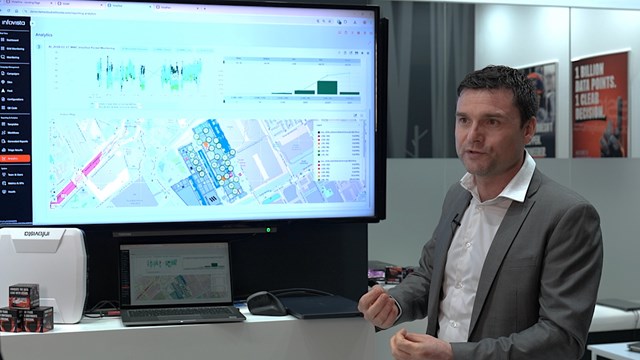
In the wake of the major and disastrous breach of rival SK Telecom’s network by cybercriminals earlier this year, South Korean telco KT Corp has pledged to invest more than 1 trillion won ($723m) over the next five years on its cybersecurity defences. The announcement, as reported by The Korea Herald, comes only days after SK Telecom, in a bid to allay fears, mend its reputation and halt the steady stream of customers cancelling their subscriptions, announced it is to invest 700bn won ($514m) over the next five years “to expand security teams, improve systems and elevate information protection to top-tier standards”. During a briefing in Seoul, KT’s chief information security and privacy officer, Hwang Tae-sun, said the investment plan isn’t a reaction to SK Telecom’s breach – instead, it has already started and was prompted by the data breaches suffered at the hands of the Salt Typhoon hacking group by North American operators, such as AT&T and Verizon. As part of its security investments, KT Corp is considering working with technology partners such as Microsoft, Google and Palo Alto Networks.
Having been given the go-ahead by US telecom regulator the Federal Communications Commission (FCC) for its $3.1bn acquisition of fellow satellite network operator Intelsat, SES expects to close the deal by the end of this Thursday, 17 July. SES noted in this announcement that it has now received the final regulatory approvals it needed for the acquisition, which will create, noted SES when it first announced the planned takeover in April 2024, “a stronger multi-orbit operator with greater coverage, improved resiliency, [an] expanded suite of solutions [and] enhanced resources to profitably invest in innovation.” SES stated last year that together, SES and Intelsat would have a combined fleet of more than 100 geostationary earth orbit (GEO) and 26 medium-earth orbit (MEO) satellites, with more to be launched. It added that the new company would have annual revenues of €3.8bn and adjusted EBITDA of €1.8bn, and would be able to achieve financial efficiencies worth €2.4bn, about 85% of the transaction’s value, through the “combination of selling, general and administrative savings as well as optimisation of third-party capacity costs and future efficiencies in procurement.”
And yet more FCC action, as the US regulator’s Wireline Competition Bureau has given the go-ahead for Bell Canada (BCE) to acquire Ziply Fiber, which operates in the north-west region of the US. The bureau concluded that “there are no likely potential transaction-related public interest harms”. The deal, worth CAN$7bn (US$5.1bn), was first announced in November 2024. Then in May this year, Bell Canada forged a strategic partnership with Public Sector Pension Investment Board (PSP Investments), one of Canada’s largest pension investors, to form Network FiberCo to “accelerate the development of fibre infrastructure through Ziply Fiber, in underserved markets in the US.” Ziply Fiber, which reaches about 1.3 million premises with its access network, has operations in four US states – Washington, Oregon, Idaho and Montana – and was founded in 2020 when the company acquired network assets and broadband service operations from Frontier Communications for US$1.35bn. The FCC agreed with Bell Canada and Ziply that the proposed takeover wouldn’t have any impact on Ziply’s current customers, as “Bell Canada intends for the Ziply Fiber business to continue as its own operating entity, maintaining its existing company management and business plan,” and that the acquisition “will not result in any disruptions to Ziply Fiber customers or business partners”.
Hong Kong Broadband Networks (HKBN) Enterprise Solutions (HKBNES) has announced the development of a 1.6Tbit/s optical core network that addresses “the growing demand for data transmission bandwidth”. The network upgrade has allowed HKBNES to offer a “tenfold upgrade to its Metro Ethernet (MetroNet) service” to 100 Gbit/s “to empower enterprises with higher-performance private networks for advanced technologies, such as generative AI, machine learning, cloud-based supercomputing and ultra-high-definition video applications.” Read more.
The AI infrastructure bubble looks like it’s going to get a lot bigger before it bursts as the leading players aim to outdo each other with the scale and resources of their datacentre facilities. To wit, Meta’s owner and CEO, Mark Zuckerberg, took to Facebook on Monday to unveil plans to invest hundreds of billions of dollars in AI datacentre “superclusters” – and he had even more ‘super’ things to say, reported CNBC. “Meta Superintelligence Labs will have industry-leading levels of compute and by far the greatest compute per researcher,” Zuckerberg wrote, adding that the first supercluster will be called Prometheus. Here at TelecomTV Towers (which, some might say, is a different type of ‘cluster’), we’re hoping Marcus (as he should surely be renamed) will soon announce the development of a supercluster that’s located on an ocean floor (for cooling purposes) and called Poseidon… just a thought!
– The staff, TelecomTV
Email Newsletters
Sign up to receive TelecomTV's top news and videos, plus exclusive subscriber-only content direct to your inbox.