To embed our video on your website copy and paste the code below:
<iframe src="https://www.youtube.com/embed/MzTFF1GXozE?modestbranding=1&rel=0" width="970" height="546" frameborder="0" scrolling="auto" allowfullscreen></iframe>
Guy Daniels, TelecomTV (00:09):
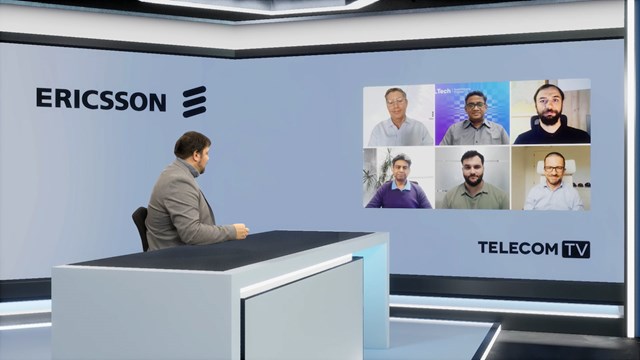
Welcome to our special webinar on the need for speed and connectivity - the Mavericks shaping aviation's digital future. Hello, I'm Guy Daniels. Now, there's an opportunity for mobile network operators to move beyond connecting aviation and towards an aviation as a service model. This would combine connectivity with trusted identity, location, network intelligence, and resilience. The shift is from selling connectivity to enabling and assuring the mission itself. But how should MNOs move beyond connectivity as a commodity? Where could programmable networks and network APIs create new value for aviation enterprises? And what are the requirements to make these use cases scalable? Before we start our discussion, we should establish why this is a GSMA Open Gateway webinar and the role being played here by GSMA Fusion. Earlier I spoke with Natasha Nayak, Senior Director at GSMA Fusion, and I asked her to elaborate.
Natasha Nayak, GSMA Fusion (01:26):
So GSMA Fusion is the demand engine for GSMA Open Gateway. GSMA Open Gateway has set up an entire platform for interoperable, standardised network APIs through which network operators expose their capabilities to the rest of the world. And GSMA Fusion is what works with the enterprises. So it's the outside-in approach. For the longest time, operators have innovated and exposed their network capabilities based on what the networks will allow them to do and what the technology will allow them to do. But GSMA Fusion narrows the problems that come with that kind of approach, because when you do that, you're trying to fit a square peg into a round hole. It's very helpful and enterprises have benefited a great deal from it. But from the GSMA Fusion outside-in approach, what we're trying to do is begin with the enterprise problems first, instead of the APIs.
(02:26):
We talk to the enterprises, understand what are the problems that they're trying to solve on a day-to-day basis, and then we work backwards to find or map the network capabilities and APIs that will help improve their business outcomes and enhance enterprise value. So that's what GSMA Fusion's main focus is. And we work across different verticals - media and entertainment, broadcasting, gaming, aviation, automotive, FinTech, retail. It's a very diverse set of stakeholders and the larger ecosystem that we work with.
Guy Daniels, TelecomTV (03:01):
That was Natasha Nayak, Senior Director at GSMA Fusion, discussing the role of the organisation. So let's now meet our guests. I'm delighted to be joined today by Khalil El-Boji, who is Business Development Manager for Network APIs and Digital Trust at Orange; Professor Weisu Guo, who is Head of the Centre for Assured and Connected Autonomy at Cranfield University; Will King, Vice President, Growth and Advisory with IDEMIA Travel and Transport; and Jack Mandala, who is CEO of Seamless Air Alliance. Hello everyone, good to see you all. Thank you so much for taking part in today's webinar. I've got a question for each of you to start with. Weisu, I'm going to come to you first, if I may. I'd like to ask why aviation is becoming an increasingly demanding environment for connectivity.
Weisu Guo, Cranfield University (04:08):
Yes, fantastic. So I think we can look at this from different lenses. One lens is to look at what are the real drivers from the platform side. If we think about large civil aviation platforms, connectivity not only brings the digital world to the customers, but also to aerial operations. And there's a wide range of things that platform operators are interested in - everything from improving inventory tracking to understanding engine performance. That can really allow the airport side to restock and resupply more efficiently, as well as seeing how fuel is used for flight behaviour assessment. And of equal interest, but on the other end of the spectrum, is how small drones network together. Here we might be interested in how a collective of drones are networking together to achieve a greater purpose, as well as connectivity to the remote human operator for assurance. And in all these cases, there is a stretching envelope of growing demand for capacity, for resilience to environmental and electromagnetic stressors, but also contextualisation to the mission semantics.
Guy Daniels, TelecomTV (05:23):
Great. Thanks very much for setting us going with why this sector is important and why we're talking about this today. Will, I'm going to come across to you next. As I said, this is a fascinating sector, so please tell us more about why aviation is becoming so much more demanding.
Will King, IDEMIA (05:39):
Yeah, absolutely. So I see four key themes forming to create what is really the perfect storm. The first - and this is with an identity lens - is that passenger volumes are rising. IATA tells us that by 2050 they're going to double. We're seeing over 3% year-on-year growth, higher in certain regions. And this just creates a very real physical problem. If your numbers are doubling, how do you process that many people? You can't just deploy more gates - where are they going to go? You can't just deploy more border guard staff because who's going to pay for them? You can't just build new airports because it costs hundreds of millions of dollars and the same problem applies. So invariably we have to turn to technology. If we can't process people in bigger places, we need to process them more quickly.
(06:29):
So we're already seeing this live. For example, we're all familiar with traditional e-gates where you put your passport, you go through the journey, it takes about 30 seconds. Well, now what you can do is go through as a family. That allows you to process a group of three or four people in one go - it's much quicker. We also have deployments where there's no need to put the passport in at all. We already know who's coming. We have a passenger manifest and we have their biometrics as they enter the border. So we can just load that into a gate. You walk up, the gate opens - that 30 seconds is now five seconds. And then you look at the next phase coming, which is: why is there a gate at all? What we're going to see is corridors where people can just walk through, and essentially what we're going to rely on is the technology to process 80% and use the staff to process the 20% exceptions - the person whose visa has expired or who is an overstayer, or whatever it may be.
(07:24):
So that's the first one - a lot more people. Second, and this won't be a surprise to anybody, digital adoption is accelerating. Everybody I'm sure has gone through an airport with your passport in your left hand and your mobile phone in your right hand with your boarding pass. That's going to go away. You're going to have a digital passport on your phone in the very near future. We've already done trials with this. Other companies have done trials with this. It's the DTC - the digital travel credential. So that's coming and there's going to be a lot of it. The next theme is that the payloads themselves are physically getting bigger. If previously we were talking about sending a passenger manifest, now we're attaching an image to it. If previously we were talking about a gate that reads a passport, now we're processing video, and we're having to send that video potentially to a site that isn't even on the airport premises - hundreds of miles away.
(08:12):
So there are a lot more people, a lot more digital assets, a lot more data. And then the final critical point is that we're no longer just talking about people submitting information to a system. We now have systems interacting with other systems. We have an ever-increasing demand for more data to drive the intelligence that the AI future promises - better staff scheduling, better rostering, all driven by data. So when you put those four things together, we've got this perfect storm where increasing demand on the network is a critical factor, and I can't tell my stories of what the future is going to be without the fundamental network that underpins it.
Guy Daniels, TelecomTV (09:03):
Great. Thanks very much, Will. So it is, as you say, a very demanding environment with tremendous growth in numbers and data. Jack, let's come across to you. Why, from your perspective as CEO of the Alliance, is this vertical so demanding in terms of connectivity?
Jack Mandala, Seamless Air Alliance (09:25):
Yeah, I mean, looking at it through the lens of in-flight connectivity, the capabilities have expanded dramatically. The advent of LEO networks and massive new investments in space are driving immense amounts of new capacity and lowering costs. In-flight, we're seeing both more users and more data. More users - five years ago you would see 10% of passengers connecting on board. Now, with the advent of better connectivity, we're seeing those numbers at 40% and greater. And once those passengers are connected, we're seeing them doing a lot more with it and using a whole lot more data. It used to be about maybe a business traveller trying to get one urgent email across the internet, and things have changed. People are treating it just like they do their home network. They're checking their social, they're streaming video, they're using a massive amount more data.
(10:36):
So you have more users and higher usage, and that combined with connected aircraft applications is driving an immense amount of increased demand for connectivity on board.
Guy Daniels, TelecomTV (10:52):
Yeah, a very demanding environment to operate in. Khalil, I'm going to come across to you because you are our operator representative on this webinar. Do you have a view on why aviation is becoming more demanding in terms of connectivity?
Khalil El-Boji, Orange (11:11):
I think it's the combination of the three preceding discussions. On one part, there are lots of new use cases. And on the other part, you have the evolution of aviation itself. We have lots of people using their devices for many things - it can be homework, email, or video streaming. And on the other side, we have the evolution of the aircraft itself - that means more new functionality, more AI, more data that needs to be downloaded or uploaded for maintenance, and so on. All these kinds of use cases don't have the same requirements in terms of bandwidth and latency. And that's why we now need to be able to prioritise the right loads - rather than someone trying to view a YouTube stream, for example, over a data maintenance flow or a critical mission communication.
(12:27):
All of this will coexist on the same network, but they will not have the same usage profile and will not have the same priority. That's why airports and aviation are now needing more and more connectivity - and something that can respond to the challenges of today and tomorrow.
Guy Daniels, TelecomTV (12:49):
Thanks, Khalil. I've got a related question now that I'd like to ask. Will, let me start with you. What do you see as the biggest technology and connectivity challenges currently facing aviation?
Will King, IDEMIA (13:04):
I think it's a brilliant question. I'm going to answer it with another question - a kind of hypothetical "what if". So I think the challenge is that we need to transition from today's fixed infrastructure to either semi-permanent or even mobile infrastructure. And the reason for this is: what happens if there's a cyber attack, a network outage, an air traffic control failure - as I got caught up in recently in the UK? There's a major disruption and now you've got tens of thousands of people where they shouldn't be, baggage mountains forming. And what do we need to do about that? The easiest thing is to equip somebody with a mobile phone that can, for example, take a photograph of a bag and it will just say, "that bag belongs to Will King." We have different technologies we can use, but they all require a transition from what we have now - where you go to a physical place and join a physical queue and fill out a physical tag - to the mobile equivalent.
(14:03):
So what happens if the physical environment itself has to change? Maybe there's a major event - the World Cup, the Olympics, Formula One, a trade event, whatever it might be. How do we process these people? Coming back to this concept: volumes are going to double by 2050. Do we talk about temporary infrastructure, semi-permanent equipment? What about an airport that looks at its environment and says, "I've got a domestic terminal and an international terminal and in the morning I've got almost exclusively domestic travel and in the evening almost exclusively international - so how do I switch them?" It's really hard to do that when we're bound to physical infrastructure. It becomes a lot easier when we start to make this switch to semi-permanent and mobile infrastructure.
(14:53):
And I think for me, the future use cases that we're looking at mandate flexibility, and they mandate a transition away from the physical cable to non-wired solutions. Let me give a fine example. I mentioned this concept of a smart lane where people just walk through. This is coming - these are being deployed right now. What it means is a border guard who has spent the last 20 years in a glass booth stamping passports is suddenly standing in the flow of people holding an iPad, wearing smart glasses or whatever it may be, to identify who they need to intercept, who they need to interview, who they need to talk to. That's a massive change operationally, but from the network perspective, it is an absolutely enormous change. So for me, transitioning into this mobile space is probably the biggest challenge we face when it comes to connectivity.
Guy Daniels, TelecomTV (15:47):
Great. Thanks very much. A clearly identified challenge there. Weisu, let me come across to you as well. From the work you do, what would you say is the biggest technology and connectivity challenge?
Weisu Guo, Cranfield University (16:00):
The first thing to recognise is that aviation is a multi-stakeholder and high-risk environment. In many ways, when we're passengers, we're all in it together. So there's no single entity that decides, and every party, every authority is necessary. So what does that really mean for connectivity? We often have to realise that on the air side - that is, the connectivity is across vast distances in time and space - there is a very low appetite for risk and a very high requirement for synchronisation. So often your signals are exposed to things that you wouldn't typically encounter at the terrestrial level. And we're all aware of some of these challenges - they exist in different planes. For example, if you want to optimise landing sequences, you need to share flight data between competitors, but they don't want to share flight data and fuel data.
(16:59):
There is also poor conspicuity in certain areas, and we are seeing increasingly crowded skies. So innovation certainly has a wide range of hard problems to address, but it's also very hard to penetrate and to replace legacy systems. And part of that challenge is that it's very difficult to calculate the risk-reward trade-off of innovation in these kinds of high-risk, complex aviation settings.
Guy Daniels, TelecomTV (17:29):
Yeah, that's interesting. And I'm certainly learning that there are a lot of elements and aspects to the aviation industry - it's a broad industry. Jack, what would you say is the biggest technology or connectivity challenge that we're facing?
Jack Mandala, Seamless Air Alliance (17:43):
Yeah, so even with all of these great new advancements we're seeing, airlines are still faced with the challenge of fear of missing out, I think, in terms of their vendor selection on connectivity on board, and interoperability. So when an airline finally makes a decision to go with a service provider, they're taking the aircraft out of service, they're installing proprietary gear on that aircraft, and it's a huge expense. So even if there's no contractual lock-in between the airline and the satellite service provider, there's this inherent lock-in because they've gone off and made a huge investment of time and money. A big airline might invest a billion dollars across their fleet to equip each aircraft with the modem and antenna that connects to a satellite system. So if that satellite operator decides to make a big increase in cost, or if that satellite operator's performance goes down, it's painful for an airline to walk away.
(19:02):
It's not an easy decision. So this lack of interoperability and this fear of missing out on the next big thing - it's a tough decision for airlines.
Guy Daniels, TelecomTV (19:16):
Good points. Thanks very much. So we've heard the enterprise view on this. Khalil, from an operator perspective, what would you say is the biggest technology and connectivity challenge here?
Khalil El-Boji, Orange (19:28):
I think from an operator's point of view, we have four different challenges today. The first is coverage. Aviation operations can happen in different areas - inside or outside the airport, on the ground, or sometimes directly in flight. It's difficult to have the same level of connectivity everywhere. The second challenge is predictability for critical applications. Best-effort connectivity is not enough. We need to know if the network can support the application at the right place at the right moment. The third challenge is resilience for important and critical missions. Relying on one network is not enough. We need to be able to switch between different networks - from private networks, from Wi-Fi, or from newer connections like non-terrestrial networks. The last point is interoperability. I think it's the most important because aviation is global. There are lots of operators and lots of countries working differently, and aviation needs something very simple and very easy to use.
(20:48):
And that for me is the last and most important challenge that we have to address with the operators. So if I can sum it up in a few words: we need to provide connectivity that is more predictable, more resilient, and easier to use everywhere.
Guy Daniels, TelecomTV (21:06):
Great. Thanks very much, and thanks Khalil for that summary. So Jack, I'm going to come back to you because I'd like to ask, from an enterprise perspective, where do you see the greatest gap between what aviation needs and what networks currently provide?
Jack Mandala, Seamless Air Alliance (21:23):
Yeah, I think airlines should be buying an outcome, not the underlying technology. Airlines want global and ubiquitous connectivity. They want systems that are future-proof. They want a healthy market of providers. And the challenges today stand around interoperability, increasing market concentration in terms of service providers, security and cost concerns, and the need to make connecting on board easier for passengers. So those are the key gaps that we have today to tackle.
Guy Daniels, TelecomTV (22:03):
Great. Thanks, Jack. And Will, I'm going to put the same question to you. Where do you see the greatest gap between what the networks provide now and what the industry actually needs?
Will King, IDEMIA (22:13):
Yeah, absolutely. I think Khalil just said it best. Mission-critical systems cannot fail. So from my lens, we're talking about things like border control - they cannot fail. This is a mission-critical system. Senior ministers and MPs will lose their jobs. It will dominate the news cycle for days. There's national pride, there are hundreds of millions of dollars at stake. The border has to continue operating. And I think therefore, when it comes to the network, the perception is very much that for such a high-stakes system, we still need to rely on the physical cable. And I think we need to do a lot to change that perception, because technically it's not true. There are people far more intelligent than me who can make the arguments around how it is secure and reliable and robust. But nonetheless, the perception is still: this is mission-critical, I need a wire.
(23:08):
And actually, if we're going to enable the use cases that we're talking about and what's coming in the future, we absolutely have to move towards a technology where we're not married to that wire. So I think as an industry, we could do more to really explain and build trust in these networks, to demonstrate that they are truly all the things that we say they are.
Guy Daniels, TelecomTV (23:29):
Great. Thanks so much, Will. And it's a great way to lead into our next item because we want to pause our discussion for a moment or two, as we have a short video to watch. Smartlane is a product from IDEMIA that facilitates biometric clearance for multiple passengers as they walk by.
Voiceover (23:51):
Imagine an experience where individuals move effortlessly - no gates, no barriers, no queues. IDEMIA enables this with an AI-powered multi-processing solution, allowing people to move seamlessly through secure environments without stopping. By combining advanced AI technologies with design expertise, the solution delivers fast, accurate matching results and continuous flow while preserving the highest levels of security. It also provides operators with dedicated monitoring interfaces for real-time situational awareness and informed decision-making.
Guy Daniels, TelecomTV (24:31):
Fascinating solution there from IDEMIA. Let's now return to our discussion and move on to the subject of network APIs. Khalil, maybe I could start with you on this one. How important is the ability to dynamically understand or influence network performance for mission-critical aviation applications?
Khalil El-Boji, Orange (25:00):
For me, I think it's very important for mission-critical aviation applications, and we can split it into two parts. The first is how to understand the network. The application needs to know if the network can support it now or in the near future. For example, with network information, we can understand the current condition, the location of the device, and even the expected connectivity for a future mission. And the second is the ability to influence the network. For example, at a critical moment, the application may need a specific level of network quality. For this, we can use quality-on-demand to request a specific bandwidth, specific latency, or a specific jitter - for video streaming, for example, or for an important data flow. The real value comes when we combine both, because at that point we'll be able to observe, decide, act and verify.
(26:06):
And I think this is the main important point for aviation - because the network is not only connectivity, it becomes part of the mission.
Guy Daniels, TelecomTV (26:22):
Indeed. Nicely said. And Weisu, let me come to you on this one. How do you see network APIs as being important for aviation applications?
Weisu Guo, Cranfield University (26:34):
Yes. So I think it's important for the APIs to understand the context and to understand the channel. Here's why. Safety is at the forefront of aviation. A crude example is that the minimum separation distance is determined partly by the latency of information - they expect that there is some delay in latency. And understanding this, and if you can improve the latency performance, you can potentially shrink that zone of separation and improve airspace. And of course there are two scenarios here. One is how different aviation platforms network with each other to cooperate and to deconflict. And that's challenging, especially in remote areas and near very low-altitude areas where you have obstacles, mountains, hospitals, or geopolitical hot zones where there is a lot of electromagnetic jamming. The second scenario, which is also very challenging, is the relationship and the connectivity between a human operator and the platform.
(27:50):
So if we increase the level of autonomy in platforms, we still expect human oversight. Why is this problematic? Well, imagine an operator seeing extremely delayed data from a platform. That can affect the operator's situational awareness, increase stress over time, reduce comprehension of the overall situation, and lead to safety-critical risks. So connectivity - and understanding connectivity - is very important, and the movement from near real-time to real-time optimisation of the network may also be crucial.
Guy Daniels, TelecomTV (28:32):
Great. Thanks very much. And as you said, the understanding part is so important. Khalil, let me come back to you because pilot programmes and POCs are very exciting, but what needs to happen for these capabilities to move from individual pilots to scalable, multi-market deployments?
Khalil El-Boji, Orange (28:53):
I think here we have three things to address. The first is standardisation. As aviation is global, developers should not need to integrate separately with each operator in each country. We need to have the same aggregated information. And this is exactly the role of GSMA Open Gateway. But standardisation alone is not enough. The second point is abstraction. The aviation application should not need to understand all the complexity of the network, and should be able to switch between a private network, 5G, or Wi-Fi through this kind of abstraction. And the third point is consistency - what capability is available, where it is available, and what result you can expect. For me, this is how we move from isolated pilots to a solution that scales across operators and markets.
Guy Daniels, TelecomTV (30:01):
Great. Thanks very much, because that is what we're aiming for, and it's a lot of the work that GSMA Open Gateway is doing to support this. Can we move on to look at what the future of aviation has in store? Weisu, maybe I could come to you. I'd like to ask how you see autonomous systems, drones, connected aircraft, smart airports - all these increasingly automated operations - changing connectivity requirements.
Weisu Guo, Cranfield University (30:31):
I think when I think about connectivity - especially combining terrestrial and non-terrestrial networks - what's really impressive is the coverage. Some of that coverage is mandatory and intentional. For example, you have to cover a certain country with your terrestrial services. Some of it is just a matter of physics - LEO satellites orbit around the earth and cover a lot of the ocean even when it's not needed. But from an aviation point of view, what's really exciting is that future networks not only have great coverage, but they also have great onboard edge capability - in the base stations, in the satellites. And that combined with the spectrum and the antenna system gives a great opportunity to sense, to communicate, and also to compute. These three combined together, if successfully orchestrated, provide great capabilities to all aspects of aviation - not just the drones or the airports, but including all sorts of other orchestration activities within the aviation sector.
(31:43):
So that is what I am most excited about - to programme aviation mission requirements at the edge in terrestrial and non-terrestrial networks.
Guy Daniels, TelecomTV (31:54):
Yeah, this is really exciting. But I'd like to ask whether mobile networks are currently building for the aviation industry that exists today or the aviation industry that will exist tomorrow and in the future. Khalil, let me come to you first as our operator. Are you building for the industry that exists today?
Khalil El-Boji, Orange (32:17):
I would say both, because today mobile networks are already supporting many aviation needs - connected airport operations, passenger services, drones, 5G, and more. And at the same time, we also need to prepare for the future. As my colleague said, aviation is moving towards more automation, more AI, more autonomous systems, more connected aircraft and drones. The problem today is that many of these capabilities are still developing in silos. We may have some connectivity, location, or quality-on-demand in a private network or satellite connectivity, but they are not always combined into one simple service for the aviation application. And for me, this is the next step. We need to move from separate network capabilities to a more integrated aviation as a service model. The network should not only connect the mission - it should also help to understand, support and assure the mission.
Guy Daniels, TelecomTV (33:18):
Great. Thanks very much. And let's get the enterprise perspective on this. I'll ask Will and Jack - Will, I'll come to you first. Do you see the MNOs as building for the aviation industry today or for the future?
Will King, IDEMIA (33:34):
I think invariably the target needs to be to build for the future. If what we do today is build a network which can replace the cable, we've missed the opportunity. The opportunities are around changing modes of operation. And I think this concept of aviation as a service resonates across the entire industry. Obviously I'm going to talk from my view about more sensors and more data, biometrics and digital identity, but equally you could have somebody here making the exact same point on parallel stories in baggage, perimeter security, drones, apron, logistics, and all of the other things within the ecosystem. So for me, I see connectivity as changing. The opportunity is far more than simply replacing the cable with a like-for-like wireless solution. What we need to do to react to the volumes coming and to enable the technologies which are now possible is to really redesign those networks.
(34:35):
And I think that's where GSMA and the open APIs are a huge help. As an industry, we don't want to be building a custom network integration every time. Everything needs to be standards-based interoperability, and the network is the bedrock of all of that. And those APIs that GSMA provides are that bedrock. So for me, I think invariably we have to be building for the future, and I don't think the future can exist without these kinds of technologies.
Guy Daniels, TelecomTV (35:10):
Great. Thanks so much, Will. And Jack, your view on this as well?
Jack Mandala, Seamless Air Alliance (35:13):
Yeah, look, we're seeing more and more mobile network operators partnering with satellite operators on non-terrestrial networks. From an in-flight connectivity perspective, we've seen something like this before. We have a history where small cells were deployed on board by Panasonic AeroMobile and SITA OnAir. Ultimately, the airlines decided they didn't want to manage two systems. They had a Wi-Fi system on board and they had a second cellular system on board, and it was too much. And because every device has Wi-Fi connectivity, they decided to go with Wi-Fi as the universal language that all devices speak - because airlines don't want to manage technologies, they want the infrastructure on board to abstract that complexity away. One super exciting thing going on is 5G NTN - the work there could bring the mobile industry back into the aircraft. It solves critical issues that we have with security and interoperability that we've been talking about throughout this webinar, as well as scale from the mobile industry.
(36:35):
So I think those are exciting new opportunities for the mobile industry to break back into this space.
Guy Daniels, TelecomTV (36:42):
Yeah, absolutely, Jack. And I can't wait to see that develop into 6G NTN as well when the TN-NTN work gets going in earnest. Well, I have a final question for all of you. I'd like to ask what you think are the most important capabilities aviation enterprises need from MNOs over the next three to five years. Will, if I can come to you first.
Will King, IDEMIA (37:12):
I'm going to repeat a previous answer and be quite brief, which is: trust. I think we need to reach a point where the MNO network for critical services in the airport is as trusted as physical infrastructure, and that is the bedrock that everything else is built on. So anything we can do to reinforce that is critical.
Guy Daniels, TelecomTV (37:31):
Yeah, really important. Great point. Thanks very much. Weisu, let's come to you. What do you think is the most important capability that you need from the MNOs?
Weisu Guo, Cranfield University (37:42):
I think there are two sides to that coin. MNOs and R&D are very good at developing technologies, and there is always a temptation to apply what has worked in other sectors to aviation. But what needs to happen is engagement with aviation stakeholders to understand risk assessment and envelopes. There are a lot of diverse risks with diverse stakeholders that need to be taken care of before applying innovation.
Guy Daniels, TelecomTV (38:15):
Yeah, good point - understanding the specific customer. Jack, I'll come to you as well for your thoughts.
Jack Mandala, Seamless Air Alliance (38:22):
Yeah, I think there are three things. We talked about two of them throughout the call today. First is interoperability, and I think 5G NTN is a great solution towards that. At the Seamless Air Alliance, we're doing a demonstrator programme later this year with Airbus and others, and the European Space Agency, to show interoperability - to show a 5G NTN aircraft handing off between LEO and GEO satellites in space - to try and foster the move towards interoperable equipment on board. The second is visibility into the performance of the network. We've built a service called Viper that monitors the performance of satellite connectivity on board. But the third - and probably the biggest thing - and we haven't talked about it yet, is that from an in-flight connectivity perspective, we're asking the mobile industry to help us make passengers' connectivity easier. When passengers come on board, how can they stay connected? With all of the increased usage we've seen, there's increased risk.
(39:42):
Recently we saw on Delta, there was a bad actor that put up a hotspot on board that passengers were just connecting to without knowing any better. So there are security risks there. And a little-known fact: less than half of travellers only travel once a year. So we have a lot of travellers that aren't frequent flyers. They shouldn't be connecting to an open network. They shouldn't have to enter a username or password. They're not going to have a passpoint certificate on their device. We can make this simple and secure using mobile network APIs to connect them using SIM credentials. We're working on a joint requirement statement with the GSMA to put that out there and get it moving, so that people just stay connected when they get on board.
Guy Daniels, TelecomTV (40:40):
Great. Thanks, Jack. Look forward to seeing updates on that. And Khalil, I'm going to end with you. Slightly reworded question because you are the operator. What's the single most important thing that MNOs could do today to better serve the aviation industry's future needs?
Khalil El-Boji, Orange (40:57):
In a few words, I think the network must be programmable, predictable, and interoperable. Three words that sum up all of what we've discussed. And for me, that is what we can expect from the MNO from an aviation perspective.
Guy Daniels, TelecomTV (41:21):
Fantastic. Well, thanks very much everyone for participating in the webinar today. We must leave it there. Thank you all for taking part. GSMA Fusion is bringing together aviation enterprises and mobile operators to identify and articulate these requirements, turning industry demand into actionable opportunities for the whole ecosystem. And if you would like further information on this topic, then please follow the links below the video. For now though, thank you all for watching, and goodbye.
Please note that video transcripts are provided for reference only – content may vary from the published video or contain inaccuracies.