To embed our video on your website copy and paste the code below:
<iframe src="https://www.youtube.com/embed/ALMMjl9TiUM?modestbranding=1&rel=0" width="970" height="546" frameborder="0" scrolling="auto" allowfullscreen></iframe>
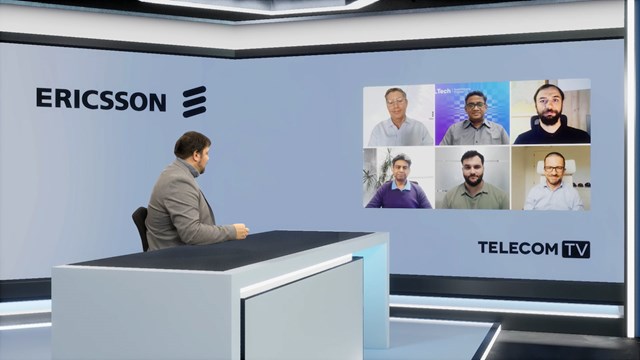
Welcome back everybody to the tropical conditions of Windsor. Hope you all enjoyed your lunch. We've got a lot to get through so we're going to get started. Our first session for this afternoon is digital sovereignty requirements, probably one of the hottest topics in the sector right now. Geopolitical tensions are forcing telcos to balance digital sovereignty demands with network resilience. Data localization, supply chain independence and guaranteed uptime are now operational imperatives and not policy discussions. So how do operators build sovereign ready networks while maintaining global interconnectedness? Let's meet our panelists and I'm going to ask them to briefly introduce themselves starting at the very far end with Joe. Joe.
Joanna Cavan, UK Telecoms Lab (01:14):
Thanks very much. Hi everyone. I'm Joe Cavan. I'm the managing director of the UK Telecoms Lab, which is a cybersecurity and resilience facilities. We work with operators and vendors doing advanced vulnerability research and industry security testing and then disclose responsibly the vulnerabilities that we find so they can be patched before they are exploited.
Colin Bannon, BT Business (01:38):
Hi everybody. Colin Bannon, CTO of BT Business and BT International.
Nihal Newman, Ofcom, UK (01:43):
Good afternoon everyone. Nihal Newman. I'm the director for security and resilience policy at Ofcom, the communications regulator in the UK.
Christof Stallmach, Red Hat (01:52):
Hi there. I'm Chris Josh Talmar, the head of Center of Excellence and Technical Engagement at Twitter.
Anastasios Karaiskos, Wind River (01:59):
Nastasi Karaskos, global vice president for the telecoms practice at Wind River where we are powering everything from embedded edge devices all the way up to intelligent distributed cloud infrastructure.
Lasha Tabidze, VEON (02:11):
Good afternoon. Lasha Tabiza, chief digital operations officer of Wyom Group.
Ray Le Maistre, TelecomTV (02:16):
Okay. Welcome everybody. Now, Lasha is our co-host for this session. So before we get into the panel discussion, Lasha is going to go to the podium to deliver a few thoughts to get the session started. So let's round of applause please for Lasha.
Lasha Tabidze, VEON (02:33):
Thank you. Thank you, Ray, and thank you everyone for joining this panel. So when coming here I asked and I will ask Ray now to put this picture and I asked AI to really create a picture what's sovereignty about. And very interestingly, and today morning on the sessions we've heard that AI will be helping us to identify new use cases, new architecture, how we do it. And literally when AI has done this picture, I changed nothing and you can see here that my data, my rules, my future, it's about sovereignty. And then we have AI that says I help, but you decide. This is very important where I want to bring as a food for thought for all of us when we speak about sovereignty, because sovereignty is not just about isolation as we all understand. And in today's world everywhere like operational sovereign cloud, sovereign networks, sovereign AI developed even faster than the procedures like regulations or policies are developing.
(03:45):
So today I think we should touch that base as well, how fast are policies developing and how fast are operationally everything developing. And it's very important that nowadays I think that telecom are requested to have three main pillars. It has to be resilient, it has to be data secure, but it has to be also globally connected. And that's the key challenge. How we build our sovereign networks, how we do our sovereign architecture, whether it's cloud or we develop sovereign AI in the countries, that we still stay globally connected. We do not defragment the digital economy and digital ecosystem, but at the same time we really ensure secure environment and build the trust within the countries we operate. So by this Ray, I think I'll pass back to you.
Ray Le Maistre, TelecomTV (04:35):
Okay. Thank you very much, Lasha for setting the scene and for giving us our first cartoon, possibly the last of the two days, we'll see.
(04:48):
So let's get into this. Now you very kindly provided a few notes as well to set the scene even further and noting as well, latter noted, resilience used to mainly be about technical design, redundancy, uptime failover, but today it's also about reducing critical dependencies on infrastructure, vendors, data flows. So resilience is clearly evolving from pure network reliability to something broader, including digital independence and data security. So how is this shift changing the way that operators design and operate their networks in practice? I'm going to start with you, Colin, because I know that this is something you've been tasked to look at in recent times and you've been spending an awful lot of time on this.
Colin Bannon, BT Business (05:46):
Yeah, I think I see a lot of familiar faces in the crowd. Some of us have spent a whole day together working on this not too long ago. The first thing I would say just get it out on the table is that the industry, telco industry needs clarity, needs certainty in what the frameworks is for sovereignty in the UK and they need help. It's not something that we can probably resolve just ourselves. There needs to be some structure around that from government, I think. And the reason is without that certainty, it becomes a barrier for our boards and our investors to invest, to understand what that is. So I think a taxonomy or an ontology and landing on that and getting some form of framework and many of you've heard talk to me about, well, of course we're not going to get in the UK unlike other countries regulation, but at least we could have a framework or a guidance framework that perhaps a red tractor mark for sovereignty to in the case of the UK to provide clarity and certainty on what is it that if you design it in Britain, build it in Britain and operate it in Britain, what is the advantage of that and ensure that there's a level playing field where you don't get sovereign washing and others who have not made that similar investment go into the market and just put a badge on theirs and say that.
(07:30):
And so I think it's very important to have a level playing field that the UK defines what is important to the UK on what our level of tolerance for risk is. And I think I'd start that off and it goes without saying that we're investing. We personally in BT have taken a leap of faith hoping that there will be goodwill in the market and the industry and with government that there will be that definition, but because it takes time to build an infrastructure, we're investing ahead of that certainty and taking a risk.
Ray Le Maistre, TelecomTV (08:10):
Okay. Yeah, maybe a slight risk there. And because you've talked there about the UK, I want to bring Joe and Nihal in here to talk about what this means for what kind of conversations you are having with the operators and the other important bodies in the UK. If I can start with you, Joe, because obviously security is a big part of this and this is a big part of what you do. How are things changing as the sovereignty debate kind of ramps up to the next level?
Joanna Cavan, UK Telecoms Lab (08:41):
I mean, great question and I think you're right about lack of definitions, but sovereignty is not a new concept, but it does mean different things. If you just look at your report that you published at TelecomTV a couple of weeks ago about what does sovereignty mean for telcos, it was a complete spread. Everything from built, every single hardware component, software running, operating the network all within our jurisdiction, storing the data within our jurisdiction through to countries like the UK where that's not feasible, let alone is it desirable to have that level of sovereignty. So I think it is important that we try and speak the same language and understand what ... It differs between sectors as well, critical national infrastructure sectors. It's obviously much more important to understand where you have sovereign capability, what you trust, what you own, what you're prepared to access from elsewhere.
(09:43):
I think although it's not a new concept, if the word sovereignty in front of products and services gets us to be more demanding as consumers and gets companies being more demanding of their suppliers around security and understanding the supply chain, et cetera, then it's no bad thing if we're starting to talk a lot more about digital sovereignty.
Ray Le Maistre, TelecomTV (10:09):
Yeah. It's raising a lot of topics and conversations and I'm sure that comes back to the regulators as well, Niha. I'm sure you must be asked a lot of questions about this from lots of different groups, including the operators about what can be done, what's allowed, can things be changed to allow certain sovereign services or sovereign infrastructures to be built. So what are you hearing from the market?
Nihal Newman, Ofcom, UK (10:36):
So I would first like to start with the fact that the definition is important because are we comparing apples with apples or apples with pairs? When we talk about sovereignty, are we talking about operating in the UK? Are we talking about working with trusted partners? But I can appreciate that is a different track, not for today. From my perspective, I do feel the telecom sector does underpin our critical national infrastructure. So the points that Joe did make and building on what Colin said, the clarity that can be provided in a starting point is the Telecom Security Act. In the UK, I would like to really put that into focus because that framework was created in early 2020, late 2019 at the back of a comprehensive risk assessment of the sector. And that risk assessment identified a set of comprehensive measures for the operators to take and by when they should implement it.
(11:34):
Now the important thing is there are so many measures in there, but when we talk about sovereignty, it already makes reference to what operators should be doing around national resilience, around capability, around supply chain diversity, around testing. So we're not starting from ground zero. My suggestion in this conversation is let's look at what we currently have before we start thinking about reinventing the wheel. So I would put that point out to operators and industry to see is that a good point to start with and then build from that.
Ray Le Maistre, TelecomTV (12:12):
Okay. Christophe, I'm sure you're having a lot of different conversations as well in the past 12 to 18 months as well as yourself, Nastasi, about how networks might be architected and managed slightly different to enable new service opportunities or to enable new levels of resiliency. What kind of conversations are you having around this?
Christof Stallmach, Red Hat (12:44):
The topics of energy appears not by accident, right? It's maybe a reminder of a situation that we have to reevaluate our partner ecosystem. But for me, it displays also an evident opportunity for the telcos to rethink. So telco talks for ages from becoming a communication service provider to a digital service provider from telco to techco, but what's their drive? How do they adopt this mindset and enable themselves into this B2B world that they really can additional services to their customers, not to bundle their mobile contract with a streaming provider, but what is the additional value? 5G came along and everybody was talking about it will bring the killer apps. Well, did it? Well, I probably don't answer the question now AI is coming along. Will AI innovate them in a certain way or is it another pattern which follows the 5G stream, which we experience in Telcoity gives you the opportunity you as a telco to review and reflect the options which you can provide to the market, not to outperform your competitors, not to undercut price in your environment, but really outlocalize your competitors.
(14:12):
So really provide local services for sensitive data for real time access data. We talk in the telco, we bring telcos together with different industries at Red Hat because we build this ecosystem. I'm a strong believer. I'm in age in Red Hat and the company does great things, but it's not only the company, it's the ecosystem which we bring together in which we enable this thing. So Vanity gives us this reminder now, how can we enable this? And if telcos really realize that they can change the culture not to deliver an internal service in form of a cost center, but really become an enabler and change this model to offer this as an external offering, this could transform a lot of into industries.
Ray Le Maistre, TelecomTV (15:07):
Yes, because it's got to happen internally can happen externally.
Christof Stallmach, Red Hat (15:10):
Pretty
Ray Le Maistre, TelecomTV (15:10):
Much. Nastarsi, what kind of conversations are you having here? And I guess this is, do you see what is being talked about? And you're right, sovereign services, apples, pairs, plums, grapefruits. It's everything. We saw that from the report we published recently, lots of different views. But are we at a point now where this opportunity where the network architecture, the telco cloud, if you like, is ready to enable this kind of shift and take on this opportunity?
Anastasios Karaiskos, Wind River (15:42):
Yeah. So the shift around resiliency that we've seen, I think as an industry, we're not talking about just singularly uptime or redundancy or failover anymore, right? This is about reducing dependency, concentration on things like your cloud providers, the infrastructure, the software stacks, the data flows. And the kind of questions that we see that were coming up is where is the data being processed? Who controls the infrastructure under which jurisdiction does it operate in? Who has the operational acces? So it's no longer about building walls, right? It's about having the control, control over your data, where your workflows are being optimized. It's not about everything in the telco cloud needs to be held in sovereignty, right? Certain workflows do, but not everything.
Ray Le Maistre, TelecomTV (16:31):
Yeah. No, and certainly that's something I've heard from a few operators in the last month as well in some of the interviews we've done. Lasher, you've heard an array of perspectives here. How does this sound to you in terms of what you're doing at Vayon and how you're thinking about this at Vayon where you have a number of different markets and quite different to the UK, that's for sure.
Lasha Tabidze, VEON (16:55):
Yeah, absolutely. First of all, I'm really happy that with this question, I brought up so many very interesting angles, how we should look at this. And look, for Vion in some of the markets we're blessed because even when we were creating all the policies and regulations, we had the power to sit down together with the lawmakers and really discuss this opportunity, how we can create an additional value for the markets we operate in. But of course we have five markets and one of them is Ukraine where you can imagine what level of security, sovereignty and all kind of things we need during the wartime. But in other markets, we immediately saw the value to create a new business there. As Christopher rightly mentioned, we immediately jumped into there was no hyperscaler play in the market. We immediately jumped into creating the computing power, cloud powered, new services, service integrations, and all this done on prem on sovereign cloud, sovereign infrastructure.
(17:57):
And going forward, even speaking about the sovereign AI and what I really want to add to all what was said is the trust factor. This is very important because if we look at the sovereignty from the trust perspective and we really build the valuable services, then we are becoming real player without even competing, not to hyperscalers, nor to local competitors. We create new value as a local player with local context, local security, and we gain trust, whether it's from B2G, B2B, or just customers in the B2C side.
Ray Le Maistre, TelecomTV (18:36):
Okay. And trust, I'm not sure how many times that word's already cropped up today. We're only in the afternoon of day one, but that's cropping up an awful lot, I guess, as we talk about AI quite a bit as well. So we're looking at modern telco infrastructure and how this might adapt or be ready for sovereignty. And we often talk about distributed architectures, cloud and edge, but are these things really being designed around sovereignty or are we adapting global architectures to local requirements? And could there be a danger there? Because sovereignty implies something a bit deeper, local processing, secure data environments, reduced dependency, but you don't want to lock yourself out and we've heard that. And Colin, obviously just recently BT has talked about offering sovereignty across borders as well and helping with that. So how can networks be designed that are locally resilient and secure but are still globally connected so you're not cutting yourself off.
(19:55):
Is this an oxymoron? Is this possible? Can it be done in a way that doesn't harm the operations or in fact harm the business? Does anybody want to jump in on that one first on that? Yeah, go on.
Lasha Tabidze, VEON (20:11):
No, I'll definitely want to leave this question to first to NASTASI to answer because we had lots of discussions regarding the edge cloud and et cetera. But one thing I really want to add here to make this more realistic discussion, because we all understand that to build the real sovereign architecture with sovereign cloud, edge cloud and everything, this is huge cost. That's why I think that to really build it, we have to be ready to invest without even knowing that there will be short-term outcome. Otherwise, we will just replicate, as you just rightly mentioned in your question, that we will just adopt to something, but this is not a layer or architecture layer for the future proof. Nastasa, please.
Anastasios Karaiskos, Wind River (20:57):
Yeah. So I think we saw a trend that telcos or enterprises initially tried to centralize everything into a hyperscaler cloud, but the reality is that you've got to push the workloads back towards regional cloud, back towards edge or on- prem or sovereign environments. So the design principle that we've seen is process the data where it makes operational and regulatory latency and sovereignty sense. Where are the workloads being executed? Where is inference happening? Who's operating in that particular environment? Who controls the access? These are the key points. Control over that platform, who is controlling access and where are the decisions being made? These are all the really basic fundamentals when you're thinking about designing your sovereign cloud environment.
Lasha Tabidze, VEON (21:42):
So we think hybrid model is the most efficient one.
Anastasios Karaiskos, Wind River (21:45):
This is what we're seeing, yes.
Ray Le Maistre, TelecomTV (21:47):
Okay.
Nihal Newman, Ofcom, UK (21:49):
Could I just on that? I do agree with regards to the protection and security by design and that is so important because that concept has been around for decades, but adding to that is also around the appropriate protections is making sure you are not protecting everything at the same level. It is understanding your risks, making sure there is clear accountability for those risks and at the same time knowing what level of protections are needed for what sort of data that you're managing.
Christof Stallmach, Red Hat (22:21):
That's the point. We evaluate your risk. Telco industry and the way how we build it with 2G and the following technologies over the last 30 years follows always the same pattern. Why? Because network equipment providers are forced on certain SLAs to deliver in a certain standard. Why would you change an architectural design which is running for decades, which is protecting you and your customer? It's a perfect contract, right? Why would you change it? But telcos are used in regulations and sovereignty is not a hurdle for telcos. I don't believe it. It's the gameplay, which we know for decades, but how do they innovate in this area? By following all the standards which we have and just accepting the new assumption with this architectural design, this will not work. Reevaluation of this architectural standards to the SLAs is evident important to this environment. One measurement, what it's done and what you hear in every panel is open source currently in every sovereignty discussion is the solution for everybody, but it's not easy.
(23:38):
If you think about open source community, these are millions of people contributing for thousands or millions of projects. Then you have companies which are betting, you have telecommunication service providers who are contributing there. Other companies, everybody comes with a different interest. How do you maintain this ecosystem? How do you build this trusted alliances again, which follow you new standards and which provide you a new target and new vision to achieve? And that's going to be the challenge. We need reliable ecosystems which align with our targets, therefore the reference architecture must be reviewed as well and challenged.
Ray Le Maistre, TelecomTV (24:19):
Okay. Carla, I want to come to you because borders, whether they're geographic, political, regulatory, is it possible to have a business that can move borders around and-
Colin Bannon, BT Business (24:36):
Yeah. We've talked about compute mostly in the last five minutes. I'm going to talk about traffic flows for a minute and protocols. If you look at the forks in the road of the likely potential scenarios on global regulation around sovereignty, is it reasonable to assume that sovereignty will not just be applied to data at rest, but could it in some scenarios, in some countries, and we're seeing the early signals for sovereignty to be applied to data in motion and for that matter, resiliency as well. And what I see and what we see in BT is our European colleagues in other telcos building their sovereign clouds at various levels of security and they're pulling up drawbridge and they're creating these sovereign islands of at rest. Some of them are hybrid with the hyperscalers, but commerce still needs to flow, right? We're in a world where there is some deglobalization that's been going on with sovereignty aspects here, but you still need to, how do you poke a hole in that walled garden and then create traffic flows to the features in the public cloud that you don't have on your private cloud.
(26:00):
And that's a real use case right now that we're seeing on these air gap solutions that we're seeing sprout up throughout Europe. And the other one is how do you then do things like sovereign roaming that you are taking a ... I'll take a paid mark on that where you're in country C and you're from country A and your traffic is flowing through country B that you don't actually trust. And so the concept of deterministic path control at the underlay level that this SD- WAN cannot solve for at a telco level will require new solutions on what the next version of the internet will be where you will start to have concepts of how do you geofence traffic flows? How do you create no fly zones for traffic flows? And that deterministic path control for failure scenarios is very real. How do you have disjoint paths and other things like that?
(27:03):
And if you follow the thesis that some governments will start to care about data in motion, then we as a telco industry need to solve for it. Fortunately, BT's made the investments. We sit on the standard bodies and there is now in modern telco networks, you're abstracting the control plane from the data plane and you can use that control plane. For instance, global fabric is one example where you can inject business intent and start to put those overlays on top. Because remember, the internet is a beautiful thing. It was designed to survive with DARPANET to survive a nuclear war. God help us, but it is fundamentally geographically ignorant. And so in a new world with new challenges around where people's data actually flows across the globe, one, you need to solve how do you connect those sovereign islands back together? It's almost, if you think about the old communities of trust or coin networks, extranets and things like that, there is some adjacent principles there of trust, the Swiss SSFN network for trading and extending trust out.
(28:20):
It is a really interesting area to challenge that I think we've solved for at least at the underlay level. But I would say I don't think you can solve this at an overlay level and it is up to telcos, global telcos to solve in the actual fabric of telecommunications and also agree how you roam and interwork and what those NNIs look like and what business intent you'll be passing between those NNI locations for the future when people start to really care about where those traffic, those packets flow hop to hop to hop.
Ray Le Maistre, TelecomTV (28:54):
Okay. And are you saying that it was just fortunate that you made the investment before in a network that can enable this? Because I guess you're talking about-
Colin Bannon, BT Business (29:05):
Well, Neil's in the crowd. So Neil and I had lots of conversations about potential futures and we thought that, look, the reality is the luck was the abstraction of the control plane was something that we had to do anyway for a modern network to change a lot of reasons that we did and having an abstracted path computation engine and an ability to expose a northbound interface to inject business intent opens up many use cases including things like sovereignty for data in motion.
Ray Le Maistre, TelecomTV (29:36):
Okay. And Joe, so Colin was talking about data in motion, but data at rest, data secured and stored, I don't know if this is something you looked at, but is there a danger that the shift towards sovereignty and locally stored data, that that in itself is a security risk by having all of your data in One territory?
Joanna Cavan, UK Telecoms Lab (30:02):
It could be. I mean, I don't think we can design networks and services to be excluded or like islands because that's not the reality of this business. We need to connect. That's the whole point. So I think it's about actually making sure we understand how our networks operate. We understand where the dependencies are and we can recover quickly when something happens. And I think it's that resilience and ability to recover quickly that is one of the most important principles around how we should design our networks.
Colin Bannon, BT Business (30:43):
Spot on, I just want to add one thing which was I forgot to mention, but you trigger metadata is going to be hugely important for the repositories. So you could envision the data fabrics that you're starting to see with modern cloud architectures. In the next couple of years, we'll have metadata around the sovereignty requirements for that particular data pool. And you could then take a step forward and say, which hasn't been developed yet is where the network fabric learns from the data fabric the treatment of that data in motion. So that's a potential future.
Ray Le Maistre, TelecomTV (31:23):
Okay. Very quickly, Lasha, if I can come back to you before we get onto the next topic, what do you see as the cost implications here for network operators of adapting to sovereign environments and delivering sovereign services? I mean, is this something that is going to give the CFO a headache, put CapEx budgets under risk?
Lasha Tabidze, VEON (31:50):
Yeah, that's a great one. That's why I put this question on top of what you already asked, because we all understand that to really build sovereign by nature and fully secure environment on- prem. I'm not speaking just about the computing power or the hardware, what you're going to use there, or the connectivity, what you need to these data centers and to these networks. I'm speaking also about how you use it further. So you need people, you need businesses, you need integration teams, you need to develop the services on top of that, right? Because it's not about just like creating some boundaries and yes, I have something sovereign here. Then country and people and businesses inside, they have to use it somehow. And then you cannot go and look for another companies who can work with your data how to go forward. That's why I'm saying, so what we see and the same is valid for Vion as well, right?
(32:49):
We pick country by country and case by case. Of course, there is some level of where you must do this sovereignty on anything you do, whether it's like network layer or cloud or whatever, but then you pick what you want to do more and do you really want to build a sovereign infrastructure in the country? So what's the end goal when you build this just to be compliant to the regulations or you can use it as a competitive advantage inside the country. And then another cost comes on top, as I've said.
Ray Le Maistre, TelecomTV (33:26):
Absolutely. And of course we've heard in recent years about how certain regulations are shifting cost, where costs are going or where spending is going and how that's shifting strategies at the same time. No, goodness, time is really running away with us here and I did want to get to the audience in a minute for a question. So if you've got a question, prepare for it in a couple of minutes. But I do want to get to this next point because it's just as important and it's about disruption to service, disruption to network infrastructure. A lot of that used to be caused by physical network failures. But Lasha, as you've pointed out, dependencies, whether that's on cloud platforms, software layers, centralized architectures, there's a shift in the risk from infrastructure failure to dependency concentration. So what is the single point of failure that telecom operators really need to think about today?
(34:27):
And in the next 12 months, what capabilities should telcos prioritize to strengthen their digital independence? Now that is a massive question in a couple of minutes with quite a few people to comment. So I'm going to take whoever puts themselves forward first, I'm going to come to for a comment on that. Okay, Colin.
Colin Bannon, BT Business (34:51):
I'll try to keep this short this time. Some of you know me talk about this. I think resilience is a lie. I'll just put it out there these days. I think it is a fallacy in many ways because if you look at the marketing architectures of most platform players out there today, they talk about resilience and yet every month last year we had major global outages and the concept of resilience I think is a misnomer. I think diversity is actually the new important policy around this because when is a resilient zonal architecture not resilient? It's when you have a single failure plane and until you get such a point that you have platform diversity where and if you do need to get that. So if you think about the Venn diagram of board concerns right now, cybersecurity, resilience and sovereignty, if you do follow the thesis that you need a second platform, well then maybe you tick off another board risk, which is sovereignty at the same time and that second platform make it sovereign and kill two birds with one stone on that point and then do it in a nuanced way.
Ray Le Maistre, TelecomTV (36:12):
Okay. Yeah. Joe, we'll come down. Everybody's got a point to make here, which is great. So Joe.
Joanna Cavan, UK Telecoms Lab (36:19):
I actually asked my team this and I used the word single failure and they came back with nine things, not just one thing. But I think where we landed was closing the patch gap. So making sure that you are designing your products securely, but you are patching your products regularly and actually the advanced vulnerabilities that we find aren't usually the ones that lead to networks being exploited. It's just the general security vulnerabilities that are there. So the biggest thing from us when we look at the security of networks is to just make sure we are actually not retrofitting security and we are serious about designing security in by default.
Nihal Newman, Ofcom, UK (37:11):
Okay. I was just going to build on that and from the perspective of diversity, I would also say dependency. So we are talking about dependency within the sector and different aspects of technology. I would say look outside the sector as well. Energy power is absolutely essential. Without that, nothing's going to work. So I think it's important to look outside the sector and think about those dependencies and two is capability. If the sector does not have the skills, knowledge, understanding, and capability of understanding the systems, that in itself could be a single point of failure.
Ray Le Maistre, TelecomTV (37:46):
No, that's an absolutely fantastic point. Get ready to ... The microphone's going to come around in a second. I'm just going to get a few more comments here, but get ready, Christophe.
Christof Stallmach, Red Hat (37:56):
Quick response to Colin. I get your point. Resilience, is this a lie or did Telcos didn't know how to measure it? Because it's all in a contract, it's all under SLAs, but how do we measure it?
Colin Bannon, BT Business (38:11):
Well, I've bought over the last 30 years, close to 30 billion worth of telecoms hardware, most of it is sold as high availability, high resilience. In
Christof Stallmach, Red Hat (38:23):
A blackbox.
Colin Bannon, BT Business (38:25):
And therefore you need to trust, verify. That's
Christof Stallmach, Red Hat (38:29):
The point. So it's about the trust, the ecosystem. Is this still your trusted partner? But how do you define this trust? How do you make them responsible beyond? If it's in a black box, you rely on trust.
Colin Bannon, BT Business (38:42):
Like a cloud platform.
Christof Stallmach, Red Hat (38:43):
But how do ... Not only, because it goes for the whole ecosystem stack, right? For the whole solution. Going to open source and using now open source as a solution, it's easy to say, but it's hard to measure because suddenly all these responsibilities comes to you and how do you measure it? But as a single point of failure, all X in one basket, that's really critical because without the measurements, how you do this. So in my eyes, open source is the way to go forward, but you have to be prepare your culture, your capabilities in your environment, not only for your company, but for your ecosystem, it must be all aligned.
Ray Le Maistre, TelecomTV (39:24):
Okay. Sanza.
Anastasios Karaiskos, Wind River (39:26):
So I see that the next generation of telecoms outages will not be caused by hardware failures, right? It will be caused by the over-centralized dependencies. We haven't touched so much in this discussion about AI, right? But AI introduces new sovereignty risks, right? Inference location, for example, telemetry exposure, GPU dependency. Most organizations, they're protecting the infrastructure itself, but not the AI execution environments. And this is absolutely critical.
Ray Le Maistre, TelecomTV (39:59):
Lasha, is there a single point of failure or is there none?
Lasha Tabidze, VEON (40:02):
Yeah. Look, single point of failure, there is one single point of failure, not changing what we are doing now. That's how I truly see it and it's very important. And I wouldn't take it down to just whether it's in the closed box or open architecture and open signals. I more agree that we first have to really map and look our dependency concentration and start from there. This is very, very important. And what Anihal mentioned regarding the energy and everything else, look, many of us were doing lots of green energy and other things following many good things in the world like ESG and things we want to do. But now with the rising prices everywhere, allow CFO is running after to make more green just because it's not sustainable anymore. So it's a very complex thing, but my takeaway and what I want to bring to the audience is that first we really need to map all the critical dependencies and unlock it, make redundant.
(41:07):
Well, whether it's two, three different layers of redundancy or platforms of redundancy, this is very important. Right now we just look as in the past for the main redundancy like data center and we have to have the redundancy, but there are many other critical components and it was rightly mentioned lately we've seen just one problem here and all the services and all the things are out. You cannot help it. So I would say single point is not to do anything, but the most important is we have to start it doing now because now we can really calculate it and everyone inside our company and the investors and the boards going to understand that this is important to be resilient and your business going to grow consistently and being redundant.
Ray Le Maistre, TelecomTV (41:55):
Okay. Carpe diem together. Okay. So Tony, or I'm going to call you Mike from now on Tony, because you have the mic.
Christof Stallmach, Red Hat (42:05):
Camille.
Ray Le Maistre, TelecomTV (42:05):
So very quick question. We have two minutes.
Camille Mendler, Omdia (42:09):
Okay. Well, first a statement, the network sovereignty issue is not a tomorrow issue, it's a today issue and on five large enterprise multinational enterprises are already trying to put this in place, mandated routing with exclusions, geographic exclusions. But large enterprises have the resources and they may know about things alternatives BGP like Scion and things like that that might solve some of the problems. What I haven't heard in this discussion I'd like to hear the panel speak about is most of this is about you covering yourselves from regulatory oversight. What about your willingness to help the scale ups that don't have much of an IT department that have no idea of the danger that they're facing? Isn't this an opportunity for you to step up? I haven't heard much about the customer. Why is that?
Ray Le Maistre, TelecomTV (43:00):
I'll tell you why, because we've got one and a half minutes left and that was going to be our next talking point, but a great point. So let's touch on that very quickly then. This is an opportunity to help for the telcos to be in that trust position to help the customers with their sovereignty needs. How big an opportunity is this, Masha?
Lasha Tabidze, VEON (43:28):
Well, look, and of course now I'll speak from the Vion perspective. We saw this opportunity, that's why we started doing this in the markets we operate. And on top of sovereign cloud and development on the sovereign infrastructure, we developed the products locally with local people, local data, completely sovereign, tapped into different businesses and we ended up Q1, for example, 25% of top line coming of the businesses which created on top of sovereign infrastructure inside the markets and then opened up possibility for the startups development teams and et cetera on the products we developed to make new services on top of that. So that's why I underlined that I'm speaking now from the VM perspective because in the markets we operate, we have these opportunities. We saw it, we invested in it, and now we see the great results coming back to us.
Ray Le Maistre, TelecomTV (44:23):
Okay. Any other quick comments on-
Colin Bannon, BT Business (44:25):
So there's a tension, Camille, like the Telecoms Security Act is the absolutely right thing to do, but it adds a lot of cost into the cost space and then you're competing against those that don't have the unit economics of the Telecoms Security Act against that consumer market or the scale up side. What we've decided, and look, we had sovereign before at the secret and the government level, but we knew that the unit economics wouldn't scale to down into the wider private enterprise. And so at least in BT, our philosophy on sovereign is how do you do sovereign by design where there's only a plus five, 10% market sensitivity where we've made a commitment that there is at least one version of every one of our products, voice, contact center, et cetera, across the full portfolio that people can buy as a sovereign platform, but is still at the unity economics of the mass scale products.
(45:22):
That is not easy to do and it also is really difficult to bring the board along when they're going, "Yeah, but you don't have a level playing field yet because there's no definition." And I'll come back to the end, which is getting that clarity in the market.
Ray Le Maistre, TelecomTV (45:36):
Okay. But the encouraging point is, and I think from what I have heard that some of the early adopters of sovereign services that some telcos have been developing to see if there is an opportunity in the market, a lot of the demand has come from small startups and smaller companies and not larger enterprises. And I think that's a really interesting trend. So there is definitely a dynamic here and an opportunity for the sector absolutely. But unfortunately that is all the time we have for this session. This is why we have a whole day dedicated to sovereignty in December because 45 minutes hardly scratches the surface, but we need to start our next session and we need to get our next set of industry experts up on the stage. While we do that, please give a big round of applause to our sovereign panel. Really great discussion.
(46:31):
Thank you very much. Lasha, thank you so much.
Please note that video transcripts are provided for reference only – content may vary from the published video or contain inaccuracies.
Panel Discussion
In this DSP Leaders World Forum session, experts from Veon, Wind River, Red Hat, Ofcom, BT Business and UK Telecoms Lab discuss how geopolitical pressures are transforming how telecom operators approach network design, bringing about a shift beyond traditional resilience with a focus on uptime and redundancy to encompass digital sovereignty requirements too. The panel explores the challenges of building sovereign-ready infrastructure that reduces critical dependencies on vendors and data flows while maintaining global connectivity.
Broadcast live 19 May 2026
Participants

CO-HOST
Lasha Tabidze
Group Chief Digital Operations Officer, VEON

Christof Stallmach
Head of EMEA Telco COE, Red Hat

Colin Bannon
Chief Technology Officer, BT Business

Joanna Cavan
Managing Director, UK Telecoms Lab

Nastasi Karaiskos
GVP Global Telco & EMEA Sales, Wind River

Nihal Newman
Director, Security and Resilience Policy, Ofcom, UK