- Anthropic bulks up as sales soar
- Memory sales help Samsung beat Q1 expectations
- Huawei’s got a new rotating chief
In today’s industry news roundup: AI giant Anthropic has signed up for more processing capacity as demand, and revenues, accelerates; Samsung’s first-quarter numbers are well ahead of expectations thanks to its strong position in the memory market; Huawei’s latest top exec has a lot of European experience; and much more!
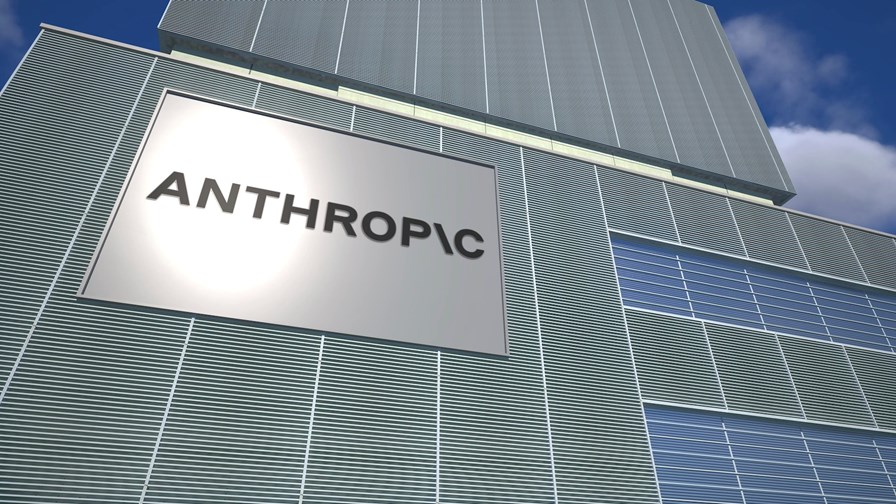
San Francisco-based generative AI (GenAI) developer Anthropic is taking “multiple gigawatts of next-generation TPU [tensor processing unit] capacity” from Google and Broadcom that it expects to start being used next year as demand for its Claude AI models grows to “unprecedented” levels and drives ever-higher revenue levels, the company has announced. “This groundbreaking partnership with Google and Broadcom is a continuation of our disciplined approach to scaling infrastructure: We are building the capacity necessary to serve the exponential growth we have seen in our customer base while also enabling Claude to define the frontier of AI development,” stated Anthropic’s CFO, Krishna Rao. Anthropic, which counts telcos such as SK Telecom, Deutsche Telekom and Singtel amongst its partners, noted that its annual revenues run rate “has now surpassed $30bn, up from approximately $9bn at the end of 2025,” and that the number of customers spending more than $1m with Anthropic on an annualised basis now exceeds 1,000, “doubling in less than two months”.
South Korean tech giant Samsung Electronics has surprised the markets with much better than expected guidance for its first-quarter financial numbers, as the company issued a note to say it expects its revenues for the first three months of this year to hit 133tn Korean won ($88.75bn) and its operating profit to be about 57.2tn Korean won ($38.2bn). Veteran tech sector analyst Richard Windsor noted in his latest Radio Free Mobile blog that the numbers confirm that Samsung “is back at the top of its game and is set to retake its crown as the king of memory… this is an indication that the main theme of the results cycle coming this month is going to remain AI demand driving a historic shortage for memory and a bonanza for the memory makers.” However, this means that the price of many consumer devices that require memory chips is being driven up by the high cost of those components, something that research firm IDC highlighted in this recent market trend blog about the expected hike in prices for PCs and smartphones (markets in which Samsung is, of course, a major player).
David Wang is the latest senior Huawei executive to head up the board of directors and the company’s executive committee as the Chinese vendor’s latest rotating and acting chair, a role that is taken on in turn by the company’s top table executives and handed on every six months. Wang started the role on 1 April, taking over from Ken Hu Wang. He has held numerous senior roles at Huawei since joining in 1997, including president of technical sales of the European area, managing director of Huawei Italy and Switzerland, and stints as president of the wireless and (fixed) network product line teams.
With so many new satellites, carrying many different types of technology ‘payloads’, being launched into orbit these days, there’s more and more talk about the prospect of deploying datacentres in space, which seems like a crazy idea but one that has attracted support from Elon Musk and others involved in the tech and space sectors. The latest executive to say that datacentres should be deployed in space, and who appears to be certain that this will indeed happen (despite concerns about cooling and radiation) is Cisco Systems CEO Chuck Robbins, according to The Verge, which has published an interview with Robbins that begins with a focus on that specific topic.
South-east Europe operator United Group has completed a new terrestrial cable linking the Greek capital Athens to the country’s second-largest city, Thessaloniki. The 600km cable connects a further six cities – Volos, Lamia, Larissa, Livadeia, Katerini and Thebes – along its route then, through United Group’s existing points of presence, connects to Sofia (Bulgaria) and into the company’s Balkan backbone which, in turn, connects eight countries, including Croatia and Slovenia. The network operator said the terrestrial route is a “key component of its broader regional strategy” and will reinforce links beyond Europe, including Turkey and the Middle East. United also said it has further plans for the region, including an “Aegean submarine connection linking Greece, Turkey and the Middle East” in the next few years.
The US National Hockey League (NHL) has partnered with Verizon and the New Jersey Devils ice hockey team to launch a new innovation lab showcasing connected tools for use by hockey venues, game officials, coaches and players. The NHL Innovation Lab will be located inside the Prudential Center in Newark, offering teams and organisations within the game of ice hockey a space to develop and test emerging technologies and initiatives. It will use the centre’s adjacent practice rink – the RWJBarnabas Health Hockey House – to test technology on the ice, using a private 5G network provided by Verizon. The telco, already NHL’s official 5G partner, will also provide the sporting association with access to its Secure Cloud Interconnect solution, which will be used to support the NHL with testing next-gen technologies, including advanced 4K and 8K media workflows, and player tracking equipment.
Five years after it debuted vanilla 5G, Proximus has launched 5G+ (5G standalone, or 5G SA) in Belgium, becoming the first operator in the country to offer the service. The launch of its 5G+ service is initially limited to business customers, with plans to expand the offering to small business and residential customers, and later to eSIM users, from the summer. The operator, which says its 5G network covers around 92% of the Belgian population, says the “transition to 5G+ also paves the way for network slicing, an important new feature that will enable Proximus to offer customers tailored connectivity on a commercial scale”.
A joint network enhancement effort undertaken by mobile operator Smart Communications, Ericsson and Meta has resulted in millions of Messenger users in the Philippines “enjoying clearer, more reliable voice and video calls,” according to this Ericsson announcement. “By optimising network performance at scale, the partners reduced call disruptions and delays, making everyday Messenger conversations across the Philippines smoother and more dependable,” noted the vendor, adding that the “enhanced network performance was enabled by Ericsson and Smart fine-tuning key technical parameters in Smart’s live network in the Luzon area of the Philippines.” According to the partners, Messenger calls now have less delay (24.6% lower round-trip time), fewer interruptions (55% lower packet loss) and clearer video (nearly 20% higher video bitrate).
– The staff, TelecomTV
Email Newsletters
Sign up to receive TelecomTV's top news and videos, plus exclusive subscriber-only content direct to your inbox.