Telenor’s take on the progress and challenges of cloud native in telecoms

By Guy Daniels
Sep 15, 2025
To embed our video on your website copy and paste the code below:
<iframe src="https://www.youtube.com/embed/P6P2xWmfbOU?modestbranding=1&rel=0" width="970" height="546" frameborder="0" scrolling="auto" allowfullscreen></iframe>
Guy Daniels, TelecomTV (00:13):
Hello, you are watching the Cloud-Native Telco Summit, part of our year-round DSP Leaders Coverage. I'm Guy Daniels and for this year's summit now in its seventh year, we are focusing on two key areas, creating transformation roadmaps and delivering operational excellence. Well, joining me now is Hans Bendik Jahren who is VP Network and Infrastructure Technology Strategy at Telenor Group. Hello Hans, very good to see you. Thanks so much for taking part in this year's summit. Well, first of all, can I ask you generally how do you rate the progress of the telecoms industry with regards to its use and adoption of cloud-native?
Hans Bendik Jahren, Telenor Group (01:01):
The need and focus is definitely understood by the operator and our partners ecosystem, but we also see that our wish to move faster in this area have been limited with the technology readiness and operators internal capabilities. In Telenor, we are a professional buyer of solutions and services and we have partners that we rely on the roadmaps and plans for adopting cloud-native and that's one of the limiting factor for us for new solutions and new technology areas. We are to a large extent, able to move faster when we're buying systems as we put requirements on selection criteria for selecting those kind of tools and that we are also able to focus on that when we are putting investments forward to accelerate the cloud-native. There's definitely a need to put a bit more or the dinosaur systems that the Tel Cooperator have in place that they need to be transformed. However, those are typically large systems which is both costly to transform for us and application developers and it also shows limited business upside, which is one of the challenges for our modernization journey moving all to cloud-native. I think also then if you look to how we are approaching new technologies these days with 5G and 5G SA there have in terms of technology readiness, 5G SA may be mature, but I think partly we have shortcut a bit the cloud-native journey and that transformation journey may be one of the missed opportunities that we could have seen in maybe a broader transformation journey due to technology readiness. However, we are moving and we are taking step by step also in that area.
Guy Daniels, TelecomTV (03:21):
Well, thanks very much Hans, and you explained there what you are doing at Telenor. Can we focus a bit more on what you're doing and how you rate your own adoption? How is cloud-native improving your key business objectives? Are you able to tell us which areas you think are succeeding and which still need to be developed?
Hans Bendik Jahren, Telenor Group (03:41):
Definitely are. The cloud adoption we are doing in Lenor is definitely varying quite a bit between the IT and network divisions as it probably are in most telcos and with it we have definitely been working much, much faster than on the network side where we are basically leveraged on the hyperscalers technology and public cloud where basically the focus on cloud adoption have been for probably more than a decade and currently we have been reaching for close to 70% on our cloud-native ambition in the IT side, but now we are maturing and the progress is a bit stagnating. The reason for that is primarily a long tail, how the systems that is remaining, which makes the full migration quite challenging and also the organization now is definitely maybe focusing now more on simplification and removal of systems rather than the full shift to cloud-native. We in the organization are focusing on how to called retire replace, or even be architecting some other legacy systems, which is partly helping us to move forward on the cloud-native transformation. For the network side, our cloud adoption is much, much less, probably closer to 20% than the high 70% that we have on the IT side. This is mainly due to many of the large service platform and network functions have not been fully ready.
(05:29):
That goes for partly reason being that the network services have quite strict requirements on the cloud platforms. That includes security resiliency, how we do the traffic management, and I would say traditional IT compute systems, which is done also available on hyperscalers are not readily for those kind of needs. We have also explored a bit with hyperscaler technology, however, in our European markets and partly Asian ones, the readiness for those kind of solutions is not truly there for telecom systems. Additionally, we have some more challenges on the lifecycle of the systems in the telco side where our TEL operator are very committed to actually deliver services to our customers over many, many years. Those commitments and I would say lifecycle management of the platforms is not the same within the IT space and we need to both adapt processes and make sure that we adapting the systems to some extent to fulfill those customer's requirements.
Guy Daniels, TelecomTV (06:44):
Hans, that's great to hear about the progress you're making and the challenges you face. I do want to come on to the challenges of scaling later, but first of all, one of the main themes of this year's summit, as I mentioned earlier, is on creating roadmaps for cloud-native transformation. Which business drivers do you think have proven most important and most critical in securing board level commitment to a cloud-native journey?
Hans Bendik Jahren, Telenor Group (07:13):
Great question. I would say the cloud-native is in our view, a long-term journey. I said we have been working on this for many, many years, and obviously even though business value may not be immediately clear for all stakeholders, it is important that are committed to the overall belief that the transformation will deliver value. One thing is done, of course, importance of simplifying systems and the processes, but also then that we are able to improve the development cycles of the systems at the same time. Here are a question about the board level commitments. I think having top management and board level anchoring is definitely a key to success, both to get the necessary support for investments that's coming and also that we have anchoring on the activities that is needed to do this transformation. Adding on top of that, I think having a clear direction for organization that is important so we take the right decisions and also that we have some KPIs that we are able to track and follow up that we actually are executing according to that strategy.
Guy Daniels, TelecomTV (08:30):
Great. Well, our other key thing this year is on delivering operational excellence, and you've already spoken about the issues of dealing with legacy assets. What challenges do telcos face in scaling their teams and their processes as cloud-native operations mature?
Hans Bendik Jahren, Telenor Group (08:50):
We have, I would say three major challenges. One thing is of course, the security that we ensure that teams are capable of managing it and that we have robust security areas across all part of operations. Our operating model is another challenge. We need to streamline that further as the ambition is to have a more common and shared operating model across IT and network and our multi-cloud operations. Currently, there is challenges on that as there is different state of the readiness of the cloud platforms and also on the application side. To elaborate a bit on the cloud platform, as I mentioned, the public cloud readiness is not there on the network side. While on the IT side we're strong on that on the private cloud and local deployments, there is also significant dependencies between hardware and software, which is limiting a bit our maneuvering space within that area. On top of that, as also mentioned, the telco, telco applications is also a bit less mature on the cloud-native. The third point is then lifecycle management. We definitely have a bit mismatched between how the telco corporations are handling the lifecycle on the applications, including the whole development of this platform from some of our key partners, so that is some challenge we're working hard on to solve.
Guy Daniels, TelecomTV (10:39):
Well, finally, bringing both of these themes together and also introducing AI into our conversation. How do you go about feeding back and incorporating AI driven insights into your long-term operational roadmaps?
Hans Bendik Jahren, Telenor Group (10:56):
Yeah, data and data-driven decision is somewhat a core of what we have been doing for a long time, both on the customer engagement, customer journeys, and also then how we are doing network optimization activities across. We believe that cloud-native definitely will improve access and ability to scale for what is needed to get data in the future. While cloud-native will improve the access to data, we definitely need to be able to process the data in a much, much more efficient way than we do today, and from Telenor and tele group, we have also actively collaborating with NVIDIA to deliver AF access to support that compute need. So we are firming up our AI driven insights across many areas, the customer part and also network. And as a concrete example on the network domain, we are leveraging on the cloud-native capabilities and also the AI platforms to further evolve into more autonomous networks, which will bring both customer value in terms of much better customer experience as well as the operational efficiencies.
Guy Daniels, TelecomTV (12:13):
Well, we must leave it there for now, Hans, really good talking with you and thanks so much for taking part in this year's Cloud-Native Telco Summit.
Hans Bendik Jahren, Telenor Group (12:21):
Thank you, and thank you very much for having me on the show.
Hello, you are watching the Cloud-Native Telco Summit, part of our year-round DSP Leaders Coverage. I'm Guy Daniels and for this year's summit now in its seventh year, we are focusing on two key areas, creating transformation roadmaps and delivering operational excellence. Well, joining me now is Hans Bendik Jahren who is VP Network and Infrastructure Technology Strategy at Telenor Group. Hello Hans, very good to see you. Thanks so much for taking part in this year's summit. Well, first of all, can I ask you generally how do you rate the progress of the telecoms industry with regards to its use and adoption of cloud-native?
Hans Bendik Jahren, Telenor Group (01:01):
The need and focus is definitely understood by the operator and our partners ecosystem, but we also see that our wish to move faster in this area have been limited with the technology readiness and operators internal capabilities. In Telenor, we are a professional buyer of solutions and services and we have partners that we rely on the roadmaps and plans for adopting cloud-native and that's one of the limiting factor for us for new solutions and new technology areas. We are to a large extent, able to move faster when we're buying systems as we put requirements on selection criteria for selecting those kind of tools and that we are also able to focus on that when we are putting investments forward to accelerate the cloud-native. There's definitely a need to put a bit more or the dinosaur systems that the Tel Cooperator have in place that they need to be transformed. However, those are typically large systems which is both costly to transform for us and application developers and it also shows limited business upside, which is one of the challenges for our modernization journey moving all to cloud-native. I think also then if you look to how we are approaching new technologies these days with 5G and 5G SA there have in terms of technology readiness, 5G SA may be mature, but I think partly we have shortcut a bit the cloud-native journey and that transformation journey may be one of the missed opportunities that we could have seen in maybe a broader transformation journey due to technology readiness. However, we are moving and we are taking step by step also in that area.
Guy Daniels, TelecomTV (03:21):
Well, thanks very much Hans, and you explained there what you are doing at Telenor. Can we focus a bit more on what you're doing and how you rate your own adoption? How is cloud-native improving your key business objectives? Are you able to tell us which areas you think are succeeding and which still need to be developed?
Hans Bendik Jahren, Telenor Group (03:41):
Definitely are. The cloud adoption we are doing in Lenor is definitely varying quite a bit between the IT and network divisions as it probably are in most telcos and with it we have definitely been working much, much faster than on the network side where we are basically leveraged on the hyperscalers technology and public cloud where basically the focus on cloud adoption have been for probably more than a decade and currently we have been reaching for close to 70% on our cloud-native ambition in the IT side, but now we are maturing and the progress is a bit stagnating. The reason for that is primarily a long tail, how the systems that is remaining, which makes the full migration quite challenging and also the organization now is definitely maybe focusing now more on simplification and removal of systems rather than the full shift to cloud-native. We in the organization are focusing on how to called retire replace, or even be architecting some other legacy systems, which is partly helping us to move forward on the cloud-native transformation. For the network side, our cloud adoption is much, much less, probably closer to 20% than the high 70% that we have on the IT side. This is mainly due to many of the large service platform and network functions have not been fully ready.
(05:29):
That goes for partly reason being that the network services have quite strict requirements on the cloud platforms. That includes security resiliency, how we do the traffic management, and I would say traditional IT compute systems, which is done also available on hyperscalers are not readily for those kind of needs. We have also explored a bit with hyperscaler technology, however, in our European markets and partly Asian ones, the readiness for those kind of solutions is not truly there for telecom systems. Additionally, we have some more challenges on the lifecycle of the systems in the telco side where our TEL operator are very committed to actually deliver services to our customers over many, many years. Those commitments and I would say lifecycle management of the platforms is not the same within the IT space and we need to both adapt processes and make sure that we adapting the systems to some extent to fulfill those customer's requirements.
Guy Daniels, TelecomTV (06:44):
Hans, that's great to hear about the progress you're making and the challenges you face. I do want to come on to the challenges of scaling later, but first of all, one of the main themes of this year's summit, as I mentioned earlier, is on creating roadmaps for cloud-native transformation. Which business drivers do you think have proven most important and most critical in securing board level commitment to a cloud-native journey?
Hans Bendik Jahren, Telenor Group (07:13):
Great question. I would say the cloud-native is in our view, a long-term journey. I said we have been working on this for many, many years, and obviously even though business value may not be immediately clear for all stakeholders, it is important that are committed to the overall belief that the transformation will deliver value. One thing is done, of course, importance of simplifying systems and the processes, but also then that we are able to improve the development cycles of the systems at the same time. Here are a question about the board level commitments. I think having top management and board level anchoring is definitely a key to success, both to get the necessary support for investments that's coming and also that we have anchoring on the activities that is needed to do this transformation. Adding on top of that, I think having a clear direction for organization that is important so we take the right decisions and also that we have some KPIs that we are able to track and follow up that we actually are executing according to that strategy.
Guy Daniels, TelecomTV (08:30):
Great. Well, our other key thing this year is on delivering operational excellence, and you've already spoken about the issues of dealing with legacy assets. What challenges do telcos face in scaling their teams and their processes as cloud-native operations mature?
Hans Bendik Jahren, Telenor Group (08:50):
We have, I would say three major challenges. One thing is of course, the security that we ensure that teams are capable of managing it and that we have robust security areas across all part of operations. Our operating model is another challenge. We need to streamline that further as the ambition is to have a more common and shared operating model across IT and network and our multi-cloud operations. Currently, there is challenges on that as there is different state of the readiness of the cloud platforms and also on the application side. To elaborate a bit on the cloud platform, as I mentioned, the public cloud readiness is not there on the network side. While on the IT side we're strong on that on the private cloud and local deployments, there is also significant dependencies between hardware and software, which is limiting a bit our maneuvering space within that area. On top of that, as also mentioned, the telco, telco applications is also a bit less mature on the cloud-native. The third point is then lifecycle management. We definitely have a bit mismatched between how the telco corporations are handling the lifecycle on the applications, including the whole development of this platform from some of our key partners, so that is some challenge we're working hard on to solve.
Guy Daniels, TelecomTV (10:39):
Well, finally, bringing both of these themes together and also introducing AI into our conversation. How do you go about feeding back and incorporating AI driven insights into your long-term operational roadmaps?
Hans Bendik Jahren, Telenor Group (10:56):
Yeah, data and data-driven decision is somewhat a core of what we have been doing for a long time, both on the customer engagement, customer journeys, and also then how we are doing network optimization activities across. We believe that cloud-native definitely will improve access and ability to scale for what is needed to get data in the future. While cloud-native will improve the access to data, we definitely need to be able to process the data in a much, much more efficient way than we do today, and from Telenor and tele group, we have also actively collaborating with NVIDIA to deliver AF access to support that compute need. So we are firming up our AI driven insights across many areas, the customer part and also network. And as a concrete example on the network domain, we are leveraging on the cloud-native capabilities and also the AI platforms to further evolve into more autonomous networks, which will bring both customer value in terms of much better customer experience as well as the operational efficiencies.
Guy Daniels, TelecomTV (12:13):
Well, we must leave it there for now, Hans, really good talking with you and thanks so much for taking part in this year's Cloud-Native Telco Summit.
Hans Bendik Jahren, Telenor Group (12:21):
Thank you, and thank you very much for having me on the show.
Please note that video transcripts are provided for reference only – content may vary from the published video or contain inaccuracies.
Executive Interview
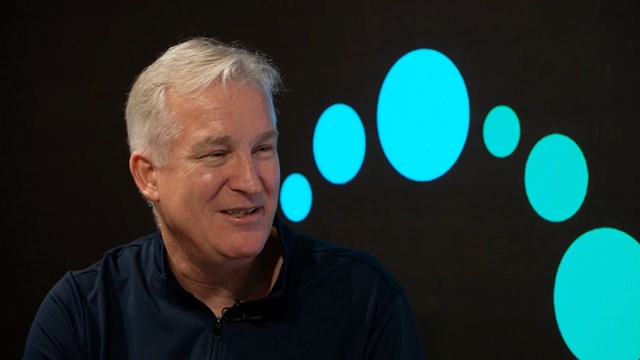
In this exclusive interview, Telenor Group’s Hans Bendik Jahren talks to Guy Daniels about the telecom industry's adoption of cloud-native technologies. He outlines the challenges faced by Telenor, including technology readiness and internal capabilities, and explains the importance of board-level commitment and the role of AI in enhancing operational roadmaps.
Recorded September 2025

Hans Bendik Jahren
VP Network & Infrastructure, Group CTO, Technology Strategy, Telenor