Building the AI factory: A framework for telecom success - on demand

By James Pearce
Sep 29, 2026
To embed our video on your website copy and paste the code below:
<iframe src="https://www.youtube.com/embed/TYejgg9AydI?modestbranding=1&rel=0" width="970" height="546" frameborder="0" scrolling="auto" allowfullscreen></iframe>
James Pearce, TelecomTV (00:04):
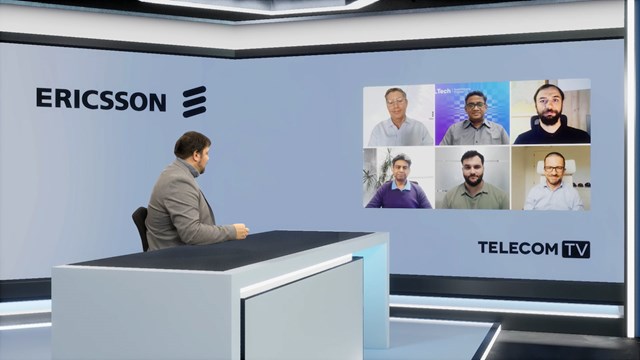
Welcome to Telecom TV. As CSPs look to move from AI experimentation to scaled deployment, the conversation is shifting beyond just isolated AI use cases toward the infrastructure, software and operating model required to support this exciting new technology at scale. I'm James Pearce and I'm going to be your host for today's panel, which will explore what the AI factory means in a telecom context and how CSPs can build the foundation for more sovereign AI-ready networks. To discuss this, I'm delighted to welcome our panel of experts. Today I'm joined by Slawek Stawiarski, who is the Telco and AI solutions manager at Intel Corporation, Richard Card, who's global head of telco at SUSE, and Melvin Rosario, who is the strategic business development telecom for EMEA at Dell Technologies. Thank you all for joining. Let's dive in by looking at the term AI factory itself. Can you explain what that actually means and why it's important for telecom operators?
(01:09):
Melvin, perhaps you can go first.
Melvin Rosario, Dell Technologies (01:11):
Yeah, I think it's an excellent question, essentially because the AI factory concept sounds like another buzzword in the industry. But when we talk about AI factory in telecom, it means something very specific. We're talking about repeatable systems that turn network and business data into actual production AI outcomes, not only isolated pilots. And we know that that's been going on for years where a lot of CSP have been doing one-off experiments. So when we're talking about AI factories is what happens when the industry comes together with a compute and the infrastructure and the open software layers with validated reasonable and reusable foundations that we can create across the systems of the network. And this is what we've been doing with Dell and Intel and SUSE for the past decades in various other workloads. So we are transitioning into these workloads specific to telco where we're trying to apply the same principle of collaborations.
(02:16):
So what is also important to say is that the timing of this matters a lot and it's because of one simple word, sovereignty. So when we look at the behaviour of the region, nearly a third of the European telcos are planning to move workload to a country sovereignty infrastructure in the next year. And roughly half of EMEA governments are planning to increase their use of sovereign cloud specific for AI. So the conversation here isn't about infrastructure anymore. It's about the control of the data, the control of the models and whether the CSP can actually prove that control to regulators.
James Pearce, TelecomTV (03:00):
That's really interesting, Melvin. Richard, do you have anything to add to that?
Richard Card, SUSE (03:04):
Well, I think Melvin summed it up pretty well. The way that I typically would think about this myself though, we look at the AI factory, think of it as the shift from doing things in silos to, as Melvin said, building something that's more repeatable. Many of the challenges right now for most CSPs is they're drowning in massive streams of data. And as Melvin again alluded to, the factory is designed to take that and make it more actionable intelligence, but at scale. Because the scale thing is important. Fundamentally, telcos are, they just can't afford to do things the way they've been doing them for decades. That siloed fragmented custom often in some scenarios is over. They can't continue to work in that way. So as the demand for network cloud infrastructure continues to scale, the unified factory model is really the only way that telcos can monetise 5G beyond the basic connectivity that they have today.
(04:17):
And that's the thing that's going to help them go through this transition that we've been talking about for years from traditional telco to techco.
James Pearce, TelecomTV (04:28):
And Slawek, what about an Intel point of view on the AI factory?
Slawek Stawiarski, Intel Corporation (04:33):
Absolutely. Yeah. And I agree. This is something that is very important to recognise that the AI factory is not actually a product or it's not a platform. It's actually operating model. If you think about the factory, you think about producing something. So the factory here in the context of AI, it means that telcos can produce a product. And to produce the product, the product has to solve some problems. So it's a business problem solution, a location where delivering the AI products is reliable, consistent way at the time, at the scale. Of course, this requires technology and partnerships like with Intel and Dell and SUSE that we are here and we can deliver this and we do this. In parallel with the technology, the operating model has to come with the business owners of the problems. And those business owners of the problems have to be accountable and those things have to be measurable.
(05:45):
So they have to be accountable for the outcome in terms of the profit and the loss. One more thing I wanted to also mention over the time, I mean the AI factories, they started to build years ago starting. And the nature of AI workload has been also changing over that time. At the beginning we were talking about training models and data centres, but today we are talking about AI agentic. A lot of actually focuses on inferencing and solving the problems of the business problems. So I think this is where the differentiator is.
James Pearce, TelecomTV (06:31):
Brilliant. Melvin mentioned another term that I think is really important in this area and that's sovereignty and sovereign AI. How do AI factories and sovereign AI translate into commercial opportunities for telecom operators? Richard, perhaps you can tackle this one first.
Richard Card, SUSE (06:47):
Yeah, sure. Thanks. Great question. I think that's the question on most people's minds. So fundamentally, it's going to act as a launchpad for bringing more value to legacy B2B services, but also identifying new revenue streams, particularly as we look at the edge, more things are moving to the edge. We know that private network deployments are on a bigger scale, but also there's a lot of advanced or further advanced enterprise services that are being consumed that is really where the monetisation from 5G is going to be realised. I think the main differentiator for telcos, don't forget, telecom data is highly sensitive. It's a very harshly regulated industry and it's always tied to that country region's critical national infrastructure. And CSPs can't just push that sort of information into the public cloud. They need to be able to provide that full level of data privacy and governance.
(08:04):
So with a sovereign AI factory, it immediately unlocks opportunity for them because they can cover all of those bases. And aside from just generating new revenue streams, it also drives monetisation through automation of the operations and lifecycle within the network as well. So as we start to use more predictive maintenance and real time optimisation for the network, it gives telcos the ability to be more efficient in managing those environments.
James Pearce, TelecomTV (08:43):
Melvin, you mentioned sovereignty in your first answer. Maybe you could give us your thoughts on this.
Melvin Rosario, Dell Technologies (08:50):
No, exactly. So just to add to what Richard had commented already is the fact that this is transforming the way that operators might need to think on what a network is. Because when you think about sovereign AI, it can translate directly into commercial opportunities. Because we're talking about that they turn infrastructure that they already have or they are building into something that they can sell or just something that they can use internally. So think about it from the perspective of most immediate version of this is GPU as a service, renting out compute capacity to enterprises start-ups that they cannot build their own. And then above that, you can also think about AI development as a service for model as a service. And so now renting out only the raw compute. And the biggest opportunity I would say is sovereign AI platforms sold directly to regulatory industry governments, banks, healthcare, public sectors.
(09:57):
So industries are willing to pay a premium for data resilience and geo-restrictions. So what makes this commercially different than the past telco differentiators attempts by operators is the national network edge side and trust that they already have built. And this is not something that hyperscaler can replicate overnight, but it's exactly why several operators are already reporting double digit growth year over year on this type of service. So it's a reality and it's a different way to address their network operations.
James Pearce, TelecomTV (10:40):
Slawek, do you see sovereignty in the same way or do you have anything to add to that?
Slawek Stawiarski, Intel Corporation (10:45):
Yeah, I think there's a lot of discussion about the sovereignty and sovereign AI. And I think from Intel perspective, since Intel is providing the physical compute, that kind of functions, those features have to be embedded in the compute platform as well. Because telco is providing a very critical infrastructure and they have a critical information that they have to protect. That information has to protect from with the software defined functions, with the software cloud solutions, but it has to be also from the infrastructure perspective and also from the compute perspective. So sovereign AI for Intel is super important. We provide the platform that actually can do this. We build the trust into the silicon, enabling the operators to enforce data isolation and verify integrity of AI workloads at the hardware level. So it goes from the very bottom to the top that it can be provided.
(12:04):
SUSE plays a critical role as well here. They have the open cloud native software layers that gives operators genuine control over the environment and also the security. And the same is for Dell. So Dell provides infrastructure that brings to the live and deployable validated system, which are safe systems and which can be trusted in the production environment. So all of us hear that we cannot deliver the AI sovereignty alone. We have to work together to bring this to the operators and also to the customers.
James Pearce, TelecomTV (12:42):
So let's map out the ecosystem a little bit. What role does each company play in helping operators build AI native networks? So maybe you can give us an Intel perspective first.
Slawek Stawiarski, Intel Corporation (12:53):
Absolutely. And so building the AI networks has to be from the ground floor. Starts with the products, with the physical deployment. And Intel is contributing here tremendously through the hardware functions that provides the AI native solutions with embedded acceleration in every solution that Intel provides. We call this AI everywhere. And also, as I mentioned before with the discussion about the sovereignty, Intel brings the trust into the silicon. We have embedded security systems, security functions in the silicon that provide that security and trust to the operators from the hardware perspective.
James Pearce, TelecomTV (13:53):
And how about SUSE? What's SUSE's role in this ecosystem?
Richard Card, SUSE (14:00):
Well, I mean, first of all, the reality is important to highlight no single vendor can deliver a telecom AI factory alone. It does require a very tight and seamless coupling of the entire ecosystem, which is again, that's what open source is all about. Embracing the ecosystem, ensuring a supply chain is diverse. Obviously the underlying infrastructure is incredibly important and that's where the three of us, Dell, Intel and SUSE come together as a major force. So from our perspective, SUSE provides open cloud native software fabric. We deliver a lightweight AI optimised Kubernetes and a Linux OS platform that powers all of our products. So SUSE AI powered by the same architecture. SUSE Telco Cloud, powered by the same architecture. What that guarantees is consistency across those architectures. It's incredibly difficult to embrace the benefits of what a diverse ecosystem brings if you have to reinvent the wheel every single time.
(15:13):
So with SUSE, by maintaining that consistency, we're allowed to provide CSPs with the ability of deploying, managing and managing the life cycle or across their entire network from the core out to the edge, which is super important to have that level of control.
James Pearce, TelecomTV (15:36):
And Melvin, where does Dell fit into this ecosystem?
Melvin Rosario, Dell Technologies (15:40):
Yeah. So as you can see from the clicks here, there is a common thing. So it's how do we reduce simplicity? How do we make a foundation that is repeatable? So from Dell perspective, we provide a consistent foundation across the data centre, the network, the edge with lifecycle ready products infrastructure that allows partners like SUSE to bring their zero touch GitOps model to expand all the way down to the bare metal and not stopping on the software layer. So we are actively working with CSP around the globe, providing a consistent foundation across their network. And we do that to try to help them to automate how the infrastructure is deployed, monitor, upgraded, support according to all the policies and telco requirements. And Richard mentioned, nobody can do this alone. So the partnership of the ecosystem is absolutely key to enable this in a really effective way.
(16:46):
And this is very much the joint effort that we've been doing with both Intel and SUSE, which are partners of us for decades. And what we can keep on hearing from operator is that the simpler operations usually falls apart when something breaks at 2 AM and the vendors are pointing at each other. But because we're working together in a joint validated telco stack, the ownership stays very clear on which is as much responsible of each part of the stack. And ultimately the goal is to reduce the manual interaction and the operation friction while providing visibility, resilience and control. And that ultimately should help to create a foundation of AIOps and increase the goal of things like autonomous network.
James Pearce, TelecomTV (17:40):
So we've set out what AI factories are and what it means for the industry. What I'd like to talk about is what are the operators ultimately trying to achieve by becoming AI native and maybe outline what some of the benefits they can expect from this as well. Richard, I don't know if you want to go first maybe and give us an idea as to how you see this.
Richard Card, SUSE (18:00):
Yeah, sure. No problem. Look, I think we're talking about AI factories, but this isn't a new challenge. Telcos, ever since the invention of NFV have been trying to become more efficient. And the only way you can become more efficient is to be more diverse in your technology decisions. So I think at the end of the day, most operators today are trying to eliminate a lot of the operational complexity that they've experienced. Again, avoid vendor lock-in, which is something we've been talking about for a lot of time, but also build something that is future proof with the emergence of AI. The AI use cases that are relevant today, there'll be a thousand more by the end of next year. So what that's driving is more requirements around bringing efficiencies to not just the operations, but more efficiencies into how they manage their customers, manage their networks.
(19:10):
But it also provides them with flexibility to be far more diverse within the supply chain. And that becomes more poignant every year. Something always happens. The moment there's a memory shortage. A couple of years ago we had a semiconductor problem. People are now looking at their alternative virtualisation strategies. There's always something driving change. And without the diversity of the ecosystem, it restricts you from change, but it also restricts you from innovation. If you can't move to the next version of something or you want new features in a future release, but your current architecture doesn't allow you to do that, then you're not going to feel the full benefits of moving to an AI native strategy. So fundamentally what they need to achieve these goals is consistency across the architecture, which allows them to consume that diverse ecosystem of both containerised network functions and AI, the workloads that will work side by side in the same environment.
James Pearce, TelecomTV (20:31):
Melvin, I'm going to come to you next. What benefits would you like to highlight?
Melvin Rosario, Dell Technologies (20:36):
Yeah. Ultimately, the way that I see it or we see at Dell is that the operators are not trying to become AI native for their own sake. We see it as they're trying to solve three fundamental problems. One is how can they run their business, the daily business more efficiently? How can they turn the operations of their network a bit more autonomously? And this is an effort that is going on for a decade or so in the telecom. But finally the pieces that we're missing to really enable that autonomous network coming into place. So that's the second aspect. But the third is access to revenue that they couldn't access before. So think about it that from the efficiency of their network operation point of view is about coming into more efficient ways to handle their customer care, IT backend systems and processes. And for the network side, thinking about this self-optimisation and all about managing that network a bit more autonomously.
(21:41):
But the third aspect that we have talked about earlier is about that growth side. So how can we start integrating new ways of monetising the network? So these are fundamentally the three different elements of why we see operators and what they are in a really important pole position to win this race. And we've seen it across various operators in Asia and Europe and North America, they're trying already executing on some of these activities and the results out there in terms of efficiency and also increase of revenue. So it's not a theoretical exercise, but it's about how fast can we start moving as an industry and we can no longer play the waiting strategy.
James Pearce, TelecomTV (22:35):
That's really, really interesting. Slawek, what do you think in terms of the benefits and why the operators are really interested in this area?
Slawek Stawiarski, Intel Corporation (22:44):
Absolutely. And what I'd like to add here is the fact that in this context we talking about it's about the operational simplicity. What really eats the costs, not only from the deployment of the architecture, network architecture in operators is not the CapEx only, but it's also operational cost. And operational simplicity, the capability of running AI workloads on the network workloads on a common standardised compute in the right place in the network and the low power requirements is very critical. So that's what we are looking at and hear also from our partners and operators. Simpler infrastructure estates means simpler operations and less point of failures. And therefore Intel is leading in providing the consistent compute platform capabilities across the network. We call this basically AI everywhere. I would say one of the operators in North America, this is what I heard recently said that they could roll out AI and adopt best innovations from AI into the network operations because the compute and cloud services and integrations, they were already there.
(24:15):
They were available in the network. So they could provide this, but this is important that all these elements are existing in the network and they are open and easy to implement. The operators, they don't want to have the complexity. They want to have a simplicity. And I think this is a story here about how we can help achieving this for the operators.
James Pearce, TelecomTV (24:42):
I think simplicity has been such an issue for the industry for a while. So I think that's a really good point. We've got time for one more question. So let's have a look at some of the key trends and milestones that operators should watch out for as they move from AI experimentation to scale deployment. And Melvin, you started with the first question. So I'm going to give you first stab at this as well.
Melvin Rosario, Dell Technologies (25:03):
Appreciate it. So fundamentally we're looking at few things that are important to be on the watch for. First, I will say the shift that is happening from training to inference. So the industry spent the last couple of years focused on massive training clusters. And that makes sense. Well, the priority was building the models, but I think they're reaching a point where are putting off and the volume of activity shifting overwhelming to inference. Every chatbot response, every AI driven network decision, every fraud check is an inference. So therefore we see that the real commercial opportunity is now in the real time inference embedded in the network. So running assistance, agents, you name it. So that requires that the different kind of infrastructure to rethink. So probably operators who only plan for large training clusters may find a setup that might not scale the same way for inferences.
(26:10):
So that's an important thing to watch out. The second trend is everything that is happening on the regulatory calendar. So the speed of innovation is quite, quite fast and the regulatory bodies are trying to catch up to put all the fences necessary as we're developing AI around the world. So keep an eye on that because that brings opportunities, a set of opportunities, but also a set of decisions that needs to be made. So your infrastructure investment is future proof. A third aspect which I'm thinking about these trends is the validated ecosystem. So open reference architecture becoming the norm, rather these custom integrations due to as our colleagues from Intel have mentioned, simplicity is a key element on how we scale this and make it repeatable. And the industry, it needs to keep an eye on how that validated so that secret sauce, these ingredients are coming together in something that is really scalable.
(27:20):
And finally, and not less important, is the window itself. So several operators in this space have said it themselves that the opportunity to learn the enterprise trust and the government trust and become the platform of choice is right now. Whoever who managed to figure out this in the next couple of years, I would say, would be very hard to displace. So this is a market where, as I said earlier, wait and see is a safer strategy.
James Pearce, TelecomTV (27:52):
Slawek, let's come to you. What are the key trends that you're looking out for?
Slawek Stawiarski, Intel Corporation (27:59):
I think it was very well put together. One of the things that we are looking at, I mean, there's a lot of dynamics going on in the industry from the AI perspective. I think recently there's a lot of discussion actually refocused from training into the inferencing, but then now there's a talk about agentic AI and all those type of workloads require a specific compute capabilities. In the past, we're talking a lot about GPUs because they were needed for the training the models and doing a lot of that kind of a compute in the industry. Now we're talking about inferencing. Inferencing is actually a main workload that we see. And from Intel's perspective, it's super important because inferencing is what we are striving to provide. The same as with the Agentic AI. There's a lot of focus on Agentic and how we can deliver that Agentic because Agentic requires a lot of CPU compute.
(29:14):
And this is the, again, Intel is providing this kind of solutions.
(29:22):
And what's really important and it's something I feel strong about is no single vendor can actually deliver this AI factory's AI network. And CSPs shouldn't want to have single point of delivery. The risk of single vendor approach is dependency and dependency on one company roadmap, on on company pricing and one company interpretation, that makes a complication and lock-in for the CSPs. The strength of what Intel, Dell and SUSE bring together is that each layer is genuinely differentiated and it's open, which is very important for operators and industry. And so we bring this capabilities together in a validated way. So the systems are validated, they are proven and operators, they can just take it and deploy. They don't want to waste the time for testing the solutions, for pre-doing some proof of concepts. They want to have something that can be easily integrated in an easy way, open platform, and they can benefit the value of deploying these platforms from the first day.
James Pearce, TelecomTV (30:53):
Richard, I'm going to give the final word to you. So what are the key trends that you're seeing or that you're interested in?
Richard Card, SUSE (30:58):
Great points made by my colleagues. I think you'll probably see there's quite a lot of similarities through all of the messaging across the three of us as well. So I guess a little bit more context and more erring on the side of the network or sorry, the infrastructure software, I think there's three areas. I mean, first of all, AI workloads are rapidly scaling out into thousands and in some cases tens of thousands of distributed locations. So when you're dealing with that kind of scale, zero touch operations and automated lifecycle management stop being a nice to have, it's absolutely necessary. There's your operational efficiencies right there. Second, again, and I've mentioned this a few times, really telcos really need to move away from dedicated siloed environments running individual use cases. We see this happen every time a new technology drops. And it's especially true with AI.
(32:07):
It's easy to get caught up in building those separate environments and also in some cases disconnected environments, but that just creates massive management problems later on down the road. So the trend, as we continue to say, is around shared infrastructure. Telcos are looking at ways where they can have consistency, which is true if you look at the things that Project Sylva is trying to achieve, it's commonality across their infrastructure to allow you to adopt, consume multiple different use cases for the core, the edge, for AI, all running side by side. And then finally, a look at the shift in platform independence. So CSPs are actively moving away from many of that restrictive legacy virtualisation environments that they've been using for many years and arguably as again, restriction on innovation. So by embracing open source and cloud native alternatives, it gives them significant benefits. They still maintain the governance and compliance that they get from those siloed deployments, but they're also gaining.
(33:31):
They're gaining more centralised visibility across the entire environment. And also the predictability, which again is what a lot of the AI use cases for the network is around that predictability and traffic patterns and efficiencies. And that's from the core right to the edge, all of those things are available from day one. It's not something that they need to look to move towards. So certainly from our perspective, those are three major areas when it comes to making decisions around the infrastructure.
James Pearce, TelecomTV (34:02):
Those are some really good examples and trends for people to look out for, but I'm afraid that's all we have time for today. Thank you to our brilliant panel for their contribution. In order to build the AI factory, the industry needs to adopt a connected ecosystem approach. Working together, our panellists have demonstrated how they intend to help service providers create the foundation for intelligent, automated, sovereign and future-ready networks. Thank you for joining me today on Telecom TV.
Please note that video transcripts are provided for reference only – content may vary from the published video or contain inaccuracies.
Panel Discussion
As CSPs move from AI experimentation to scaled deployment, experts from Dell Technologies, Intel and SUSE explore what a sovereign telecom AI factory is and what it requires. The panel discusses how aligning silicon, cloud-native software and infrastructure opens up commercial opportunities, such as GPU-as-a-service, while addressing critical industry trends including agentic AI, the pivot to inference, and platform independence.