- Japan’s NTT has been working on various aspects of the self-driving vehicle ecosystem for years
- Now it is bringing that expertise under one roof at new subsidiary NTT Mobility
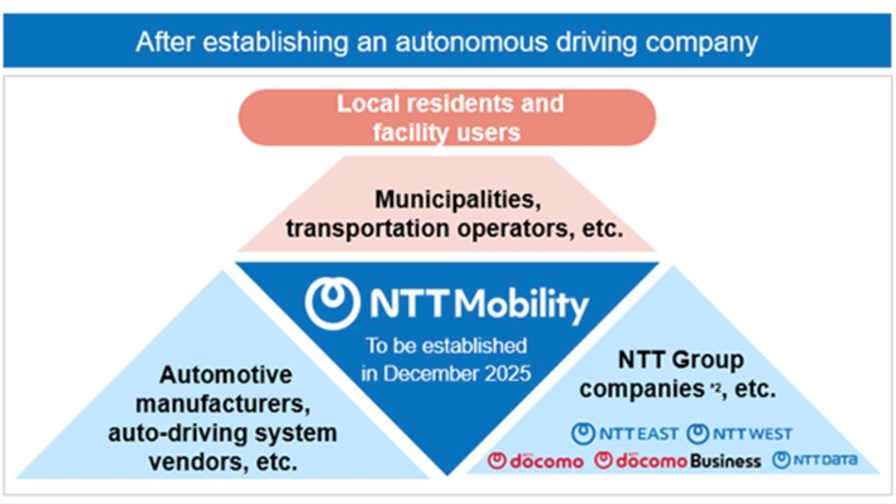
Giant Japanese telco NTT Group is bringing all of its self-driving vehicle expertise under one roof with the formation of a new subsidiary, NTT Mobility, which will begin operations in mid-December.
The telco notes its various existing business units, including its mobile operation NTT Docomo and its enterprise services operation, now called NTT Docomo Business, have been working on various aspects of the driverless vehicle ecosystem for some years. They have already undertaken 35 autonomous driving projects nationwide, leveraging their expertise in “high-speed, highly reliable communication network services”, building on “deep local relationships nationwide” and “collaborating with stakeholders on numerous demonstrations”. For example, NTT Group and Toyota last year unveiled a joint initiative in the field of mobility and AI/telecom to advance autonomous driving innovation and create an ecosystem that can support “a society with zero traffic accidents”.
But with the Japanese government now working towards the implementation of autonomous driving zones in about 50 locations by the end of the current fiscal year (31 March 2026) and in more than 100 locations by early 2028, and with momentum growing as more and more autonomous driving demonstrations take place in Japan, NTT wants to ensure it’s in the driving seat (so to speak) when the market moves beyond demonstrations and starts to achieve scale, especially when it comes to supporting autonomous public transport systems.
To position itself in the optimum way, NTT Mobility will aim to “provide a one-stop service that comprehensively supports the introduction and operation of autonomous-driving services nationwide,” and that means not only offering various autonomous vehicles but also the platform that can deliver software updates to the autonomous driving system as well as, according to NTT, “on-site response and repairs in case of malfunctions” (a phrase that might not encourage early adopters). “With NTT Group companies serving as the point of contact, we provide a one-stop service enabling transportation operators and other service providers to utilise autonomous driving services,” NTT added.
In addition, by “leveraging the NTT Group’s strengths in communication network services and other areas, we will develop solutions and related services that address the requirements and challenges demanded by Level 4 autonomous driving” (which enables self-driving vehicles in limited areas).
NTT Mobility will focus on three main areas: The provision of autonomous vehicles and associated management services (such as the procurement and provision of autonomous vehicles, vehicle maintenance and servicing and vehicle management, including emergency dispatch); supporting the development of autonomous driving zones and the development of associated operation support services (including the establishment of Level 4 autonomous driving zones, the creation of associated maps, and operational support, such as the development and implementation of training programmes); and the development and construction of remote monitoring systems and services.
The new subsidiary will also “advance AI initiatives for crew operations required in regional public transportation, working toward the realisation of Level 4 autonomous driving with remote monitoring” by collaborating closely with municipalities and transportation operators. This will be a particularly major challenge as the “required transportation service formats and technical requirements – such as fixed-schedule/fixed-route buses, on-demand buses, and taxis – vary significantly by region,” the operator noted.

While the opportunity to be a linchpin in Japan’s autonomous vehicle ecosystem is clearly appealing to the operator, NTT concedes there are multiple challenges to be addressed before autonomous driving becomes a reality in Japan. These include “establishing a system for providing safe and secure autonomous vehicles, achieving nationwide and standardised operations, and developing infrastructure adapted to the Japanese road environment,” the operator noted.
“The creation of NTT Mobility “will accelerate collaboration with diverse stakeholders, aiming to achieve a safe, secure, and sustainable autonomous driving society,” it added.
The operator expects NTT Mobility to be providing autonomous driving services by April 2027.
- Ray Le Maistre, Editorial Director, TelecomTV
Email Newsletters
Sign up to receive TelecomTV's top news and videos, plus exclusive subscriber-only content direct to your inbox.