To embed our video on your website copy and paste the code below:
<iframe src="https://www.youtube.com/embed/2bktIehhv6g?modestbranding=1&rel=0" width="970" height="546" frameborder="0" scrolling="auto" allowfullscreen></iframe>
By Vivek Chadha, Chief Growth and Marketing Officer, Rakuten Symphony
“AI-powered productivity gains for cost reduction are important, but they have to ultimately translate into better outcomes for customers, increased market share and revenue uplift.”
AI is rolling out in telco operations globally. What makes or breaks these deployments won’t always hinge on whether the tech capabilities are sound and producing a desired result.
Failed AI projects often trace all the way back to those initial discussions around who within the organization owns the project and how it is being measured from a cost perspective.
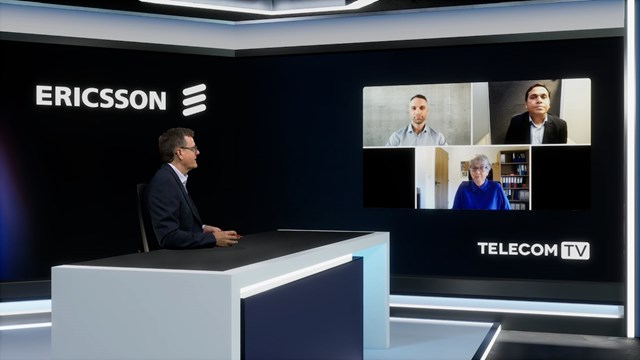
This was the theme of a recent Telecom TV discussion I was invited to join. Here are the top four takeaways I shared that every telco should keep in mind when it comes time to invest in AI.
You must name an owner and they’ll need support
Who owns the title of the job matters less than knowing there is one person or group responsible for driving all AI activities across the enterprise.
Every few weeks, something significant happens in AI. If ownership is assigned to multiple individuals or groups within the organization, no one can be held accountable. But one person cannot carry this burden alone. A shared mandate from the board and C-suite is required for AI to move beyond departmental initiatives and produce results.
McKinsey's Global Survey on AI found that CEO oversight of AI governance was one of the factors most closely linked to bottom-line impact from gen AI. At the end of the day, those responsible for the budget, personnel and processes must also be responsible for the business outcome. A centralized team can build or deliver the capability but the actual value creation will occur within the business units using the capability on a daily basis.
Speak the board’s language to secure buy-in
Board and C-suite commitment ensures that AI gets required resources and support and does not get stuck within departmental silos. This means elevating the discussion.
Boards aren’t concerned with specific AI models or which AI agents will be deployed. They want to have an ROI-focused financial discussion. Unsurprisingly, many AI business cases fail when this critical step is skipped.
It's a well-known gap as Gartner has predicted that over 40% of agentic AI projects will be canceled by the end of 2027, citing escalating costs, unclear business value or inadequate risk controls. With clarity from the outset, this failure rate can be reduced.
Leaders should separate what they are confident will work in production versus what they are still testing. This makes cost savings easier to identify since there is a clear before and after, whereas attributing revenue growth to AI investments is considerably more difficult.
Some evidence of success is beginning to emerge. Companies like Orange have reported that they aim to achieve €600m in value from AI across their business by 2028, while others, such as Verizon, have linked a rise in customer service sales by approx 40% to AI. Rakuten Mobile also estimated an improvement of 20% in RAN energy consumption.
Look beyond the obvious ROI
An interesting phenomenon is occurring in some AI rollouts: though certain metrics may move in the right direction, the targeted issue persists.
While there is nothing inherently wrong with AI transformations focused primarily on improving productivity or cost, when they are the sole focus, there is a chance the overall transformation misses the mark.
Initial revenue-related experiments typically require sufficient flexibility to operate independently. Committing to a business case too early in the process can create lock-ins that inhibit further experimentation. Similarly, there needs to be a willingness among telcos and vendors to collaborate around joint risk-reward sharing (through revenue share or outcome-based models) rather than simply competing.
Ultimately, a successful AI-enabled transformation should also move the needle when it comes to outcomes like improved customer experiences, increased market share and new revenue streams.
Decision room dynamics are changing
We now spend relatively little time evangelizing AI. When we engage in discussions related to a specific use-case, the decision-making authority rests with the domain-owners. When we're discussing transforming an entire agenda – say, an autonomous network end-to-end – we're likely looking at an executive meeting. They look at two things predominantly: how this will improve productivity and speed; and how they can govern and extend these capabilities without becoming reliant on any one vendor.
The same level of pragmatism is evident in model selection. Operators are partnering with hyperscalers and running hybrid deployments and asking which use cases really need the biggest model. We are seeing a strong demand for telco-trained small language models that are specifically designed for domain use cases especially when it comes to network automation.
Who really owns AI in a telco? Who ultimately "owns" the transformation of AI, and the possibility of developing a business case that will hold up in a boardroom setting demands attention in every organization pursuing breakthrough initiatives.
To take a deeper dive into this important discussion area, please check out the replay of Telecom TV’s AI-Native Telco Forum, where I was joined by Karim Kotobi, Senior Manager, Digital Product and Transformation, Vodafone, Abir Hossain, Vice President, Technology Strategy & Operations Development, Elisa, Pascal Prot, CEO, Legos (Local Exchange Global Operation Services), Selenga Akiner, EMEA Regional Partner Manager, Telecom Systems Business, Dell Technologies, and Ari Banerjee, Chief Strategy Officer, Netcracker Technology.