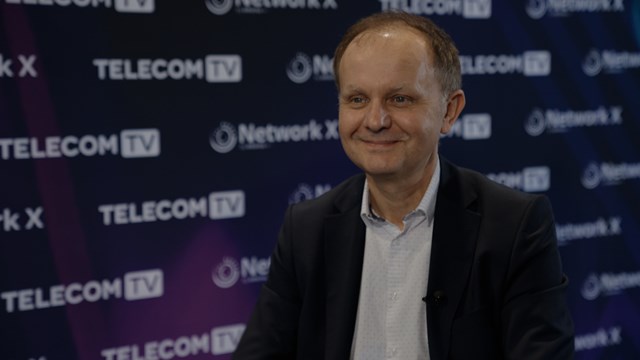
Verizon CEO Dan Schulman.
- Verizon unveils $2bn AWS AI deal amid strong Q3 financial results
- O2 and Nokia team up for UK AI-RAN trial
- Tata Communications to build $450m Indian AI backbone
In today’s industry news roundup: Verizon signs a $2bn deal to provide AWS with AI dark fibre as it posts better-than-expected Q3 results; O2 and Nokia trial AI-RAN at London’s Paddington station; Tata Communications is to plough $450m into a fibre network connecting datacentre hubs in India; and much more!
Verizon has reported gains of 406,000 monthly bill-paying wireless subscribers – nearly double analyst estimates – prompting the US operator to raise its full year expectations to 1.2 million postpaid subscribers, up from earlier estimates of between 750,000 and 1 million, as part of its Q3 financial results. Net income rose 5.2% to $5.3bn, which the US company attributed to a “sharp focus” on operational efficiency. Total operating revenue stood at $34.3bn, up 1.5%, while Verizon has thus far kept to its plan to spend between $16bn and $16.5bn on its network and other assets this year. In its Mobility and Broadband segment, service revenue growth of 2.9% was offset by a 9% drop in equipment sales, due primarily to “significantly lower upgrade volumes” as customers are keeping devices for longer periods. Service revenue in that division reached $23.5bn, up 2.9% year on year. Verizon now maintains 17.4 million total broadband connections, with more than half of new fibre customers opting for 1-gigabit-plus download speeds. “Verizon delivered another record-breaking quarter. One year into our transformation, Verizon is fundamentally stronger – operationally, financially and competitively,” said Dan Schulman, Verizon CEO. “By prioritising customer-first offerings, like Simplicity and our expanded loyalty programme, over heavy subsidies, we are winning loyal, high-value customers while expanding margins, reducing churn and generating strong sustained cash flow.”
Sticking with Verizon… during its investor earnings call, Schulman revealed the company had signed an AI infrastructure deal with Amazon Web Services (AWS) worth more than $2bn. The agreement will see Verizon supply AWS with dark fibre infrastructure to meet AI workload demand. It builds on an existing strategic partnership between the two and mirrors a dark fibre deal that the US operator announced with Google earlier this year. Schulman said: “Technology leaders are choosing our fibre network to power the next generation of AI infrastructure. We are continuing to raise the bar and we are only one year into a multi-year growth story." He also explained that Verizon has an “active pipeline of additional hyperscalers, neocloud providers and large enterprise clients who are in negotiations to have us supply them with either dark or lit fibre connectivity”.
UK mobile operator O2 has partnered with Nokia to deploy what its claims is the country’s first live trial of AI-RAN. The operator – which is part of Virgin Media O2 – deployed the technology at one of its so-called ‘Giga Sites’ in London Paddington to demonstrate how artificial intelligence can improve 5G network efficiency in a live environment. Paddington is one of the UK’s busiest transport hubs, with the rail station seeing on average some 191,499 passenger journeys every single day. It also brings unique challenges, such as major fluctuations in network traffic depending on the time of day. O2’s trial saw the AI-RAN boost spectral efficiency by 20%, enabling the site to carry more data using existing network capacity. Throughput was also improved and the network remained stable throughout consistent periods of high demand. Jeanie York, chief technology officer at O2, said: “Mobile data demand continues to grow, so we need smarter ways to make the most of the spectrum and infrastructure we already have. This live trial with Nokia showed how AI can improve network efficiency and help us respond more effectively to changing customer demand. By making better use of existing network resources, we can deliver a better experience for customers while supporting future traffic growth.” Nokia has been one of the major proponents of AI-RAN, but its efforts have accelerated since Nvidia, which is keen to see its technology deployed by mobile operators around the world as quickly as possible, pumped $1bn into Nokia in October last year. Just last week the AI tech giant announced an AI-RAN field trial with SoftBank in Japan.
Tata Communications has unveiled plans to invest around $450m to build a high-speed network connecting India’s AI datacentre corridors. The Indian-based telco will deploy around 10,000km of long-haul fibre cables across the country, with the buildout set to take place in three phases: Starting with the Mumbai-Pune-Chennai corridor, subsequent phases will expand connectivity into emerging east-coast and Western India datacentre hubs, such as Vizag, Bhubaneswar, Jamnagar and GIFT City. The new network will also link into Tata Communications’ existing network fabric, which includes more than 500,000km of subsea cables and 200,000km of terrestrial fibre. Ganesh Lakshminarayanan, MD and CEO of Tata Communications, said: “We are excited about the opportunity in the India datacentre-to-datacentre connectivity, which we believe could evolve into a market exceeding $1bn over the medium term. With our planned investments, we are building on our existing strengths to create one of the most comprehensive datacentre connectivity platforms in the market, positioning us to capture this significant growth opportunity.”
Simba Telecom is facing severe penalties and will potentially be stripped of its telecoms licence after Singapore’s regulator accused the country’s smallest mobile network operator (MNO) of improper spectrum usage. On Monday, the Infocomm Media Development Authority (IMDA) of Singapore issued a Show Cause Notice, sharing a detailed list of spectrum licence infractions, some of which the regulator claims may have been deliberate. The IMDA also published possible sanctions that could be imposed on Simba if it rules against the operator, including significant fines or even revocation of its operating licence, according to Channel News Asia. It is important to note that the probe – which was prompted when efforts by Simba’s parent company, Tuas, to buy rival M1 revealed potential misuse of spectrum last year – hasn’t yet reached a final ruling. The deal to buy M1 collapsed after standard regulatory investigations uncovered the alleged behaviour of Simba. The IMDA has challenged Simba to defend itself against the accusations, which involve alleged unauthorised spectrum use, breaches of telecommunications regulations and concerns about the company’s governance and compliance practices.
– The staff, TelecomTV
Email Newsletters
Sign up to receive TelecomTV's top news and videos, plus exclusive subscriber-only content direct to your inbox.