- Mavenir and Red Hat unveil Integrated AI Platform
- GSMA analyses mobile’s impact in Africa
- TM Forum tackles AI-native telco strategies
In today’s industry news roundup: Mavenir and Red Hat collaborate on the development of a new platform designed to help telcos monetise AI; the GSMA says mobile’s impact on Africa’s economy was valued at $240bn last year; the TM Forum addresses the problem of ‘fragmented AI deployments’; and much more!
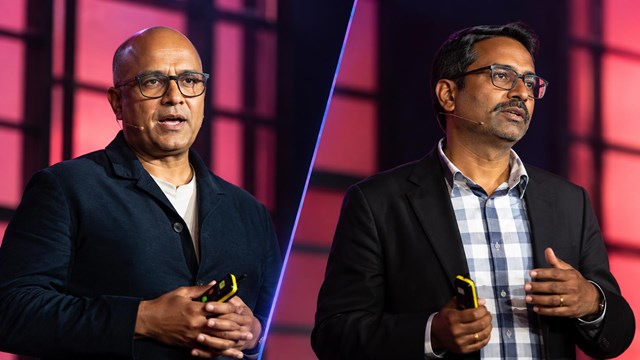
Mavenir and Red Hat have developed an Integrated AI Platform that, the partners say, “enables network operators to monetise AI the way they already monetise data; through token-based consumption plans, billed on the phone bill, with full control over pricing, service-level agreements (SLAs) and the models that power every interaction.” The jointly developed system will “operate across three models: Operator-branded AI services for their own subscribers; as the AI infrastructure layer powering operator AI grid deployments; and as a managed AI platform through which operators offer AI capabilities to enterprise customers on a token-based consumption basis,” noted Mavenir in this announcement. According to the telecom software developer, “token-based AI consumption, the unit model powering every large language model interaction, mirrors the mobile data billing paradigm operators have mastered for decades. Monthly AI token plans, per-department enterprise quotas, and SLA-backed tiers for operator-provided AI services represent a structurally new monetisation layer on top of existing connectivity.” It added: “To realise this opportunity, operators need production-grade AI infrastructure that controls sovereign on-premises compute, intelligent model routing, token-accurate metering, carrier-grade service assurance and billing integration. Critically, no single deployment model fits every use case. Routine use cases belong on operator-owned SLMs [small language models] for cost and sovereignty reasons. Complex reasoning tasks may warrant selective access to frontier models. Built in collaboration with Red Hat, Mavenir’s Integrated AI Platform supports both modes under a single policy and charging framework, giving operators a hybrid architecture that maximises economics without sacrificing capability where it matters most.” The move will be of interest to many in the telecom industry at a time when token-based plans are coming under scrutiny (not always with a positive outcome). Bejoy Pankajakshan, chief technology and strategy officer at Mavenir, stated: “Operators are watching AI revenues flow to hyperscalers and third-party platforms while they provide the connectivity that makes it all possible. This changes today. The Integrated AI Platform… gives operators the infrastructure to become AI service providers in their own right. Operators gain sovereign control over models and data, token-accurate monetisation that integrates with their existing BSS, and the service assurance to back their own managed AI services with contractual SLAs. Whether operators are launching subscriber AI services, building out their AI grid infrastructure, or offering AI capabilities to enterprise customers on a consumption basis, the platform provides the commercial and operational controls to do it at carrier scale. For the most demanding use cases, the platform also provides policy-governed access to frontier models, so operators are never constrained by what runs on-premises. This is built from the ground up for operator monetisation requirements.” Chris Wright, CTO and senior VP of global engineering at Red Hat, added: “In today’s AI-driven world, network operators now more than ever require high availability, data sovereignty and carrier-grade reliability to scale AI across millions of subscribers. Working with Mavenir, we’re delivering an integrated solution supported on the Kubernetes-native foundation powered by Red Hat AI, which brings MLOps [machine-learing operations], vLLM [virtual large-language model] inference and AgentOps [agent operation] capabilities. This hybrid architecture allows operators to run sovereign on-premises models for the bulk of their traffic and selectively connect to frontier models for tasks that require it, all through a single policy and billing framework. Together, we give operators a path from AI experimentation to AI monetisation without rebuilding their operations model.”
The mobile industry contributed more than $240bn to Africa’s economy in 2025, supporting approximately 13 million jobs and generating $45bn in public revenues, according to the GSMA’s Mobile Economy Africa 2026. The trade body’s report claims operators in Africa are increasingly focused on unlocking the full value of digital networks for consumers, businesses and governments by deploying services beyond the traditional scope of telcos, including AI, digital services such as payments, and network-related capabilities unlocked thanks to APIs. According to GSMA Intelligence research, some 79% of operators in Africa cited becoming a digital transformation partner as a primary enterprise objective. The research also found that the impact of mobile technologies is set to grow and, the GSMA predicts, will hit around $290bn by 2030. However, adoption remains a key challenge for the continent. While mobile broadband networks now cover the vast majority of the population, approximately 63% of Africans live within coverage but are not using mobile internet. By comparison, only 9% remain outside mobile broadband coverage.
Ahead of its annual DTW Ignite event in Copenhagen, the TM Forum is ramping up its PR engine… Having already tackled sovereign AI and satellite communications this week, the industry body has now turned its attention to AI-native telco strategies. According to the TMF its members are “set to introduce new AI-native extensions to the Open Digital Architecture (ODA), addressing the problem of fragmented AI deployments and starting to move the telecoms industry towards an AI-native future,” which includes the deployment of autonomous operations and networks. The forum hopes to align its members behind common goals and practices as, it notes, telcos “will not reach the next level of performance through fragmented AI pilots or standalone automation. The shift underpins the transition from selling connectivity to delivering assured outcomes – including performance, reliability and sovereignty – through increasingly autonomous operations. To do that, the industry needs a trusted, common foundation that is designed for control, governance and agility as AI scales.”
AT&T’s CFO, Pascal Desroches, is retiring at the end of this year and will be replaced by Jennifer Biry, who has been appointed as deputy CFO with effect from 6 July before taking over from Desroches at the start of next year, the operator announced in a filing with the Securities and Exchange Commission (SEC). Biry is the former CFO and chief operating officer of security tech giant McAfee.
As part of its efforts to support “national technology champions”, Orange has unveiled three new strategic levers that it claims will help young French companies scale up: Direct procurement, commercial distribution and solution integration. The French operator claims startups face a number of structural barriers that can limit their ability to scale up, including lengthy contracting processes, limited access to large corporate customers, a lack of commercial references and the complexity of scaling up. To combat this, the French telco used this week’s VivaTech to unveil a new action plan to support young enterprises. The plan involves three stages: Stepping up its direct procurement policy with French start-ups; using its own scale to help open doors for start-ups to both public- and private-sector markets; and accelerating the inclusion of French technologies in its B2B service catalogue.
Global IoT connectivity management specialist Aeris has struck a new deal with Japan’s KDDI, which has been using the platform now known as the Aeris IoT Accelerator since 2017. The underlying system, the IoT Accelerator and Connected Vehicle Cloud, was previously developed by Ericsson, but the Swedish giant offloaded the platform in 2023 to Aeris, which has been enhancing and expanding it since then. “The new contract demonstrates continued demand for Aeris’ IoT Accelerator platform, which manages 104 million IoT devices and 42 million connected vehicles globally,” noted Aeris. Sean Gowran, VP of sales in the APAC region for Aeris, stated: “The Aeris IoT Accelerator platform delivers Tier-1 infrastructure that supports global enterprise connectivity requirements. Our unified global platform enables simplified and secure large-scale IoT deployments, allowing multinational enterprise customers, including automotive OEMs, to innovate and scale during significant market growth phases without complexity. The Aeris IoT partner ecosystem and our agentic AI platform innovations continue to enhance our ability to deliver advanced connectivity services worldwide.” Earlier this year, Aeris struck an IoT Accelerator deal with Philippines operator Globe Telecom.
– The staff, TelecomTV
Email Newsletters
Sign up to receive TelecomTV's top news and videos, plus exclusive subscriber-only content direct to your inbox.