Vodafone is trialling its RoboRAN in Tirana, Albania.
- Vodafone is testing a mobile antenna deployment option that is ‘equipped with an AI brain and robotic arm’
- It has been dubbed internally as RoboRAN
- The operator is trialling the radio access network option in the Albanian capital of Tirana
- Speculation that Paul Verhoeven is interested in developing a RoboRAN script is being fabricated by fans of 1980s sci-fi movie satires
In 1987, Paul Verhoeven’s seminal sci-fi satire RoboCop hit the big screen, with its titular AI-enabled character spouting such memorable lines as “Come quietly or there will be... trouble.” Fast forward to 2026 and Vodafone Group has unveiled RoboRAN, which may not have quite the same audio-visual appeal but provides evidence that a combination of physical and algorithmic AI may be coming to a city near you soon (hopefully without a firearm).
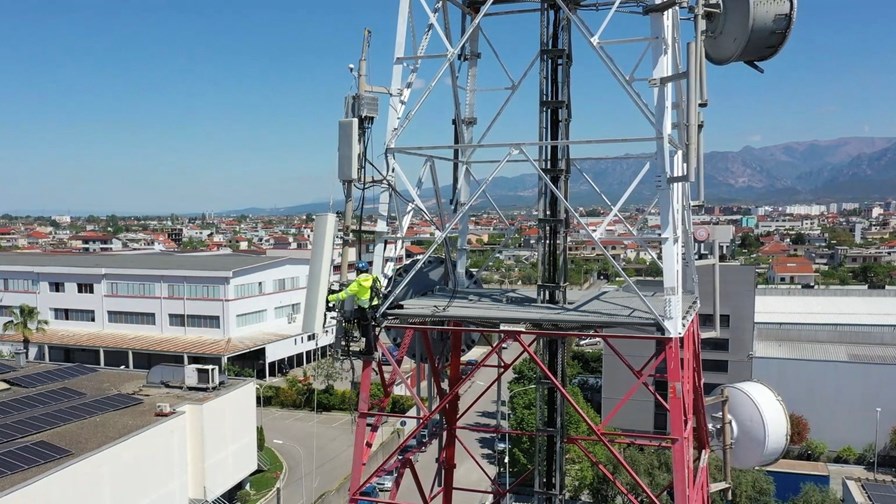
RoboRAN is a mobile antenna “equipped with an AI brain” (a Vodafone algorithm) and a robotic arm made by South Korean vendor Humax Networks that “autonomously analyses where customers need coverage most and automatically adjusts the radio antenna to improve the signal.”
According to Vodafone, which is testing RoboRAN in the Albanian capital of Tirana, “the self-thinking mast can evaluate demand and local conditions, including weather, to decide where to focus its strongest signal. On sunny days it can direct the signal outdoors, and when it rains, it focuses on providing deeper indoor coverage… [It can] rotate or tilt the radio antenna to optimise 4G/5G coverage and performance” and, importantly, “it continues to think, learn and adapt and can make decisions almost instantly without human intervention.”
The rotation isn’t as fast as a RoboCop ‘draw’, however. “During the day, the antenna serves shoppers; at night, it automatically shifts coverage to a nearby residential area, adding capacity when evening internet use rises. The process takes around 20 to 30 minutes. While the movement can technically be speeded up, the pace is designed to conserve energy and is still far faster than the days [it takes] for a manual change or the weeks required to add another antenna,” noted Vodafone.
Vodafone Group’s director of mobile access engineering, Paco Pignatelli, noted that “this is an early example of physical AI in telecoms. By analysing network demand and making autonomous decisions, the AI algorithm can adjust radio antennas to optimise coverage and capacity without human intervention. This enables us to deliver superior connectivity for our customers.”
The telco, which recently became a network operator partner of TelecomTV’s AI-Native Telco Accelerator (ANTA) initiative, noted that the trial is part of its “broader effort to integrate autonomous antenna control into its company-wide, open standards-based platform for automating radio access network (RAN) components. Internal teams and third-party developers can use the platform to create intelligent optimisation algorithms that enable antennas to become active, dynamic parts of an adaptive RAN.”
The operator added: “Antenna digitalisation, combined with AI-powered RAN automation, is a major step towards fully autonomous, self-adapting networks. By focusing on practical innovation, Vodafone is demonstrating technology leadership today while helping shape the networks of tomorrow.”
- Ray Le Maistre, Editorial Director, TelecomTV
Email Newsletters
Sign up to receive TelecomTV's top news and videos, plus exclusive subscriber-only content direct to your inbox.