Building the next-gen software governance model with open platforms, automation and AI

By James Pearce
Jul 16, 2026
To embed our video on your website copy and paste the code below:
<iframe src="https://www.youtube.com/embed/fJ7s8vJcVnA?modestbranding=1&rel=0" width="970" height="546" frameborder="0" scrolling="auto" allowfullscreen></iframe>
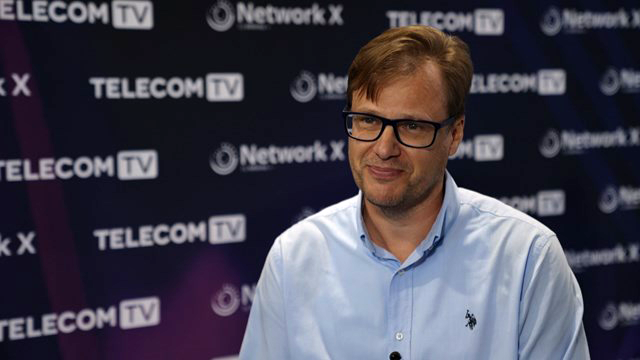
Welcome to TelecomTV. I'm James Pearce, and I'm in Copenhagen for DTW Ignite. We've got a wonderful panel for you today. I'm delighted to be joined by Elisabeth Schnappinger, who's Head of Software Asset Management of FinOps at Telefónica Deutschland; Ricardo Gulla, who's the Global Account Manager for Red Hat; and Upendra Dharmadhikary, who's Senior VP and Managing Partner Consulting at Tech Mahindra. Thank you all for joining me today. Let's dive straight in. Elisabeth, telecom operators today are managing an increasingly complex software landscape driven by SaaS adoption, multi-cloud environments, and of course, rapidly evolving digital services. From Telefónica Deutschland's perspective, how is this growing complexity changing the way you think about software governance, lifecycle management, or even enterprise-wide technology strategy? And what role do intelligent automation and data-driven decision-making play in this?
Elisabeth Schnappinger, Telefónica Deutschland (01:02):
So, at Telefónica Deutschland, we see these changes in the software world and also in the complexer ecosystems, not only as a challenge or as a problem, but we see it as an opportunity for change, a real change in our minds, in our necessity, what we will work in the future on. And of course, we need to have new governance models to really keep these new models running, to control it, and to get the best and cost-efficient world out of it.
James Pearce, TelecomTV (01:36):
Upendra, if I come onto you, Tech Mahindra's SAMgen solution, which I think you've talked about with us before, introduces an AI-enabled approach to software asset management. It moves beyond traditional licence tracking towards predictive and automated governance. How does SAMgen help enterprises like Telefónica Deutschland transition into this new operating model? And what are the key advantages of embedding AI and automation into software lifecycle management?
Upendra Dharmadhikary, Tech Mahindra (02:04):
Thanks, James. It's very important that colleagues from Telefónica, Elisabeth, thank you. What they're looking at from SAMgen opportunity is to address all of the issues we face while we are doing it manually, where we are tracking data from various OEM vendors and be able to manage the licences through its lifecycle from discovery to reporting and then optimisation, of course. But AI-enabled platform and the solution which we have put together is enabling the data discovery and improvement, more AI to come here as we move forward. But the opportunity is to reduce the manual effort, of course, making the real-time decisions going forward and moving from reactive to predictive means that you need models which will help you to see how the OEM landscape and licensing is changing. And to address that, this solution provides you capability to see what's happening, the visibility, and be able to predict what's going to be the new licence costs, for example, or also the changes in OEM optimisation of the different topics with especially looking at open source.
(03:11):
Of course, adoption of all of this is very important, and working with business colleagues and customers will be very important. Like with Elisabeth in Telefónica Deutschland, we see the opportunity to work together to make that change happen.
James Pearce, TelecomTV (03:25):
That's really, really interesting. So modern enterprises are increasingly relying on open platforms, which obviously is one of Red Hat's specialities, and ecosystems to manage complexity and enable agility. How do open source technologies and intelligent platforms support AI-driven software governance models such as SAMgen, which we just mentioned, and how does this ecosystem collaboration help enterprises move towards more autonomous and data-driven operations? Ricardo, maybe you can start.
Ricardo Gulla, Red Hat (03:53):
Thank you, James. Indeed, the open source will be the engine of these new platforms because as you have nowadays, the AI and all the platforms and software being AI driven, you need to get the best of breed of the technologies, and the community is the best way to innovate and to bring the best software to the customers. So this is where Red Hat can support our customer like Telefónica and Tech Mahindra. But what Red Hat brings to the customer is the supportability, the security, the lifecycle management that is so important to the customers. Anyone can deploy the community software, but to be reliable, need to count on a company like Red Hat to support it. And not only the technology, as you said and mentioned very well, it's important to have the ecosystem and the partnership because you need to rely on partners like Tech Mahindra that has great capabilities to bring innovation on top of the software and Telefónica that has a visionary strategy to deploy it and to put everything together to make it a reality.
James Pearce, TelecomTV (04:55):
So one of the key outcomes of this transformation is improved governance, operational agility, and better alignment between technology and business outcomes. Elisabeth, what tangible improvements is Telefónica expecting from an AI-enabled software governance model? But also, how does this impact decision-making and business efficiency?
Elisabeth Schnappinger, Telefónica Deutschland (05:15):
So from the AI part, we really expect to be more at the forefront, let me call it like this, of every decision, of every new product, what we have in the market, and of getting all the best out of it. In the past, we had to take decisions often on not valid data, on out fashioned data, too late. And now we expect really to be more or less on a predictive way, on a proactive way to cover the needs of our company and to do that in real time is also key for the future with open platforms and together with products like the OpenShift platform for Red Hat and also together with Tech Mahindra, because also in our company, we do not expect that we can cover everything on our own. So we need successful and reliable partners on our side really to move forward in the AI transformation.
(06:16):
And I think especially from the company perspective, the SAM topic was really shifted from, in the past, more or less an administrative work with looking at numbers, looking at how many licences do you need, to a really department who can steer the strategy of a company. And that together with using open platforms, using also open source and community reasons, what is a very good and a profitable point for us, because collaboration and also communication to really share knowledge, to know about what others are doing, not to make the same failure as other companies. And AI gives you more or less the opportunity to find out who has the same problems. And we can also see it now here on the DTW Ignite Forum that we all talk about more or less about the same problems in the history. And there moving forward, getting the right data, getting the right partners in-house, be cost efficient and really to work in a future operating model is key for us.
James Pearce, TelecomTV (07:22):
Sounds like that collaborative open model is really, really important. So as enterprises increasingly adopt AI and automation across IT operations, software governance itself is evolving into a more predictive intelligence driven discipline. What does the future of software asset management look like in an AI driven enterprise, and how can telecom operators use these capabilities to create competitive advantage? Upendra, do you want to start?
Upendra Dharmadhikary, Tech Mahindra (07:50):
SAMgen, for example, and working with Red Hat with the open platform, the capability and the opportunity is there to look at self-optimising era. And this self-optimising era really enabled by AI is based on ecosystem which provides the data on what's the licence usage there. And the models for licences will change with AI because the usage is not going to be user based alone. And there are new models which are like tokens or with what comes with the AI usage across service. Businesses interested in service and they're not interested in the backend licence regime, let's say. And that needs to shift. The opportunity for us is to come together and thanks for putting the focus here from Telefónica, Elisabeth. What we are doing with Red Hat is quite important to see that we drive the future where self-optimising is real. It will need to be worked through because data is quite important and accuracy of these models is absolutely critical from a trust perspective. So we address that together.
James Pearce, TelecomTV (09:02):
Elisabeth, do you have anything to add from that from an operator point of view?
Elisabeth Schnappinger, Telefónica Deutschland (09:05):
I just want to bring back to mind, I think also what Upendra says, licence modelling in the future or also licence usage will not be driven by customer or by persons. It will driven by on demand licence usage. So it will be much more be on point on the real time. And also what we have with Red Hat, we have an open source platform. And I think that is one of the key messages. It can be reliable. It can be also for companies with a high secure topic. Be relevant to go on open source platforms like Red Hat to have a strong community behind which support you and which bring you to the next level also for the AI topics. We will have a lot of data in the future, much more than we had now, and we have to handle it. And of course, I think therefore, and also from the SAMgen perspective to come back on this point, we need a governance to steer exactly that. And that is very important.
(10:05):
And what we do also with Tech Mahindra together is really to put focus on the most important and necessary topics to talk about with suppliers like Red Hat about future, about our needs and our growth path in the future. And really to get rid of the other smaller topics. You had to have them, because you need it, but there is no way of going forward, with this. And you have to focus on strategic partnerships like we have with Red Hat, like we have with Tech Mahindra to grow together.
Upendra Dharmadhikary, Tech Mahindra (10:36):
And what I would like to add, James, is that it's important that we are looking at the value that business is getting. So the value is business agility to be able to adopt and absorb new software vendors who will be, say AI vendors let's say. And this will come in different shapes from business, from technology teams and from our ecosystem partners. And with the marketplace, it's a good idea to curate all of that innovation together. But of course, we will change from can we reduce software spend today and can we replace this software with that software? It becomes real time, almost like on the spot decision with robust data points to make that decision happen.
Ricardo Gulla, Red Hat (11:18):
And that with all this point that my colleagues bring here and talking about the new data, the amount of data that we're going to have, the agility that you need to take the decisions, it's important to think since the beginning in the automation. Not in the automation as to deploy a new site, this everyone knows how to do, but on an automation platform that you can centralise all the decisions and know how to handle this amount of AI decisions, the business driving decisions that we have nowadays that is much more dynamic. The new service that you want to put in the platform, if you have a centralised automation platform, you can use this to take the decisions and be really fast on deploying it and reducing the cost. This is much needed for any operator.
Elisabeth Schnappinger, Telefónica Deutschland (12:03):
And let me add one point to that, because as a telecommunication provider, it is all about the customer, and it is all about the business behind. So our value must be, and our decision must be driven by what is value for our customers. And therefore, I think we are on the right way.
James Pearce, TelecomTV (12:21):
That's great to hear. It's such a brilliant collaboration. So just to wrap up, I'd like to maybe look ahead a little bit. How do you guys see AI, automation, and open ecosystems shaping the next generation of enterprise software governance and telecom transformation? More specifically, what's going to define success for the industry in this phase of the journey? Ricardo, do you want to go first?
Ricardo Gulla, Red Hat (12:45):
Sure. So they have to work together. I see the automation as the backbone of any deployment. Normally, when you say about the platform, you don't say the automation platform, you say about the OpenShift Virtualisation, OpenShift network. But if you don't have this backbone of the automation, the thing does not work as it should be, as we plan it to work. And to bring this value of the platforms, to enable the customer, as Elisabeth said, in the end, what matters is the end customer of Telefónica. So to increase the customer satisfaction or to be able to have a better go to market, you need to build a strong platform with AI, no doubt, because it's bringing a new reality to any platform and to any operators. But building this with this automation backbone, so then we can be reliable in bringing value to the end customers.
Upendra Dharmadhikary, Tech Mahindra (13:42):
A lot of time today is spent in finding what happened and seeing that, okay, what was the usage and things like that. So SAM governance today is a little bit more reactive than from the digital point of view, some automation has been done. But in the future, kind of looking ahead, say 2030 and beyond, so it's like a roadmap. And with Elisabeth, this is what we discussed. So what's the future? And the future is that there's a lot of AI embedded for the entire life cycle of software governance, software asset management governance. It's a mix of software, hardware, and the AI chips, whichever way you put them in soft and hard. And SAM governance is a lot of it self-organising, but we need four eyes principle, as we always say in Germany. We need the four eyes. So there is a human in the loop. And even in the future, there'll be a human in the loop in that governance model.
(14:40):
The role that governance would play from a human perspective will change significantly because a lot of time that is being spent today will be focused tomorrow in value add for the end customer. And that value add would be on time to market, responding to requests or changes from the customers, looking for options. If there's another open source solution available, what's the cost of migrating and switching? And can this be done quite seamlessly so that there is no end customer disruption, per se? So quite a lot of opportunity here. Elisabeth.
Elisabeth Schnappinger, Telefónica Deutschland (15:13):
I think if you let me add one thing what is for me the key for the future. I think we are living in a such complex world with such complex platforms on every side. We get massive data in the future, and it is about bringing exactly this complexity back to clarity to get the right decisions for the right places for the right software. It's not only for software in my eyes, but for all of it. But to get the right software with the right value behind, to get the right platform to really being able to do that, because I think that is one of the mass of data we will have in the future to take a decision will really make our life harder than it is now. Of course, we are happy to have the data, what we do not have in the past, and we can now decide on really the real time. But it will be much more difficult to put this complexity back to a clarity. And that is, for me, the key for the future.
Upendra Dharmadhikary, Tech Mahindra (16:13):
The decisions, like you said, the complex model that will be there because we have hybrid platforms and open platforms and all types of clouds and all type of AI, multi-AI, multi-cloud platforms. I think it'll be key that probably quantum also plays a role in future. And the use cases are in the testing phase in terms of trying to show the value, but it is to be production grade ready so that we can totally rely, and it's done much faster.
Elisabeth Schnappinger, Telefónica Deutschland (16:40):
And at the end, it's all about the customer. So we had to really get value out of it.
Upendra Dharmadhikary, Tech Mahindra (16:44):
Absolutely.
Elisabeth Schnappinger, Telefónica Deutschland (16:45):
Because, on the other hand, we cannot live without it.
James Pearce, TelecomTV (16:48):
It's always all about the customer, but I love that bringing complexity back to clarity. That sums it up really well. Thank you so much for joining me today, guys, on TelecomTV. This was really fascinating. Thank you.
Elisabeth Schnappinger, Telefónica Deutschland (16:58):
Thank you.
Please note that video transcripts are provided for reference only – content may vary from the published video or contain inaccuracies.
Panel discussion
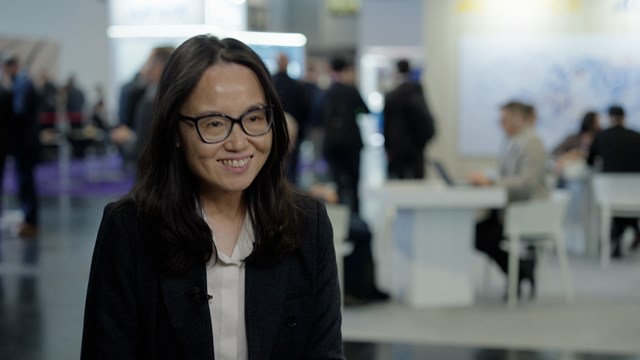
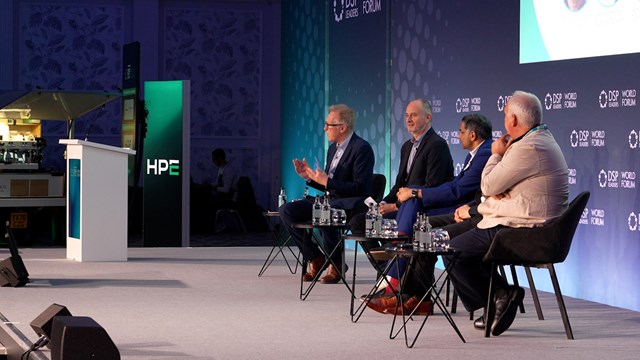
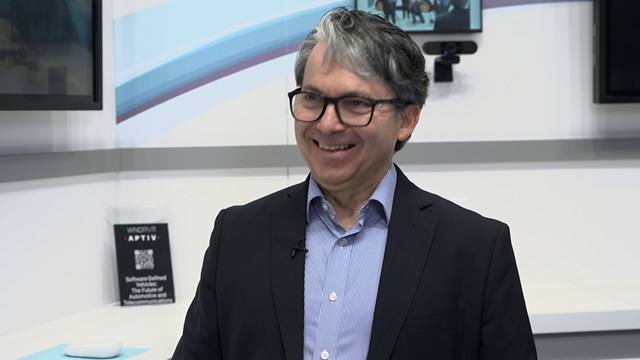
At DTW Ignite in Copenhagen, Red Hat’s Ricardo Gulla, Telefónica Deutschland’s Elisabeth Schnappinger and Tech Mahindra’s Upendra Dharmadhikary examine how AI and automation are reshaping software asset management from an administrative, licence-counting function to a strategic discipline. They also discuss predictive modelling, the reliability and security of open source, the shift toward on-demand, AI-driven consumption licensing – and why human oversight will remain essential.
Featuring:
- Elisabeth Schnappinger, Head of Software Asset Management and FinOps, Telefónica Deutschland
- Ricardo Gulla, Global Account Executive, Red Hat
- Upendra Dharmadhikary, Senior Vice President & Managing Partner of Consulting, Tech Mahindra
Recorded June 2026
Email Newsletters
Sign up to receive TelecomTV's top news and videos, plus exclusive subscriber-only content direct to your inbox.