To embed our video on your website copy and paste the code below:
<iframe src="https://www.youtube.com/embed/sNeiMcmIgGA?modestbranding=1&rel=0" width="970" height="546" frameborder="0" scrolling="auto" allowfullscreen></iframe>
Ray Le Maistre, TelecomTV (00:06):
Digital transformation is a term that has been used for years already, but it's still relevant to every industry vertical, including telecom as virtualisation, cloud and AI developments impact everyday operations. To discuss some of the ways in which the telecom sector is changing, I'm talking today with Yariv Geller, who is the co-founder and CEO of vHive. Yariv, thanks so much for joining us today. So in very simple terms, what does vHive do? What is it offering to its potential customers?
Yariv Geller, vHive (00:40):
Sure, and thanks for having me, Ray. Simply put, vHive is transforming how telecom operators and TowerCos manage, scale, and monetise their physical infrastructure. vHive is an enterprise software company, and what we do is we provide an end-to-end AI-powered platform for building and managing digital twins of cell sites. We essentially turn physical tower portfolios into actionable digital intelligence. But what that really means in practice is that instead of sending technicians on slow, high-risk tower climbs to bring sparse information from the field, our software orchestrates autonomous drones, 360 cameras, users' iPhones, and we use that to capture site data in minutes rather than in hours, days, and weeks. And then our platform processes that data using AI to generate accurate 3D digital twins and automated analytics of each site and also of the entire portfolio as a whole. So that's in a nutshell what vHive is about.
Ray Le Maistre, TelecomTV (01:59):
Now, why is this relevant to the telecom sector right now?
Yariv Geller, vHive (02:04):
Telcos across the board, they suffer from poor field data. And to be broader, it's not just telcos. Any large infrastructure provider that has distributed assets across vast areas, they live on data from the field in order to make their ongoing operational decisions. And when I say that they suffer from poor data, I mean that mostly it's dated, so it's expired in terms of time. It's inaccurate in many cases, and it's in almost all places un-uniform because data is coming from a lot of different sources in different formats and it's just very difficult to digest and use. So very quickly, data in systems starts diverging from reality in the field, and it's becoming less and less useful in terms of making decisions. It leads to inefficient processes and workflows, and it basically creates a lot of mistakes, delays, and overall inefficiency and waste. Our technology really solves a variety of different critical challenges across the entire lifecycle of assets.
(03:25):
And the lifecycle starts with the planning phase of how do I plan my sites? How do I build my sites? And how do I maintain them? And I think there are some prevalent use cases that we've seen across the industry in a lot of different places looking at accelerating rollouts. So whether it's a network expansion, an equipment upgrade, 5G deployment, we make all of these happen significantly faster because operations and engineering teams, they have immediate and accurate data, and they don't need to rely on old information that leads to mistakes or waiting for manual field reports to come in. And those reports are also frequently suffering from human error and inaccuracies themselves. So the ability to take a variety of different pieces out of the rollout workflow and replace them with automated digital workflows and components is really vastly accelerating these processes. Then another very common and frequent use case is revenue assurance.
(04:44):
So TowerCos like Phoenix Towers and SBA, as well as telcos, telecom operators like Verizon, they want complete transparency into co-located assets and tenants' equipment. And this ensures that billing is accurate and disputes can be avoided. And we're seeing some really cool collaborations across the ecosystem. For example, as customers, we have Verizon on the MNO side and Vertical Bridge on the TowerCo side, and their ability to use a single source of data that is trustworthy enables them to just work more efficiently. And then I would say that one of the most prevalent use cases or drivers is really cost reduction and efficiency. So we really dramatically reduce unnecessary truck rolls and manual design work and drafting. And beyond that, we're just eliminating waste that's related to poor data. Imagine a team going to the field, going to a site and discovering, "Hey, that's not what we expected to find because we looked at drawings and they said something else." So the ability to clean that up helps telcos get things done right on the first attempt.
(06:14):
And all of these just bring overall OpEx down, which is so critical to telcos these days. So just ultimately we enable telcos to bridge this gap between their field operations and their digital strategy by just giving them visibility and control over the entire portfolio at scale all the way from the portfolio level down to a single piece of equipment on a site.
Ray Le Maistre, TelecomTV (06:44):
And Yariv, can you tell us a little bit about who would actually own the data and own the digital twin model?
Yariv Geller, vHive (06:52):
Right. I think it's kind of interesting because as I mentioned, we are seeing digital twins becoming across-ecosystem value. Having a single source of truth that serves both TowerCos, MNOs, general contractors, AEC companies, and so on. There's a question of who should really own the data, who should be digitising. The short answer is that it depends on the market. We see some collaborative markets where companies are actually sharing data between them and there are TowerCos that are capturing data and maybe selling data products to their MNO customers. We're seeing some other markets where customers are seeing data as part of their competitive advantage. The ability to use data and analytics to leverage it to make faster decisions, smarter decisions, be more effective in the field, gives them a leg up on their competition. And in those markets, we're seeing customers actually wanting to own the data, so it's theirs and not necessarily shared across the industry.
(08:11):
So I think there are multiple flavours across the industry. But I think what I'd say in the end is that having digital workflows and digitisation in the end is a competitive advantage and it has also different compelling reasons to digitise. And these triggers can vary from company to company. So for example, a mobile network operator might want to digitise sites in order to roll out new 5G equipment. The TowerCo might want to digitise in order to monitor equipment on a site, and these might happen in different points in time. So I think what we see digitisation is something that's ongoing by different parties at different trigger points where in some markets the data will be shared. In some markets it'll be guarded as a competitive advantage.
Ray Le Maistre, TelecomTV (09:15):
Can you just explain then in more detail how the vHive platform works? Because accurate and real-time data is something that all the operators are looking for. So how are you able to deliver this in a way that hasn't been possible up to now?
Yariv Geller, vHive (09:33):
So the vHive platform really operates as an end-to-end cloud software solution, and it's structured around three seamless pillars, the capture stage, the analyse stage, and the integration stage. And we start with the field layer, which is what we refer to frequently as autonomous capture. In the field, we orchestrate a variety of different data capture vehicles. It can be the autonomous use of drones, the use of 360 cameras or phones. And we have developed a variety of different technologies, including a patented auto-discovery technology that really enables a user to easily conduct a site survey by following a guided workflow on a mobile app. So the entire process is very seamless. It takes 30 to 60 minutes where the software guides the user in the field on basically either pressing a button and having a drone take off completely by itself and capture data, or it guides the user where to snap photos or walk around with a 360 camera.
(10:54):
So it's a very user-friendly workflow. Now that leads us to the second layer, which is our intelligence layer.
(11:06):
It starts from creating a digital twin from the data and adds AI analytics on top of that. So once captured, the data automatically gets processed in the system and it is analysed to create different analytical data products as we refer to them. We generate first a digital twin, which is a 3D visual representation of the site, but moreover, it has a full understanding of all of the components of a site. Antennas, microwave dishes, amplifiers, every single component gets identified and segmented, and we have a deep understanding of its relationship to other components in the site. Of course, its dimensions and orientation and so on. We then have the ability based on that to understand the inventory of the site because we are basically breaking down a site to all of its different components, and we can use that for asset verification. So for example, we were amazed to learn early, early on in the process of developing our product that companies, whether it's TowerCos or sometimes even MNOs, have a poor understanding of what equipment is actually on their sites.
(12:30):
And we're finding these discrepancies and helping synchronise databases to what's really out there in the field. We do build verification. So the system actually analyses the as-planned state of the site versus the as-built state of the site. And we can point to discrepancies after work has been done on site. We can point to things that were installed incorrectly that are not maximising coverage and output and ultimately delivering poor customer experience. We also look at the health of the site, its condition so we can help maintain it. We help customers co-locate on the site by identifying where is their empty space where they can add new equipment. And we actually also generate from the data BIM models that help simulate. You can move things around on a tower and simulate an end state that you're trying to do. So all of these together are a growing set of analytics and AI capabilities that would really be impossible to do otherwise without sending people to the field, spending hours on generating models, spending hours on simulating things.
(13:54):
And this is all done automatically quickly and accurately.
(14:00):
We also cover in our data anything from the tower to the compound, to the access road, the shelters, the cabinets, all the way down to the rack level. So the solution is very, very holistic in data that gets captured and analysed to create this very, very complete digital twin. And perhaps the last pillar, which is the operational layer or the integration layer where we integrate with other enterprise systems. So really digital twins are only useful if organisations can act on them. And we've seen time and again companies that say, "Ah, we have a 3D model, which is not even a digital twin. And yeah, it sits there and we're not really sure what to do with it. But if we integrate all of these analytical outputs into our customers using our partner API, we can feed structured data directly into MNOs and TowerCos' existing asset management systems, CAD/BIM engineering tools, and billing platforms.
(15:19):
And this creates a single source of truth across the enterprise where everybody's feeding from a source of data that really reflects the field and is not diverging from reality. And this allows the engineering teams, the operation team, finance, M&A teams all to make quick and accurate decisions.
Ray Le Maistre, TelecomTV (15:43):
That's a lot of information and a lot of intelligence that these companies are gathering, but what exactly does this enable the mobile operators and other infrastructure operators to do that they can't do already using existing planning and modelling tools because they do have some, it's not all manual charts, et cetera. So what is this system? What is the vHive system enabling them to do that they couldn't do before?
Yariv Geller, vHive (16:12):
Right. So I think several things. First of all, one slogan that we have is continue doing what you've done previously, but do it faster, cheaper, and better. So I think what we've learned over time is rather than coming to a telco and saying, "This is a revolution, throw everything that you've done before, and now we're going to be doing things in a different way." What we've learned is that we need to integrate well into their existing workflows. And that really means that the value that they first gain from us is the value of getting answers in a matter of days and not a matter of months. We've actually seen co-location processes in Europe. Companies we work with are saying it takes them between 12 and 24 months to co-locate on a site. So the ability to do this in a much shorter time translates to a huge impact.
(17:27):
Second thing that we're hearing from customers is that they are using data in a very inefficient way. Different players in the ecosystem are feeding from different data sources. And each of them is only correct to a certain point in time, which is not very recent. That leads to a lot of, again, waste in processes, people going out to the field trying to perform their tasks only to discover that the field is not reflecting what they thought. So a lot of repeat, a lot of wasted site visits, and just a process that takes a very, very long time. In addition, we've heard from one of our customers in Europe that in order to co-locate on a site, he needs to coordinate a multi-party meeting on site. He needs to coordinate his people with his contractor. He needs to bring the mobile network operator with their contractor, and sometimes they need to bring somebody from the regulator in order to oversee the process.
(18:47):
So the bottom line is just scheduling a meeting like this can take a couple of months. Whereas when you have a digital twin, everybody is looking at the same source of data. They can do it remotely. They can simulate the changes that they want remotely. And this is a much more efficient collaboration tool that enables shortening very, very long workflows that otherwise cost a lot of money.
(19:19):
So those are examples of things, but I can throw a few more. So we work with a range of TowerCos and MNOs like Verizon, Phoenix Towers, SBA, Indara, Cintel, Vertical Bridge, the list goes on. And what they are doing is a variety of things, and we can see it across the ecosystem, but also globally across different continents. And a few of the examples that come to mind, one of them is we've accompanied a lot of M&A projects. So we know that companies are continuously buying and selling tower portfolios. And what they need is a baseline. If a company acquires thousands of sites, it typically takes them a couple of years to figure out what's going on on each site, if at all. I mean, they get lists from the seller, but the lists are typically very far from reality. And we found in M&A examples, 65% of antennas had a significant discrepancy versus what the database said.
(20:38):
So yes, they have a database. Yes, it's supposed to say what's going on on each of the sites, but reality shows differently. And what is enabled in this case that could not have been done before? Typically in an M&A, a buyer would go and sample 10 to 50 sites and say, "Yeah, yeah, yeah, it kind of looks okay. Let's hope that this is indicative to the rest of the sites and do a multi-billion dollar acquisition based on this very, very sparse information." We've done M&A projects with the customers where they bought 7,000 sites and we could digitise those 7,000 sites in a matter of three, four months and give them a very accurate understanding of what it is that they're buying.
(21:39):
Other than that, for TowerCos, we're seeing major discrepancies between equipment installed on the tower and equipment that they have in their database. And this is really leading to billing issues because whether it's equipment that's not being billed for or disputes with their customers, the MNOs, the ability to provide this transparency on what's going on on a site, it just provides much smoother operations. And I think in general, we're providing a very effective tool for operations teams to reduce cost. So taking a workflow that co-locating over 24 months, if I can squeeze that down to six months, that's huge savings, huge improvement in time to revenue. We've seen the ability to reduce workflows by 50% of the cost. And I think those are major asks by customers that we have around the world.
Ray Le Maistre, TelecomTV (22:51):
Now you've talked a lot about the benefits that operators and infrastructure owners can get from the use of the vHive platform. Can you just give us a sense of the overall economic benefits here?
Yariv Geller, vHive (23:04):
Yeah, sure. So I think one of the exciting things that we've discovered is that when we go and speak to customers, the perception is originally, wait, I'm going to need to go to leadership and ask for a new budget for digitisation. And what we've proven in many customer use cases that we've sold to is that vHive is actually cost positive, meaning in the end of the day, we're saving money, not costing money. So we are using existing budgets that are set for the lifecycle of a site, and we are replacing those workflows by cutting costs. And I'm talking about low-cost countries. We have a customer in Asia where we've been able to cut down costs by 51% when compared to their existing solution. So again, I think the main message here is that digitisation is a cost positive activity that in the end of the day, the TCO is that you are spending less money, not more money by doing this new process.
(24:28):
So one of our customers who's a major mobile network operator has integrated the use of vHive into its entire build process. And they start by doing what's referred to as a pre-construction survey, meaning I don't want to start my planning stage, let alone sending people to the field before I'm getting an immediate accurate representation of the site that I'm going to be working on.
(25:00):
That information is used for the planning process. We provide feedback during the build process. And then at the end of the build process, we perform a post-construction survey, which basically says, okay, we had a plan and we want to verify that the changes on the site have been done according to plan. And this survey now becomes maybe next year's modification plans basis for operation. So it is a cycle. Sometimes in year number one, you start with collecting preliminary information in order to start making smart decisions, but the value is generated from the get-go. And there are other examples, like I mentioned, many of our customers who start by even an M&A project, they want the baseline on everything that they own. They're saying, "I don't want to encounter surprises. I want to create a unified baseline across all of my infrastructure with a uniform data format." And they send us out to digitise thousands of sites.
(26:21):
And then what we see is that they will every year do another 50% of their sites. They'll re-survey or 30%. It doesn't really matter, but they get into this cadence and cycle of digitising sites on a periodic basis in order to keep the data fresh and accurate.
Ray Le Maistre, TelecomTV (26:42):
Yeah. Well, that's a lot of useful information and a lot of potential benefits for operators there. But everything changes, the industry continues to change. How will vHive change? What is next for the company?
Yariv Geller, vHive (27:01):
I would say that telecom is this amazing rabbit hole that we keep going deeper and deeper in terms of what can be gleaned from data and what value can be generated. So first of all, I think we are already on this very exciting path of expanding the digital twin that we provide to be all-encompassing. And I mentioned that we started from the tower, we grew to the access road, the compound, the shelters, the cabinets, the rack level. So we keep adding more and more information into our digital twin data structure because the more data we can put into it, the more interesting questions you can ask about your infrastructure and get a better understanding of how to better operate it, how to extract more out of it.
(27:54):
I think what we've also seen, which is pretty cool, is how the platform as a source of truth is becoming more and more of an ecosystem play and a source of truth and not just for a single player. So I mentioned how TowerCos and MNOs, so working with Verizon, Vertical Bridge, for example, an MNO and a TowerCo on both sides of the same operation, but also adding into this mix general contractors who are performing work on the site, constructing things on the site, looking at AEC companies who are doing the planning and architectural designs and so on for the sites. So again, having one source of truth that everybody can rally around and just synchronise on and work efficiently is also creating some really exciting opportunities there.
(28:58):
I think in the end of the day, our goal is to impact every field-related workflow, whether it's during the planning phase where vHive generates drawings that are accurate to reality and 3D BIM models, the simulation environment, in the rollout phase where we can shorten site visits and feedback from the site and compress that tremendously, both in time and cost, and in the operational phase of keeping track of what's going on on the sites, maintaining it and understanding any issues that might be developing on it. That is another end-to-end axis that we're trying to grow on. I'll say one additional exciting thing that has come out recently. We have developed a technology that enables telcos to look at racks of equipment and analyse all of the components that are sitting inside the rack automatically. We've seen this as a very interesting segue to a business that some of our customers are also in, which is data centres, a huge booming domain that's related to the AI wave, and our ability to digitise data centres also leads to an additional adjacent market to what our customers are doing in pure telecom.
(30:27):
So these are all interesting directions that I see our development over the next few years.
Ray Le Maistre, TelecomTV (30:34):
Well, increasingly in the telecom sector, trust is becoming a much used term and word, and of course trusted data is what everybody is looking for. Before we close out, Yariv, any final thoughts you want to share with our audience?
Yariv Geller, vHive (30:56):
Yeah, sure. I think speaking to our customers, I think there is a common thread. Every boardroom in the telecom industry and not only in the telecom industry is pushing for two main things at the moment. One is how do you operate more efficiently? And the other is how are you using AI in an effective way to do so? And I think vHive is a cool example of being in that intersection. Companies who are not addressing these two items and finding solutions to do so are falling behind, and I'm excited to see how the technology's becoming more and more the new way that the industry is operating.
Ray Le Maistre, TelecomTV (31:47):
So Yariv, lots of exciting developments as the industry continues to evolve 5G and moves towards 6G. So we look forward to hearing more about the digitisation of the telecom sector. Thanks very much for joining us today.
Yariv Geller, vHive (32:01):
Thank you. Thank you very much, Ray.
Digital transformation is a term that has been used for years already, but it's still relevant to every industry vertical, including telecom as virtualisation, cloud and AI developments impact everyday operations. To discuss some of the ways in which the telecom sector is changing, I'm talking today with Yariv Geller, who is the co-founder and CEO of vHive. Yariv, thanks so much for joining us today. So in very simple terms, what does vHive do? What is it offering to its potential customers?
Yariv Geller, vHive (00:40):
Sure, and thanks for having me, Ray. Simply put, vHive is transforming how telecom operators and TowerCos manage, scale, and monetise their physical infrastructure. vHive is an enterprise software company, and what we do is we provide an end-to-end AI-powered platform for building and managing digital twins of cell sites. We essentially turn physical tower portfolios into actionable digital intelligence. But what that really means in practice is that instead of sending technicians on slow, high-risk tower climbs to bring sparse information from the field, our software orchestrates autonomous drones, 360 cameras, users' iPhones, and we use that to capture site data in minutes rather than in hours, days, and weeks. And then our platform processes that data using AI to generate accurate 3D digital twins and automated analytics of each site and also of the entire portfolio as a whole. So that's in a nutshell what vHive is about.
Ray Le Maistre, TelecomTV (01:59):
Now, why is this relevant to the telecom sector right now?
Yariv Geller, vHive (02:04):
Telcos across the board, they suffer from poor field data. And to be broader, it's not just telcos. Any large infrastructure provider that has distributed assets across vast areas, they live on data from the field in order to make their ongoing operational decisions. And when I say that they suffer from poor data, I mean that mostly it's dated, so it's expired in terms of time. It's inaccurate in many cases, and it's in almost all places un-uniform because data is coming from a lot of different sources in different formats and it's just very difficult to digest and use. So very quickly, data in systems starts diverging from reality in the field, and it's becoming less and less useful in terms of making decisions. It leads to inefficient processes and workflows, and it basically creates a lot of mistakes, delays, and overall inefficiency and waste. Our technology really solves a variety of different critical challenges across the entire lifecycle of assets.
(03:25):
And the lifecycle starts with the planning phase of how do I plan my sites? How do I build my sites? And how do I maintain them? And I think there are some prevalent use cases that we've seen across the industry in a lot of different places looking at accelerating rollouts. So whether it's a network expansion, an equipment upgrade, 5G deployment, we make all of these happen significantly faster because operations and engineering teams, they have immediate and accurate data, and they don't need to rely on old information that leads to mistakes or waiting for manual field reports to come in. And those reports are also frequently suffering from human error and inaccuracies themselves. So the ability to take a variety of different pieces out of the rollout workflow and replace them with automated digital workflows and components is really vastly accelerating these processes. Then another very common and frequent use case is revenue assurance.
(04:44):
So TowerCos like Phoenix Towers and SBA, as well as telcos, telecom operators like Verizon, they want complete transparency into co-located assets and tenants' equipment. And this ensures that billing is accurate and disputes can be avoided. And we're seeing some really cool collaborations across the ecosystem. For example, as customers, we have Verizon on the MNO side and Vertical Bridge on the TowerCo side, and their ability to use a single source of data that is trustworthy enables them to just work more efficiently. And then I would say that one of the most prevalent use cases or drivers is really cost reduction and efficiency. So we really dramatically reduce unnecessary truck rolls and manual design work and drafting. And beyond that, we're just eliminating waste that's related to poor data. Imagine a team going to the field, going to a site and discovering, "Hey, that's not what we expected to find because we looked at drawings and they said something else." So the ability to clean that up helps telcos get things done right on the first attempt.
(06:14):
And all of these just bring overall OpEx down, which is so critical to telcos these days. So just ultimately we enable telcos to bridge this gap between their field operations and their digital strategy by just giving them visibility and control over the entire portfolio at scale all the way from the portfolio level down to a single piece of equipment on a site.
Ray Le Maistre, TelecomTV (06:44):
And Yariv, can you tell us a little bit about who would actually own the data and own the digital twin model?
Yariv Geller, vHive (06:52):
Right. I think it's kind of interesting because as I mentioned, we are seeing digital twins becoming across-ecosystem value. Having a single source of truth that serves both TowerCos, MNOs, general contractors, AEC companies, and so on. There's a question of who should really own the data, who should be digitising. The short answer is that it depends on the market. We see some collaborative markets where companies are actually sharing data between them and there are TowerCos that are capturing data and maybe selling data products to their MNO customers. We're seeing some other markets where customers are seeing data as part of their competitive advantage. The ability to use data and analytics to leverage it to make faster decisions, smarter decisions, be more effective in the field, gives them a leg up on their competition. And in those markets, we're seeing customers actually wanting to own the data, so it's theirs and not necessarily shared across the industry.
(08:11):
So I think there are multiple flavours across the industry. But I think what I'd say in the end is that having digital workflows and digitisation in the end is a competitive advantage and it has also different compelling reasons to digitise. And these triggers can vary from company to company. So for example, a mobile network operator might want to digitise sites in order to roll out new 5G equipment. The TowerCo might want to digitise in order to monitor equipment on a site, and these might happen in different points in time. So I think what we see digitisation is something that's ongoing by different parties at different trigger points where in some markets the data will be shared. In some markets it'll be guarded as a competitive advantage.
Ray Le Maistre, TelecomTV (09:15):
Can you just explain then in more detail how the vHive platform works? Because accurate and real-time data is something that all the operators are looking for. So how are you able to deliver this in a way that hasn't been possible up to now?
Yariv Geller, vHive (09:33):
So the vHive platform really operates as an end-to-end cloud software solution, and it's structured around three seamless pillars, the capture stage, the analyse stage, and the integration stage. And we start with the field layer, which is what we refer to frequently as autonomous capture. In the field, we orchestrate a variety of different data capture vehicles. It can be the autonomous use of drones, the use of 360 cameras or phones. And we have developed a variety of different technologies, including a patented auto-discovery technology that really enables a user to easily conduct a site survey by following a guided workflow on a mobile app. So the entire process is very seamless. It takes 30 to 60 minutes where the software guides the user in the field on basically either pressing a button and having a drone take off completely by itself and capture data, or it guides the user where to snap photos or walk around with a 360 camera.
(10:54):
So it's a very user-friendly workflow. Now that leads us to the second layer, which is our intelligence layer.
(11:06):
It starts from creating a digital twin from the data and adds AI analytics on top of that. So once captured, the data automatically gets processed in the system and it is analysed to create different analytical data products as we refer to them. We generate first a digital twin, which is a 3D visual representation of the site, but moreover, it has a full understanding of all of the components of a site. Antennas, microwave dishes, amplifiers, every single component gets identified and segmented, and we have a deep understanding of its relationship to other components in the site. Of course, its dimensions and orientation and so on. We then have the ability based on that to understand the inventory of the site because we are basically breaking down a site to all of its different components, and we can use that for asset verification. So for example, we were amazed to learn early, early on in the process of developing our product that companies, whether it's TowerCos or sometimes even MNOs, have a poor understanding of what equipment is actually on their sites.
(12:30):
And we're finding these discrepancies and helping synchronise databases to what's really out there in the field. We do build verification. So the system actually analyses the as-planned state of the site versus the as-built state of the site. And we can point to discrepancies after work has been done on site. We can point to things that were installed incorrectly that are not maximising coverage and output and ultimately delivering poor customer experience. We also look at the health of the site, its condition so we can help maintain it. We help customers co-locate on the site by identifying where is their empty space where they can add new equipment. And we actually also generate from the data BIM models that help simulate. You can move things around on a tower and simulate an end state that you're trying to do. So all of these together are a growing set of analytics and AI capabilities that would really be impossible to do otherwise without sending people to the field, spending hours on generating models, spending hours on simulating things.
(13:54):
And this is all done automatically quickly and accurately.
(14:00):
We also cover in our data anything from the tower to the compound, to the access road, the shelters, the cabinets, all the way down to the rack level. So the solution is very, very holistic in data that gets captured and analysed to create this very, very complete digital twin. And perhaps the last pillar, which is the operational layer or the integration layer where we integrate with other enterprise systems. So really digital twins are only useful if organisations can act on them. And we've seen time and again companies that say, "Ah, we have a 3D model, which is not even a digital twin. And yeah, it sits there and we're not really sure what to do with it. But if we integrate all of these analytical outputs into our customers using our partner API, we can feed structured data directly into MNOs and TowerCos' existing asset management systems, CAD/BIM engineering tools, and billing platforms.
(15:19):
And this creates a single source of truth across the enterprise where everybody's feeding from a source of data that really reflects the field and is not diverging from reality. And this allows the engineering teams, the operation team, finance, M&A teams all to make quick and accurate decisions.
Ray Le Maistre, TelecomTV (15:43):
That's a lot of information and a lot of intelligence that these companies are gathering, but what exactly does this enable the mobile operators and other infrastructure operators to do that they can't do already using existing planning and modelling tools because they do have some, it's not all manual charts, et cetera. So what is this system? What is the vHive system enabling them to do that they couldn't do before?
Yariv Geller, vHive (16:12):
Right. So I think several things. First of all, one slogan that we have is continue doing what you've done previously, but do it faster, cheaper, and better. So I think what we've learned over time is rather than coming to a telco and saying, "This is a revolution, throw everything that you've done before, and now we're going to be doing things in a different way." What we've learned is that we need to integrate well into their existing workflows. And that really means that the value that they first gain from us is the value of getting answers in a matter of days and not a matter of months. We've actually seen co-location processes in Europe. Companies we work with are saying it takes them between 12 and 24 months to co-locate on a site. So the ability to do this in a much shorter time translates to a huge impact.
(17:27):
Second thing that we're hearing from customers is that they are using data in a very inefficient way. Different players in the ecosystem are feeding from different data sources. And each of them is only correct to a certain point in time, which is not very recent. That leads to a lot of, again, waste in processes, people going out to the field trying to perform their tasks only to discover that the field is not reflecting what they thought. So a lot of repeat, a lot of wasted site visits, and just a process that takes a very, very long time. In addition, we've heard from one of our customers in Europe that in order to co-locate on a site, he needs to coordinate a multi-party meeting on site. He needs to coordinate his people with his contractor. He needs to bring the mobile network operator with their contractor, and sometimes they need to bring somebody from the regulator in order to oversee the process.
(18:47):
So the bottom line is just scheduling a meeting like this can take a couple of months. Whereas when you have a digital twin, everybody is looking at the same source of data. They can do it remotely. They can simulate the changes that they want remotely. And this is a much more efficient collaboration tool that enables shortening very, very long workflows that otherwise cost a lot of money.
(19:19):
So those are examples of things, but I can throw a few more. So we work with a range of TowerCos and MNOs like Verizon, Phoenix Towers, SBA, Indara, Cintel, Vertical Bridge, the list goes on. And what they are doing is a variety of things, and we can see it across the ecosystem, but also globally across different continents. And a few of the examples that come to mind, one of them is we've accompanied a lot of M&A projects. So we know that companies are continuously buying and selling tower portfolios. And what they need is a baseline. If a company acquires thousands of sites, it typically takes them a couple of years to figure out what's going on on each site, if at all. I mean, they get lists from the seller, but the lists are typically very far from reality. And we found in M&A examples, 65% of antennas had a significant discrepancy versus what the database said.
(20:38):
So yes, they have a database. Yes, it's supposed to say what's going on on each of the sites, but reality shows differently. And what is enabled in this case that could not have been done before? Typically in an M&A, a buyer would go and sample 10 to 50 sites and say, "Yeah, yeah, yeah, it kind of looks okay. Let's hope that this is indicative to the rest of the sites and do a multi-billion dollar acquisition based on this very, very sparse information." We've done M&A projects with the customers where they bought 7,000 sites and we could digitise those 7,000 sites in a matter of three, four months and give them a very accurate understanding of what it is that they're buying.
(21:39):
Other than that, for TowerCos, we're seeing major discrepancies between equipment installed on the tower and equipment that they have in their database. And this is really leading to billing issues because whether it's equipment that's not being billed for or disputes with their customers, the MNOs, the ability to provide this transparency on what's going on on a site, it just provides much smoother operations. And I think in general, we're providing a very effective tool for operations teams to reduce cost. So taking a workflow that co-locating over 24 months, if I can squeeze that down to six months, that's huge savings, huge improvement in time to revenue. We've seen the ability to reduce workflows by 50% of the cost. And I think those are major asks by customers that we have around the world.
Ray Le Maistre, TelecomTV (22:51):
Now you've talked a lot about the benefits that operators and infrastructure owners can get from the use of the vHive platform. Can you just give us a sense of the overall economic benefits here?
Yariv Geller, vHive (23:04):
Yeah, sure. So I think one of the exciting things that we've discovered is that when we go and speak to customers, the perception is originally, wait, I'm going to need to go to leadership and ask for a new budget for digitisation. And what we've proven in many customer use cases that we've sold to is that vHive is actually cost positive, meaning in the end of the day, we're saving money, not costing money. So we are using existing budgets that are set for the lifecycle of a site, and we are replacing those workflows by cutting costs. And I'm talking about low-cost countries. We have a customer in Asia where we've been able to cut down costs by 51% when compared to their existing solution. So again, I think the main message here is that digitisation is a cost positive activity that in the end of the day, the TCO is that you are spending less money, not more money by doing this new process.
(24:28):
So one of our customers who's a major mobile network operator has integrated the use of vHive into its entire build process. And they start by doing what's referred to as a pre-construction survey, meaning I don't want to start my planning stage, let alone sending people to the field before I'm getting an immediate accurate representation of the site that I'm going to be working on.
(25:00):
That information is used for the planning process. We provide feedback during the build process. And then at the end of the build process, we perform a post-construction survey, which basically says, okay, we had a plan and we want to verify that the changes on the site have been done according to plan. And this survey now becomes maybe next year's modification plans basis for operation. So it is a cycle. Sometimes in year number one, you start with collecting preliminary information in order to start making smart decisions, but the value is generated from the get-go. And there are other examples, like I mentioned, many of our customers who start by even an M&A project, they want the baseline on everything that they own. They're saying, "I don't want to encounter surprises. I want to create a unified baseline across all of my infrastructure with a uniform data format." And they send us out to digitise thousands of sites.
(26:21):
And then what we see is that they will every year do another 50% of their sites. They'll re-survey or 30%. It doesn't really matter, but they get into this cadence and cycle of digitising sites on a periodic basis in order to keep the data fresh and accurate.
Ray Le Maistre, TelecomTV (26:42):
Yeah. Well, that's a lot of useful information and a lot of potential benefits for operators there. But everything changes, the industry continues to change. How will vHive change? What is next for the company?
Yariv Geller, vHive (27:01):
I would say that telecom is this amazing rabbit hole that we keep going deeper and deeper in terms of what can be gleaned from data and what value can be generated. So first of all, I think we are already on this very exciting path of expanding the digital twin that we provide to be all-encompassing. And I mentioned that we started from the tower, we grew to the access road, the compound, the shelters, the cabinets, the rack level. So we keep adding more and more information into our digital twin data structure because the more data we can put into it, the more interesting questions you can ask about your infrastructure and get a better understanding of how to better operate it, how to extract more out of it.
(27:54):
I think what we've also seen, which is pretty cool, is how the platform as a source of truth is becoming more and more of an ecosystem play and a source of truth and not just for a single player. So I mentioned how TowerCos and MNOs, so working with Verizon, Vertical Bridge, for example, an MNO and a TowerCo on both sides of the same operation, but also adding into this mix general contractors who are performing work on the site, constructing things on the site, looking at AEC companies who are doing the planning and architectural designs and so on for the sites. So again, having one source of truth that everybody can rally around and just synchronise on and work efficiently is also creating some really exciting opportunities there.
(28:58):
I think in the end of the day, our goal is to impact every field-related workflow, whether it's during the planning phase where vHive generates drawings that are accurate to reality and 3D BIM models, the simulation environment, in the rollout phase where we can shorten site visits and feedback from the site and compress that tremendously, both in time and cost, and in the operational phase of keeping track of what's going on on the sites, maintaining it and understanding any issues that might be developing on it. That is another end-to-end axis that we're trying to grow on. I'll say one additional exciting thing that has come out recently. We have developed a technology that enables telcos to look at racks of equipment and analyse all of the components that are sitting inside the rack automatically. We've seen this as a very interesting segue to a business that some of our customers are also in, which is data centres, a huge booming domain that's related to the AI wave, and our ability to digitise data centres also leads to an additional adjacent market to what our customers are doing in pure telecom.
(30:27):
So these are all interesting directions that I see our development over the next few years.
Ray Le Maistre, TelecomTV (30:34):
Well, increasingly in the telecom sector, trust is becoming a much used term and word, and of course trusted data is what everybody is looking for. Before we close out, Yariv, any final thoughts you want to share with our audience?
Yariv Geller, vHive (30:56):
Yeah, sure. I think speaking to our customers, I think there is a common thread. Every boardroom in the telecom industry and not only in the telecom industry is pushing for two main things at the moment. One is how do you operate more efficiently? And the other is how are you using AI in an effective way to do so? And I think vHive is a cool example of being in that intersection. Companies who are not addressing these two items and finding solutions to do so are falling behind, and I'm excited to see how the technology's becoming more and more the new way that the industry is operating.
Ray Le Maistre, TelecomTV (31:47):
So Yariv, lots of exciting developments as the industry continues to evolve 5G and moves towards 6G. So we look forward to hearing more about the digitisation of the telecom sector. Thanks very much for joining us today.
Yariv Geller, vHive (32:01):
Thank you. Thank you very much, Ray.
Please note that video transcripts are provided for reference only – content may vary from the published video or contain inaccuracies.
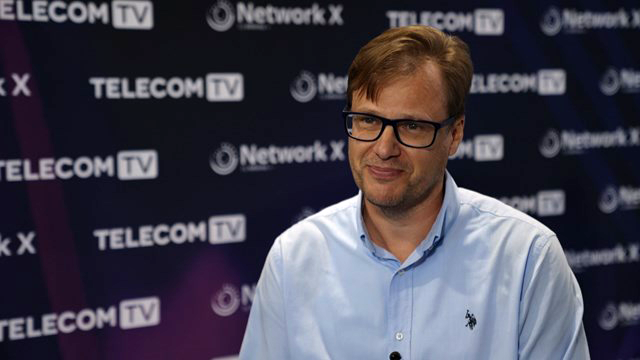
Yariv Geller, Co-Founder & CEO, vHive
Yariv Geller, co-founder and CEO at vHive, discusses how the company uses AI and digital twins to transform how operators and towercos manage their physical infrastructure, why poor field data holds the sector back, how the platform captures and analyses site data, the question of who owns the resulting digital twin, the economic benefits for operators, and much more.
Recorded: August 2026
Email Newsletters
Sign up to receive TelecomTV's top news and videos, plus exclusive subscriber-only content direct to your inbox.