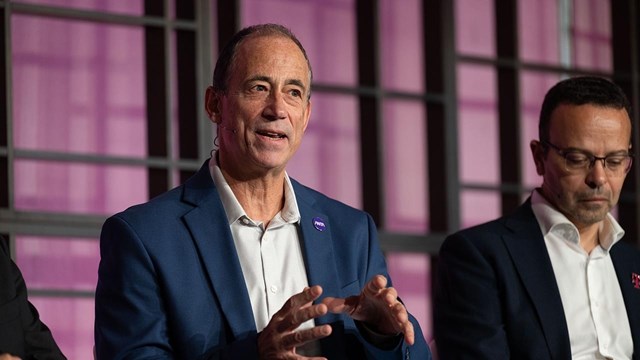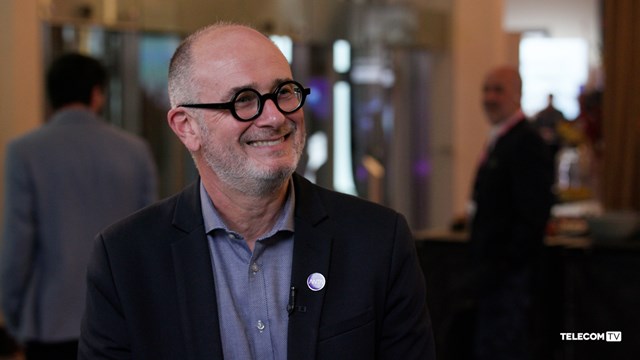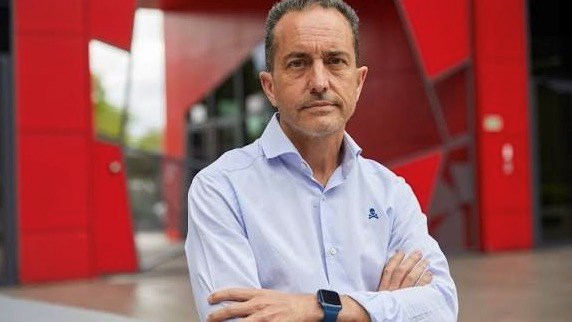
Verizon's CTO and senior VP of technology development, Yago Tenorio.
- Verizon is laying multiple foundations for the 6G era
- The US operator’s CTO, Yago Tenorio, is exploring multiple use cases to inform the company’s technology strategy
- Early integrated communications and sensing (ISAC) trials are proving insightful
- Tenorio is also focused on bolstering cellular uplink capacity to support wearables such as AR glasses, something that Verizon has started doing with its 5G connectivity
Verizon’s CTO and senior VP of technology development, Yago Tenorio, is on a mission to make sure that 6G is developed with use cases and real-world services (rather than infrastructure technology capabilities) in mind, and he has enlisted a lot of big names to the US telco’s 6G Innovation Forum (6GIF) initiative to help achieve that goal.
“The important thing, and the purpose of the 6GIF, is to build the 6G standard from the bottom up, from use cases, as opposed to what we’ve been doing all this time, which is to think about technology, implement it and then ask if anyone is interested,” Tenorio told TelecomTV shortly after the telco had announced the addition of nine “heavyweight” names, including Amazon Web Services (AWS), Cisco Systems, Intel and Nvidia, to the list of 6GIF partners, taking the total to 15 – see Verizon advances its AI-native 6G plans.
Those use cases can be developed and tested right now, not just with early pre-standards 6G tech but also using advanced 5G network capabilities. The recent integrated sensing and communication (ISAC) field trials that Verizon completed with 6GIF partners – one with Samsung focused on crowd-density detection at a FIFA World Cup game in Dallas in July, and the other with Qualcomm at the wireless chip giant’s San Diego campus focused on drone and vehicle safety tracking – are cases in point, showing that ISAC trials can be implemented, and use cases demonstrated, with 5G.
“What we did with Qualcomm was drone detection, which of course is very topical these days for obvious reasons. Our interest was in determining how wider bandwidths can deliver greater precision and accuracy, which is also important when it comes to use cases [that can inform technology decisions], and we were very successful in doing that. Now, as we establish the use case, the interest, the monetisation case, the value add case, we can walk up towards the technology and make 6G what we want it to be,” based on what is required to deliver useful services, stated the CTO. “If you can leverage your network to be a sensing mechanism at the same time [as providing connectivity], simultaneously, and without compromising capacity or communication capability, that is the intersection that is really interesting,” he noted.
“What we did in Dallas [with Samsung] actually drove a lot of interest from businesses there. [The people] managing that event said they had never seen anything like that, and they were immediately interested,” stated Tenorio. “They asked us if we can make it commercially available, and they said they would be glad to pay for it. Now, anecdotal as that example is, it is the exact signal that we’re looking for, because we want to deliver technology [that is] fulfilling use cases, that can be monetised and add value,” added the CTO.
And that trial, involving large crowds at a sporting event, lays the ground very neatly for Verizon’s plans for the Summer Olympics, which take place in Los Angeles in July 2028. “These are early days” for 6G use case trials, “but we have LA 2028 coming…”
Such trials will help Tenorio figure out how best to plan Verizon’s network and what technologies will help achieve the operator’s goals but one thing he and other mobile operator CTOs know already is that the radio access network of the future will need more uplink capacity than is currently available in mobile networks in order to support sensing capabilities and user devices, such as AI-enabled wearables.
Tenorio highlighted this in his submissions to TelecomTV’s recent free-to-download editorial report, The AI-Native Path to 6G, for which the Verizon CTO provided insights into, and context for, the operator’s ISAC developments, along with other AI-native 6G insights. In that submission he noted that “sensing, along with ambient AI devices like smart glasses, requires a continuous, high-definition uplink stream. Today’s networks operate on an asymmetrical downlink bias. The key technical foundation for 6G is designing a more balanced uplink/downlink radio protocol that can handle continuous uplink data without degrading system performance or burning through device battery and thermal limits.”
The CTO is much less worried about the integration of compute and storage in the radio access network (RAN) than he is about the “communication capacity performance on the uplink direction that you can deliver on the radio interface.”
In particular, he wants to ensure that Verizon’s network is capable of supporting cutting-edge user devices: That’s something that has been on his mind for some time, as he delivered a keynote address on the topic at TelecomTV’s DSP Leaders World Forum event in the UK in June 2025 – see Verizon CTO: We’re on the cusp of ‘another smartphone moment’.
And it will be front of his mind right now following the news that Verizon is the exclusive US partner for wearables vendor Snap, with the telco providing the 5G connectivity for the charging case that supports the company’s Specs augmented reality (AR) glasses.
Tenorio told TelecomTV: “I think the use cases we’re going to see emerging will be based on AI wearable technologies that move you from your current prompting strategy and beyond a conversational kind of strategy,” one where agentic AI is reacting to prompts while being “aware of your contextual situation because it’ll sense your environment [using] video, audio, sensors – specific hardware that is sensing something, or even the radio itself sensing the environment with ISAC.”
He continued: “What that requires is a much more capable uplink that can scale to provide this service to everyone who wants it. So, if you think of a consumer network, suddenly everybody is transmitting some sort of information that can be video, audio or sensors on a 24/7 basis. That is a lot of uplink, and as we know, the network today is designed with the downlink in mind.”
Mobile operators will need “more capacity to serve everyone doing this at the same time. And so, when we think of 6G, we need to think of a system that takes a step” towards much more capable uplink connections, he added.
So is Verizon any closer to figuring out how this can be achieved? “Adding partners to the 6GIF is a step forward. Are we any closer? Yes. How? By working with all these partners, and we’ll probably be adding more.”
One of the issues, though, is that the telecom and networking sector isn’t the best at figuring out what customers want or need (at least in this editor’s opinion). So does Tenorio have any plans to get actual users involved in the 6GIF so they can inform the work on useful use cases?
“Hold that thought!” said Tenorio. “I’m working on it now. It’s not that I agree with you” in terms of whether the telecom sector is bad at figuring out use cases. “I would like to believe that we understand our customers, but you can never do enough – you can always do more to understand your customers, and I’m all for adding [less traditional] members to this club to move us forward. I’m with you. I’m working on it,” stated the CTO.
So – watch this space!
- Ray Le Maistre, Editorial Director, TelecomTV
Email Newsletters
Sign up to receive TelecomTV's top news and videos, plus exclusive subscriber-only content direct to your inbox.