Orange’s Ensarguet on what it takes to become an AI-native telco

By James Pearce
Sep 16, 2026
To embed our video on your website copy and paste the code below:
<iframe src="https://www.youtube.com/embed/FOaur1JMCK8?modestbranding=1&rel=0" width="970" height="546" frameborder="0" scrolling="auto" allowfullscreen></iframe>
James Pearce, TelecomTV (00:08):
Hello and welcome to TelecomTV. I'm James Pearce and I'm in Düsseldorf for the AI Native Telco Forum. And I'm delighted to be joined today by Philippe Ensarguet, who is the VP Cloud and Software Engineering at Orange. Philippe, thank you so much for joining us. Now, of course, you're a member of the ANTA Steering Board. Why don't you start by telling our viewers why you wanted to be involved in ANTA and why also it's an important initiative for the industry?
Philippe Ensarguet, Orange (00:34):
I remember it so well. It was in last February. We were having a drink with Sean and with Guy, and we were talking heavily about AI, agentic, and how everything was moving so fast. And it's really where we have a kind of trigger. So being on board, I would say at the very first hand with ANTA was extremely important for us. And I like the mood because it's not about competition. It's not about, I would say, who is the best. It's only sharing and learning together. We are in front of a massive transformation, and I think that sharing and learning altogether is extremely important. And I definitely think that ANTA is the best place to do so.
James Pearce, TelecomTV (01:20):
Brilliant. So what do we mean when we say AI native telco? What does it take to become an AI native telco? And how far along is Orange in its journey to become one?
Philippe Ensarguet, Orange (01:29):
Okay. So AI native, I think that it's very interesting to just consider the wording, AI native. So it means that it's not AI legacy, so it means that putting AI on something that is legacy is not AI native. So it's a strong reboot in terms of business operation. And I have one joke when I'm talking about AI native, most of the time I'm saying that let's assume that you will switch off your AI native system. If it still continues working, at best, it's automation, but it's not AI native. So joke apart, I think that it's a strong disruption from business value, business creation up to the technical side and all the business and the jobs that are in between. So becoming AI native is not something that is happening, I would say, apart. It's really something that is built up on what we made on the cloud native transformation.
(02:28):
So adding one layer to manage basically the agentic stack. But it's also, I would say, multiple other components that we need as a substrate to be successful on the AI native transformation. Of course, mastering the data, mastering the context and the knowledge. It's about the ontology. It's about basically the digital twin, everything that is able to bring on purpose what is running in our network and being able to be integrated and plugged into AI or agentic AI. Something that is also very important in the journey and transformation is just to consider the upskilling and reskilling is extremely important. Leading AI project, supervising agentic AI system is new business, but it's new business that is heavily connected with the networks because you cannot automate and you cannot bring agentic with system without having a very deep knowledge about what need to be automated. So that's the reason why for me, job upskilling and reskilling is extremely important in the transformation that we are having.
(03:40):
And today basically we are making happening agentic AI and AI, I would say on the financial optimisation. We have it on the core, we have it on the infrastructure. We start to do things also on the RAN. So I think that it's happening almost in all the telco domains, but the most important topic that we have in front of us is the scaling and the scaling from, I would say, homogeneous and I would say consistent standpoint.
James Pearce, TelecomTV (04:10):
That's really interesting. So a big part of the AI Native Telco Accelerator of course is the AI Native Telco Index, which we launched in Düsseldorf. It's just been published and one of the key highlights that I thought was really interesting was that many operators are now focusing on how to monetise their AI investments rather than maybe focusing on cost savings, which was a big issue initially. Talk us through some of the monetisation opportunities that you're focusing on at Orange.
Philippe Ensarguet, Orange (04:36):
I would prefer to start about talking about cost saving because if I want to be very transparent with you today, I think that where we have the most interesting result is, for instance, in our Smart CapEx program that is basically an AI system that is here to help us to take the right decision on the investment we need to have on the network. But it's almost the same on the operation or on the field of intervention. So I think that on investment, on operation and field of intervention, it's a place where we are having very important use cases. But on new revenue stream, if I want to answer the second part of your question, I would say that everything that is around slicing or differentiated B2B services is certainly an area that is on the two most important one that we are considering.
James Pearce, TelecomTV (05:30):
That's really interesting. Let's look at some of the key developments and strategies that Orange will be looking to deploy over the coming year. Maybe you can talk us through that as you go down your AI native telco journey.
Philippe Ensarguet, Orange (05:40):
Yeah, sure. I think that here I want to bring three topics. The first one is related to the talk that I gave that is basically setting the trust. If we do not trust in AI or in agentic, honestly, it won't work. I have so many people that are trying to implement fancy topics, but at the end of the day, if your backup is not working properly, if your reversibility is not working properly, if you do not have harness or guardrails, you won't be able to be successful. So this part for me is extremely important. So the second topic that I want to mention is really about understanding the trends and the weak signal to be sure that we are implementing the right business case. And here I would say that the GSMA Usage Observatory is something that is extremely useful. And on the third point, I think that it's very important to consider something that is not so much fancy, but super important.
(06:31):
It's about your ground foundation, mastering the data, the ontology, the digital twin for mastering the context. And here to move forward, I would say consistently and to be able to scale, we set up an AI for Network program that is totally transversal. And the idea is really to drive what we want to do in a consistent and in an appropriate manner to be sure that every use cases that we build up in one country has an opportunity to be live also in another one.
James Pearce, TelecomTV (07:02):
Philippe, thank you so much for joining us today.
Philippe Ensarguet, Orange (07:04):
My pleasure.
Hello and welcome to TelecomTV. I'm James Pearce and I'm in Düsseldorf for the AI Native Telco Forum. And I'm delighted to be joined today by Philippe Ensarguet, who is the VP Cloud and Software Engineering at Orange. Philippe, thank you so much for joining us. Now, of course, you're a member of the ANTA Steering Board. Why don't you start by telling our viewers why you wanted to be involved in ANTA and why also it's an important initiative for the industry?
Philippe Ensarguet, Orange (00:34):
I remember it so well. It was in last February. We were having a drink with Sean and with Guy, and we were talking heavily about AI, agentic, and how everything was moving so fast. And it's really where we have a kind of trigger. So being on board, I would say at the very first hand with ANTA was extremely important for us. And I like the mood because it's not about competition. It's not about, I would say, who is the best. It's only sharing and learning together. We are in front of a massive transformation, and I think that sharing and learning altogether is extremely important. And I definitely think that ANTA is the best place to do so.
James Pearce, TelecomTV (01:20):
Brilliant. So what do we mean when we say AI native telco? What does it take to become an AI native telco? And how far along is Orange in its journey to become one?
Philippe Ensarguet, Orange (01:29):
Okay. So AI native, I think that it's very interesting to just consider the wording, AI native. So it means that it's not AI legacy, so it means that putting AI on something that is legacy is not AI native. So it's a strong reboot in terms of business operation. And I have one joke when I'm talking about AI native, most of the time I'm saying that let's assume that you will switch off your AI native system. If it still continues working, at best, it's automation, but it's not AI native. So joke apart, I think that it's a strong disruption from business value, business creation up to the technical side and all the business and the jobs that are in between. So becoming AI native is not something that is happening, I would say, apart. It's really something that is built up on what we made on the cloud native transformation.
(02:28):
So adding one layer to manage basically the agentic stack. But it's also, I would say, multiple other components that we need as a substrate to be successful on the AI native transformation. Of course, mastering the data, mastering the context and the knowledge. It's about the ontology. It's about basically the digital twin, everything that is able to bring on purpose what is running in our network and being able to be integrated and plugged into AI or agentic AI. Something that is also very important in the journey and transformation is just to consider the upskilling and reskilling is extremely important. Leading AI project, supervising agentic AI system is new business, but it's new business that is heavily connected with the networks because you cannot automate and you cannot bring agentic with system without having a very deep knowledge about what need to be automated. So that's the reason why for me, job upskilling and reskilling is extremely important in the transformation that we are having.
(03:40):
And today basically we are making happening agentic AI and AI, I would say on the financial optimisation. We have it on the core, we have it on the infrastructure. We start to do things also on the RAN. So I think that it's happening almost in all the telco domains, but the most important topic that we have in front of us is the scaling and the scaling from, I would say, homogeneous and I would say consistent standpoint.
James Pearce, TelecomTV (04:10):
That's really interesting. So a big part of the AI Native Telco Accelerator of course is the AI Native Telco Index, which we launched in Düsseldorf. It's just been published and one of the key highlights that I thought was really interesting was that many operators are now focusing on how to monetise their AI investments rather than maybe focusing on cost savings, which was a big issue initially. Talk us through some of the monetisation opportunities that you're focusing on at Orange.
Philippe Ensarguet, Orange (04:36):
I would prefer to start about talking about cost saving because if I want to be very transparent with you today, I think that where we have the most interesting result is, for instance, in our Smart CapEx program that is basically an AI system that is here to help us to take the right decision on the investment we need to have on the network. But it's almost the same on the operation or on the field of intervention. So I think that on investment, on operation and field of intervention, it's a place where we are having very important use cases. But on new revenue stream, if I want to answer the second part of your question, I would say that everything that is around slicing or differentiated B2B services is certainly an area that is on the two most important one that we are considering.
James Pearce, TelecomTV (05:30):
That's really interesting. Let's look at some of the key developments and strategies that Orange will be looking to deploy over the coming year. Maybe you can talk us through that as you go down your AI native telco journey.
Philippe Ensarguet, Orange (05:40):
Yeah, sure. I think that here I want to bring three topics. The first one is related to the talk that I gave that is basically setting the trust. If we do not trust in AI or in agentic, honestly, it won't work. I have so many people that are trying to implement fancy topics, but at the end of the day, if your backup is not working properly, if your reversibility is not working properly, if you do not have harness or guardrails, you won't be able to be successful. So this part for me is extremely important. So the second topic that I want to mention is really about understanding the trends and the weak signal to be sure that we are implementing the right business case. And here I would say that the GSMA Usage Observatory is something that is extremely useful. And on the third point, I think that it's very important to consider something that is not so much fancy, but super important.
(06:31):
It's about your ground foundation, mastering the data, the ontology, the digital twin for mastering the context. And here to move forward, I would say consistently and to be able to scale, we set up an AI for Network program that is totally transversal. And the idea is really to drive what we want to do in a consistent and in an appropriate manner to be sure that every use cases that we build up in one country has an opportunity to be live also in another one.
James Pearce, TelecomTV (07:02):
Philippe, thank you so much for joining us today.
Philippe Ensarguet, Orange (07:04):
My pleasure.
Please note that video transcripts are provided for reference only – content may vary from the published video or contain inaccuracies.
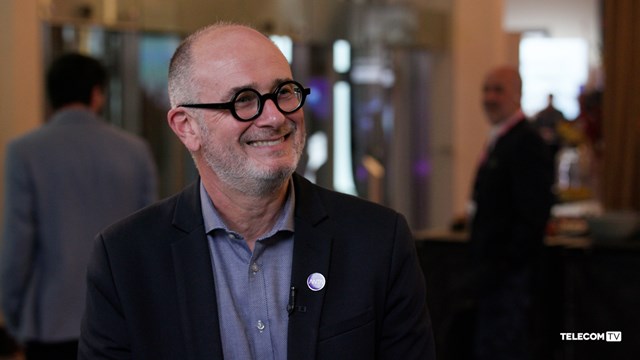
Philippe Ensarguet, VP Cloud & Software Engineering, Orange
Philippe Ensarguet, VP of cloud and software engineering at Orange, discusses what is required to be a true AI-native telco, how AI (including agentic AI) is being applied across Orange’s enterprise and network operations, why it is critical that telcos ensure they can trust AI, the importance of re-skilling the workforce, why he joined the ANTA Steering Board, and much more.
Recorded September 2026