How CSPs can turn the network edge into a physical AI platform

By James Pearce
Jul 10, 2026
To embed our video on your website copy and paste the code below:
<iframe src="https://www.youtube.com/embed/eXYo-52g1Yo?modestbranding=1&rel=0" width="970" height="546" frameborder="0" scrolling="auto" allowfullscreen></iframe>
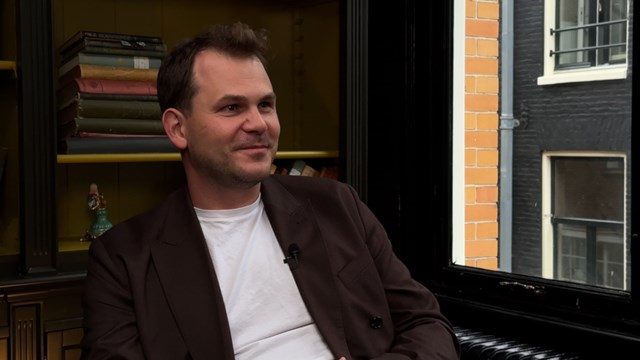
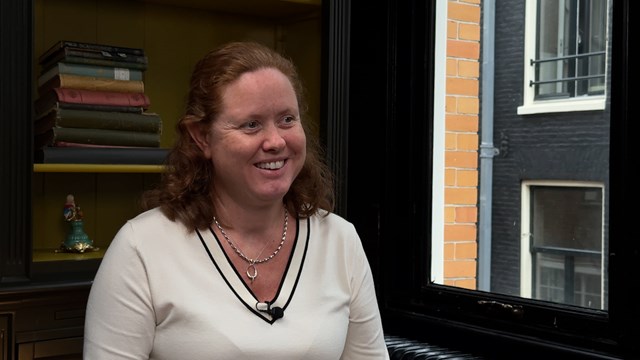
Welcome to TelecomTV. I'm James Pearce and I'm at DTW Ignite in Copenhagen. I've got some really special guests for you today, so I'm going to introduce them and then we're going to dive in. I'm delighted to be joined by Hans Neff, who's the Deputy CTO for Europe and America's region at ZTE and Laurence Feijt, who is the senior director, Telco Partner Sales APAC at Red Hat. Thank you both for joining me. Let's start with the Catalyst projects, which are always a highlight of DTW. Why don't you tell us about the project and how you became involved in the robotic dog project, Laurence?
Laurence Feijt, Red Hat (00:35):
Yeah, so obviously we are very excited to be part of this. I think the Catalyst projects is definitely one of those avenues where the telco industry is really coming together to collaborate and find real-life production solutions to emerging ideas. So what really compelled us to work together with ZTE on this catalyst is an important question that it aims to address, which is how do we make AI the next monetization avenue for communication service providers? And the magic to it, if you will, really is into the architecture. So rather than putting all the intelligence into the robotic dog or autonomous devices in general, we put that complexity onto the network edge and we provide a solution for, we provide a common foundation to that platform, and that ensures that all those AI complex services are basically deployed, managed, and scaled very consistently across the board.
(01:44):
The final point that I would add is that the robotic dog is a great showcase for a much bigger conversation, which is physical AI. And that allows basically for our customers to use that same architecture that powers the robotic dog and apply it to any other physical AI use case. So think of smart cities, think of autonomous operation or even industrial automation. So this is really exciting because that paves the way for new revenue streams for our telco customers.
Hans Neff, ZTE (02:17):
Laurence, I can't agree more. Yes. The thing is to add on, we have seen CSPs suffering for years. They are searching for new streams of revenue. They're searching for new income streams. This showcase, this catalyst shows the aspect how this can work. We see evolution. Evolution in AI, meaning Agentic AI is stepping in. Physical AI we see and it grows to the fact that we will have thousands of devices of various kinds in the same cell in the same area. Offloading compute power from them is a beneficial case for the battery lifetime, for the complexity of the devices, and it is a beneficial case for the operator as he hosts the infrastructure and there are values to be added. The coordination of the devices, the authentication of the devices, so basically adding a trust layer on that infrastructure to allow the customers really to enjoy safely the service. And this complete value package is the one which I think we both think adds value to the industry and allows to leverage the next step of evolution for a telco. So really to find cases to build up.
James Pearce, TelecomTV (03:33):
It's a really exciting example. Let's have a look at some of the technical aspects of it. So Red Hat provides the technical foundation for the Catalyst. How does your cloud-native platform manage complex distributed workloads across the core and the edge, but also how does that ensure that the AI models remain economically efficient?
Laurence Feijt, Red Hat (03:52):
First thing first, I think that this catalyst really highlights the immense power of the distributed cloud architecture as well as distributed AI inferencing. And with Red Hat OpenShift and Red Hat OpenShift AI, we have that ability to create that common single open hybrid cloud platform that spans across the AI factories, the network edge powered by our partner ZTE, all the way to the autonomous devices. And this catalyst is really the perfect proof of concept because instead of relying on very expensive onboard GPUs, the robotic dog offloads all the very complex and heavy AI processing and AI orchestration to the network edge. And by sharing all those AI services across thousands of devices, it allows basically for real-time decision-making, it allows for multi-agent workflow orchestration, but it also reduces the cost of the hardware, it reduces the device complexity and it also reduces power consumption. So from a technology standpoint, Red Hat OpenShift AI supports model as a service through vLLM and LMDeploy. And this provides AI applications with access to much smaller, less complex open-weight models, while providing the latest innovation, providing freedom of choice without all the typical overhead that comes with frontier models.
James Pearce, TelecomTV (05:40):
Mission critical scenarios demand reliability, of course. So what are the specific challenges in jointly optimizing RAN and edge resources to provide quality of service for an AI op?
Hans Neff, ZTE (05:51):
Very good question. You have to see it from the angle of an operator. The operator itself is providing mission critical services already on voice, on data, so you have their fire departments, other services using it. Now the next counterpart is not a human. The next counterpart is a physical AI, it's a logical AI. So the first thing you have to see, it's a kind of co-engineering. So you must understand what the AI needs to communicate and what resources have to be foreseen in the radio, in the edge to fulfil basically this service for the device independently what kind of. This relation is essential for this teamwork, what we have built up here. Now having the look there, you have a multi-step trust environment. The first level of trust is the authentication, the authorization, the coordination of hundreds of clients. The second level of trust is that you understand the resources which are offloaded. You must do secure, you must do isolated, you must do it on a cloud ecosystem which is distributed. Distributed means more sites, means mobility. So you have also to take into account the intercommunication between the sites because a robotic dog will not remain in one cell. Transmission, computing, cloud, radio resources and application are the four essential key criteria to make the engineering perfect and to make it run as it does right now in our showcasing the catalyst.
James Pearce, TelecomTV (07:24):
So the project highlights a move away from reactive commands to multi-agent orchestration. Perhaps you guys can explain how this layer allows the dog to act as a proactive companion.
Hans Neff, ZTE (07:34):
Okay. Let's start on the term agent. Let's do on this because it's a very, very broad term and the industry defines agents as user agent, it interacts with a person, network agent, it optimizes the network and there are various types of them. Now those agents can be installed on a physical AI. Those agents can be installed on sensors. Those agents can be used basically on a phone or on a home device and those all have to interact. The main idea now is to have a kind of coordination layer which enables you to say this area has to be served with a certain quality, with a certain interaction. To do this, we are using standard protocols like A2A, what for example is done here on TMF in addition, or MCP, where both of us are members and partners and contributors to allow agents to agents communication, coordination, authentication, same as hierarchic layer architecture for agents. So these two aspects help to understand clearly how to structure such agent infrastructure and relations.
Laurence Feijt, Red Hat (08:38):
What I would add to what Hans was just saying is that the orchestration becomes really important when a task is becoming so complex that it can't be handled by a single agent. And basically Red Hat addresses that through providing the right tools and the right interoperability across models, agents and frameworks. What makes this Catalyst very unique is that the robotic dog is not anymore acting or operating as a standalone device waiting for individual commands. Now thanks to the multi-agent orchestration layer, you have the ability for that layer to coordinate multiple different agents together. To make it very concrete, that means that when the end user issues a command, "Let's go shopping," the orchestration layer will coordinate several agents together. One agent, for instance, looking at what is the weather, a second one checking the inventory into the shop, a third one that might look into transport possibilities and a fourth one, even proposing to the end user to make it a social event and starting coordinating the calendars of friends.
(10:16):
So that really demonstrates, I think, how a multi-agent orchestration layer can help communication service providers to develop incremental service revenues that were not existing before. And that's a very strong value proposition.
Hans Neff, ZTE (10:34):
I think this layer shows its strengths already because we have more than one use case present where models like voice, natural language models, where models like interaction, security, door opening, weather models you mentioned already, work together and you can flexibly exchange the stream or the workflow of that to really make the service customized for your needs. And that's the strong point we can see in our collaboration where the flexibility of Red Hat comes together with our technical work.
James Pearce, TelecomTV (11:05):
Yes. That's really, really cool actually. I really like that idea of the multi-agent and the effect it's having. Obviously we know that the CSPs face growing traffic, but not necessarily corresponding revenue growth. How does this solution empower the service providers to transition into orchestration of intelligent digital systems?
Hans Neff, ZTE (11:24):
I fully agree that we have a growth of complexity. We have a growth of traffic to be handled, but the revenue, the ARPU is not accordingly. Operators since years now are searching for opportunities to leverage the technical capabilities they have and to make money with that. 5G allows URLLC, lowest latency, highest availability, high throughput services to be offered to customers. And now with that collaboration, you can see a multi-level approach. The first level is strengthening the key asset that Telco has—trust, authenticating, authorizing and coordinating communication. The next level with your platform helps to have an open ecosystem architecture where you can offload tokens, save energy, save complexity on the devices, and having an open API to integrate. And the highest layer, because the platform of Red Hat is not only an AI platform, it's also a platform for computing, allows you to offload and to store logical data, service data for B2B, for example. So it gives you the whole flexibility with the transmission, with the platform to offer new services. And those new services, as said, strengthen core knowledge of telcos—trust, security, strengthens the capacity for communication, one of the strengths of them and gives them a leverage of a new value, which is doing the ecosystem with the platform.
James Pearce, TelecomTV (12:58):
Do you have anything to add?
Laurence Feijt, Red Hat (13:00):
Yeah, no, sure. So I think that this Catalyst, I mean, as Hans said, basically this Catalyst really addresses the current squeeze that every single communication service provider is facing in the world today, which is flattening or even worse, declining connectivity revenues while they are facing skyrocketing traffic onto their network. And I think that by adopting the intelligent service delivery edge, these providers really have the opportunity to transform themselves and become the central platform for new types of services and autonomous operations.
Hans Neff, ZTE (13:43):
Basically, those platforms can help to offer things the hyperscaler cannot do.
Laurence Feijt, Red Hat (13:49):
Yes.
Hans Neff, ZTE (13:50):
One option is to go forward and say, "I have control of SLA. I have control of service. I have control of the database and I have control of the platform." No hyperscaler can offer that.
James Pearce, TelecomTV (14:03):
So if we look beyond this event, we look beyond DTW, what are the next steps that CSPs must take to scale this physical blueprint beyond guide dogs and integrate robots into our daily lives?
Hans Neff, ZTE (14:13):
Technology is one aspect. There are technological aspects that have to be foreseen. They have to be implemented to be ready. As said, there's an easy start for the authentication, hardware resources minimal, investment minimal, the key trust. The platform is the next step. So the ecosystem like Red Hat does it. So with this ecosystem, there is an investment to be done. You need compute resources, you need integration points, but it offers you a complete new perspective. The last step is you have to think a little bit about this cultural move in a telco. A telco is used to sell minutes. It's used to sell gigabytes. Now it shall sell security, safety, trust, and it shall sell token offloads. It's a different aspect, a different thinking. So this culture and these aspects have to be technically and commercially foreseen, and there is a cultural aspect, this last thing. Currently, we are used to dealing with human codes—the human issues the command, the system executes. With that step it goes, the human defines a border, defines a policy, designs a process, and the system realizes it. So those three aspects I think are the things an operator needs to focus at.
James Pearce, TelecomTV (15:33):
So Laurence, final thoughts from you.
Laurence Feijt, Red Hat (15:35):
Yes, no absolutely. So I think that to add to what Hans was saying, in order to scale the physical AI blueprint beyond singular use cases like the robotic dog that we demonstrated with ZTE, communication service providers really need to transform themselves and become that common platform for autonomous systems. And in order for them to achieve that, I think there are a few things that they need to do. The first one is definitely related to the need for them to invest into cloud-native architecture that spans from the AI factories through the network edge powered by ZTE all the way to the autonomous devices. And by doing so, it also allows for the data, the intelligence and all the mapping updates to flow very fluidly across thousands of devices. I think also that a big challenge that service providers will need to address is related to the heterogeneity of all the devices, and they will do that by embracing and championing open standards. I think that by adopting the Red Hat frameworks, by also pushing for open standard protocols such as MCP, they will be able to achieve that goal. So this is where I will end. Maybe the last word here is that I think the question is not anymore only about connecting the machines, but rather really the question for service providers is how well they will manage that transition from transforming their network into an intelligent and scalable delivery platform that will lead to new incremental enterprise revenues for them.
James Pearce, TelecomTV (17:46):
I think it's really exciting to see some practical applications of AI. Thank you both so much for joining me on TelecomTV.
Laurence Feijt, Red Hat (17:51):
Thank you so much.
Please note that video transcripts are provided for reference only – content may vary from the published video or contain inaccuracies.
At DTW Ignite 2026 in Copenhagen, Red Hat’s Laurence Feijt and ZTE’s Hans Neff discuss their TM Forum Catalyst project, which uses a robotic dog to demonstrate how CSPs can monetise AI. Rather than putting intelligence onboard the device, the project offloads heavy AI processing and multi-agent orchestration to the network edge via Red Hat and ZTE infrastructure. The experts explain how this cuts device costs, complexity and power consumption, adds a trust layer for authentication and scales to smart cities and industrial automation.
Featuring:
- Hans Neff, Deputy CTO Europe & Americas Region, ZTE
- Laurence Feijt, Senior Director Telco Partner Sales APAC, Red Hat
Recorded June 2026
Email Newsletters
Sign up to receive TelecomTV's top news and videos, plus exclusive subscriber-only content direct to your inbox.