Zinkworks on closing the network management capability gap with autonomous networks

By James Pearce
Jul 9, 2026
To embed our video on your website copy and paste the code below:
<iframe src="https://www.youtube.com/embed/_Gf2qqss5Eo?modestbranding=1&rel=0" width="970" height="546" frameborder="0" scrolling="auto" allowfullscreen></iframe>
Hello and welcome to TelecomTV. I'm James Pearce. I'm in Copenhagen for DTW Ignite and I'm delighted to be joined today by Paul Madden, who is the CEO of Zinkworks. Welcome, Paul. Thanks for joining us. Let's dive straight in — tell me how the show's going so far for you.
Paul Madden, Zinkworks (00:19):
So far it's been going really well, James. Very energetic and really good for us compared to last year. We had an event on Monday with Google where we met a number of telco operators in advance of the conference, so it sort of feels like we're on day three of the event. But that was really useful — we were hosting a discussion around the business case for autonomous networks, because in reality, without the business case you're getting to the nub of it — it doesn't make sense to invest without that. But it's been really good. An observation from the last two days here has been that last year there were a lot of telco operators talking about embarking on the autonomous networking journey. This year it feels like you could categorise the operators into two camps: those that are actually doing it, and those that are still talking about it.
(01:15):
We had a great chat yesterday with some of the team from Telefónica, for example — and there's an example of a company who's actually doing it rather than still talking about it. So far, so good.
James Pearce, TelecomTV (01:24):
Let's talk about Zinkworks itself. For those who don't know Zinkworks, what's the origin story?
Paul Madden, Zinkworks (01:30):
So we were formed in Athlone in Ireland just over eight years ago. We have a strong Ericsson heritage — a lot of the technical leadership came out of Ericsson over the years. Network management is our DNA. I've been working in network management since the late 1990s, which is a depressingly long time, as has a lot of our technical leadership. So that's our DNA. We also have a very close relationship with Google and we leverage a lot of that technology platform for the solutions we bring to market today — we think it's fantastic. I would say the core of the company is around our engineering capability.
James Pearce, TelecomTV (02:19):
What is it that makes Zinkworks appealing to operators? Why should they partner with you?
Paul Madden, Zinkworks (02:23):
Let me give you our view of network management over that period, because we've been there the whole time. There have been enormous advances in network management over the last 25 years — huge amounts of money invested in R&D and new platforms to help manage these networks. The problem has been that the complexity of the network has grown more complex at a faster rate. So there's a capability gap between what you need your network management to do and what it actually can do, despite all the advances and investments. And that has resulted in huge network operations costs for telco operators. The cost of running a network has grown too large and has really outsized itself. We do see the Google Cloud platform as a game changer there — it brings a technology platform to bear that levels the playing field and makes the promise of autonomous networks or zero-touch networks a reality for the first time in those 25 years.
(03:35):
We've seen that capability gap grow consistently over 25 years, and now we're seeing it close again — where we can have a management system that genuinely keeps pace. So we're working with our clients to help them leverage that technology and bring the use cases into production that get them on the autonomous networking journey. And I think anyone who's serious about embarking on that journey — rather than continuing to talk about it — we'd love to talk to them.
James Pearce, TelecomTV (04:04):
So maybe you can give us some examples of working with tier-one clients.
Paul Madden, Zinkworks (04:07):
Yeah. If I was to look at telco operators that are really doing it, VMO2 would be first in mind for me. We have a significant engagement ongoing with them at the moment. They're leveraging AI to drive autonomy across their full network operations — they've kicked off a really ambitious programme at the start of this year, and we're executing the roadmap with them to drive that autonomy. That's a great example for me. And sometimes I think we lose sight of the fact that with network operations it's not just about operating the network — it's the full lifecycle. If you look at the planning phase, for example, as just one part of it — the amount of effort a telco operator has to invest in identifying where a new site should be, making sure you have the transport network capability, planning permission and so on — that's a huge part of the process, and there are huge benefits to be gained in just that one slice of automation.
(05:07):
So when we look at VMO2, they're looking at the full end-to-end, not just the operational part of the network itself — it's the full end-to-end lifecycle, which is really ambitious. We're also doing a lot of work with Vodafone. We have an rApp Studio that we're developing with Vodafone, and that really enables them to get their domain experts engaged in developing the solutions they need to drive automation in their network. Today there are a lot of vendors selling rApps and telco operators are buying them, but with this studio we have with Vodafone, it enables Vodafone's own engineers — the people at the coalface — to develop solutions to the problems they see themselves. That's really exciting for us. We also have a deployment with MasOrange, another vanguard I would say in terms of advancing autonomous networking. We have a digital twin deployed with them where we're working on AI-powered root cause analysis and anomaly detection, and that's proven very successful as well.
James Pearce, TelecomTV (06:17):
Brilliant. It sounds like you've got some really high-calibre partners. Maybe you can tell us about some of the investments you're making to make this all work.
Paul Madden, Zinkworks (06:23):
First and foremost, the primary thing we always invest in is talent. The engineering profile we have is exceptional and I won't be shy or humble about that whatsoever — my day job really is to make sure we have an environment where our engineers can excel. But also, if we look at the bigger journey these telcos are on in terms of driving autonomous networking, we're looking at some of our solutions and identifying which are more appropriate to productify and which are more appropriate for bespoke solution delivery. Because we're very clear that you cannot have a single platform or solution that is one-size-fits-all for all telco operators — everybody has a different landscape, different challenges, different problems. But we are picking what we think are very valuable niche areas within that and looking to productify them. The rApp Studio is a key one — we're already working with Vodafone on it and have a number of other engagements ongoing.
(07:25):
PowerSave is another area we're looking to invest in and productify. I think PowerSave is really interesting — we have a graph time-series model that we've patented which allows us to predict the load at a cell level to a really high degree of accuracy, which can feed into your power-saving loop: power down the carriers when you don't need them. That's been proven and independently validated, and it's a real differentiator for us — a solution that is absolutely in demand but is also genuinely novel. We haven't seen anything comparable to it in the market today.
James Pearce, TelecomTV (08:05):
Obviously the industry is going through rapid change. How do you see the telecom landscape evolving and where does Zinkworks fit in?
Paul Madden, Zinkworks (08:12):
I think there are two things that stand out for me. One is the drive toward network automation. I've never seen it feel this real. I remember back in the late 1990s we talked about zero-touch networks — it was always a dream just over the horizon, and actually the dream seemed to be getting further away. Now I see it becoming a reality — the idea of a zero-touch network, a dark NOC, or however you want to describe it, becoming achievable as we start to reach level four and level five autonomy. And it's also important to say: I don't see level four and level five as an end in themselves — more so a means to an end. What operators want are better-performing networks that cost less to run, and if you get to level four or level five, that helps you achieve that goal.
(09:11):
That's our wheelhouse right now — that's where we're executing. We also see more regulation coming, and given the geopolitical environment, that's understandable. But I also think that's fine, because I do believe technology will be able to meet that regulation. Whatever regulation comes in — and you do see people come up with rather bleak outlooks on that — I don't buy into that at all. I think the regulation will come and I think the technology will advance to meet it and still deliver the promise of autonomous networking.
James Pearce, TelecomTV (09:46):
What's next for Zinkworks? What should we look out for?
Paul Madden, Zinkworks (09:48):
We're looking to establish our product portfolio a bit more. But ultimately, what we want to be is: if a telco operator is genuinely serious about driving their autonomous networking journey, we want to be a partner that they know about, that they hear about, and that has the track record — that has developed, delivered, and deployed solutions that are in production. So that it becomes an easy choice for them to say, "We need some help on this journey — Zinkworks are an obvious choice."
James Pearce, TelecomTV (10:19):
Perfect. Thank you so much for joining me today.
Paul Madden, Zinkworks (10:21):
Thanks, James.
Please note that video transcripts are provided for reference only – content may vary from the published video or contain inaccuracies.
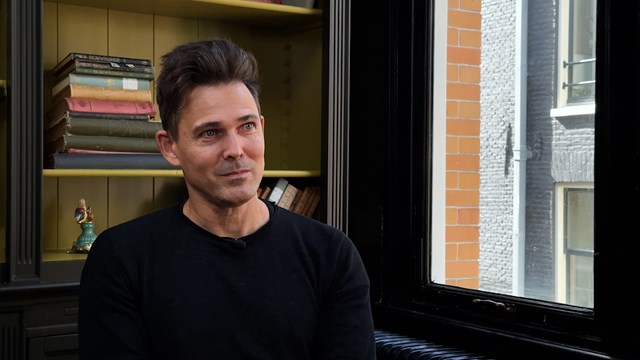
Paul Madden, CEO, Zinkworks
At DTW Ignite 2026 in Copenhagen, Zinkworks CEO Paul Madden discusses the business case for autonomous networks and how operators fall into two camps: Those deploying autonomy and those still talking about it. Drawing on the company’s Ericsson heritage and its work on the Google Cloud platform, he explains how network complexity has outpaced network management for 25 years, and why that capability gap is finally starting to close.
Featuring: Paul Madden, CEO, Zinkworks
Recorded: June 2026
Email Newsletters
Sign up to receive TelecomTV's top news and videos, plus exclusive subscriber-only content direct to your inbox.