To embed our video on your website copy and paste the code below:
<iframe src="https://www.youtube.com/embed/ppr62FcbrUk?modestbranding=1&rel=0" width="970" height="546" frameborder="0" scrolling="auto" allowfullscreen></iframe>
Like it or not, 6G is looming on the horizon and network operators around the world are preparing for the next generational shift in cellular infrastructure. But where do mobile operators start with their next generation network planning and what role can AI play? Well, to find out more, I'm talking today with Danielle Rios, who's CEO at Totogi. Danielle, great to see you as usual. Thanks very much for joining us. Now the telco industry is starting to talk seriously about 6G and research firm Dell'Oro forecasts up to half a trillion dollars in 6G related wireless infrastructure CapEx in the 2029 to 2034 timeframe. How do you expect operators to plan those 6G investments?
Danielle Rios, Totogi (00:53):
Well, the problem is that operators are about to make a big decision without the one number that matters. Which parts of the network actually make money? Every operator can tell you where traffic is heaviest, down to the individual cell. Almost none can tell you the same thing about revenue, which of their towers are profitable, which customers make a site worth upgrading, or what return a 6G build would produce in one city versus another. They can't do it as a live view, not continuously, and not without a six-month consulting engagement. That's the situation. The biggest capital decision of the decade and the return side of the equation is invisible.
Ray Le Maistre, TelecomTV (01:36):
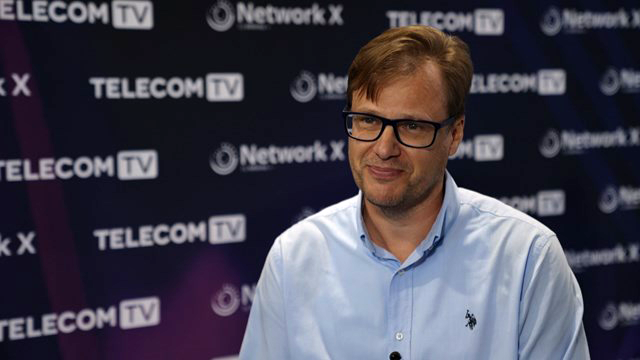
Yeah. So I mean, telcos generate an enormous amount of data, and obviously there's a lot of talk at the moment about how that data is processed and analysed. But do the operators actually know which parts of the network are profitable and which deliver the best return on investment?
Danielle Rios, Totogi (01:54):
No, because the answer is scattered across systems that were never built to talk to each other. Think about what it takes to know what one tower earns. The revenue is in the billing system. The costs are in the ERP. Which cells sit on which towers is in network inventory. Which customers use those cells is in the network data where a customer is a SIM identifier. An operator runs hundreds of these systems and the same customer is labelled differently in every one. So the join doesn't exist. The industry has tried to fix this for 40 years with things like integration programmes and data warehouses, and the projects die because by the time you've mapped the last system, the first ones have already changed. So every G business case had real data on the traffic side and a forecast on the revenue side. Half data, half hope.
(02:45):
$2 trillion on 4G and 5G later and revenue is flat.
Ray Le Maistre, TelecomTV (02:50):
Okay. But in 2026 and beyond, AI is smart, right? And AI is supposed to change what's possible here. And that's the whole premise of this next technology wave. So how can AI help operators with their 6G investment planning?
Danielle Rios, Totogi (03:08):
Not in the way most people are thinking of AI. Most people are using AI to improve productivity or for ideas to generate more revenue. But I'm talking about using AI to help you make the most important decision for your telco, deciding whether or not to move to the next G. The change that matters is using AI to read the systems. Using the Totogi Ontology, it learns what every field means, how the systems relate to each other, and it keeps the map current as they change. The labour that made this previously unsolvable is exactly what AI and Totogi is good at. So now you can build one model of the business that every system feeds. And once it exists, the money question, like what does this tower earn or what would an upgrade return stops being a research project and becomes as simple as asking a question.
Ray Le Maistre, TelecomTV (04:01):
Okay. Well, I mean, that sounds like a very interesting approach and one that would interest, I'm sure, a lot of operators, but are any of them putting this into practice right now in the 5G environment?
Danielle Rios, Totogi (04:14):
They are. We're working with a forward-thinking operator in Latin America. We connected their systems, billing, marketing, network, cell site data, and built one model of their business. Now they rank every site by the revenue it generates, and they forecast the return on an upgrade before approving it. In most telcos, the network team tells the CEO that upgrading will drive revenue, and the CEO has to take that on faith. This CEO can check it himself site by site, update it continuously, and it changes the size of the decision. Take an operator staring at a $500 million build. The model might say it's really $50 million spent in the right places. This is the biggest capital allocation decision a telco makes, and now they can make it with data on both sides.
Ray Le Maistre, TelecomTV (05:01):
Okay. So I mean, these are the kind of things that a lot of companies talk about at a big event like MWC in Barcelona, but these conversations are year-round affairs now. And your company, Totogi, is a founding partner of ANTA, the AI-Native Telco Accelerator. And you're going to be in Düsseldorf for the AI-Native Telco Forum in early September. For an operator thinking about 6G, how do they get started with Totogi?
Danielle Rios, Totogi (05:29):
Well, if you're attending the forum, come to my talk and check out this demo of the Totogi Ontology. And if you're not able to make it in Düsseldorf, reach out to me directly on LinkedIn or X, or go to our website at totogi.com and we'd be happy to get you started.
Ray Le Maistre, TelecomTV (05:44):
Okay, great. Well, I'm sure the topic of data and the economics of building out networks are going to be absolutely hot topics in Düsseldorf. Danielle, thanks very much for joining us. Great to talk to you as ever, and look forward to talking with you again soon. Yeah,
Danielle Rios, Totogi (06:00):
Thanks so much, Ray.
Please note that video transcripts are provided for reference only – content may vary from the published video or contain inaccuracies.
Danielle Rios, CEO, Totogi
With 6G on the horizon and research firm Dell’Oro Group forecasting up to half a trillion dollars in related wireless infrastructure capital expenditure between 2029 and 2034, Totogi CEO Danielle Rios argues that mobile network operators (MNOs) are about to make the biggest capital decision of the decade without knowing which parts of their network actually make money. She explains why revenue data sits scattered across billing, ERP, network inventory and customer systems that were never built to talk to each other, leaving past business cases with real traffic data but only a forecast on the revenue side. Rios describes how the Totogi Ontology uses AI to read those systems, learn what each field means and keep the map current, building a single model of the business that lets operators rank sites by revenue and forecast the return on an upgrade before approving it. She points to a Latin American operator already applying the approach in its 5G network, and previews Totogi’s participation in the AI-Native Telco Forum in Düsseldorf.
Recorded September 2026