BT on extracting value from voice and preparing for the AI of the future

By James Pearce
Oct 7, 2026
To embed our video on your website copy and paste the code below:
<iframe src="https://www.youtube.com/embed/XApiTU8dDwU?modestbranding=1&rel=0" width="970" height="546" frameborder="0" scrolling="auto" allowfullscreen></iframe>
James Pearce, TelecomTV (00:05):
Hello and welcome to TelecomTV. I'm James Pearce and I'm in Amsterdam for CASA26. And I'm delighted to be joined today by Richard Atherton, who's the head of unified communications at BT International. Thank you so much for joining me today. Let's start with the big topic in telco at the moment, which of course is AI. How is generative AI changing what enterprise customers expect from their communications and contact centre partners?
Richard Atherton, BT International (00:31):
If you go back in history, BT has always been known as a reliable telecoms company who can deliver a call from A to B, and it's been like that for a long, long time. On top of that, you may have had a bill, for example, that showed you who had actually called, for how long you spoke, the cost of each individual call, that kind of basic information. And the emphasis was really on, okay, how reliable is it that you could deliver a call from A to B, and can we do that in different parts of the world? And we prided ourselves on building an infrastructure and being able to do that. Today, there's a lot more because those conversations carry information that we never really understood before. And it can be things like sentiment, it can be legal information. Depending on the scenario, it can contain huge amounts of information which are very valuable to different parties.
(01:22):
Now because of that and because we carry that information, we now have a responsibility of making sure we contain that information, we can encrypt it and we can deliver it so that it can be used by AI. And when I talk about AI in its broadest possible sense, so it can be used in so many different formats. How that is going to transpire is really up to the AI industry, but our job is to deliver the data accurately. And now that becomes much more important with AI.
James Pearce, TelecomTV (01:50):
So if every conversation can increasingly be transcribed, analysed, and acted upon by AI, how does that change the value of the underlying communication service?
Richard Atherton, BT International (02:02):
Well, the value is in, again, the data that we bring basically to the front door of those AI applications. Now to do that, we have to, first of all, make sure that the call is delivered. So it has to actually get from A to B. Secondly, it has to have good enough voice quality to be able to understand the caller. And potentially if they're conversing with AI or another human being, you have to be able to understand both sides of the conversation, otherwise this transcription will be inaccurate and the analysis won't work. And even on a higher level, when you start to read things like sentiment, then really your voice quality has to be absolutely perfect. So when you're doing this across borders, for example, and in different zones, you can understand there's a lot of infrastructure that needs to be in place to do that.
(02:54):
And then I think probably the third thing is compliance. So we need to make sure that a call is actually allowed to go from A to B, from one territory to another. And then potentially that the information stored within that call and the data given and the things that were talked about is accurate because it could become legal information. Was that information actually allowed to be passed into AI? So there's a lot of different things that start to be important and we are the carriers of that data. So we have to govern that data at the point that it's handed over to AI. So it's a much bigger responsibility than we used to have.
James Pearce, TelecomTV (03:34):
Where do you see the biggest opportunity for BT to create new value from the convergence of communications, customer data and AI?
Richard Atherton, BT International (03:42):
Well, it's interesting because the more we talk about it, the more we look at it. Everything you've heard at this conference talks about the value of that data, what you can do with it. You've seen lots of examples of if you take this data, if you eliminate X percent of fraud, it grows your conversion rate by a higher percentage. There's a lot of talks about that value. The key for BT is how do we monetise that value? Because if we still consider ourselves to be a basic telecom company and our only job is to deliver a call from A to B and we ignore that data and we ignore the value of that data, then other parties will simply come along, take that data from us, turn it into something valuable and sell it instead of BT. Now it's our job to make sure that that doesn't happen because we are the party that invested in all of that infrastructure to actually carry the data, to get the call from A to B around the world.
(04:38):
So we really do need to extract the value as well and make sure that we contain that value in an equitable model, a business model when we start to introduce AI into that.
James Pearce, TelecomTV (04:49):
So what do you think is going to be the biggest single change that AI will make to the telecom operator business model over the next three years?
Richard Atherton, BT International (04:57):
Well, this is an interesting one. I think the thing that is always in the back of my mind is when we talk about these scenarios and we're talking about collecting data for a call and a call can be between two humans, but it could also be between human and AI, you're still talking about a voice call going from A to B and it's collecting data. The thing that keeps coming back in my mind and a lot of my colleagues' minds in BT is what happens if AI starts to communicate with AI because then there's no voice, then there is data swapped from one AI to another and will that actually replace human-to-human conversation or human-to-AI conversations? And that's a big unknown for us. So we're almost betting on models that we can see in existence today and not really knowing what AI is going to do around the corner.
(05:52):
And we're not alone in that because everybody's in that situation. Whatever happens now in six months becomes obsolete. So to be ready for those types of big changes is a huge challenge for us.
James Pearce, TelecomTV (06:04):
Yeah. And as you touched upon, it's moving so fast. Thank you so much for joining us today on TelecomTV.
Richard Atherton, BT International (06:09):
You're welcome. Thank you.
Hello and welcome to TelecomTV. I'm James Pearce and I'm in Amsterdam for CASA26. And I'm delighted to be joined today by Richard Atherton, who's the head of unified communications at BT International. Thank you so much for joining me today. Let's start with the big topic in telco at the moment, which of course is AI. How is generative AI changing what enterprise customers expect from their communications and contact centre partners?
Richard Atherton, BT International (00:31):
If you go back in history, BT has always been known as a reliable telecoms company who can deliver a call from A to B, and it's been like that for a long, long time. On top of that, you may have had a bill, for example, that showed you who had actually called, for how long you spoke, the cost of each individual call, that kind of basic information. And the emphasis was really on, okay, how reliable is it that you could deliver a call from A to B, and can we do that in different parts of the world? And we prided ourselves on building an infrastructure and being able to do that. Today, there's a lot more because those conversations carry information that we never really understood before. And it can be things like sentiment, it can be legal information. Depending on the scenario, it can contain huge amounts of information which are very valuable to different parties.
(01:22):
Now because of that and because we carry that information, we now have a responsibility of making sure we contain that information, we can encrypt it and we can deliver it so that it can be used by AI. And when I talk about AI in its broadest possible sense, so it can be used in so many different formats. How that is going to transpire is really up to the AI industry, but our job is to deliver the data accurately. And now that becomes much more important with AI.
James Pearce, TelecomTV (01:50):
So if every conversation can increasingly be transcribed, analysed, and acted upon by AI, how does that change the value of the underlying communication service?
Richard Atherton, BT International (02:02):
Well, the value is in, again, the data that we bring basically to the front door of those AI applications. Now to do that, we have to, first of all, make sure that the call is delivered. So it has to actually get from A to B. Secondly, it has to have good enough voice quality to be able to understand the caller. And potentially if they're conversing with AI or another human being, you have to be able to understand both sides of the conversation, otherwise this transcription will be inaccurate and the analysis won't work. And even on a higher level, when you start to read things like sentiment, then really your voice quality has to be absolutely perfect. So when you're doing this across borders, for example, and in different zones, you can understand there's a lot of infrastructure that needs to be in place to do that.
(02:54):
And then I think probably the third thing is compliance. So we need to make sure that a call is actually allowed to go from A to B, from one territory to another. And then potentially that the information stored within that call and the data given and the things that were talked about is accurate because it could become legal information. Was that information actually allowed to be passed into AI? So there's a lot of different things that start to be important and we are the carriers of that data. So we have to govern that data at the point that it's handed over to AI. So it's a much bigger responsibility than we used to have.
James Pearce, TelecomTV (03:34):
Where do you see the biggest opportunity for BT to create new value from the convergence of communications, customer data and AI?
Richard Atherton, BT International (03:42):
Well, it's interesting because the more we talk about it, the more we look at it. Everything you've heard at this conference talks about the value of that data, what you can do with it. You've seen lots of examples of if you take this data, if you eliminate X percent of fraud, it grows your conversion rate by a higher percentage. There's a lot of talks about that value. The key for BT is how do we monetise that value? Because if we still consider ourselves to be a basic telecom company and our only job is to deliver a call from A to B and we ignore that data and we ignore the value of that data, then other parties will simply come along, take that data from us, turn it into something valuable and sell it instead of BT. Now it's our job to make sure that that doesn't happen because we are the party that invested in all of that infrastructure to actually carry the data, to get the call from A to B around the world.
(04:38):
So we really do need to extract the value as well and make sure that we contain that value in an equitable model, a business model when we start to introduce AI into that.
James Pearce, TelecomTV (04:49):
So what do you think is going to be the biggest single change that AI will make to the telecom operator business model over the next three years?
Richard Atherton, BT International (04:57):
Well, this is an interesting one. I think the thing that is always in the back of my mind is when we talk about these scenarios and we're talking about collecting data for a call and a call can be between two humans, but it could also be between human and AI, you're still talking about a voice call going from A to B and it's collecting data. The thing that keeps coming back in my mind and a lot of my colleagues' minds in BT is what happens if AI starts to communicate with AI because then there's no voice, then there is data swapped from one AI to another and will that actually replace human-to-human conversation or human-to-AI conversations? And that's a big unknown for us. So we're almost betting on models that we can see in existence today and not really knowing what AI is going to do around the corner.
(05:52):
And we're not alone in that because everybody's in that situation. Whatever happens now in six months becomes obsolete. So to be ready for those types of big changes is a huge challenge for us.
James Pearce, TelecomTV (06:04):
Yeah. And as you touched upon, it's moving so fast. Thank you so much for joining us today on TelecomTV.
Richard Atherton, BT International (06:09):
You're welcome. Thank you.
Please note that video transcripts are provided for reference only – content may vary from the published video or contain inaccuracies.
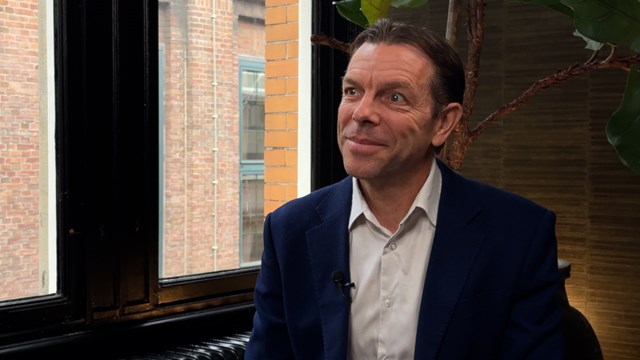
Richard Atherton, Head of Unified Communications, BT International
Richard Atherton, BT International’s head of unified communication, discusses the impact of AI on unified communications, the importance of delivering accurate data, how BT can extract value from its investments in infrastructure and the transfer of data, and how to prepare for future developments in the fast-moving world of AI communications.
Recorded September 2026
Email Newsletters
Sign up to receive TelecomTV's top news and videos, plus exclusive subscriber-only content direct to your inbox.