World’s submarine comms cables under greater threat than ever

By Martyn Warwick
Aug 4, 2025
- Deliberate sabotage by “malign actors” is increasing under the cloak of “plausible deniability”
- The immense amounts of vital data carried by submarine cable systems cannot be replaced or even ameliorated by satellites or microwaves
- Lack of a coherent global strategy to counteract sabotage has resulted in a seadog’s dinner of uncoordinated, patchy and partial responses
- Absence of concerted international action will eventually result in bigger, economically and socially paralysing outages and unrest
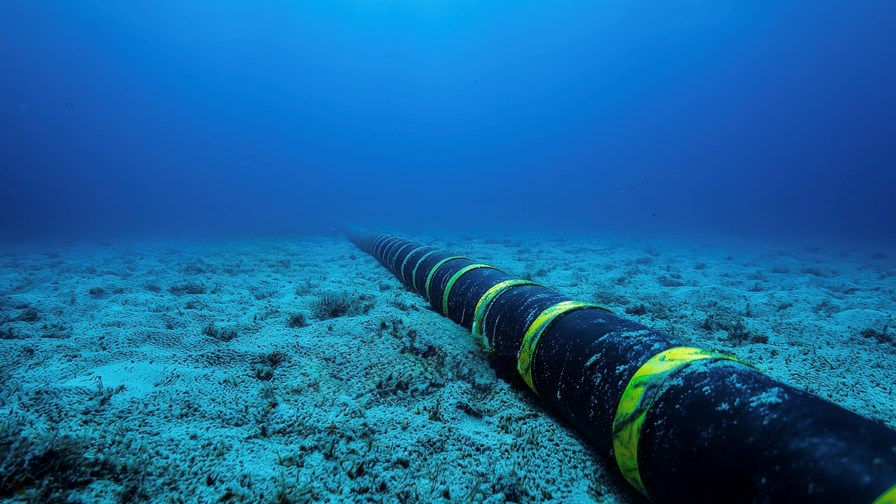
Given the evident reality of deteriorating geo-political relationships and global economic tensions, submarine comms cables are under more threat than ever before from an enlarged and increasingly aggressive coterie of state-run or state-sponsored “malign actors” and, to make matters worse, the capacities and capabilities of the West and its allies to prevent or repair either physical or cyberattacks on submarine networks are declining.
These are the conclusions of a new report from Recorded Future, the US cybersecurity and threat intelligence organisation that is headquartered in the Boston suburb of Somerville, Massachusetts. The company provides end-to-end intelligence, ranging from identified and potential adversaries and infrastructure to targets. The research report, “Submarine cables face increasing threats amid geopolitical tensions and limited repair capacity”, is published by the Insikt Group, which is Recorded Future's threat research division, whose staff includes analysts and security researchers with deep government, law enforcement, military and intelligence agency experience.
The report notes that the Insikt Group’s assessment of the current risk environment for submarine cables is in convincing alignment with the findings of its 2023 assessment, which threw the spotlight on the worrying convergence of geopolitical, physical and cyber threats. The new report, based on an analysis of 44 publicly reported incidents of significant cable damage occurring in 32 distinct groupings over the course of 2024 and 2025, concludes that the lack of redundancy in the submarine the submarine cable ecosystem, taken in combination with the lack of diversity of cable routes, their crowding together at various strategic landing points around the world and the lack of capacity in global repair facilities will magnify the incidence of deliberate damage and could result in prolonged comms outages.
The report adds that regions of low redundancy, including secondary European cable routes and areas including West and Central Africa and many Pacific islands, are more likely to suffer disproportionate impact from cable damage, especially when geopolitical tensions coincide with infrastructure constraints.
Many submarine cable systems lie in comparatively shallow waters where simple acts of sabotage disguised as accidents, such as anchor dragging by merchant marine vessels acting either directly for, or on the paid behalf of, malign national actors such as Russia, China, Iran and North Korea, can be disavowed under the tattered cloak of so-called “plausible deniability”.
The report identifies four incidents involving eight distinct cable damages in the Baltic Sea and five incidents involving five distinct cable damages around Taiwan over the course of 2024 and 2025. In these cases, at least five of the nine incidents were attributed to ships dragging their anchors, including four vessels linked to Russia or China operating under suspicious circumstances or hiding under opaque ownership structures. Such attacks are likely to increase in frequency and will extend to deeper waters where repairs will be more difficult and time consuming.
Even as attacks increase, most specialist cable ships are busy deploying new festoons to enable the seemingly insatiable global demand for more broadband access so are not readily available to be diverted to repair duties. Thus, currently, there is an insufficient number and types of dedicated submarine cable system repair ships available to meet likely demand, with the current 40-day global benchmark ‘mean-time-to-repair’ regime likely to become more of a notional target than a meaningful timetable. In other words, outages will last longer, be more disruptive and cost more to repair.
Satellite systems and microwave links do help as partial stop-gap solutions but, given the truly vast streams of data continually transmitted across the world’s global subsea cable networks, they cannot maintain more than a tiny percentage of the data flow that would be lost in the event of multiple (and possibly simultaneous) attacks. Indeed, the US telecoms regulator, the Federal Communications Commission (FCC), recently reported that satellites account for just 0.37% of all US international comms capacity.
The report suggests that, to help mitigate these challenges, immediate consideration must be given to the establishment of joint public-private partnerships investing in repair and maintenance capabilities. Also required are improvements in real-time monitoring and security measures around submarine cable infrastructure and the introduction of strong and comprehensive stress tests to identify areas where resilience must be bolstered.
There are some 80 commercial (rather than military or state national) ships globally dedicated to maintaining and expanding submarine cable infrastructure, including those from the UK’s Global Marine Systems (with a 13% market share), Orange Marine of France (also with a 13% market share), SubCom of the US (11.6%), Alcatel Submarine Networks (10%) and Optic Marine Services of Malaysia (10%). Between them, they own more than 66% of the available global fleet of cable-laying and cable-repairing vessels.
As of April this year, there were 597 subsea cables in operation or under construction around the world, an increase of 38 on the 559 that were either in use or being built in 2024. Subsea cables account for 99% of international data traffic and form THE critical infrastructure that permits and underpins global telecoms and financial traffic. Where the commercial suppliers of cable systems are concerned, three companies, Alcatel of France, SubCOM of the US and NEC of Japan together own the lion’s share of the market, not only in the number of systems delivered but also in the number of kilometres of cable manufactured and future systems planned.
However, HMN Technologies of China is growing quickly and making its presence felt across various disparate markets. Formerly known as Huawei Marine Networks (yes, it’s that name yet again), the company has, to date, deployed 108,000 kilometres of submarine cable around the globe and is the fastest-growing subsea cable systems provider on the planet. It is also known that China Telecom, China Unicom and China Mobile are investing hundreds of millions of dollars in building a subsea cable network that will connect China to the rest of Asia, the Middle East and Europe.
No known technology can replace the capacity and speed of submarine cable systems
Damage to submarine cable systems is an accepted hazard across the industry and genuine accidents or breakages, such as abrasions caused by the movement of the oceans, avalanches and rockslides or by seismic incidents, are not uncommon. As the venerable International Cable Protection Committee (ICPC) (founded back in 1958) points out, the great majority do not cause “detectable” issues because traffic is almost instantly switched to other routes. However, and as the report makes clear, some of the most impactful instances of damage have been (and continue to be) deliberate and are all the more effective where there is limited redundancy, minimal access to other cables via which to reroute data and a lack of immediate repair capacity.
Obviously, it is easier, quicker and less expensive to lay submarine cables closely alongside others on similar geographic routes, but such a strategy increases the systemic risk by creating single points of failure. Thus, countries with multiple submarine cables routed along different geographic routes are less likely to suffer major disruption to connectivity, while those with fewer connecting cables, placed in close proximity to each other, are more susceptible to multiple cable damages and associated outages. Recent incidents of damage to multiple cables at once indicate that ‘threat actors’ are exploiting the concentration of cables along similar routes to cause prolonged outages across big geographic areas.
Simultaneously, the concentration of submarine cables at a single cable landing station also increases the possibility that damage to, or close by, a landing site will have immediate impact on multiple cables because landing stations are multi-functional, providing power to cables and connecting them to terrestrial networks. Furthermore, the location of landing stations is often determined by proximity to and access to existing infrastructure or regulatory issues and not necessarily because they provide rather high protection from natural disasters or physical threats, such as spying or sabotage. A cluster of cables terminating at the same landing site is a prime target and as, the European Union Agency for Cybersecurity (ENISA) emphasises, “a co-ordinated attack against multiple subsea cables could have a major impact on global internet connectivity.”
The problem is very real and very pressing and the sabotage of subsea cables could bring huge swathes of the global economy to a standstill. That’s bad enough, but matters are further exacerbated by the regulatory walls that some countries, for political, ideological, and economic reasons, are constructing as they use stifling bureaucracy to make the issuance of permits for the ships to use or cross territorial water to repair damaged cables more and more complex, expensive and time consuming. The net result is that deliberate obfuscation and delaying tactics ensure outages last for longer than they otherwise would.
All in all, the entire shebang is a mess that will require immediate international co-operation and policing if it is ever to be even partially resolved – and that seems unlikely to happen until a global incident concentrates minds and forces the development of a new strategy but, by then, it might be too late. What a farce.
– Martyn Warwick, Editor in Chief, TelecomTV
Email Newsletters
Sign up to receive TelecomTV's top news and videos, plus exclusive subscriber-only content direct to your inbox.