- Vodafone teams up for €100m Black Sea network investment
- T-Mobile US launches Edge Control
- Xavier Niel has his eyes on Belgium’s national operator
In today’s industry news roundup: Vodafone Group and partner Vodafone Ukraine are building a subsea cable in the Black Sea to link Ukraine with Bulgaria, Turkey and Georgia; T-Mobile US is looking to capitalise on its nationwide 5G-Advanced rollout with a ‘private network-like’ service offering; Iliad’s owner Xavier Niel is keen to increase his influence over Belgium’s national operator Proximus, it seems; and much more!
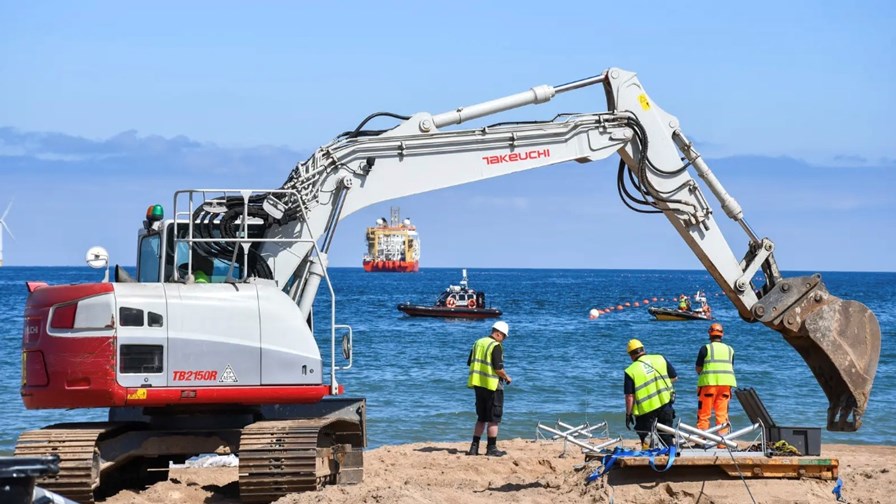
The Vodafone Group and Vodafone Ukraine – which is not part of the Vodafone Group, despite the name – are to invest €100m in the deployment of a new high-capacity submarine cable system, dubbed Kardesa, across the Black Sea. It will connect Bulgaria, Georgia, Turkey and Ukraine. The claim is that Kardesa, which is set to boast 500 TBit/s of data capacity, will help improve the diversity of digital routes across the region and “create a modern digital corridor between Europe and Asia”. The first landing for the new festoon will be in Bulgaria in 2027 with subsequent landings in Turkey, then Georgia and then Ukraine. Unsurprisingly, work on the new system in war-torn Ukraine will only take place in “internationally recognised safe zones”. London, UK-based subsea networks specialist Xtera will design and deliver the €100m turnkey project. While there is a lot of excitement currently about the impact that emerging satellite systems will have on current and future communications networking strategies, the critical role played by subsea cables cannot be overstated – it is estimated they currently carry between 97% and 98% of all international internet traffic and are, therefore, vital to the global digital economy. Vodafone Ukraine, which is the country’s second-largest provider of mobile and fixed broadband services (after Kyivstar) with 15.4 million customers, uses the Vodafone brand under licence but is owned by Neqsol Holding, a diversified regional conglomerate of international companies with wide-ranging interests in the energy, telecoms, construction and high-tech sectors.
Still with Vodafone Ukraine… The operator is to install solar power infrastructure at 100 base stations across the country within the next few months, following a successful trial at three pilot sites. “In the face of ongoing challenges for Ukraine’s power system, Vodafone is investing in a solution that will reduce the load on the power grid and provide additional resilience to critical communications infrastructure. Each base station will receive its own solar power plant with an energy storage system, which will allow the facility to partially cover its energy needs from renewable sources,” the operator noted. Each system includes 3.6 kW solar panels and inverters, which allow the use of solar-generated energy during peak load periods or grid outages. “This project is our response to the energy challenges facing Ukraine,” stated Yevgeny Frunza, the operator’s technical director. “By investing in green technologies, we not only reduce electricity costs but also reduce the load on the country’s energy system. This is a step towards a more sustainable and environmentally friendly telecommunications infrastructure that will operate even under conditions of restrictions in the centralised network associated with blackouts,” he added. For further details on the pilot tests and the expected benefits of the solar power installations, see this press release.
Having already taken notable competitive advantage of being an early investor in 5G standalone (5G SA) capabilities with network slicing and other enterprise-friendly services, T-Mobile US is now looking to attract more B2B business with a new “private network-like” service called Edge Control that takes advantage of its 5G-Advanced capabilities, which have been available nationwide since April this year (see this press release and this news coverage). The US operator’s pitch is that it can provide a private 5G network experience without the associated cost and hassle thanks to its 5G-Advanced capabilities and edge compute platform. “While private networks can help organisations overcome latency, security and data jurisdiction challenges, realising these benefits at scale demands higher costs and complex orchestration across multiple sites,” it claims. “With Edge Control, organisations get the benefits of a private network – minus the overhead of deploying and managing one at every location. Edge Control enables seamless data routing between endpoints, servers and compute – delivering ultra-low latency, data sovereignty and simplified scalability. Additionally, Edge Control enables organisations to process data directly within their existing infrastructure for ultra-low latency – whether on private cloud platforms or on-premises systems like those from Dell Technologies. This flexibility allows customers to operate Edge Control in environments tailored to their unique operational, compliance and performance needs while processing data closer to where it’s generated.” T-Mobile’s other new launch is T-Platform, a “5G portfolio platform that delivers seamless access and centralised control of all T-Mobile for Business solutions, including Edge Control, through a single unified management portal.” Check out this press release for more on Edge Control and T-Platform.
Telecom sector entrepreneur Xavier Niel, whose Iliad Group empire has spread across Europe with notable success in recent years, is always on the lookout for a new investment opportunity: An example of such smart opportunism is the controlling stake Niel acquired (via Iliad and his investment firm NJJ Holding) in Scandinavian telco Tele2 in 2024. Now, it seems, he’d like to increase his stake in Belgium’s national operator Proximus, which is still majority state-owned (53.5% stake) and which is in flux, having recently seen a change in the top management – see this news about the new CEO and this announcement about Proximus Global. Niel already holds a 6%-plus stake in Proximus, as we reported in 2023, and has been keen to increase that stake to have a greater say over the telco’s strategy, according to this Brussels Times report. Niel appears to have approached the Belgian government with a plan that would have seen the Belgian state retain a majority stake of 50% plus one share and Niel build a bigger slice of the Proximus pie. But the Belgian government didn’t like the idea of a French company having a major influence over its national operator… at least for now. Niel is known for not giving up easily once he has a plan in mind.
News of yet more developments in quantum computing continue to flow in as examples and tests of more robust working quantum devices are rolled out and evaluated. Much of the investment and development work is situated in the US but the rest of the world is also making significant contributions, with Europe playing a prominent role. For example, Swiss Quantum Technology SA (SQT) signed a €10m agreement to deploy one of D-Wave Quantum’s Advantage2 Annealing Quantum Computers in Europe. The 4,400+ qubit Advantage2 system from the US firm will support Italy’s Q-Alliance initiative and be accessible through D-Wave’s Leap real-time quantum cloud platform. Both companies say the deployment will boost global access to quantum computing while advancing energy-efficient, production-grade quantum applications. Quantum annealing is a quantum computing method used to find the optimal solution of problems involving a large number of solutions, by taking advantage of properties specific to quantum physics, such as quantum tunnelling, entanglement and superposition. The agreement calls for D-Wave to provide SQT with access to 50% of the available machine for a five-year period, with the option for SQT to purchase the system at a future date. Commenting on the deal, Dr. Alan Baratz, D-Wave’s CEO, said: “The agreement with SQT is an important milestone in our ongoing effort to expand global access to our fleet of annealing quantum computers and to help our rapidly growing customer base solve computationally complex problems faster and more efficiently. As Europe extends its quantum leadership, we believe that D-Wave’s production-grade annealing quantum computing technology will serve as a critical component, fuelling quantum application development and adoption now.”
Still in Europe, the government of the Basque Autonomous Community of Spain and IBM have been working together to inaugurate Big Blue’s Quantum System Two at the IBM-Euskadi Quantum Computational Centre in San Sebastián. The installation is a significant development in the partnership that began in 2023 within the framework of the BasQ (Basque Quantum initiative), which is promoted by the Basque government to help make Euskadi (the Basque Country) an international hub for quantum technologies. The initiative offers its members access to one of the most powerful quantum computers in the world to aid research into fundamental physics and materials science. The IBM Quantum System Two installation is only the second such deployment outside the US. It is powered by a 156-qubit IBM Quantum Heron processor, one of the best-performing quantum processors yet to be developed by the tech giant.
US national regulator, the Federal Communications Commission (FCC), looks set to revoke the licence that permits Hong Kong Telecom (HKT) to provide domestic and international telecoms services “to and within” the US. The FCC cites HKT’s “close ties to China” as the reason for its decision. Hong Kong has been a functional part of mainland China since 1997 and HKT is a close affiliate of China Unicom, one of the PRC’s top-three mobile carriers (along with China Telecom and China Mobile). China Unicom is already on the FCC’s “Covered List” – effectively a ‘hit list’ of telecom network operators and equipment manufacturers (including Huawei and ZTE) whose actions are deemed to be a national security risk to the US, both within and without its national borders. The list is kept up to date by the FCC as an agency requirement under the terms of the US Secure and Trusted Communications Networks Act. Some initial and comparatively minor restrictions were imposed on HKT in 2022 but the sudden issuance of a notice of imminent withdrawal of HKT’s operating licence marks the first time the US agency has taken serious action against a Hong Kong operator. In its ‘order to show cause’, the FCC requires HKT to provide reasons why its licence should not be revoked, especially given that it is is so closely involved, integrated almost, with China Unicom, “a provider that is already listed on the FCC’s Covered List due to national security concern.” A press announcement states its action against HKT “is an appropriate step towards ensuring the safety and integrity of our communications networks. The FCC will continue to safeguard America’s networks against penetration from foreign adversaries, like China.” In recent years, since 2019, the US has either withdrawn existing telecom services licences and/or denied the issuance of new ones to a raft of Chinese state-owned organisations, including China Mobile International, China Telecom, China Unicom, Pacific Networks Corporation and ComNet.
– The staff, TelecomTV
Email Newsletters
Sign up to receive TelecomTV's top news and videos, plus exclusive subscriber-only content direct to your inbox.