- Vodafone pitches sovereign angle for its SatCo JV
- Vendors step up European sovereignty efforts
- IDC forecast offers little joy for telcos
In today’s industry news roundup: Joint venture SatCo to base its European Satellite Operations Centre in Germany for sovereign direct-to-device connectivity services; Red Hat and Kyndryl are enhancing and promoting their ability to support sovereign operations in Europe; year-on-year growth in the value of the global telecom and pay-TV services sector is slowing down, almost to a crawl, according to IDC; and more!
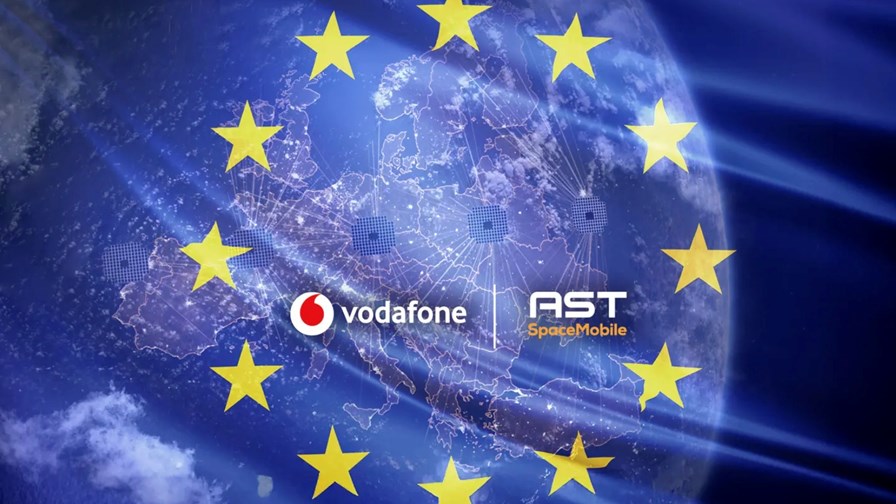
The European wholesale direct-to-device (D2D) satellite communications joint venture dubbed SatCo, formed in March by low-earth orbit (LEO) satellite operator AST SpaceMobile and Vodafone Group, one of its investors, is to locate its main Satellite Operations Centre (SOC) in Germany. SatCo’s plan is to “give consumers and businesses access to secure space-based cellular broadband connectivity via their domestic mobile network operator” in all European markets, notedVodafone in March. The facility, which will be located near either Munich or Hannover, “will allocate and map satellite connectivity used by SatCo to serve mobile network operators (MNOs) across Europe to ensure ubiquitous mobile broadband in underserved areas and support emergency services and disaster relief agencies,” explained the telco, adding that MNOs in “21 European Union (EU) member states and other European countries have expressed interest in adopting the service, with commercial launch planned to commence from 2026.” As with most developments these days, there is a ‘sovereign’ angle: Vodafone says the constellation serving EU markets “will include a comprehensive ‘command switch’ feature to support European oversight and security. This capability supports updating all telemetry, tracking and control (TTC) encryption keys for both S-Band (used to connect smartphones from space) and Q/V-Band (used for links between satellites and earth stations). It also allows for the modification of service encryption keys for communications across the continent… [and] manages the activation, deactivation and direction of satellite beams in Europe.” Vodafone Group CEO Margherita Della Valle noted: “SatCo delivers a sovereign satellite solution to the whole of Europe. It will give European operators access to secure and resilient satellite communications, complementing existing terrestrial telecommunications networks. By establishing a satellite constellation in the EU and our principal command centre in Germany, we are ensuring the next frontier of communications infrastructure is firmly embedded in Europe.” The news came a day after UK national operator BT Group, which has no plans to launch direct-to-device (D2D) services, announced a LEO-delivered satellite broadband service partnership with SpaceX’s Starlink, one of AST SpaceMobile’s main competitors. For further details, including SatCo’s spectrum aspirations, see the full announcement.
Sticking with the European sovereign services theme… Open-source cloud software giant Red Hat has announced a “confirmed sovereign support” solution, described as a “fully EU-anchored support experience”, for the 27 member states of the European Union “to address the critical strategic imperative for digital sovereignty in Europe.” This new support offering is “purpose-built to deliver dedicated EU citizen-driven technical support from within the EU for Red Hat software subscriptions, providing a new level of verifiable local control over critical IT operations,” the IBM-owned company noted in this announcement. Chris Wright, CTO and senior VP of global engineering at Red Hat, noted: “More and more European business leaders are looking to digital sovereignty as a way to help drive economic differentiation in a global marketplace, as well as insulate operations from geopolitical dynamics and safeguard EU data, technology and operations. At the same time, these leaders want to further cloud infrastructure resiliency and AI innovation goals through strengthened supply chain transparency, jurisdictional security, compliance and autonomy.”
Meanwhile, Kyndryl, the managed IT infrastructure services giant that was spun off from IBM in November 2021 into a separate, independent public company, has struck a deal to acquire Solvinity Group, a Netherlands-based provider of secure managed cloud platforms and services, for an undisclosed sum to enhance its sovereign services portfolio in Europe. “By combining Kyndryl’s mission-critical advisory, implementation and managed services capabilities with Solvinity’s private and hybrid sovereign cloud offerings, Kyndryl is continuing to innovate how customers manage, secure and automate workloads,” noted Kyndryl. “These expanded capabilities will support customers in running highly sensitive workloads with stringent security and compliance requirements in navigating evolving regulations on data sovereignty,” it added. Petra Goude, president of Kyndryl Strategic Markets, stated: “Kyndryl’s acquisition of Solvinity will enable us to offer customers expanded services in modernising, innovating and securing sensitive and complex workloads. This transaction reflects our proactive investment in mission-critical capabilities as we empower customers to bolster security, respond to increasing regulatory requirements and transform for a competitive and rapidly evolving landscape.”
And still in Europe… Generative AI giant Anthropic, the developer of the Claude large language model (LLM) that counts the likes of Amazon, Cisco, Google and SK Telecom amongst its investors, is opening offices in Paris and Munich as its “global operations expand across Europe,” the company noted in this announcement. Anthropic plans to further expand its European footprint alongside its current offices in London, Dublin, and Zurich. The moves are the “latest example of Anthropic’s extraordinary momentum in Europe – and all around the world. In the past year, we have tripled the number of employees we have in the EMEA region and will continue to expand our headcount with the addition of these new offices. Businesses across Europe are trusting Claude with their most important work. As a result, EMEA has become our fastest-growing region, with a run-rate revenue that has grown more than 9x in the past year. The number of large EMEA business accounts – customers that each represent over $100,000 in run-rate revenue – has also grown more than 10x over the past year,” the AI company boasted.
Sovereign services and infrastructure strategies are increasingly important to the tech and telecom sector. The TelecomTV team will be exploring this trend at the Digital Sovereignty Forum, a new, in-person workshop-style event being held in London on 3 December. Get all the details here.
The global market for telecom and pay-TV services is expected to be worth $1.532tn in 2025, a year-on-year increase of 1.7% from 2024’s $1.51tn, according to the research team at IDC. In 2024, the year-on-year increase in the market value was 2.2%, so the growth rate for the global market is slowing, it seems. Indeed, the IDC team expects the global connectivity services market to grow at a compound annual rate of 1.5% over the next five years, so there’s not a lot for the telco community to cheer about from this forecast. “As highlighted by recent IMF forecasts, the overall market environment is expected to be less stimulating than in previous years, shaped by rising protectionism and persistent economic uncertainty in key regions,” noted IDC. You can see IDC’s regional expectations in the chart below. A number of other negative factors are also affecting growth but “most notably, saturation in mature telecom markets continues to be the primary constraint on expansion, limiting upside potential in traditional service segments.” With little hope for growth, the IDC team suggests telcos “are expected to shift focus toward margin improvement, operational efficiency and monetisation of emerging technologies to sustain shareholder value. Leading telecom [operators] are, therefore, deploying AI across network operations, customer service and fraud prevention to drive efficiency and reduce costs.” This is not news to anyone, of course, but according to IDC, such “initiatives are already contributing to EBITDA margin gains, with predictive maintenance and automated support systems leading the way. AI also enables personalised offerings and dynamic pricing, boosting ARPU [annual revenue per user] and reducing churn. Fraud detection systems enhanced by AI are helping reduce losses, reinforcing customer trust and regulatory compliance. With AI accelerating time-to-market for new services, [telcos] can better monetise emerging technologies like 5G and edge computing. In the longer term, as AI continues to evolve, it will be increasingly recognised not as a mere technological enhancement but as a strategic enabler poised to drive sustainable growth for telecommunications operators.” The comments accompany the publication of IDC’s latest Worldwide Semiannual Telecom Services Tracker – let’s hope the report, and the analyst team, have more detailed and nuanced suggestions regarding the impact of AI to share with their telco clients.

Having decided to abandon its infrastructure-based cellular strategy, strike a “hybrid mobile network operator” deal with AT&T for its Boost Mobile operations, and sell its spectrum assets, Echostar has published a somewhat unusual earnings report for the third quarter of this year. “The third quarter was marked by the signing of two transformative spectrum transactions – one with AT&T for $22.65bn and the other with SpaceX for $19bn,” noted the company. “The transactions were instrumental in resolving the FCC’s review of the company's spectrum utilisation. Following the announcements of the transactions, the FCC confirmed EchoStar had met all 5G network buildout requirements and other related obligations had been fully satisfied.” Those deals, announced during the third quarter, were then followed on 6 November by an “amended agreement with SpaceX to sell its unpaired AWS-3 wireless spectrum for $2.6bn in SpaceX stock.” Now that Echostar has more than $40bn in assets from its spectrum deals, what will it do? “EchoStar Capital will be responsible for investing new capital from the recent spectrum transactions in order to fuel future growth opportunities for EchoStar Corporation,” it noted. Hamid Akhavan, who has presided over the recent developments as the CEO of Echostar Corporation, will now become CEO of EchoStar Capital, while Charlie Ergen, chairman and co-founder of EchoStar Corporation, will be president and CEO of EchoStar Corporation and “assume the operating responsibility for the pay-TV and wireless business units,” the service provider noted. “EchoStar will soon be in the unique position of having substantial available capital, vastly changing its scope of opportunities. Through EchoStar Capital we will fuel EchoStar’s growth into new and complementary arenas, beyond its successful pay-TV, wireless and enterprise business units,” stated Akhavan. “This is an opportune moment in time for our business to go on the offense as we build upon our 45-year institutional heritage and forge a new path forward for creating and developing opportunities in our strategic expertise domains that will provide attractive value creation for EchoStar and its shareholders.” Let’s hope things go better this time around… In the meantime, having decided not to run its own mobile network any more, EchoStar has begun the “abandonment and decommission process for certain portions of its 5G network that will not be utilised in EchoStar’s hybrid MNO business model, resulting in a significant adverse change in the intended use of such assets,” the company noted. “These developments resulted in a one-time, non-cash impairment charge of $16.48bn.” Ouch. As a result of those charges, Echostar reported third-quarter revenues of $11.2bn and a net loss of almost $13.3bn.
– The staff, TelecomTV
Email Newsletters
Sign up to receive TelecomTV's top news and videos, plus exclusive subscriber-only content direct to your inbox.