- Netomnia acquired by nexfibre for £2bn
- Ericsson teams up with Mastercard, Microsoft
- Lumen unveils multi-cloud gateway
In today’s industry news roundup: UK altnet Netomnia is being acquired by wholesale fibre player nexfibre, which is closely related to VMO2, for £2bn; Ericsson has struck partnerships with Mastercard for mobile money evolution and Microsoft for enterprise connectivity management; Lumen Technologies has further expanded its enterprise services portfolio; and much more!
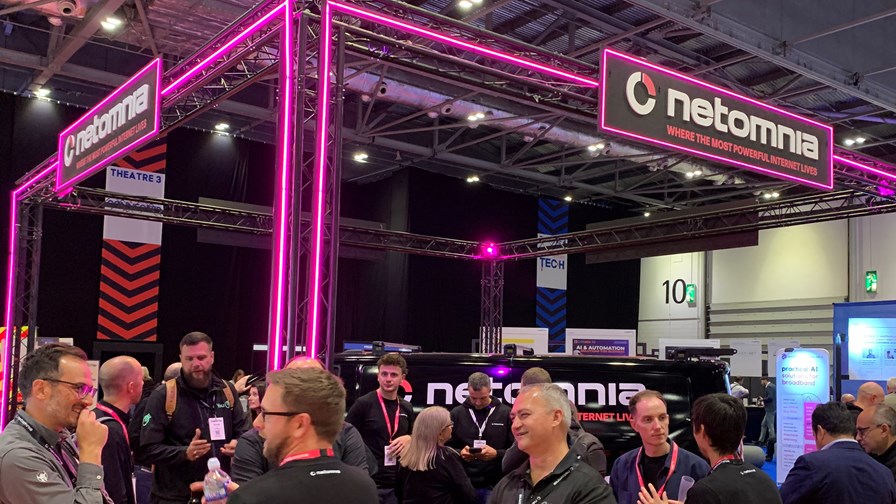
As expected, major UK fibre broadband altnet Netomnia (aka Substantial Group) has agreed to be acquired by nexfibre, the UK fibre broadband wholesale operator that is owned by Liberty Global, Telefónica and Paris-based private equity outfit InfraVia Capital for £2bn: The Financial Times reported on the planned deal at the start of February. The deal creates a major rival to BT’s wholesale fixed line division Openreach and to CityFibre, as Netomnia’s network reaches more than 3 million UK premises and is already serving 460,000 customers through its retail brand, YouFibre, and a combined Netomnia, nexfibre and the more than 2 million premises on the upgraded network of Virgin Media O2 (VMO2), which is jointly owned by Liberty Global and Telefónica, “will create a scaled, financially secure challenger to BT Openreach, with a full fibre footprint of approximately 8 million premises by the end of 2027,” noted Netomnia. “When combined with Virgin Media O2’s wider fibre rollout… the two networks together will reach up to 20 million premises, significantly expanding wholesale choice for internet service providers,” it added. In a joint statement, Vincent Levita, founder and CEO of InfraVia Capital Partners, Mike Fries, chairman and CEO of Liberty Global, and Marc Murtra, Chairman & CEO of Telefónica, stated: “By bringing our strengths together, we are creating a scaled and financially secure wholesale fibre challenger to BT Openreach – one that will enhance competition, strengthen the UK’s digital infrastructure and deliver greater choice and quality for consumers and businesses. This transaction unlocks £3.5bn in international investment and reflects our shared confidence in the UK as a highly attractive market for long-term investment, supported by the government’s economic policies. We are committed to accelerating full-fibre coverage and helping ensure the UK remains competitive and ready for the future.” Once the deal is completed, nexfibre will retain Netomnia’s network assets and sell the altnet’s retail business, including the YouFibre and Brsk brands, to VMO2 for £150m. There are a lot of moving parts to this deal – to drill into the details, check out this announcement from nexfibre’s owners and this announcement from Netomnia. Ultimately, though, it will result in a much stronger single competitive wholesale fibre operator for the UK market. Kester Mann, director of consumer and connectivity at analyst and research firm CCS Insight, believes this deal will “fire the starting gun on an expected major shake-up of the UK broadband market as industry sentiment shifts from build to buy. Following several much smaller deals, the nexfibre-Netomnia tie-up is the first meaningful step toward much-needed consolidation of the UK fibre sector. Further mergers and acquisitions are bound to follow as the struggling and indebted ‘altnet’ sector comes to terms with rising costs, heavy competition, and slower-than-expected take-up.”
Ericsson has teamed up with Mastercard in an effort to “reshape how money moves across the world”. The partners plan to integrate the Ericsson Fintech Platform (Mobile Financial Services) with Mastercard Move (its portfolio of money movement solutions) to “empower telecom service providers, banks, and fintechs to expand digital wallet capabilities, launch new payment services, and reach unbanked or underbanked communities,” noted Ericsson in this announcement. The Swedish vendor’s “pre-integrated application programming interfaces (APIs), cloud-native deployment and compliance-ready infrastructure simplifies fintech connectivity to Mastercard Move,” added Ericsson.
Ericsson has also unveiled a joint development with Microsoft that will result in the integration of “advanced 5G capabilities directly into Windows 11”. The move will enable enterprises to access “secure, policy-driven laptop connectivity” that can simplify “how IT departments manage, protect and scale mobile PC fleets,” according to this Ericsson announcement. The joint solution combines Microsoft Intune device management with Ericsson Enterprise 5G Connect (formerly Ericsson Enterprise Virtual Cellular Network), which is “an AI- and cloud-analytics-powered platform that continuously monitors network quality and automatically adjusts connectivity for best performance and security”: The combination of the capabilities will enable IT teams to “automate how devices connect, seamlessly switch between communications service providers’ (CSPs) networks, and apply in-house enterprise policies,” according to Ericsson.
US long-distance network operator Lumen Technologies has expanded its enterprise networking portfolio with Lumen Multi-Cloud Gateway and enhanced metro data center connectivity across major US markets. “Moving data across hybrid environments is a lot like managing air traffic – you need clear routes, predictable timing, and the ability to adjust when conditions change,” stated Jim Fowler, Lumen’s chief technology and product officer, in this announcement. “Most legacy networks weren’t built for that level of coordination. With our expanded network fabric, Lumen gives enterprises a way to move data securely, effortlessly, and consistently across clouds, data centers, and edge locations, designed to reduce the complexity that hold AI-driven operations back.”
The value of the mobile core network (MCN) market, comprising multi-access and edge computing products as well as a broad range of packet and voice core systems, grew by 15% year on year in 2025, according to research firm Dell’Oro Group, with the 5G MCN market accounting for 50% of the total market. “5G MCNs led the way in 2025 growth, as 5G standalone (5G SA) networks reached an inflection point and moved towards mass market appeal, as more 5G SA networks expand in population coverage in urban, suburban, and rural areas,” noted Dave Bolan, research director at Dell’Oro in this press release.
– The staff, TelecomTV
Email Newsletters
Sign up to receive TelecomTV's top news and videos, plus exclusive subscriber-only content direct to your inbox.