Building profitable AI-native networks from 5G-Advanced to 6G
To embed our video on your website copy and paste the code below:
<iframe src="https://www.youtube.com/embed/u2WNqGWe6mY?modestbranding=1&rel=0" width="970" height="546" frameborder="0" scrolling="auto" allowfullscreen></iframe>
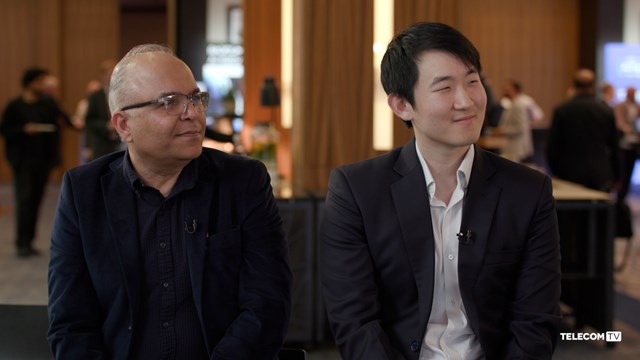
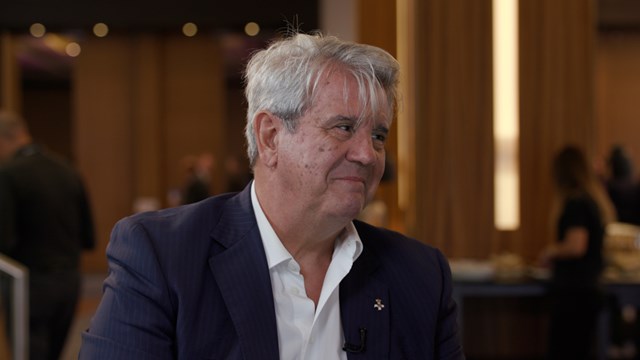
Hello, you're watching TelecomTV and our panel discussion on building profitable AI native networks from 5G advanced to 6G. I'm Guy Daniels. And today's discussion looks at the impact of AI on how we build radio access networks. We have brought together experts from Nokia and NVIDIA to explore how AI RAN is reshaping mobile networks. We're going to discover what telecom providers need if they are to capture the business opportunity unlocked by AI RAN. And we are going to discuss the growing importance of programmable networks to enable a connection of network capabilities with enterprise applications creating opportunities for cross industry innovation. Well, I'm delighted to say that joining me on the program today are Mikko Jarva, who is head of portfolio and technology for network APIs at Nokia. Aji Ed, who is head of cloud AI at Nokia and Soma Velayutham who is vice president AI and telecoms at NVIDIA. Hello everyone. It's really good to see you all. Thanks so much for taking part today. Aji, if we could come to you first with NVIDIA's landmark $1 billion investment in Nokia, which was announced last October. How is this partnership poised to redefine AI native networks by bringing GPU accelerated compute to the edge?
Aji Ed, Nokia (02:03):
Thanks Guy. So the way I look at it, this investment is really a turning point for our industry. It brings together two global leaders, the Nokia in wireless network, NVIDIA in AI and accelerated compute. But what is exciting is we are now able to bring GPU accelerated compute right to the edge of the RAN network, to the base station, to the cell site. Instead of sending everything back into the data center, we can run real time AI in the baseband and we can therefore bring smarter algorithms, better spectral efficiency and the ability to improve the performance through software defined architecture. That is the key. So now we are co-creating this with NVIDIA. We are already seeing significant potential and gains that is helping us to achieve this potential. So this is setting up perfectly for the path towards AI native 6G, where network becomes intelligent, adaptive and capable of hosting entirely new applications and services. So this is not just an investment, it is a catalyst. It accelerates the evolution from network that simply connects people to a network that connects intelligence connecting people to connecting intelligence.
Guy Daniels, TelecomTV (03:34):
Yeah, Aji there's exciting possibilities here. So let's get NVIDIA's perspective on this and I'll come to Soma next. Soma, building on the collaborative momentum from this recent Nokia alliance, what breakthroughs in NVIDIA's infrastructure do you anticipate will supercharge edge AI?
Soma Velayutham, NVIDIA (03:53):
So NVIDIA, as you know, is the leader in AI infrastructure and the first thing that you need to actually deliver is increased value in the telecom industry and supercharge edge AI is you need the networks to be programmable. Today if you look at the base stations, they are single purpose and the first step of it, it's like a three step process. You need to be software defined and once you are software defined, then you can actually make it programmable and when you make it programmable you can actually value add with AI. So it's like a three step process. So we are very excited to work with Nokia who is a leader in wireless industry 5G and 6G and then bringing their workload to the NVIDIA compute as a software defined AI native 5G 6G. When you bring that Nokia workload as a programmable software defined, then we can actually add programmability and then add layer on top of that.
(04:56):
As of my last check, the Apple store has 2 million applications. This is very similar to what happened from the feature phone to the smartphone era. It had to be software defined and once you become software defined, you can actually make it programmable and accessible and once it's accessible a lot of value comes on top. As I said, about 2 million application as of January 26th in the iOS app store and the same thing is we look at the base stations of tomorrow is going to be software defined and programmable and add AI as a value on top of that. This is really going to supercharge edge AI, many applications we'll talk about later, but for now it's about all about creating value with AI.
Guy Daniels, TelecomTV (05:42):
And Soma there's been three distinct areas that have emerged here. I'd like to ask you about the differences and interplay between AI on RAN, AI for RAN and AI and in an AI enabled RAN framework because it can be a little confusing to grasp.
Soma Velayutham, NVIDIA (06:02):
Thank you. That's actually a very good breakdown as AI RAN is a big word and this is a good subsegment segmentation of the universe of AI RAN and in some sense this was actually formed as in the AI RAN Alliance, which Nokia and NVIDIA both were founding members about two years ago in order to make this happen. And AI on RAN is about AI applications running on top of RAN. So it's like the over the top AI application and today tokens are the fastest growing workload on top of RAN. So how can a RAN network efficiently deliver tokens and AI applications on top of RAN? And this could include edge applications like computer vision, robotics, connected cars, as well as simply delivering tokens for ChatGPT. Then you have the second segment of it which is AI for RAN and this is all about spectral efficiency and extreme cost efficiency. As traffic explodes,
(07:10):
as you know in the last 10 years the data utilization has gone up exponentially but we need to maintain the cost efficiency of delivering that workload over the air spectral efficiency and gbps per dollar. And however, if you look at most of the RAN applications or the RAN features, they are RAN algorithms. They are about 40 years old. Many of these are not utilizing AI and Nokia with its Bell Lab has a lot of leadership in AI for RAN and we've been collaborating together to use AI in the RAN or for RAN to deliver spectral efficiency way beyond what has been done in the last 40 years. So this is the next exciting segment and there's been a lot of demos and prototypes that's been built and released and there will be a lot that also be shown at the upcoming MWC. Then you have AI and RAN,
(08:10):
this is another opportunity to monetize because networks RAN networks are typically built for the peak and when you build something for the peak, by definition you're going to be underutilized. It's like having an airlines build 300 seats but they are flying at about 25% occupancy. It's not a profitable venture. However that's what you had to do in the previous technology. But with now accelerated computing and NVIDIA compute, you can actually have a fully software defined data center that can actually run AI and RAN as co-tenants in this. So when you are not utilizing the computer for RAN, you can actually release that capacity to tokens. So and NVIDIA compute that we've been collaborating with Nokia here is the world's first computer that can efficiently run RAN and the most efficient to run tokens. So this is the AI and RAN. So three buckets. One is AI on RAN to deliver application over the RAN AI for RAN to deliver spectral efficiency for the RAN and AI and RAN when you are underutilized, how to use it as a multi-tenant data center to monetize the underutilized capacity.
Guy Daniels, TelecomTV (09:32):
That's great Soma, thanks very much for making that clear and let's go into some more detail on each of these now we'll start with AI on RAN. Mikko let me turn to you. How does the convergence of AI edge and network programmability with 6G enable new use cases, applications and monetization and what are some examples of these possible applications?
Mikko Jarva, Nokia (09:59):
The capabilities like AI compute at the Edge, AI native network, the programmability and the software defined nature of the networks design the core and heart of 6G of course. And then the question is how do we utilize them? Well what are they used for? Well the programmability of the network uses this capabilities to optimize the network to deliver specific workflow data. Soma was referring to the tokens, making sure that the first and the last token get through the network as fast as possible into the right AI workload. That's about optimizing the network for the AI workloads and other workloads and the software defined nature of the network enables that much better. It supercharges the capabilities of the network to deliver tokens. Of course related to that is also optimizing how and where the network, the data flows in the network. So it's about optimizing routing. In many cases
(11:03):
also, AI applications are uplink heavy so it's important to get a lot of data from these devices, phone cameras into inference and then getting some kind of a response or inference back. So it's a lot about also optimizing or bringing the uplink and then of course optimizing also or prioritizing specific devices or workflows in the network so that they go through with the high fidelity and in time. And then the other capability or possibility that is enabled with these capabilities is bringing the application related AI compute co-located with the network using some of the same infrastructure that is used for the network function, of course with acute separations. And of course the AI computation capabilities in the network, that's very close of course where the data is being created and where the inference needs to go back to essentially where the tokens flow and it's also a secure place. Now,
(12:14):
so those are some of the concepts. What the network, the software defined network can do is optimize essentially how the tokens flow over the network and where they are being processed now then do the applications. I like what Aji was talking about, the connecting intelligence. The applications are all about connecting intelligence and if we can, through software defined means, can shape the network for connecting intelligence, then that will help power value creation. And of course with the value creation, the monetization follows. So what are the applications? Obviously AI applications, mission critical applications, whether it's autonomy, security, first responders, it's about video analytics, then inference on the demand inference, high precision, high fidelity inference on demand in a close and secure place. And in fact when we launched our collaboration and announced it at NVIDIA GTC late last year, we had a nice demonstration of one of these applications. We showcase how we can process multiple video feeds for drone detection from the network and then bring the drone detection application placement onto the network edge, on demand, and then utilizing the same infrastructure that we are using also for the radio compute. So yeah, that's some of the examples of the concepts, possibilities and then the applications that this transformation enables.
Guy Daniels, TelecomTV (13:58):
Thanks very much Mikko. This is really interesting. Well let's move on now to AI for RAN and Aji let's come across to you to explain this to us. What performance or operational efficiency improvements have you seen or do you expect to see from using AI RAN?
Aji Ed, Nokia (14:16):
Yeah, I think this is a very important domain. Like all this, the different categories, what we talked about, this AI for RAN that brings, there are two types of improvements. What I can categorize. One is operational efficiency improvement and the second one is spectral efficiency improvement. So when I talk about operational efficiency improvement, and this has been there in the industry for some time where we build AI enabled automation and tooling like SON, SMO and all of these different tools which would help to improve the efficiency of the network, operational efficiency of the network. And this is consistently improving with new developments, what's happening in the SMO space. So that continues. Now where it helps with the GPU accelerate computing with AI RAN is in the spectral efficiency improvement, the spectral efficiency as you can imagine, the spectrum is the biggest asset for an operator. There's
(15:18):
billions of investment done in the spectrum, getting the spectrum and getting the right utilization and improved utilization of spectrum is the key. So here how we see is, and again into three different buckets, the spectral efficiency improvements which are possible, or which we foresee in AI. One is from an parallel compute perspective from a GPU is inherently more suitable for parrallel compute that helps compared with any other traditional systems. So parallel compute where we can utilize, bring additional new advanced beamforming techniques, channel estimation for uplink channels, et cetera, advanced MIMO receivers. So all of these aspects would help by default by using the GPU accelerated computing. That's one segment which is parallel computing. The second segment, I would say, is using the machine learning based algorithms. So you could bring a lot of new ML models, machine learning models for let's say multi-user MIMO pairing, which improves the spectral efficiency, link adaptations improvement or even ML based channel estimation, et cetera.
(16:33):
So there are endless opportunities which we can bring in, use the new machine learning models in this category. And the last but not the least is again how to improve the spectral efficiency using new algorithms. Of course we are talking about DeepRx, DeepTx and maybe new advanced channel estimation techniques like RKHS in addition to what we're using MMSE, what we're using today. So there are multiple different ways this compute GPU accelerated computing could help to bring the efficiency. So all of this put together, we strongly believe this is the path forward and the GPU accelerated computing using in AI RAN will improve the spectral efficiency and that's where we Nokia, NVIDIA and with other industry partners are working together.
Guy Daniels, TelecomTV (17:28):
Thanks Aji. There's a lot of focus on spectral efficiency at the moment. Well let's now look at AI and RAN Soma. Let's come back to you. How can a GPU powered brand enable new revenue sources and what does it mean for possible applications and monetization opportunities for the telecoms providers
Soma Velayutham, NVIDIA (17:49):
In media computing platform, the AI accelerated computing platform is a hundred percent software defined and programmable and AI Native. And this is the first computer in the world that actually can run high performance RAN workload like Nokia vRAN and at the same time deliver the tokens for ChatGPT. So you have one heterogeneous computer that can actually do RAN very well at the same time, do tokens very well. And you know that in parallel that there is a huge insatiable demand for tokens and delivering tokens in the world. You can see the growth of GPU-as-a-Service, Token-as-a-Service, Model-as-a-Service. I mean this is just growing exponentially depending on whose report you read, hundreds of billions of dollars market. Now every operator who's actually deploying the NVIDIA compute platform and the Nokia RAN software, what they're able to do is monetize that compute asset instead of just using it 30% of the time on an average and occasionally use it during the peak.
(19:00):
That asset that's deployed now gets utilized more than 80% or 90%. And typically when we talk about utilizing the same compute, RAN compute, most people tend to think about the traffic is coming from the access network. But this is a computer that can process both AI and RAN and the traffic can come from either through the access network, the RAN access, which is proportional AI traffic will be proportional to the RAN traffic, which is edge AI. The second opportunity is because all these data centers, these best stations are connected to the cloud, connected to the packet core and the data center, the roundtrip delay from the cloud to the furthest base station in the US for example, is actually less than 40 milliseconds. You can actually dispatch a workload from the cloud to the base station if the base station is underutilized. So think about it as a grid of computing that sits around the cell site.
(20:02):
When it's underutilized, this computing fabric can actually offer itself to the cloud to be offloaded. GPT-4o actually charges 5 million per one $5 for 1 million tokens. And this is the high value token. And if you take open-source models like some open-source model in bedrock, they charge about 10 cents per million token depending on where you are in the model value. But here you are, you have a computer that operators can invest, run a very highly spectral efficient workload for RAN and whenever it's underutilized, actually turn around and offer it as tokens per dollar and make anywhere between 10 cents per million token to $5 a million tokens and monetize it. So this is a fantastic opportunity. We actually in a very exciting crossroad to truly start looking at RAN as a AI computing fabric.
Guy Daniels, TelecomTV (21:06):
Lot of interesting new ideas there, Soma, this is absolutely fascinating, but I'd like to return for a second to 6G and Soma, let me ask you, to what extent is AI RAN future-proofed for 6G?
Soma Velayutham, NVIDIA (21:21):
A hundred percent. Basically everything that we do in AI RAN is all about software defined. And when you're software defined, whether it's 5G or 5G advanced or 6G, it's all software defined. This compute platform that operators will invest and deploy is future proof and it's also very flexible. They can choose the kind of fronthaul they need, whether they want it to be a different split or they can choose different RU vendors or they can choose different configurations. As C-RAN and D-RAN, it's completely futureproof and because it's built with AI native, as Aji mentioned, all the new algorithms, if you look at 3GPP release 20 and 21, they're talking about a large number of AI based algorithms and this is the best platform to actually start delivering this base AI-based algorithms in the future.
Guy Daniels, TelecomTV (22:17):
Yeah, thanks very much Summit. Well let's go across to Aji and get your views as well. What do you make of AI RAN for 6G Aji?
Aji Ed, Nokia (22:26):
I one hundred percent agree with what Soma said. The architecture is completely software defined and programmable. What it means is we can bring any new algorithms, new AI pipelines, new capabilities, what I mentioned before with the new algorithms like RKHS or new AI machine learning models, which we can bring to improve the efficiency. And even if we talk about the 6G, the features that we can bring it on top of the hardware. So if we don't need to really worry about the new hardware refresh cycle from a capability standpoint. So that's exactly what 6G requires. So a network that can evolve, learn and adapt over a period of time. So it's not just, AI RAN is not just compatible with where 6G is going. It's more, I would say is a stepping stone that makes AI Native 6G network possible. So this is extremely crucial that we are building the software defined, flexible, fully flexible, fully programmable architecture for the future. That's what is happening with AI.
Guy Daniels, TelecomTV (23:31):
Great, thanks so much Aji because we are hearing that that 6G also requires to be AI native. So Mikko, let me come across to you and ask you what do you think is the best architecture and concept for the evolution of the network to AI native?
Mikko Jarva, Nokia (23:46):
Yeah, I think there is sort of three layers for this architecture evolution and overall transformation. And the first layer is the AI network , the AI native network itself. And that means that the network functions in RAN, in core ,the management functions and optimization analytics functions, et cetera. They become AI native. That means that they use accelerated common computing and software defined methods in there. But because of the accelerated computation capabilities within the network, that AI native network as a whole becomes also distributed platform for AI computing and applications. So that's the first transformation, making the network as a whole into AI native construct and a platform and apply fully defined applying software defined principles. Then the next layer is how that network becomes programmable and how it's being accessed by applications and how do the applications signal to the network, what do they need and how do the applications bring back or get data from the network to understand the network's capabilities and also can get information from the network.
(25:14):
What does the network see and senses around this? I would call AI native exposure. That means AI native and agentic interface towards the network. And this would be obviously building on top of APIs through MCPs and also exposing network specific agents as gateway protocols towards the consumption of the network. And then the third layer is the agent, the consumption of the network. So we will see more and more external agents accessing network capabilities, placing compute into the network, delegating tasks for the networks to do and shaping the network for the mission that those agents are using. For these three layers, AI native network holistically as the platform AI native exposure, how we communicate and exchange data with that network, and then the consumption of the network through AI agents.
Guy Daniels, TelecomTV (26:16):
Thanks very much Mikko. Just about time for one final question that I'd like to put to Soma and Aji. Soma, what have been the milestones so far? What's been achieved so far and what's coming next?
Soma Velayutham, NVIDIA (26:31):
2025 has been an amazing year. I've been in the industry for 30 years, actually 25 is my 30th year, but I feel like a kid at a college working with Nokia and the collaboration has been amazing. We have delivered the world's first live over the air call, Nokia world-class software on NVIDIA's platform. We've made a live call and over the air, it's been amazingly fulfilling to get to that point and it all happened within months, not years. And that shows the power of software defined and moving on in 26, we'll demonstrate that the joint solution is competitive to a traditional solution if not even exceed the traditional solution performance from gbps per dollar and gbps per watt and opening up the larger opportunities for the industries to accelerate the adoption of this AI RAN platform.
Guy Daniels, TelecomTV (27:34):
Thanks very much, Soma and Aji, what about you? What's the next milestone to look out for AI RAN.
Aji Ed, Nokia (27:41):
Like Soma said. So we are truly excited about this journey together and we have been on this journey for some time and now when we look ahead, so immediate milestones, what we have in the MWC and here, what we are focusing on, all these three different segments, what we talk about AI on RAN, AI for RAN, AI and RAN, and we'll have real demonstrations, real use cases available at MWC. And at the same time we are also expanding with more and more customers. We'll announce more and more customers partnerships with during MWC and we will have a performance and power efficiency demonstrations and competitiveness, which we will be executed during the course of this year. And on top of it, there are multiple different milestones which we have defined in terms of the different proof of concepts and trials, which will validate all these different aspects of performance, spectral efficiency improvement, power efficiency, and all of these different aspects in 2026. And we are truly excited and this is the kind of journey that we want to undertake for the future to create AI Native 6G.
Guy Daniels, TelecomTV (28:51):
Indeed and Aji, looking forward to seeing developments, but we must leave it there for now. That's all the time we have. Thank you so much to all of you for taking part in our discussion today and you can find further information on AI RAN and indeed all of the subjects covered in today's program by following the link in the text accompanying this video. For now though, thank you for watching and goodbye.
Please note that video transcripts are provided for reference only – content may vary from the published video or contain inaccuracies.
Panel Discussion
This TelecomTV webinar brought together experts from Nokia and NVIDIA to explore how AI-RAN is reshaping mobile networks. GPU-accelerated AI-RAN enables the transition from 5G to AI-native 6G, helping mobile network operators benefit from the fusion of AI and RAN. It scales up accelerated AI computing for highly efficient 5G-Advanced and AI-native 6G (AI-for-RAN), leveraging computing and infrastructure synergies (AI-and-RAN) and unlocking new monetisation opportunities (AI-on-RAN).
The discussion highlighted what telecom providers need in order to capture the business opportunity unlocked by AI-RAN and explored the growing importance of programmable networks for enabling the connection of network capabilities with enterprise applications, creating opportunities for cross-industry innovation.
For more information please visit nokia.com.
First Broadcast Live : February 2026