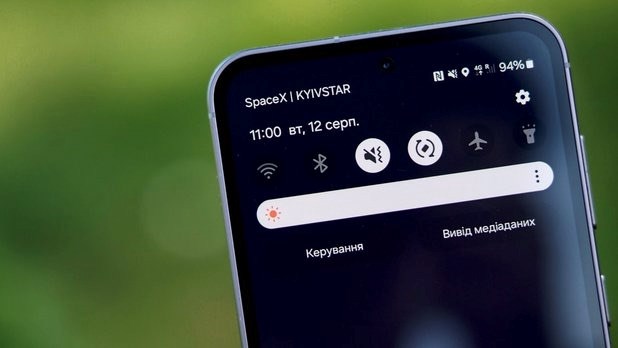
- Kyivstar’s D2D service attracts 3 million users
- Verizon is all set to close $20bn Frontier FTTP acquisition
- Nigeria awards three more satellite service licences
In today’s industry news roundup: In less than two months Kyivstar has registered 3 million users for its Starlink-enabled direct-to-device (D2D) service; Verizon is on course to close its acquisition of fibre broadband operator Frontier Communications on 20 January; Amazon Leo and Sateliot now have licences to offer satellite services in Nigeria; and more!
Kyivstar, the Ukraine operation of international telco Veon, says it has more than 3 million registered users, equivalent to more than 10% of its customer base, for Starlink Direct to Cell, the direct-to-device (D2D) service it launched in partnership with Starlink late last November. Since the launch, more than 1.2 million SMS messages have been delivered via satellite connectivity. Veon noted: “The technology has proven especially vital in Ukraine’s southern and eastern regions, underscoring the crucial role of connectivity in these areas and reaffirming Veon and Kyivstar’s dedication to maintaining resilient communication in Ukraine. The satellite technology has been most broadly used in five cities: Kyiv, Lviv, Vinnytsia, Khmelnytskyi and Dnipro. The service is free of charge to all 4G smartphone users on Kyivstar network (about 15.5 million subscribers) through their regular tariff plans and without further modifications to their device settings. The technology operates in open areas with a clear line of sight to the sky. Kaan Terzioğlu, Veon Group CEO and executive chairman of Kyivstar, stated: “The rapid adoption of Starlink Direct to Cell services by Kyivstar subscribers demonstrates the critical importance of enhancing Ukraine’s resilience and our customers’ appreciation for the availability of satellite-based connectivity. We will continue to lead the way in providing innovative services that Ukraine needs to build its digital future and in meeting the ever-growing demand of our customers for digital connectivity.”
Verizon has been given the thumbs up by US regulators to complete its acquisition of Frontier Communications in a deal that will expand the reach of its fibre access network by almost 30 million premises in 31 states. Californian regulators agreed the deal, which values fibre-to-the-premises (FTTP) network operator Frontier at around $20bn, can go ahead with some conditions attached. Verizon will be obligated to expand affordable voice and broadband options, including protections for low-income customers, in California. The telco giant must also invest in broadband and network reliability, and “establish comprehensive tribal engagement requirements”. To complete the deal – which was agreed in September 2024 – Verizon must also agree to a $10m partnership with the state’s university system while introducing protections for rural and copper customers. Other commitments include labour protections and infrastructure deployment, plus $500m of spending with California’s small business community, noted the California Public Utilities Commission (CPUC). Verizon CEO Dan Schulman said: “The path to closing the Frontier acquisition marks a significant milestone in Verizon’s evolution and is a bold step forward in Verizon’s transformation to regain market leadership. Upon closing, we will be uniquely positioned to offer our customers the best combined mobility and fibre experience for mobile, home internet and other essential services across a significantly expanded footprint.” He added, “Verizon is wholly focused on serving and delighting our customers, and earning their trust and loyalty. After the transaction closes next week, our greatly expanded footprint will enable us to provide more value to more households and businesses in more regions, driving our growth and benefitting our customers and our shareholders.” The acquisition deal is expected to be completed on 20 January this year.
Nigeria has issued more licences for satellite services, with Amazon’s Kuiper Systems (now known as Amazon Leo), NSLComm and Spanish internet of things (IoT) firm Satelio IoT Services (better known as Sateliot) joining Elon Musk’s SpaceX to make up six providers now licensed in the African country. The country’s telecom regulator, the Nigeria Communications Commission, issued the permits under its commercial satellite communications framework, which the government had designed with the hope of bringing investment into the sector, reports Reuters. Nigeria is Africa’s largest telecom market, and the decision is part of the regulator’s drive to bring next-generation non-geostationary satellite systems to the country, the NCC posted on its website. Amazon bagged a seven-year licence for Ka-band services, including fixed satellite services and mobile services, through its 3,236 satellite network Amazon Leo (renamed from Project Kuiper), while NSLComm gained similar clearance for its 264-satellite BeetleSat-1 Network. Sateliot gained approval for its planned 491-satellite cluster, though only one of its satellites is currently in orbit. They will join SpaceX’s Starlink, which had around 66,000 subscribers in Nigeria at the end of 2025, according to Connected Africa.
The governments of India and Germany have struck a new pact that will see the two countries work more closely together on telecom and emerging digital technologies. Through the Joint Declaration of Intent (JDI), both sides have committed to enhancing cooperation through the exchange of information and best practices, as well as to collaborating on emerging technologies and co-operating on areas such as policy and regulatory frameworks, telco manufacturing, and lowering trade barriers for companies in the sector. As ever with this sort of agreement, little detail was shared, as the countries will team up to create a detailed work plan, outlining more specific goals and priority areas, but the aim is to strengthen links between the country’s respective telecom and IT sectors. The agreement was signed by Indian telecom minister Amit Agrawal and the German ambassador to India Philipp Ackermann during German Chancellor Friedrich Merz’s official visit to India last week. India has been busy in recent years building up its indigenous telecom technology R&D and production capabilities – see Indigenous tech fuels BSNL’s revival.
– The staff, TelecomTV
Email Newsletters
Sign up to receive TelecomTV's top news and videos, plus exclusive subscriber-only content direct to your inbox.