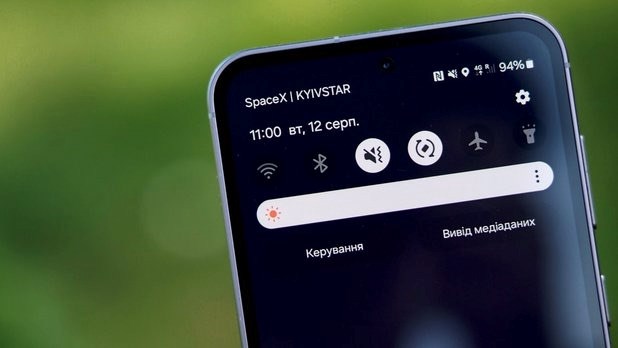
- Veon’s Kyivstar hits 5 million users for its D2D service
- Nvidia, Nokia pump more funds into AI infra firm Nscale
- VMO2 and friends linked to major fibre wholesale deal
In today’s industry news roundup: Ukrainian operator’s direct-to-device (D2D) service has been used by 5 million customers in just over three months; AI infrastructure firm Nscale has raised $2bn in its Series C round, with existing investors Nvidia and Nokia joining in once more; Virgin Media O2 (VMO2) and its sister company Nexfibre are reportedly in talks for a significant fibre broadband wholesale deal with VodafoneThree; and much more!
Kyivstar, the Ukraine operation of international telco Veon, says 5 million customers have now connected to its network via Starlink Mobile (formerly Starlink Direct to Cell) satellites using the direct to device (D2D) service that Kyivstar launched in partnership with the low-earth orbit (LEO) satellite operator in November last year. The service, which enables Kyivstar’s 22.5 million mobile customers to stay connected on regular 4G smartphones even when they are beyond the reach of the operator’s terrestrial radio access network, is being offered and provisioned under “extremely difficult wartime conditions”, including “during blackouts caused by attacks on power generation facilities, in regions with damaged infrastructure, and in areas near the frontline,” the operator noted in this announcement. “Kyivstar is shaping the global practice of integrating Starlink Mobile with its terrestrial network, and the Ukrainian use cases are directly influencing the development of direct-to-device technology. We are adapting to the real challenges we face in Ukraine today. What we are testing and refining will help other countries enhance resilient connectivity during crises, disasters, and other emergencies,” stated Ilya Polshakov, director of new business development at Kyivstar, which says more than 7 million text messages have been transmitted using the D2D service.
The bubble hasn’t burst yet… UK-based AI infrastructure firm Nscale has raised $2bn in a Series C round led by Norwegian industrial investment firm Aker ASA and venture capital firm 8090 Industries: The UK-based company’s latest fund-raising efforts value it at $14.6bn. Multiple other companies participated in the round, including Dell Technologies, Nokia and Nvidia, all of which previously chipped in when Nscale raised $1.1bn in its Series B round that was announced in September 2025. Nscale stated in this announcement that the Series C funds would “further accelerate [its] global development of vertically integrated AI infrastructure – from GPU compute and networking to data services and orchestration software – across Europe, North America and Asia.” In September last year, as part of a broad range of announcements linked to the UK/US Tech Prosperity Deal, Nscale teamed up with Nvidia and OpenAI to form Stargate UK, “an overarching infrastructure platform designed to deploy OpenAI’s technology in the UK, with a particular focus on sovereign workloads”.
UK newspaper The Times is reporting (subscription required) that Virgin Media O2 (VMO2) has opened talks with domestic rival VodafoneThree over its first major wholesale broadband services deal. The commercial agreement would see VodafoneThree, which is seeking to increase its fixed broadband customer base beyond its current 2 million, be able to buy capacity on the wholesale network being assembled by VMO2 and its parent companies Telefónica and Liberty Global, which also own a 50% stake in UK wholesale fibre network builder Nexfibre, a sister company and close partner to VMO2. According to The Times, any such deal hinges in part on the completion of Nexfibre’s £2bn acquisition of Netomnia, a recently announced deal that would give Nexfibre and VMO2 a full fibre network reach of about 8 million UK premises: Such a deal would also confirm Nexfibre/VMO2 as a major wholesale rival to BT’s Openreach and CityFibre, currently the two leading fibre broadband wholesale operators in the UK.
Still with VMO2... The UK operator says it has hit a cybersecurity milestone, having used its AI-enabled Call Defence platform, in partnership with secure voice solutions specialist Hiya, to “successfully label more than 1 billion suspected scam and spam calls to O2 customers”. VMO2 started offering the free service to its mobile customers in November 2024, and about 70 million calls per month are now being labelled as suspected scam or spam (this author gets a few each week…). According to VMO2, calls labelled as “suspected scam” are answered 42% less often and last 89% less time than unflagged calls.
Carmaker BMW has reportedly turned to NTT Docomo to develop an integrated smart-car connectivity system for its range of electric vehicles (EVs). The German manufacturer will introduce the Japanese firm’s connectivity solutions, including an embedded SIM, into its upcoming range of EVs including its flagship iX3, which is due to launch later this year, according to Nikkei Asia. The connectivity platform will also enable over-the-air updates, allowing software upgrades and new functions to be added after vehicles have been purchased, with the technology expected to feature in vehicles sold in over 100 countries, although the US and China may not be included.
Syrian authorities have launched an auction for MTN’s operating licence in the country after the African telco agreed a formal exit last week. MTN Group president and CEO Ralph Mupita met with Syrian Arab Republic Minister of Communications and Information Technology Abdulsalam Haykal at MWC26 to formalise an agreement to regularise MTN’s exit from Syria, more than five years after MTN announced plans to exit the country. MTN wrote off its investment in 2021, and the Syrian communications ministry will hold an auction for the 20-year licence and 75% stake in the business (the rest is owned by Syria’s national investment fund), with 2 May 2026 set as the final deadline for submitting bids, ahead of naming a new operator by June.
With MWC26 now behind us, there will be a flood of post-show blogs, reports and the like (TelecomTV will be contributing to this, of course!). One such comes from Ivo Ivanov, the CEO of German internet exchange DE-CIX, who highlights a major and increasingly complex challenge facing network operators right now – “intelligence sprawl”. This may not be a totally new concept but is becoming a bigger headache with AI adoption and the rollout of telco cloud infrastructures. Ivanov writes: “Instead of a simple model in which data travels from device to cloud and back again, many emerging services now depend on multiple processing environments working together simultaneously. Vehicles communicating with roadside infrastructure, connected medical devices sending alerts in real time, or IoT [internet of things] deployments coordinating across entire cities all rely on data moving seamlessly between devices, edge systems and cloud platforms, as well as mobile, fibre and even satellite networks. That means connectivity is now about more than bandwidth or uptime – it’s also about latency, routing efficiency and the ability to exchange traffic directly between networks.” See his full blog here.
– The staff, TelecomTV
Email Newsletters
Sign up to receive TelecomTV's top news and videos, plus exclusive subscriber-only content direct to your inbox.


