- Ciena and Meta claim subsea world record
- Odido loses court battle over Huawei ban
- Liberty Global bolsters Blume unit with CEO appointment
In today’s industry news roundup: Ciena and Meta are pushing the boundaries of what can be achieved in terms of ultra long-distance, unregenerated data transmission; Dutch operator’s poor run of luck continues; Liberty Global’s support services unit appoints new chief as it aims to grow its external customer base; and much more!
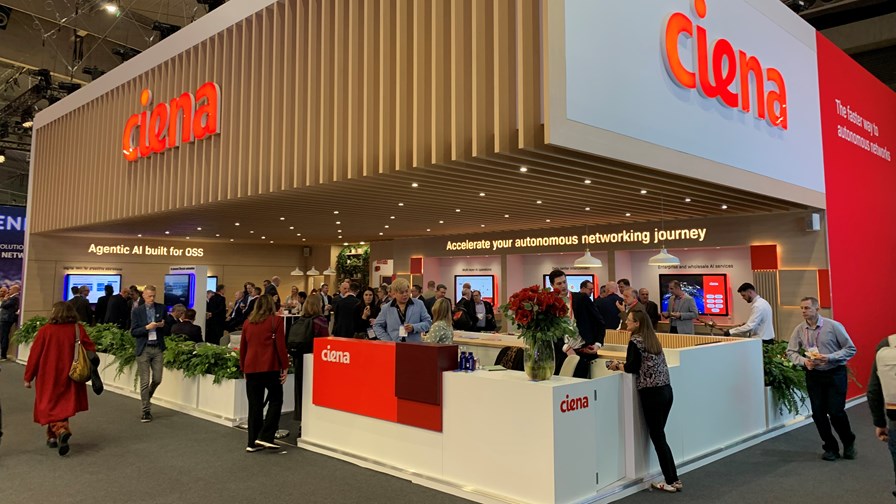
Ciena and big tech giant Meta are claiming a new world record, boasting that they have achieved “unregenerated single carrier 800 Gbit/s across a transpacific submarine cable” that runs from Singapore to California thanks to the deployment of the optical vendor’s WaveLogic 6 Extreme (WL6e) coherent optics on the Bifrost subsea cable system, on which Meta has a fibre pair. Ciena noted in this blog, authored by the vendor’s senior director of market and competitive intelligence Brian Lavallée: “800 Gbit/s was successfully transmitted across an unregenerated, point-to-point undersea optical link spanning 16,608 km, establishing a world-record distance for a single-carrier 800G wavelength.” The unregenerated part is crucial, as this means the very high capacity data transmission can be achieved without the need for amplifiers/repeaters to be deployed along the subsea cable route, which cuts capital and operational costs as well as reducing power consumption. In the blog, Lavallée noted that the recent trials with Meta “are more than technical achievements – they reflect the evolving network requirements of AI and cloud-scale innovation. This means managing an internal network with high capacity and ultra-low latency across continents to better train and deploy AI models and associated services. This technology firmly positions organisations like Meta to manage an AI-ready infrastructure over long distances while building a power and space-efficient platform that supports unprecedented demands while also delivering numerous environmental, social and governance (ESG) benefits.”

Transpacific Bifrost submarine cable system
Dutch operator Odido isn’t having much luck lately. Having suffered a major cyber breach in February, the telco has just lost a legal appeal against the imposition of a ban by the Dutch authorities on the use of technology supplied by Chinese vendors Huawei and ZTE. Business news site Nu reports that Odido initially challenged the ban, which bars Dutch operators from using Chinese technology in mobile core networks, in the Rotterdam District Court in 2023, but lost the case. Odido then challenged that decision, but the Business Appeals Tribunal has found in favour of the initial ruling and its decision means the telco can no longer make any further challenges. We can expect to see other similar challenges around the European Union member states in the next few years following the European Commission’s recent decision to force network operators to remove technology supplied by “high-risk third-country suppliers” from communications networks as part of its recent revisions to the Cybersecurity Act. In the meantime, Huawei continues to be by far the largest provider of telecom network equipment in the world, despite facing trade restrictions in multiple markets.
Hands up who knows what Liberty Blume is? For those (like us) who missed its inception in February 2025, it is the unit of telecom, digital and media powerhouse Liberty Global that used to be called Liberty Financial Services and which, building on solutions developed internally for the many different arms of the Liberty Global empire, has developed a range of business, procurement, financial and “circular services” (for the environmentally friendly corporate) that it provides to external customers. Liberty Blume has annual revenues of more than $100m and counts all of Liberty Global’s telecom operations (Telenet, Virgin Media O2, Virgin Media Ireland and VodafoneZiggo), as well as Swiss telco Sunrise (which was spun out of Liberty Global in 2024) as customers. It’s in the news because it has just appointed Ian Larkin as its new CEO, but it’s worth noting as yet another example of a company with international telecom operations leveraging its internal developments to create a new business opportunity – other examples being Japan’s Rakuten Symphony, VOIS (Vodafone Intelligent Solutions) and various parts of India’s Jio Platforms, which looks set to be more of an international presence following the recent appointment of Dan Bailey as its president with responsibility for international business initiatives.
Has AT&T just missed an opportunity to truly differentiate itself in the ultra-competitive US mobile services market? Having just launched new mobile service plans with a heavy emphasis on ‘value’, the US operator has now unveiled a new generative AI-enabled AT&T app that aims to simplify the digital experience of its customers so they can “shop and manage all their connectivity services in one place”. That’s all very nice and may be an improvement compared with what is already on offer, but it ain’t no super app (one that bundles in multimedia experiences and special offers from partners), which is something that exists in multiple markets in Asia, the Middle East and Africa but seems to be MIA elsewhere. AT&T notes that more features are to be rolled out later in the year – is an AT&T super app on the horizon?
Having announced a $2bn investment from Nvidia just last week, Amsterdam-based Nebius, which builds and runs AI infrastructure and offers a range of AI cloud services to enterprise users, has forged an even closer relationship with the AI tech giant. Nebius is collaborating with Nvidia to “accelerate physical AI development with an end-to-end platform purpose-built for the full robotics lifecycle, from simulation and training to real-world deployment at scale”. The company noted: “Combining Nebius’s global AI cloud infrastructure with the Nvidia Physical AI Data Factory Blueprint, an open reference architecture for massive data generation and evaluation, Nebius will provide robotics developers and enterprises an agent-driven environment that addresses the two fundamental barriers to physical AI at scale: infrastructure and tooling fragmentation, and the lack of high-quality training data for rare, unpredictable scenarios that determine real-world success.” And there’s more: In partnership with Nvidia and investment firms Insight Partners, Accel, and Fellows Fund, Nebius has launched its Enterprise Readiness Initiative, which it describes as a “hands-on acceleration programme to help AI-native startups scale their products to win enterprise customers”.
Nebius has also struck a new long-term AI infrastructure supply agreement with Meta worth up to $27bn. Under the five-year agreement, Nebius will provide $12bn worth of dedicated capacity across multiple locations, based on one of the first large-scale deployments of the Nvidia Vera Rubin platform, which is an AI supercomputer that combines the processing power of dozens of GPUs and CPUs: That capacity will be delivered starting in early 2027. In addition, in connection with access to these Vera Rubin deployments, Meta has committed to purchase additional available compute capacity across certain upcoming Nebius clusters up to a total value of $15bn over a five-year period: Nebius currently intends to sell this capacity to third-party customers of its AI cloud business, with remaining capacity to be purchased by Meta.
– The staff, TelecomTV
Email Newsletters
Sign up to receive TelecomTV's top news and videos, plus exclusive subscriber-only content direct to your inbox.