- Low-earth orbit (LEO) systems are increasingly attractive to businesses (especially SMEs) and to domestic subscribers all over the world
- The value of the sector is forecast to grow by almost 25% to hit US$14.8bn by 2026
- LEO services for global IoT connectivity will also grow by 32% in the same period
- Meanwhile, geostationary-orbit satellites (GEOs) retain their own advantages, bringing about a trend towards the ‘complementarity’ of satellite systems
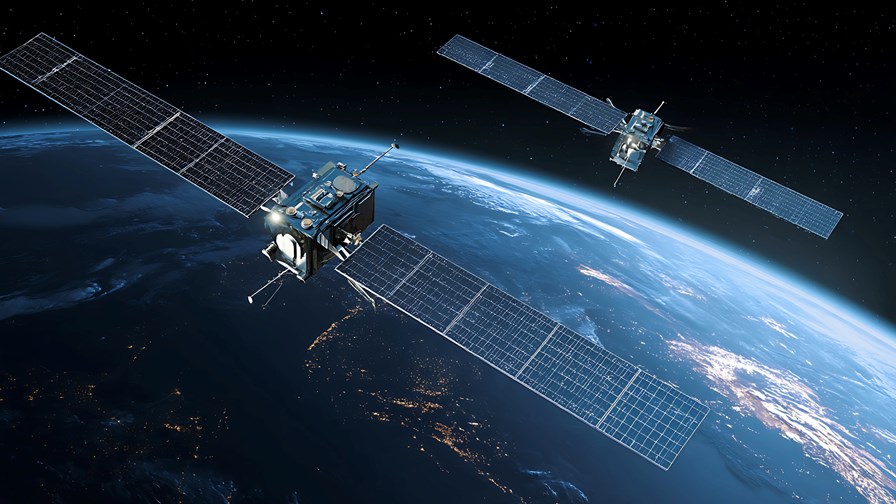
Low-earth orbit (LEO) satellite, high-speed broadband comms services are well on their way to being mainstream with LEO constellations becoming not only a broadband technology of choice for enterprises but also gaining traction with ordinary consumers as they too begin to appreciate the benefits that satellite-based domestic connectivity can confer.
A new report from research house Gartner, ‘Market trend: Emerging use cases for LEO satellite communication services’, forecasts that in 2026 the sector will be worth US$14.8bn globally, demonstrating a remarkable 24.5 % increase on this year’s figures.
The industry is certainly going through a purple patch: It is expanding quickly and enjoying the fruits of hard years of preparatory labour. There are now more than 20 operational and ‘active’ LEO satellite service providers and new launches should see a further 40,000 satellites being placed in low-earth orbits between now and the early 2030s. As Khurram Shahzad, senior director analyst at Gartner, commented, “LEO satellites have primarily delivered broadband connectivity to remote locations [that] traditional networks don’t reach. However, new consumer and business use cases are emerging, driving communications service providers (CSPs) to expand the market. This is enabling LEO satellites to become a mainstream enterprise broadband technology.”
Shahzad added, “ As use cases continue to grow, companies and consumers can expect consistent internet access and internet of things (IoT) sensing anywhere, without being limited by location. Even airplanes, ships and sea platforms will benefit from new means of network resiliency and a ubiquitous internet.”
The biggest spurt of growth in LEO satellite communications (satcoms) expected next year will originate from SME customers and domestic consumers in remote areas with no other connectivity options. The increased availability of broadband connectivity in remote regions remains a priority and spending is expected to increase by 40.2% on the part of businesses and 36.4% in the domestic consumer sector. In second place comes LEO services for IoT connectivity (32%), maritime and aviation (13.8%) and network resilience improvement (7.7%).
The Gartner report says the use cases for emerging LEO satcoms fall into four categories, the first being fixed and mobile broadband service connectivity in areas with no broadband service, temporary locations such as construction sites, or on ships and aircraft, emergency response communications or to improve resilience as fallback or backup connectivity to traditional broadband.
The second use case is global IoT connectivity where LEO satcoms will complement and, in some cases, even replace traditional IoT networks that require worldwide coverage for applications with limited bandwidth and latency requirements. Examples of these are agriculture, global asset tracking, oil and gas, transportation and logistics, military sensing and security monitoring.
The third category covers the use of LEO satellite comms services to supplement mobile broadband access by providing seamless coverage and enhancing user experience through direct-to-device (D2D) connections and the integration with 5G non-terrestrial networks.
Category four covers high-bandwidth connectivity for infrastructure backhaul to support critical applications, data transfer and other communication requirements independent of traditional terrestrial limitations. For example, LEO satellites can provide backhaul for the operations of government defence and other agencies that often require robust, reliable and secure comms links in remote or hostile environments.
The outlook for LEO satcoms definitely looks rosy, but report author Shahzad does accept there will be a few bumps along the road and adds to the report the caveat, “Despite these expanding use cases, the industry remains nascent with various limitations, including regulatory barriers in some countries and capacity constraints in certain areas. LEO services can also encounter roaming restrictions, lack interoperability and aren’t certified for all mission-critical maritime needs. It’s important for CSPs to assess strategies on a use case basis.”
LEOs and GEOs: Never the twain shall meet but they get along very well at a distance
While LEO satellite systems come with several inherent advantages over the higher-orbit alternatives, (low latency, high capacity, better signal quality and scalability), they are not a universal nostrum and do have some disadvantages over geosynchronous-orbit and geostationary-orbit (GEO) satellites that are positioned some 36,000 kilometres (km) above the Earth’s surface.
To start with, they provide limited coverage and a single LEO is no solution to demands for global continuous coverage. For that, LEO constellations of multiple satellites are required and they are costly and complex both to launch, maintain, co-ordinate and manage. LEO satellites also have shorter working lifespan compared to GEOs and either individual ones or multiples of them have to be routinely de-orbited and replaced and that usually means having a number of flying spares available to be manoeuvred into a slot vacated by a decommissioned part of a constellation. It all adds to the expense (replacement costs are high) and complexity.
LEOs also cannot compete with GEOs in terms of wide and continuous coverage – just three GEO satellites can cover almost the entire surface of the planet to provide uninterrupted service. Furthermore, a GEO’s orbital stability and fixed position makes it ideal for broadcast applications. However, LEOs, orbiting at between about 160km and 2,000km, win out where latency is concerned, and that is particularly important where time-sensitive and -dependent applications are concerned.
Meanwhile, there is nothing to be done about the 250 milliseconds (ms) or more delay inherent to a round-trip connection to a GEO satellite and back. A signal to a GEO satellite must travel from point A to the satellite, be transponded on to another frequency and then return to Earth at point B – and as Scotty of Star Trek was frequently wont to observe, “Ye cannae change the laws of physics, Captain.” LEO satellites can provide global coverage with a latency more than five times as fast as GEOs and that makes the user experience very much more as though it is via terrestrial fibre connected devices.
To sum up then, the orbit a satellite takes has implications for power system design, thermal control and comms infrastructure. LEO satellites have to contend with fast rapid orbital movement and frequent eclipses and that means smaller solar arrays and high battery cycling. What’s more, expensive ground stations and systems must constantly track the constellations as they fly overhead. GEO satellites are orbiting far enough away from the Earth to be in continual sunlight and are always in uninterrupted contact with the ground. This permits big stable power platforms to be used together with fixed-point communication antennas.
LEO systems are, by their nature, agile and modular and ideal solutions as comms systems as well as for Earth observation, while GEO satellites are more robust and fit for long-term use in providing TV broadcasting and weather observation as well as telecoms services that can work with a 250 ms latency delay.
As both sectors continue to develop, it is becoming a matter of ‘horses for courses’ with operators (and users) valuing LEO and GEO systems for their own specific characteristics and benefits, according to the contexts in which they will be used. The trend is towards “complementarity” of satellite technology networks to enable the best possible comms services and connectivity stretching across the entire surface of the planet as societies become ever more interconnected.
– Martyn Warwick, Editor in Chief, TelecomTV
Email Newsletters
Sign up to receive TelecomTV's top news and videos, plus exclusive subscriber-only content direct to your inbox.