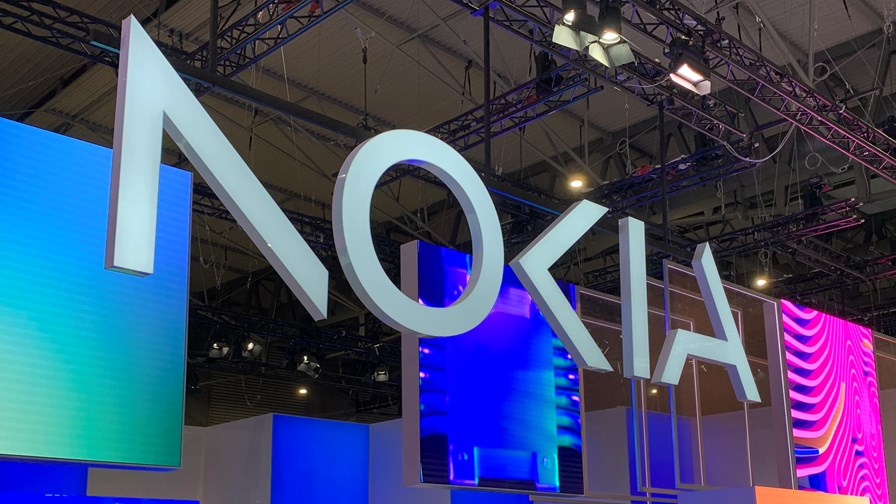
- Nokia reports stronger-than-expected Q3 results
- Orange revenue in Africa and Middle East up but domestic revenue down
- AI exacerbates mobile security threat
In today’s industry news roundup: Nokia’s third-quarter financials surprise analysts, with booming demand for AI, cloud and 5G putting the company back on track following its profit warning in July; Orange CEO doubles down on consolidation hopes as she reports overall third-quarter revenue and EBITDal growth and claims 300 million customers worldwide; Verizon’s recent Mobile Security Index finds mobile attacks are on the rise, with the threat made worse by the growing use of AI by employees in the workplace; and much more!
Nokia remains on track to achieve its full-year outlook after reporting third-quarter results that certainly seem to have come as a pleasant surprise to analysts, with AI and cloud business providing a welcome boost. As noted by Reuters, the comparable operating profit in the quarter to the end of September reached €435m, while analysts polled by LSEG (London Stock Exchange Group) expected this metric to reach €342m. The Finland-based vendor appears to be back on a more even keel following a difficult first six months of the year. Indeed, the vendor had issued a profit warning in July, blaming foreign exchange rate fluctuations (a weaker dollar) and “tariff headwinds” that are “outside its control”. Its outlook now remains unchanged for 2025 as a whole, although it has revised upwards the operating profit outlook by €0.1bn, to between €1.7bn and €2.2bn. This is owing to a change in venture fund reporting after Nokia decided to scale down its passive venture fund investments. In the third quarter, net sales rose 9% to €4.83bn on a comparable basis, said to be aided by strong growth in optical networks and cloud services. In a statement, Nokia president and CEO Justin Hotard said network infrastructure “delivered 11% net sales growth. Optical networks grew 19%, coming largely from AI and cloud customers”. Nokia noted that AI and cloud customers accounted for 6% of net sales at group level, and 14% of network infrastructure sales. According to the Reuters report, Hotard told journalists that AI and datacentre demand “continues to be robust. In fact, it continues to accelerate from our perspective”. Net sales from cloud and network services increased by 13% as “operator investments in 5G core remain strong”, said Hotard. “Our cloud-native 5G core offering continues to gain traction and we are gaining market share”, he added. Hotard highlighted, in particular, the recent deal with VodafoneThree that marked Nokia’s re-entry as a RAN supplier in the UK market for both Vodafone and Three’s combined network operations following their recent merger. For more details about Nokia’s results, see this press release.
This week has also seen a smattering of third-quarter results from telcos, including Orange, which released its figures on Thursday. During the earnings call, Orange Group CEO Christel Heydemann wasted no time in addressing the France-based operator’s consolidation ambitions following its recent €17bn joint takeover offer for certain activities of Alice France, including SFR. The non-binding offer by Bouygues Telecom, Iliad (Free) and Orange was swiftly rejected by Altice, but the trio has indicated that it intends to continue negotiations to see if an agreement can be reached. According to Heydemann, “this deal would allow us to strengthen investments in France while maintaining a competitive ecosystem for the benefit of consumers”. She also stressed there is “no certainty that we will reach an agreement, and we are willing to engage in a constructive dialogue with the Altice group”. Turning to Orange’s financial performance, Heydemann painted a broadly positive picture for the third quarter, noting that both revenue and earnings before interest, taxes, depreciation and amortisation after lease (EBITDAaL) expenses increased in the three months to 30 September 2025. In fact, EBITDAaL rose by a reasonably healthy 3.7% on a comparable basis to €3.44bn, prompting Orange to increase its annual guidance to at least 3.5%. Revenue rose by a somewhat lower rate of 0.8% to €9.99bn. Heydemann also pointed out that Orange has now passed the “symbolic threshold of 300 million customers worldwide”. In terms of group segments, Africa and the Middle East remained a growth driver, as has now been the case for several quarters. This region saw revenue rise by 12.2% owing to a 13.1% increase in retail revenues, marking 10 consecutive quarters of double-digit growth. Orange’s domestic market, France, saw revenue fall by 3.7% on a comparable basis to €4.34bn, blamed in part on the “anticipated decline” in wholesale. At the same time, Orange said mobile net additions in France have reached their highest level since 2022. Excluding France, the Europe segment saw a return to revenue growth with an increase of 4.7%, largely owing to retail services growth. Orange Business, however, remains a work in progress, reporting a 4.3% decline in revenue. The operator described the IT services market as “challenging”, whereas Orange Cyberdefense continued to shine, with a 6.3% revenue increase in the first nine months of the year. For more details about Orange’s results, see this press release.
The various flavours of AI may be good for business, as highlighted by Nokia above, but it also brings a growing level of risk for mobile devices, according to a new report from Verizon Business. The Verizon 2025 Mobile Security Index (MSI) reveals that mobile devices are “under attack, now more than ever, with 85% of organisations reporting increasing mobile attacks”. Although 75% of organisations are said to have upped their mobile security spending over the past year, the increase in the number of employees using generative AI services for work purposes “is quickly expanding the attack surface”, the report warns. It notes that 34% of organisations “fear that more sophisticated and large-scale AI-powered attacks will significantly increase their risk, and 38% believe ransomware will become even more dangerous when powered by AI”. Chris Novak, VP of global cybersecurity solutions at Verizon Business, declared that this year’s Mobile Security Index “is a clear wake-up call: Mobile security is no longer a perimeter defence but a battle fought in the palm of every employee’s hand. We talk about the perfect storm: With the rise of AI, we’re witnessing a Category 5 hurricane in mobile security, where AI is the wind – and human error is the open window”. For more details about the report’s findings, see this press release. The report can also be found using this link.
Alternative pan-European long-distance network operator EXA Infrastructure is maintaining its recent busy streak. On Thursday, it announced it has signed an agreement to purchase all long-haul duct assets belonging to Conexio doo Beograd, a provider of dark fibre and colocation services across Serbia. No financial details of the transaction were provided, however. The operator noted that the transaction further strengthens its “strategic footprint in the Balkans”, and builds on its previous acquisitions of Unitel in Croatia and GCN in Bulgaria. Under the agreement, EXA Infrastructure will buy two high-density polyethylene (HDPE) ducts spanning 860km, existing cables, and 15 points of presence (PoP) locations. The transaction also includes the transfer of existing customer contracts. EXA’s latest move comes hot on the heels of a “major” but unspecified investment in the diversity and capacity of its network between Marseille and Paris. The company also recently issued a press release to announce it had “refinanced its existing facilities and raised new financing… to support continued growth ambitions and network expansion plans”. It noted that the combined value of the refinanced debt and new investment is €1.3bn, but didn’t provide many details.
– The staff, TelecomTV
Email Newsletters
Sign up to receive TelecomTV's top news and videos, plus exclusive subscriber-only content direct to your inbox.