What’s up with… Vodafone & AWS, Corning & Nvidia, vendor swap-out costs
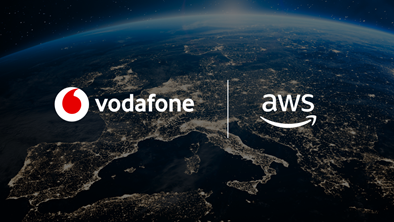
- Vodafone taps AWS sovereign cloud in Germany
- Corning to ramp up fibre-making capacity with Nvidia’s help
- Euro telcos face €27.6bn in swap-out costs – report
In today’s industry news roundup: Vodafone has teamed up with AWS to pitch sovereign cloud services to the B2B sector in Germany; US fibre-maker Corning, with the help and support of Nvidia, is increasing its optical connectivity manufacturing capacity tenfold to help meet demand for datacentre networking deployments; Europe’s telcos face a massive bill if the European Commission proceeds with its new security regulations, according to a new report; and much more!
Vodafone Group has struck a multi-year deal with Amazon Web Services (AWS) to offer “sovereign cloud services” to businesses in Germany (Vodafone’s single largest market) in a move that makes Vodafone a greater competitive threat in the digital sovereign services sector to Deutsche Telekom, which has been beating the sovereign services drum for some time already. In essence, Vodafone is offering to migrate German enterprises and public authorities to the AWS European Sovereign Cloud, which was launched in January, and will be leveraging the expertise of the team at German cloud and digital transformation services specialist Skaylink, which it acquired in late 2025, to help with that process and provide a “comprehensive sovereign solution”. Hagen Rickmann, director of Vodafone Business for EU markets and Turkey, stated: “A strong European economy needs a strong European cloud. Our continued collaboration with AWS allows us to deliver just that to our business customers and public authorities. We believe key pillars of sovereign solutions include maintaining full control over data and operations, as well as having the flexibility to choose which partners you want to work with daily.” Vodafone states that its relationship with AWS ensures that “all data is exclusively stored and processed” within the European Union (EU), as the AWS European Sovereign Cloud is a “fully featured, independently operated cloud solution built for European governments and businesses, offering robust technical controls, assurances and legal protections. Its infrastructure is fully within the EU and operates separately from other regions, meeting strict German and European standards.” For some, that is enough to meet sovereign service requirements, but as our new free-to-download DSP Leaders Report, Digital Sovereignty: What It Means for Telcos finds, some telcos believe that sovereignty is compromised if the provisioning infrastructure is owned by an overseas entity.
Still with Vodafone Group… It has backed up this week’s call from the GSMA for European lawmakers to “realign” the region’s “investment environment” in order to unlock greater investment in mobile network infrastructure with its own take on the situation. Joakim Reiter, Vodafone Group chief external and corporate affairs officer, states in this blog that the only way to make up the suggested €205bn shortfall in mobile network investment needed during the next decade to ensure Europe’s digital competitiveness is to introduce “regulatory reform”. Reiter noted: “If Europe supports scale through a realistic approach to market structure, resets spectrum policy around investment incentives and delivers real simplification rather than consolidated complexity, it can begin to close its connectivity investment gap.”
As part of a multiyear commercial and technology partnership with Nvidia to “dramatically expand US-based manufacturing of the advanced optical connectivity solutions needed to power next-generation AI infrastructure”, optical fibre-maker Corning is to “increase its US-based optical connectivity manufacturing capacity by 10x and expand its US fibre production capacity by more than 50% to meet the accelerating demand driven by AI factory buildouts,” the partners announced. They added: “Corning’s expanded capacity will supply the optical connectivity [that] hyperscale datacentres use to deploy Nvidia-accelerated computing at scale. Modern AI workloads require thousands of Nvidia GPUs – requiring unprecedented volumes of high-performance optical fibre, connectivity and photonics to move data at extraordinary speed and scale. As AI factories grow larger and more numerous, optical connectivity becomes an important component of the AI infrastructure.” As part of the agreement, Nvidia gets the right to invest up to $3.2bn in Corning stock, which, perhaps not surprisingly, has gained in value by more than 10% since the announcement was made and currently stands at $183.09, giving Corning a market value of about $160bn.
Telcos in the European Union will face collective costs of €57bn, including €27.6bn directly related to replacing hardware, dismantling infrastructure and asset write-downs, if the European Commission’s proposed revisions to the Cybersecurity Act unveiled earlier this year are approved, according to a report from the China Chamber of Commerce to the EU (CCCEU) and KPMG. The revised Cybersecurity Act, unveiled in January this year, includes measures that look set to force network operators in the EU region to remove technology supplied by “high-risk third-country suppliers” from communications networks. The move, which will require telcos to remove designated technologies from high-risk vendors within three years of the Act coming into force, signals a stronger clampdown on Chinese vendors Huawei and ZTE in the region.
Seattle-based autonomous offensive security specialist XBOW has raised $35m in additional Series C funding from Accenture Ventures, DNX Ventures, NVentures (Nvidia’s venture capital arm), Samsung Ventures, SentinelOne S Ventures and Liberty Global Tech Ventures, adding to the $120m it had already raised in the round. XBOW, which has more than 100 customers (including some of its investors), “uses AI to find and exploit vulnerabilities in applications the way attackers do, running continuously instead of as a point-in-time pentest,” the company noted. One of the investors that is also a user of XBOW’s technology is telecom, tech and media giant Liberty Global, which highlighted its involvement in the funding round in this announcement. Oege de Moor, founder and CEO of XBOW, stated: “Liberty Global has deep expertise in scaling technology businesses globally, and their commercial network will be vital as we enter our next phase of growth. With partners like them operating alongside us on the front lines, we’re accelerating our mission to stay ahead of AI attacks to defend the world together.”
Communications API platform giant Twilio has unveiled its “next-generation platform capabilities for the agentic era”, something that could well be of interest to all types of digital service providers: Those capabilities comprise Conversation Memory, Conversation Orchestrator, Conversation Intelligence and Agent Connect, which “combine to turn disparate interactions into continuous, intelligent and personal conversations across humans, agents and systems.” Inbal Shani, chief product officer and head of R&D at Twilio, stated: “Most brands still treat every conversation with a customer like it’s the very first one. Twilio is changing that at the infrastructure layer, so every business built on Twilio can remember, learn and respond like they actually know their customers.” Mila D’Antonio, principal analyst for customer engagement at research firm Omdia, noted: “Twilio is redefining what a customer engagement platform (CEP) looks like – one that remembers, adapts and orchestrates across every touchpoint. That combination of vision, execution and ecosystem leverage is what solidifies Twilio’s place at the top of the category.” The launch comes only days after Twilio reported a 16% year-on-year increase in like-for-like first-quarter revenues to $1.41bn.
– The staff, TelecomTV
Email Newsletters
Sign up to receive TelecomTV's top news and videos, plus exclusive subscriber-only content direct to your inbox.