India’s Jio reaches 5G landmark, claims global FWA crown

By Ray Le Maistre
Jul 21, 2025
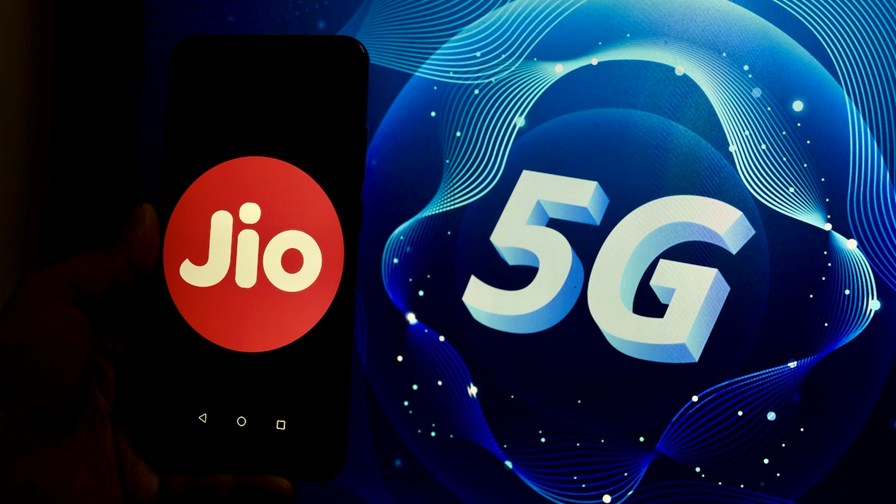
- Jio Platforms is the fast-growing and profitable digital operations division of Indian conglomerate Reliance Industries Ltd. (RIL)
- The main unit of Jio Platforms is Reliance Jio, India’s largest telco
- Jio ended June with almost 500 million mobile and fixed customers, including more than 200 million 5G customers
- It also claims to be the world’s largest fixed wireless access (FWA) service provider in the world
- But RIL still wants more from Jio Platforms before it will kickstart an IPO process for its digital division
Jio Platforms, the fast-growing and profitable digital operations division of Indian conglomerate Reliance Industries Ltd. (RIL), has had a very positive start to its latest financial year: It has reported a 24% year on year leap in EBITDA for its fiscal first quarter that ended 30 June thanks to the ongoing growth its telco unit Reliance Jio, which now has more than 200 million 5G customers and claims to be the world’s largest fixed wireless access (FWA) service provider.
While Jio Platforms is best known for Reliance Jio, which is India’s largest telco with a mobile market share of almost 41%, its operations also the development of a broad range of digital applications for multiple enterprise sectors and telecom infrastructure product development (radio units, a cloud-native core platform, OSS and BSS tools and AI applications including its JioBrain generative AI platform). And Reliance Jio doesn't just offer mobile services – it has a full range of fixed line services for consumers and enterprise customers too, as well as a broad range of digital services for businesses including cloud, cybersecurity and AI services (including GPU-as-a-service).
In the first quarter of its 2026 fiscal year, Jio Platforms generated revenues of 410.5bn Indian rupees ($4.75bn), up by 18.8% year on year, earnings before interest, tax, depreciation and amortisation (EBITDA) of 181.4bn rupees ($2.1bn), up by 23.9%, and profit after tax of 71.1bn rupees ($823m), up by 24.8%.
It ended June with a total telecom services customer base of 498.1 million, with an average revenue per user (ARPU) of 208.8 rupees per month ($2.42), which is almost 15% higher than in the same period a year ago. The operator ended June with 213 million customers for its 5G service, called JioTrue5G, and claimed in this RIL earnings announcement that the “large-scale adoption of JioTrue5G with differentiated customer experience has been driven by Jio’s own, end-to-end 5G stack with cloud-native core network, which is ready to be taken to global markets”, a hint that Jio Platforms will be ramping up its operations as an international telecom network technology vendor in the coming months, something it has been threatening to do for some time.
Jio also ended June with 7.4 million FWA customers, which, it claims, makes it the largest FWA service provider in the world. “This global leadership in record time has been driven by Jio’s proprietary point to multi-point (P2MP) UBR [ultra-broadband radio] technology. This technology is giving fibre-comparable experience at much lesser cost and has helped accelerate the pace of monthly home [connections] to ~1 million” during the first fiscal quarter. Jio launched its 5G FWA service, Jio AirFiber, in late 2023 and has managed to attract more customers than its main 5G rival, Bharti Airtel – see Jio dominates India’s 5G FWA sector.
Mukesh Ambani, chairman and managing director of RIL, noted in the company’s first quarter earnings announcement: “I am happy to share that Jio has scaled newer heights during the quarter including crossing 200 million 5G subscribers and 20 million home [fixed broadband] connects. Jio AirFiber is now the largest FWA service provider in the world, with a base of 7.4 million subscribers. Our Digital Services business consolidated its market position with a robust financial and operational performance. Through its differentiated offerings across mobility, broadband, enterprise connectivity, cloud and smart homes, Jio has positioned itself as the technology partner of choice for Indian consumers.”
In addition to its connectivity services, Jio has also recently launched JioGames Cloud, a cloud gaming platform that “allows anyone with a smartphone or a regular laptop/desktop or Jio STB [set top box] to play high-end console-quality games without needing any additional hardware”, and JioPC, a cloud computer platform that “converts any screen into a personal computer and offers affordable and secure cloud compute with built-in smart apps on a pay as you go model”.
Jio, clearly, is in a great position to capitalise on the growing demand for digital services of all kinds in India, which is the world’s fastest-growing major economy.
But its scale and profitability is, seemingly, still not enough to trigger an IPO, something that has been on the cards for Jio Platforms for a few years already. A Jio Platforms IPO had been expected at some point in 2025 with a projected valuation of about $100bn, but a recent Reuters report suggests that plan has been put on ice for now as Jio wants to achieve higher revenues, an even bigger telecom subscriber base and the further expansion of its other digital offerings so it can attract an even higher valuation.
That decision hasn’t necessarily been made by Ambani and his fellow RIL board members alone: As we previously reported, RIL sold multiple equity stakes in Jio Platforms in 2020 to big tech (Google, Meta) and private equity investors, including Google, Meta, Silver Lake, Mubadala Investment Co, Abu Dhabi Investment Authority, KKR and TPG, but Ambani’s conglomerate still holds a majority stake of about 67%. And when the IPO does come, which shareholders will be seeking to raise money from a public flotation of Jio platforms shares? We might get an answer in 2026.
- Ray Le Maistre, Editorial Director, TelecomTV
Email Newsletters
Sign up to receive TelecomTV's top news and videos, plus exclusive subscriber-only content direct to your inbox.