To embed our video on your website copy and paste the code below:
<iframe src="https://www.youtube.com/embed/iUzulwSKaB8?modestbranding=1&rel=0" width="970" height="546" frameborder="0" scrolling="auto" allowfullscreen></iframe>
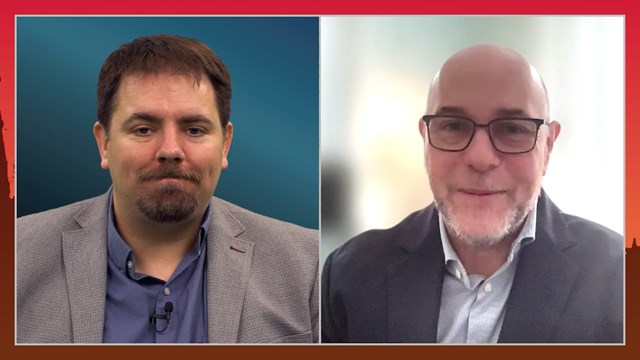
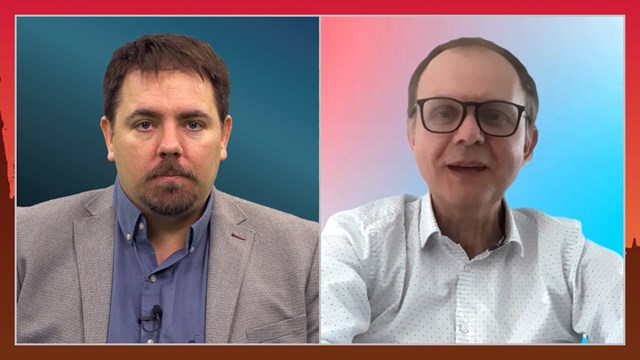
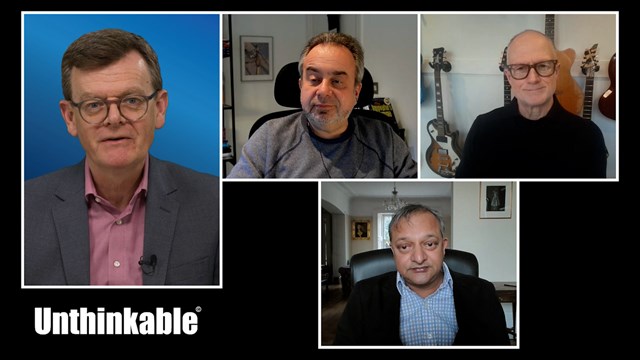
Hello, you're watching TelecomTV. I'm Guy Daniels. Now, at the recent Unthinkable Lab in London, a group of over 30 telcos, vendors, channel partners, developers, and regulators spent the day exploring whether agentic AI could become the biggest driver of telco API demand. And you can download the post-event report by following the links below this video. Now though, I'm joined by the hosts of the Unthinkable Lab and one of the event partners to unpack what we learned, identify the challenges and see what needs to happen next. So let me now introduce Andrew Collinson, who is founder and principal Connective Insight. Dean Bubley, founder and director Disruptive Analysis, and Raman Mistry, who is channel partner engagement lead at GSMA Open Gateway. Hello, everyone. It's really good to see you all again. Now, looking in detail at the report, and it's an excellent report, and I advise everyone to download it.
(01:13):
There's a lot of information in there. The report says that in theory, at least, agentic AI with MCP could become a major new user class for telco APIs. But we know that in practice, all three of these technologies are still relatively early stage. So what's the reality today? Andrew, let me come across to you first. Is there a risk that overpromising could damage credibility in the longer term?
Andrew Collinson, Connective Insight (01:41):
I think you answered your own question, Guy. There's a big gap between the promise of tomorrow and the reality of today. And today, how many people are using MCP with agentic AI and telecoms network APIs, particularly the open gateways, not many. I've seen a couple of proof of concepts or proof of value. Raman may know better than me about more of those going on, but we may see some of that at Mobile Congress, for example. So I don't think a lot of it's happening right now. I think the point of report is we hear about a lot of hype of different sorts on the supply side, which in a way this is kind of part of. And our objective with the Unthinkable Lab was really to sort of try and nip that in the bud and get to some practical stuff because the promise and the idea of it is very attractive that you can ... We will at some point in the future have lots of agents and agentic AI out in the world seeking to make use of telecoms APIs.
(02:44):
And in particular, here we're talking about the Open Gateway one. So things like fraud identification, quality of service on networks and so forth. Wouldn't it be great if that was the case? And yes, MCP is one of the technologies that could take you there. The reality, as we said, is today, all three of them are in their own ways in mature. Not trying to cast shade on any of it. I mean, so if we start with network APIs, network APIs, and here again, I'm talking about, for example, Open Gateway. They're not globally available. They're available strongly in some markets. Not every API is available in all of the same markets. And customers are quite early in their process of learning about them and using them. There are some great case studies, and Ramon can talk more about that. And we've been through some of that together.
(03:36):
If you look at MCP as a technology, then it's also pretty immature. It's quite new. And there are quite a lot of things that need to be developed to make it secure enough and reliable enough and robust enough to interface with things like telecoms APIs, which after all, could tell you, is it really you at the end of the phone? And you don't want that to happen for the wrong actors or any wrong circumstances, for example. And then when you think about Agentic AI, we're really in the realms of the earliest foothills of that as the adoption of that as a technology. And our colleague, Simon Torrance, who's one of the expert witnesses, does a lot of work on the sort of leading edge space of agentic AI. And Simon, it's clear you have to acknowledge the risks in this technology at the moment, although it is getting better and it can be done.
(04:25):
But again, it goes back to the gap between theory and reality. In theory, you can do lots of this stuff. In practice, it's actually quite a lot harder than it sounds. And our objective in the lab was to try and identify the things that you need to do to be ready to make those things happen. Because we all think that's the right thing to do, but there is actually quite a lot to be done between now and the time that you might make this future reality true.
Guy Daniels, TelecomTV (04:53):
Great. Thanks so much, Andrew. Dean, as Andrew said, there's a lot to be done, but is there also a sense of urgency here?
Dean Bubley, Disruptive Analysis (05:01):
Yeah, no, I think there's a couple of different things that are going on in the wider space of telecom and network APIs. I mean, we've had various iterations of telecom APIs for a very long time, but the current crop, particularly on the mobile side with Kamara and Open Gateway, there is a sort of pent-up ... Well, there's demand for some of the capabilities, but there's also demand for people to see the money and the outcomes early. And I'm going to be curious to see what gets announced in coming weeks and months in terms of active uptake beyond some of the case studies we've heard already. Now, whether we're going to get agents as a sort of first class user tier using MCP as a sort of gateway into APIs, I think we'll see some interesting demos. There's quite a lot that's being discussed certainly in the mobile world.
(05:56):
There's a number of operators that have made announcements, but also by some of the other standards bodies in this sector, whether it's Etsy or whether it's TM Forum and Amplify for fixed network as a service. And everyone's sort of converging on roughly the same story that agents of different types, whether they are from a developer side that looking for identity verification or whether they're from an IT system that is looking for mobile or fixed network as a service capabilities, that the agents are likely to need to interact with different telecom systems. And it at the moment appears that MCP or perhaps a specialized version of MCP will be the preferred entry point to that. But as Andrew said, we are at the earlier stages, there's sort of proofs of concept, there's sort of architecture or even sort of positioning papers, but I think that there's a lot of the machinery we still need to join all of the dots, whether it's around security, whether it's around discussion of the latency that's potentially inherent in some of the agentic approaches, whether there's AI related issues like Drift, but all of this points in one direction.
(07:14):
I'm just not quite sure exactly when the convergence point occurs.
Guy Daniels, TelecomTV (07:19):
Thanks very much, Dean. Well, Raman, that's come across to you. Huge excitement, a lot of potential in this area, as evidenced by the attendance figures at the lab, which was terrific.What's your take and feel of where we are today, the reality today?
Raman Mistry, GSMA Open Gateway (07:37):
I would tend to concur with what Andrew and Dean said. It's very much at that nascent market stage, lots of experimentations, seeing what the art of the possible is, but it's accelerating at a phenomenal pace. So that needs to be taken into account. From a GSMA perspective, I mean, GSMA is all about interoperability and standardization, getting all the operators and channel partners and the whole ecosystem to adopt around in OpenGateways case around Kamara APIs and moving that forward. If you take stock, I mean, OpenGateway's really been around for about three years or so. And in the life cycle of technology initiatives in the telco industry, that's still at a relatively small period of time. And in that time, it's grained a whole lot of momentum. It's come away with lots of operators and channel partners engaged in that community and more and more so enterprises and developers as well.
(08:48):
And what we need to remember is there's a whole ecosystem here. So it's not just the operators and the channel partners, but it's the enterprises and the developer community as well. And that's where the demand side factors come into play. And those were the ones that will impose some of the requirements that we'll need to have within that ecosystem. And more and more, as developer communities start adopting a gentech AI models, that will become more prevalent within the whole ecosystem. I noted last year that Andrea Karpasi, the OpenAI founder, coined the term Vibe coding, which has taken off extremely well over that period. And last month he had another blog where he said the next big thing is going to be agentic engineering where developers will orchestrate agents to create apps and solutions for them. So the telco community and the open gateway community need to be observant of that and obviously putting guardrails, but putting processes and APIs and other ecosystem technical factors that will enable that community.
Guy Daniels, TelecomTV (10:11):
Great. Thanks very much, Raman. And we'll build on that point there because a recurring theme in the lab was just need to move from exposing APIs to creating products that actually solve customer problems, productization. Dean, can I come across to you first? And are there any examples of what this shift either looks like or could look like or which domains might move first?
Dean Bubley, Disruptive Analysis (10:38):
I think there's a couple of approaches here, and it depends whether that productization occurs within operators or within channel partners. And this sort of parallels a wider trend I'm seeing around the use and consumption of APIs. I'm a big advocate for operators to be demonstrating the internal consumption of their own APIs, partly for their own enterprise uses, but also to craft them into fully functioning products. And so I'm certainly aware of some operator product teams using APIs like quality on demand to add value to things like say remote backups like 5G backup for a broadband connection where they're selling the fixed wireless access, the broadband fixed line, and they're putting QOD on top of the backup in case of failover. At the moment, that's not adding Agentic in as well, but I think that that is the type of initiative where the in- house team will understand the capabilities.
(11:44):
I think the other route to this is where there are third party product creators, which could be an identity provider or a fraud management company, or perhaps it could be a drone visual inspection provider or something in some more advanced scenario. And they may well then use agentic frameworks which call on multiple different APIs, not just in the network, but in the cloud and in various other settings as well, and knit that together into almost like a vibe coded IOT or vibe coded security solution. Now, I strongly suspect that some of those sectors, notably anything to do with security and fraud management, is probably going to be quite conservative. And so I don't think they're just going to have Claude set up a set of vibe coded products overnight and then ship them. But I think that we're likely to get into this process where there's going to be those sort of product creation platforms and ideas that will start to consume telecom and network APIs and then create a rounded product for either enterprises or others in the SaaS market.
Guy Daniels, TelecomTV (12:56):
Oh, that's very interesting. Thanks very much, Dean, for those observations. And Raman, what about you at OpenGateway and your community? Are you seeing a shift yet? Are you seeing a shift away from perhaps deterministic towards more outcome driven?
Raman Mistry, GSMA Open Gateway (13:11):
Definitely. That is definitely the direction of travel. I mean, people don't just buy APIs for the sake of APIs, they buy outcomes and solutions. And as Dean has pointed out, increasingly, these solutions, these APIs are combined to create an outcome, whether it's anti-fraud or quality of demand, or some other service offering that the enterprise or the buyer is trying to deliver. So that's an important aspect of productization. From a GSMA perspective, we have an initiative called GSMA Fusion, which is very much demand driven. So we work with enterprises and down the line, we develop communities as well to identify what are the solutions that you require, what are the APIs that are required as part of those solutions to deliver an outcome? And increasingly, we're getting them to write statement of requirements to say, "If you build this, I can buy it. " And there's a monetary value attached to a use case or a case that's an offering.
(14:23):
And increasingly with Agentic AI and MCP, a lot of these will start to be driven from a Gentic perspective as well as a discreet API perspective.
Guy Daniels, TelecomTV (14:37):
Thanks, Raman. That's great. And Andrew, have you got extra thoughts you want to come in with here?
Andrew Collinson, Connective Insight (14:41):
Yeah, I think we should simplify things a bit. The question is, what's a product? What do we mean by productization? And it's very easy to get quite involved in the conceptual side of it. But the reality is, think about what a product is in real life or in everyday experience. I'm trying to think of a bad example. There's a couple behind me, some guitars, for example. A guitar is a product. It sits in a clear category. It's got a use, it's got a set of users. It's got things that it has in common that you expect to get when you get a guitar and you do something with it. A string is a component. It's really not much use or anything else other than putting on a string or maybe wrapping something up. I don't know. But it's very much a component. APIs are the same as a string or as a tone pot or another bit of the kit on the guitar.
(15:32):
But unless you're making a guitar, it's not much use. And what APIs are, are components. They are components of things that can be built into other things. So what we mean by productization is that you have something recognizable as a product for use. And you can say, "Okay, SIM swap is a product." It's not really, it's telling you that something has happened. That's all a SIM swap does. It's a very useful thing to know that's happened, but it's not really a product. The one product I'm aware of, I've seen is a thing called ScamSignal. And ScamSignal looks at a variety of different signals that the network extracts from a given interaction. And it gives you an indication to the user of that product that there may be something going wrong here. And that to my mind is what a product is. It's a set of things grouped together, packaged in a certain way for a certain price to achieve a certain function.
(16:32):
So when we talk about productization, that's probably the best example I've seen so far. But a couple of examples that came up in the lab, one was know your customer. So there are some collected know your customer APIs they can get from Gateway in other places, but they could be packaged into almost like a know your customer product. And I think that's something people want to do. Or maybe it's not a know your customer, it's a onboarding signal and you think, okay, this is giving me a good signal that this customer should be onboarded and it's the person they say they are, they're not. Another case we looked at was something like a drone operator products and products around that. So I think it's important to get from the conceptual to the concrete stuff about what actually is a product from an API point of view.
(17:19):
And I suppose the final complication as Dean was pointing out is in some cases, it's built into quite a small component. It's quite a small component and a larger product potentially that involves other information sources and other aspects. So it's not straightforward, but until we start seeing more things that are very clear solutions which package a bunch of components together for a clear price for a clear purpose, that's when we think you'll see real products emerging.
Guy Daniels, TelecomTV (17:51):
Yeah. Great. Thanks so much, Andrew. It's not all that clear, is it? Dean, let's come across to you for some additional comments. Yeah.
Dean Bubley, Disruptive Analysis (17:59):
Just to come back on that last point of Andrews. So to take that drone example, imagine you wanted to create a sort of drone as a service product for video inspection of construction sites. So you may well have both a requirement for the network connectivity. In some cases, you might even need to apply for the spectrum. It might be on a private network, so there might be a regulatory API. You might need to have some sort of permission from the flight or the drone agency or whatever that is. So there might be a government API. You may well then have the video analytics hosted on a particular cloud platform and your data somewhere else. So you'd end up having to tie together all sorts of different sub components of that, in theory, fairly simple product. And part of it would be the wireless connectivity guarantee, but there's also, you have to think about where does the video storage live.
(18:58):
So at some point you'd have to use a connection to a database somewhere probably remotely. And so you'd have to call up a different set of network connections and service. So how do you glue all that together and then deliver that to the construction or property company? And I think it's that type of also API and capability and device integration where I think the channel partners really have a role to play.
Guy Daniels, TelecomTV (19:23):
Great. Well, Dean, that brings me very nicely onto the next point I was going to raise. And that was during the discussions at the lab, it was suggested that channel partners, aggregators, CPAS providers, integrators, they may well be the key to making all this work commercially by creating package solutions and bringing the developers and bringing developer access. So what do these channel partners actually need from the telcos? And Raman, if I can come to you first and from the GSMA to fulfill this role.
Raman Mistry, GSMA Open Gateway (19:56):
Hey, thank you, Guy. Yeah. So from the operators, the key aspect of this is getting them onboarded onto Kamara APIs and realizing the value of network APIs. And we've done a great job at the GSMA of doing that. We've got 29 markets now that are openly encouraged and working on network APIs. And we have another 50 in the pipeline. I think we have over 290 networks now that are involved in the OpenGateway ecosystem and within that ecosystem, we have 63 channel partners. So there's a great deal of work going on there around that interoperability and standards for those channel partners. But I think that from a telco perspective, they need to realize that there's an opportunity here to move away from low passive income as an infrastructure player and also to becoming more of a trusted layer within the whole OpenGateway and Agentic AI ecosystem.
(21:10):
With a lot of these developments around MCP and Agentic AI, they're going to be required to use APIs, but they need to be done in a standardized way where authorization and security are going to be paramount to that whole experience. And then if I look on the other side, the developer experience is going to be paramount as well. I've mentioned before around looking at those demand side indicators, but also providing the tooling and the capabilities for developers to openly experiment around some of these newer agentic paradigms and MCP servers that are coming to the market. One of the things that we think works quite well, and we've seen this at the talent arena in Barcelona and it'll be then next week as well is things like hackathons. Next week we have Nokia with Network as a code platform, and we have a number of teams of developers developing real world solutions using network APIs.
(22:25):
And we've seen this occur in other events and environments, and we think this is a strong way for moving some of that experimentation into near market type of solutions.
Guy Daniels, TelecomTV (22:40):
Thank you, Raman. And we'll be looking forward with interest to seeing what's happening over the next few weeks. Andrew, when we talk about channel partners, there's a wide range of channel partners. Anything else they explicitly need from Telcos?
Andrew Collinson, Connective Insight (22:54):
Well, just as you guys know, I do a lot of work for KPASA, which is the CPAS Acceleration Alliance, and they also work with cloud communications, contact centers, and newcast type players. So what are they trying to do? They're trying to embed communications into enterprise services a lot of the time. And of course, they are totally conversant in APIs. All of their stuff works through using it all the time, and they're very invested in AI. And they've got two, I think, real problems or challenges, if you like, from their business. So think about it from their perspective. Everyone in the world at the moment, in the world of software, is kind of slightly reeling from the impact of AI because you're seeing capital market impacts on valuation of software companies on the fears of customers that the AI companies are going to eat all their business and hear them talking about taking development costs to zero.
(23:49):
I'm not sure that all that hype is entirely bright, but that's one aspect of their world. The other aspects of the world is they want new things to sell. So if you're a CPAS provider, for example, one of the things that's going on at the moment is WhatsApp is doing very well in the market. RCS looks like it's got opportunities to be a marketing channel as much as Dean hates it. I get that in. But also APIs potentially very odd. Network API is potentially very helpful because it's a new line of business for them. It's something for them to sell. So they are, by nature, interested in network APIs working. They want network APIs to work. What they tell me they need is stability, clarity, market ubiquity, good documentation, educational customers, all of those things. And they feel where they get that. They can make great things happen.
(24:42):
So I think when you talk about channel enablement, it's important to actually think about what's the channel going through. And that's the environment they live in. They're living in a fast moving world that's very competitive. And the other thing is they're looking for new things to sell. If you take SMS, SMS has been a big component of growth and revenue in CPAS particularly. And SMS is the growth of that is tailing off. And there are some places which are saying maybe the forecast will go down. Now, one of the big uses of SMS is one-time passwords. And one of the things that operators really need to change tracks on quite quickly is understanding that things like mobile number verification are a brilliant alternative to one-time passwords. It may involve some cannibalization, but the alternative is you either do it yourself, you cannobalize yourself with a product that you like and want, like a network API for these services, or you're going to lose it to WhatsApp.
(25:39):
So I think what the channel partners need from operators is a bit more clarity about some of that commercial reality and understand why they're driving for this ubiquitous availability of APIs. And they would rather have one or two that work really well than thousands that work in one market. So I've always thought, and the stuff I do with CPASO really reinforces this. If you could do one of the two of them really well, say SIM swap and mobile number verification, which are the two that everyone is using most at the moment, make those work everywhere and it would go so much faster. So just that thing I think would make a huge difference. But it's hard because poor old GSOA have got to round up the cats of the operators and get them all to agree and they've all got different agendas and different things going on.
(26:26):
So I'm not pointing a finger at Raman and his colleagues. I understand how difficult it is, but that's what the channel partners want. They want ... If you could give them two or three that were brilliant in every market, they'd be chuffed a bit and you'd see real acceleration, I think.
Guy Daniels, TelecomTV (26:40):
Great. Well, absolutely. Thanks very much, Andrew. And we'll come to Dean in a minute, but Raman, I'm going to come to you first because it is a difficult job you've got there. What are your thoughts?
Raman Mistry, GSMA Open Gateway (26:52):
Yeah. So just to follow on from what Andrew is saying, there are one or two APIs that the industry have really focused on around anti-fraud, SIM spot, number verify, and there's been a lot of momentum in that, and that continues to grow. We are seeing a lot of channel partners now looking at areas such as qualitative communications or QOD APIs as the next evolution of use cases. And we're quite excited to see some of the case studies and use cases that are now coming out around those capabilities. Although QOD is a more complex solution to fulfill, there's a lot of opportunities there for the whole ecosystem. That's the network operators that are exposing them, the channel partners that are packaging them into some kind of solution or exposing those further on to their developer communities through a one-to-one agreement or throughout marketplaces as well. But there is a noticeable shift now moving towards those other types of APIs.
Guy Daniels, TelecomTV (28:13):
Great. Thank you very much, Raman. And Dean, let's bring you into this question about what the channel partners actually need.
Dean Bubley, Disruptive Analysis (28:20):
I think it's very dependent on the class of API. I think that there's one set which are the more mature ones around identity and fraud management, where I think that the requirements are more around documentation and sandboxes to test things in and adequate commercial relationships and sort of more the sort of general, I'd say monetization and productization and interaction, and as well as coverage in terms of all the operators, including maybe MVNOs in markets as well as MNOs. I think that is proceeding, notwithstanding some of Andrew's comments about the substitution risks in a fairly good trajectory. I think there's another class where there's a set of additional requirements around legal and regulatory. So for example, consent management, privacy management on things like location, I think is something which some of the channel partners, well, some may do themselves, but some may also expect to have managed or at least facilitated by the operators.
(29:27):
And I think that we're starting to see a few moves in that direction, but I think that the risk is that you end up as a developer or channel partner having to sign up multiple times per API in different countries, different rule sets. One of the nice things you've had in the historical world of APIs for voice messaging is that all that's handled by CPAP's providers behind the scenes. The last one is the class of APIs where I have more doubts, which is what I call hard network APIs, like the quality on demand, where there I think the channel Really needs to be sure that they work as advertised and how they deal with not even just corner cases, but really important things is does the network have sufficient capacity? Does it work indoors? Does it work with a particular device? What happens when the user switches to wifi or to a satellite connection?
(30:18):
What's the user flow? And I think that thinking through those realities of the physical world are going to be really important, especially for mobile APIs where you're at the mercy of the vagaries of radio, which is itself non-deterministic. If you happen to be in the basement, you're not going to get quality on demand no matter how much you ask for it's just not going to work. I think there's other things around roaming or what happens if you're on a separate system for in- building. It's a complicated dynamic world. And I think we're very early stages of making that presented to the channel in a way that is cast iron, simple, sign up the credit card type stuff.
Guy Daniels, TelecomTV (30:59):
Yeah. Thank you very much, Dean. And let's get a quick reply back from Roman as well.
Raman Mistry, GSMA Open Gateway (31:04):
Yeah. Just to follow up on that. So one of the ways that we at GSMA are help to promote this interoperability and standardization and trying to get this whole ecosystem to move forward is by working groups such as TS43, things like entitlement servers and are you entitled to use this service? And there's a lot of work that's going on there across the channel partner domain to try and address that. But in addition to that, we also do certification of CMARA APIs and we've also aligned with TM Forum to also start certifying the TM forum onboarding APIs, a 931 onboarding APIs is the first one that we're doing. And we're also starting to build sandbox environments. So sandbox is where you can simulate SIM swap and number verify and test out your offerings and sandbox environments to also test your compliance to Kamara certification. So there's a lot of work that we're doing within GSMA to help promote the whole industry and the whole ecosystem to move forward.
(32:23):
And in time, I could see that encompassing Agentic AI and MCP as that technology matures.
Guy Daniels, TelecomTV (32:32):
Great. Well, thanks very much everyone for all your comments on that particular point about the channel partners and their needs. If we move on, there was a vote on possible timelines and timeframes during the Unthinkable Lab as a show of hands. And it concluded that agentic AI could drive around 20% of telco API demand in about five years and over 50% in 10 years. I mean, there were some participants who voted never as well for the bigger target. But Andrew, can I come to you and ask for your takeaway of this and also what you feel needs to happen over the next year, year and a half for us to stay on track?
Andrew Collinson, Connective Insight (33:18):
Well, first of all, it was a show of hands in a room of about 40 people who at the time were probably some of the best briefed people on the planet about this particular subject, at least in one place from a multi-stakeholder group. So in some ways it's interesting and useful. In other ways, nobody knows what the future holds. So as any kind of forecast or analyst, unless you're working on something that's got a very long track history, and even then you're not even certain these are things going to be, any sort of projection of the future often reflects the mental or psychological preferences of the individual respondents. So optimists tend to be optimistic and pessimists tend to be pessimistic. So you tend to get a bit of that in the whole sample. I think one of the most interesting responses to me was from a very senior telco technology person who was quite cautious about the whole thing because in their world, they're very aware of the risks and the processes and the things that need to be put in place to make this happen.
(34:28):
And this is a person who's been trying this stuff out. So I've just put a caveat to say none of us know. I think what it said is about 20% in five years. That's not an unreasonable perspective, but nobody really knows. And the question is really, what do you do? It's not whether that's true or not. It's whether the industry takes the steps that it needs to do to make that truth become more possible. And that's probably the more interesting thing. But yeah, I mean, it's an interesting point in our universe to look at it, but nobody knows at the moment, Guy. So I think that's how I would read it. And I would just take it as a, okay, that's quite an interesting observation rather than the fact.
Guy Daniels, TelecomTV (35:21):
Yeah, absolutely, Andrew. It is an interesting observation. And as you rightly say, it's what are the steps that we need to take next and what's industry going to do collectively? Raman, I know you want to come in on this one as well. So what are your thoughts on this whole issue of looking at timeframes and then actually mapping out the next steps?
Raman Mistry, GSMA Open Gateway (35:40):
Yeah. Just to follow up from Andrew saying, who knows, is it going to be 20% as said within five years, would it be more or less than that? I guess partly it depends on which environment you come from. If you come from the software world, which is very agile and fast moving, that seems like quite a long time. But if you come from the telco world, which is a lot more risk averse and a lot more cautious, that would seem to be a reasonable timeframe. And I think where's going to be the cross point between the two? Because agentic AI MCP looks like it will move ahead no matter what. And it's whether the telcos will be there to encompass that or potentially be left behind with all the developments that are going there.
Guy Daniels, TelecomTV (36:32):
Yeah, absolutely. Thanks very much, Raman. Well, let's extend this word of caution theme a little bit longer, just time for one more question. And the report warned caution perhaps that if network APIs are difficult to reach, then agentic AI will simply take other paths to fulfill its intents and just bypass telco capabilities entirely. Dean, can I ask you how real you think this threat is and what is the cost of inaction here?
Dean Bubley, Disruptive Analysis (37:06):
It is very much dependent on the use case and how intense are expressed and where they're expressed in a given application. Yeah. So it depends whether ... If essentially you are saying that the developer or an end user will say something like, guarantee the security and integrity of this transaction or improve the video quality when I'm sending data upstream to TikTok or Instagram or something like that, the intent can be satisfied in a number of ways. You could potentially ask the network for security data or identity data, or you could get alternative sources of fraud signal. So maybe it's from the billing records, maybe it's from the way someone is holding a device. It could be a voice print. It could be looking at other purchases they've made and looking for pants. It could be a capture. So there's a whole set of ways of getting people to validate their identity and the veracity of a transaction.
(38:13):
And certainly having a SIM swap or something else is a useful approach to that. But if you have a fully agentic AI system, it may find completely unexpected sources of fraud information as an alternative that could be easier or cheaper or faster or more reliable. And same thing in, if you take the example of improve my video connection, maybe it just changes the frame rate or it looks for a different codec to encode the video, or maybe it connects to wifi and uses that, or it tethers to someone else's phone on a different network. And I think one of the challenges here is that agentic AI, because it's non-deterministic, if a system is set a goal, without necessarily having guardrails on how to satisfy that goal, it may come up with clever workarounds. And I think that's going to increase over time and that's perhaps going to be a gating factor on some of the value and it's also going to be a driver for making things easier and faster as well.
Guy Daniels, TelecomTV (39:19):
Thank you very much, Dean. And Roman, let me come across to you. Do you think this, if you want to call it a bypass threat, do you think that this threat is real and how do we go about avoiding it?
Raman Mistry, GSMA Open Gateway (39:30):
Yes, potentially. I think this bypass threat is real. I mean, if things like agentic engineering do take off where developers are orchestrating agents to create an outcome or a solution and that agent then because the network APIs for whatever reason becomes too difficult to use or it's not easily discoverable, then they'll find other ways of doing that and bypass the potential monetization value that network operators have by exposing these APIs. So I think from our GSMA perspective is we're working closely with those operators to move forward on those APIs and realize that there is this other development paradigm that's potentially coming down the line and they need to be cognizant of that because there may be other ways to circumvent the network APIs to provide the solutions that developers and enterprises who are effectively going to be the buyers will require from a network API solution.
Guy Daniels, TelecomTV (40:45):
Great. Well, thanks for those insights, Raman. We must leave it there. It's been a terrific discussion. Thank you all very much for taking part in the program today. Now, as I mentioned earlier, you can download the post-event report by following the links below this video. It's really well worth doing so. There's a lot of material in there. It's excellent. And you can also register to attend the next Unthinkable Lab, which will focus on sovereignty and resilience, and that's going to take place in London in April. For now though, thank you very much for watching and goodbye.
Please note that video transcripts are provided for reference only – content may vary from the published video or contain inaccuracies.
Panel discussion
Agentic AI, supported by MCP and other protocols, could drive major telco API demand over the next five years. At the fourth Unthinkable Lab, held in London in January, more than 30 telecoms operators, technology companies, channel partners, regulators and analysts examined explored whether agentic AI could be the main demand driver and what must change. Raman Mistry of GSMA Open Gateway joins the Lab’s hosts, Dean Bubley and Andrew Collinson, to discuss the findings, including MCP security risks, the need for productised APIs, partner roles, and whether telecoms can move fast enough for an AI-driven economy.
Featuring:
- Dean Bubley, Founder and Director, Disruptive Analysis
- Andrew Collinson, Founder & Principal, Connective Insight
- Raman Mistry, Channel Partner Engagement Lead, GSMA Open Gateway
Recorded February 2026
Email Newsletters
Sign up to receive TelecomTV's top news and videos, plus exclusive subscriber-only content direct to your inbox.