Unlocking network potential: Inside the TELUS Open RAN revolution

By Clarence Reynolds
Mar 6, 2025
To embed our video on your website copy and paste the code below:
<iframe src="https://www.youtube.com/embed/UXuSlWLq0lU?modestbranding=1&rel=0" width="970" height="546" frameborder="0" scrolling="auto" allowfullscreen></iframe>
Clarence Reynolds, TelecomTV (00:22):
Open RAN represents a fundamental shift in how networks are built and operated, promising greater flexibility, innovation, and cost efficiency. But what does this transformation look like from the inside? Well, to gain firsthand insights into this evolution, we continue our series, the Open RAN Vanguard inside the TELUS Open RAN Transformation with Suhil Rawat Director of RAN Strategy at Telus. He'll take us behind the scenes of one of North America's most ambitious network transformations. Suhil, thank you for joining us today. So let's begin with the complexity of the network. What are the main challenges for both Green and Brownfield operators?
Sushil Rawat, TELUS (01:03):
Thanks for that question, Clarence Greenfield and Brownfield is just a terminology used for how and when the network is being deployed. Currently globally, there are multiple Greenfield operators who are basically introducing their network to the customer for first time. So they are working on their own strategy for services that they want to offer to their customers and frequencies that they have and the radios that they want to deploy. When it comes to Brownfield, we have been running our network for decades. So Brownfield operators basically have a lot of customer base that exist and a lot of services that we offer today as part of our business and a lot of different radio access technology that we offer, we offer 3G, 4G and 5G services to our customers. We have 5G deployed in NSA non standalone mode and standalone mode.
(02:12):
We have narrow band IOT for services for our customer, which is used for different industries, be it agriculture or other businesses we use. We offer services such as EMTC to machine communication. We also have quite complex technologies as part of a radio access network where we combine four component carriers as part of carrier aggregation. We have massive IO technology deployed. We offer multi-fold customer experience with multi-use of MIMO technologies. We provide excellent uplink performance using uplink comp, and we also use our spectrum very efficiently between 4G and 5G via services such as DSS dynamic spectrum sharing. And going forward, we'll also be looking at delivering voice services using 5G, which is over nr. So with all these complex services we have to adopt or an architecture, we have to deliver all these services on day one with the performance that already exists. And our customer have expectation, particular quality of services from our network. So that's the bigger challenge for Brownfield operators to adopt a new technology architecture such as oan. We have to deliver all these services with the performance that is acceptable to our customer on day one. And that is the major challenge for Greenfield and Brownfield operators when it comes to adoption of new architectures such as Aura.
Clarence Reynolds, TelecomTV (04:02):
Can you walk us through your open RAN journey at TELUS so far? What are the stages of implementation that you've completed and what remains on the roadmap?
Sushil Rawat, TELUS (04:13):
We have tested the O-RAN solution that is supplied by multiple suppliers. So we have been working with the server supplier CAS platform and our DU supplier, which is Samsung in this case. We have gone through the multiple stages of lifecycle for testing the entire technology. Just to set the context, we have about 45 sector carriers on a site, which is fairly complex and large in size. And we have successfully tested this into our trial cluster. To be honest, we have even gone beyond the trial cluster. We have deployed a little over 150 sites in our network today with open RAN technology.
(05:03):
We have successfully tested the performance of O RAN. It is in many aspects better than the traditional RAN technologies that are available and in many aspects very similar to that, but in no way it is inferior to the traditional RAN technology that is available. And we had great performance with our traditional RAN solution too. So O RAN has been performing to our expectation when it comes to the deployment and performance of it. We have also integrated third party radios and we have been talking about it for a while now. The integration with third party radios is not as complex as it has been perceived in industry. We have also tested all the services that we have available with us, which is DSS, wti, VNR, and gathered aggregation, multiuser, MIMO. So we have tested all the services. Those are available with the complexity of our network. We have met and exceeded our KPI expectation in most cases, and we have also integrated with third party radios and we are also able to achieve our TCO saving targets. So those are the achievements that we have completed so far.
Clarence Reynolds, TelecomTV (06:20):
So what are the adoption priorities for TELUS when moving into larger scale deployments?
Sushil Rawat, TELUS (06:26):
Our priorities are our multifold, but we have highest priority for us in our network deployment is the performance, as I've been saying it in the previous discussions. Also, top priority for TELUS is to keep the network performance, provide excellent services to our customer, which is available to them today, and also reduce the time to produce new services for our customers. We want to be leaders in innovation. We want to continue offering best in class services with higher performance. So those are the two first two pillars for our priority. We want to also enable an architecture that is disaggregated and open in nature, which will allow us to address any supply chain challenges and also allow us to introduce best off breed when it comes to different components in the network, be the server. We want to have that innovation, continue that innovation on the server side, which include the silicon coming from Intel or other silicon suppliers.
(07:37):
So continue to take advantage of the silicon innovation. Also continue to take advantage of innovation happening in radio technologies and enable our platform for future technologies such as AI and other use cases. So architecturally our focus is to be open and to be more innovative vis-a-vis the traditional RAN. And cost is definitely one of the priorities where we basically drive the overall cost of deployment and operations lower than the traditional RAN. So those are our four major priorities getting into the O RAN deployment. And we have achieved this with a multi-vendor scenario where we have third party radios and servers and cloud platform coming in from different suppliers.
Clarence Reynolds, TelecomTV (08:28):
Can you give us an example of an open RAN site configuration?
Sushil Rawat, TELUS (08:32):
Sure. Our O RAN sites are quite complex, as I've been saying since the beginning. We have about 45 sector carriers and the spectrum that goes all the way from 600 megahertz to 3.9 gigahertz with all kind of variable bandwidth from five megahertz all the way to 200 megahertz of bandwidth available with 3.9 gigahertz spectrum that we have. And we have used 4G and 5G. We have used those frequency for multi rat deployments such as 4G and 5G. We deploy about 15 radios per site, which include massive MA radios. We have two low-band radios per sector. We have two mid band radios per sector, and we have one Massimo panel per sector, which basically concludes about 15 radios per site. Those are mapped to three different servers, so physical server with 40 cores. And we have deployed three different parts of cloud platform with three different videos on those three different servers and connecting them through a Fronthaul router, which is called CHR.
(09:53):
We distribute synchronization for fronthaul using the nick from the server and also the CHR that we have. So we have mix of timing distribution, we have mix TDD and FDD videos, and we also have mix of technology that we deliver such as 4G and 5G. And that is quite a complex architecture when it comes to a single site having three servers and 15 radios. And this is what we have deployed today on our sites, which is a little over 150 sites for our production deployment today. And we have validated and successfully deploying multi rat multipart, multi server deployment for our OR architecture.
Clarence Reynolds, TelecomTV (10:48):
So looking forward, where does TELUS go from here? How do you continue to innovate and create future opportunities for customers
Sushil Rawat, TELUS (10:56):
Beyond what we have done? This is only the first milestone for us. We have been successfully able to deploy and achieve the performance and services we need, but this is just the beginning. The main purpose of adopting ORAN is to keep the innovation going. With this architecture, we will continue to innovate and that is the plan moving forward. And innovation on architecture is just one aspect of it. Second aspect of achieving, second aspect for us is to getting into autonomous operation, which I call zero touch operation, where the system is smart enough to identify anomalies, identify incidents, and able to resolve and heal by itself where the human intervention is minimized. And that's how we'll get into autonomous operations mode of ORAN. And last but not the least, it'll also enable us with adoption of ai, with this architecture, we will be able to build our own ai which is best suited for our network, for our customer, and for our traffic model that we have. And we are very excited to get into that phase of innovation with our war and deployment.
Clarence Reynolds, TelecomTV (12:41):
Thank you very much for sharing your insights with us today.
Sushil Rawat, TELUS (12:44):
Thanks for having me. It was pleasure talking to you.
Open RAN represents a fundamental shift in how networks are built and operated, promising greater flexibility, innovation, and cost efficiency. But what does this transformation look like from the inside? Well, to gain firsthand insights into this evolution, we continue our series, the Open RAN Vanguard inside the TELUS Open RAN Transformation with Suhil Rawat Director of RAN Strategy at Telus. He'll take us behind the scenes of one of North America's most ambitious network transformations. Suhil, thank you for joining us today. So let's begin with the complexity of the network. What are the main challenges for both Green and Brownfield operators?
Sushil Rawat, TELUS (01:03):
Thanks for that question, Clarence Greenfield and Brownfield is just a terminology used for how and when the network is being deployed. Currently globally, there are multiple Greenfield operators who are basically introducing their network to the customer for first time. So they are working on their own strategy for services that they want to offer to their customers and frequencies that they have and the radios that they want to deploy. When it comes to Brownfield, we have been running our network for decades. So Brownfield operators basically have a lot of customer base that exist and a lot of services that we offer today as part of our business and a lot of different radio access technology that we offer, we offer 3G, 4G and 5G services to our customers. We have 5G deployed in NSA non standalone mode and standalone mode.
(02:12):
We have narrow band IOT for services for our customer, which is used for different industries, be it agriculture or other businesses we use. We offer services such as EMTC to machine communication. We also have quite complex technologies as part of a radio access network where we combine four component carriers as part of carrier aggregation. We have massive IO technology deployed. We offer multi-fold customer experience with multi-use of MIMO technologies. We provide excellent uplink performance using uplink comp, and we also use our spectrum very efficiently between 4G and 5G via services such as DSS dynamic spectrum sharing. And going forward, we'll also be looking at delivering voice services using 5G, which is over nr. So with all these complex services we have to adopt or an architecture, we have to deliver all these services on day one with the performance that already exists. And our customer have expectation, particular quality of services from our network. So that's the bigger challenge for Brownfield operators to adopt a new technology architecture such as oan. We have to deliver all these services with the performance that is acceptable to our customer on day one. And that is the major challenge for Greenfield and Brownfield operators when it comes to adoption of new architectures such as Aura.
Clarence Reynolds, TelecomTV (04:02):
Can you walk us through your open RAN journey at TELUS so far? What are the stages of implementation that you've completed and what remains on the roadmap?
Sushil Rawat, TELUS (04:13):
We have tested the O-RAN solution that is supplied by multiple suppliers. So we have been working with the server supplier CAS platform and our DU supplier, which is Samsung in this case. We have gone through the multiple stages of lifecycle for testing the entire technology. Just to set the context, we have about 45 sector carriers on a site, which is fairly complex and large in size. And we have successfully tested this into our trial cluster. To be honest, we have even gone beyond the trial cluster. We have deployed a little over 150 sites in our network today with open RAN technology.
(05:03):
We have successfully tested the performance of O RAN. It is in many aspects better than the traditional RAN technologies that are available and in many aspects very similar to that, but in no way it is inferior to the traditional RAN technology that is available. And we had great performance with our traditional RAN solution too. So O RAN has been performing to our expectation when it comes to the deployment and performance of it. We have also integrated third party radios and we have been talking about it for a while now. The integration with third party radios is not as complex as it has been perceived in industry. We have also tested all the services that we have available with us, which is DSS, wti, VNR, and gathered aggregation, multiuser, MIMO. So we have tested all the services. Those are available with the complexity of our network. We have met and exceeded our KPI expectation in most cases, and we have also integrated with third party radios and we are also able to achieve our TCO saving targets. So those are the achievements that we have completed so far.
Clarence Reynolds, TelecomTV (06:20):
So what are the adoption priorities for TELUS when moving into larger scale deployments?
Sushil Rawat, TELUS (06:26):
Our priorities are our multifold, but we have highest priority for us in our network deployment is the performance, as I've been saying it in the previous discussions. Also, top priority for TELUS is to keep the network performance, provide excellent services to our customer, which is available to them today, and also reduce the time to produce new services for our customers. We want to be leaders in innovation. We want to continue offering best in class services with higher performance. So those are the two first two pillars for our priority. We want to also enable an architecture that is disaggregated and open in nature, which will allow us to address any supply chain challenges and also allow us to introduce best off breed when it comes to different components in the network, be the server. We want to have that innovation, continue that innovation on the server side, which include the silicon coming from Intel or other silicon suppliers.
(07:37):
So continue to take advantage of the silicon innovation. Also continue to take advantage of innovation happening in radio technologies and enable our platform for future technologies such as AI and other use cases. So architecturally our focus is to be open and to be more innovative vis-a-vis the traditional RAN. And cost is definitely one of the priorities where we basically drive the overall cost of deployment and operations lower than the traditional RAN. So those are our four major priorities getting into the O RAN deployment. And we have achieved this with a multi-vendor scenario where we have third party radios and servers and cloud platform coming in from different suppliers.
Clarence Reynolds, TelecomTV (08:28):
Can you give us an example of an open RAN site configuration?
Sushil Rawat, TELUS (08:32):
Sure. Our O RAN sites are quite complex, as I've been saying since the beginning. We have about 45 sector carriers and the spectrum that goes all the way from 600 megahertz to 3.9 gigahertz with all kind of variable bandwidth from five megahertz all the way to 200 megahertz of bandwidth available with 3.9 gigahertz spectrum that we have. And we have used 4G and 5G. We have used those frequency for multi rat deployments such as 4G and 5G. We deploy about 15 radios per site, which include massive MA radios. We have two low-band radios per sector. We have two mid band radios per sector, and we have one Massimo panel per sector, which basically concludes about 15 radios per site. Those are mapped to three different servers, so physical server with 40 cores. And we have deployed three different parts of cloud platform with three different videos on those three different servers and connecting them through a Fronthaul router, which is called CHR.
(09:53):
We distribute synchronization for fronthaul using the nick from the server and also the CHR that we have. So we have mix of timing distribution, we have mix TDD and FDD videos, and we also have mix of technology that we deliver such as 4G and 5G. And that is quite a complex architecture when it comes to a single site having three servers and 15 radios. And this is what we have deployed today on our sites, which is a little over 150 sites for our production deployment today. And we have validated and successfully deploying multi rat multipart, multi server deployment for our OR architecture.
Clarence Reynolds, TelecomTV (10:48):
So looking forward, where does TELUS go from here? How do you continue to innovate and create future opportunities for customers
Sushil Rawat, TELUS (10:56):
Beyond what we have done? This is only the first milestone for us. We have been successfully able to deploy and achieve the performance and services we need, but this is just the beginning. The main purpose of adopting ORAN is to keep the innovation going. With this architecture, we will continue to innovate and that is the plan moving forward. And innovation on architecture is just one aspect of it. Second aspect of achieving, second aspect for us is to getting into autonomous operation, which I call zero touch operation, where the system is smart enough to identify anomalies, identify incidents, and able to resolve and heal by itself where the human intervention is minimized. And that's how we'll get into autonomous operations mode of ORAN. And last but not the least, it'll also enable us with adoption of ai, with this architecture, we will be able to build our own ai which is best suited for our network, for our customer, and for our traffic model that we have. And we are very excited to get into that phase of innovation with our war and deployment.
Clarence Reynolds, TelecomTV (12:41):
Thank you very much for sharing your insights with us today.
Sushil Rawat, TELUS (12:44):
Thanks for having me. It was pleasure talking to you.
Please note that video transcripts are provided for reference only – content may vary from the published video or contain inaccuracies.
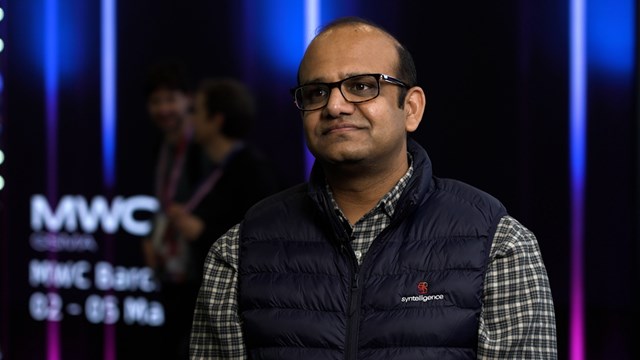
Sushil Rawat, Director of RAN Strategy, TELUS
Sushil Rawat of TELUS explores real-world performance metrics, integration challenges, and the organisational shifts required to successfully implement Open RAN at scale, providing valuable lessons for operators considering similar transformations. Through first-hand experiences and practical insights, he reveals how TELUS is navigating the complex transition from traditional vendor-locked networks to a more flexible, disaggregated architecture.
Recorded March 2025
Speaker

Sushil Rawat
Director of RAN Strategy, TELUS