To embed our video on your website copy and paste the code below:
<iframe src="https://www.youtube.com/embed/BhuToGWtMsY?modestbranding=1&rel=0" width="970" height="546" frameborder="0" scrolling="auto" allowfullscreen></iframe>
Ray Le Maistre, TelecomTV (00:05):
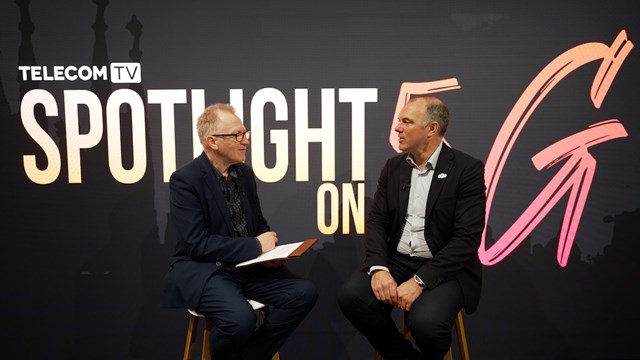
So we're in Dublin at Fyuz 2025. I'm here with Sadayuki Abeta. Who is the CTO at OREX SAI. Sadayuki, thanks very much for joining us. Great to see you again.
Sadayuki Abeta, OREX SAI, NTT Docomo (00:16):
Great to see you again too.
Ray Le Maistre, TelecomTV (00:17):
So OREX SAI just remind us for those who thinking OREX SAI, what do they do? Just to remind us what OREX SAI is?
Sadayuki Abeta, OREX SAI, NTT Docomo (00:24):
Yes. OREX SAI is a joint venture within the NTT Docomo and so that we have the experience of that open development and deployment and we provide the PREINTEGRATED solutions because we are not the software vendor, we are not the hardware vendor. So we work with the hardware vendor, software vendor, but after each operator circuit each component by themself, it's very complicated to simplify the operation we work with the partner and pre integrated solution we bring to the customer, then customer just ask us. So to simplify operation and keeping that flexibility, that is OREX.
Ray Le Maistre, TelecomTV (01:17):
Okay. And you've been working on quite an interesting and quite sizable project in Indonesia, is that right?
Sadayuki Abeta, OREX SAI, NTT Docomo (01:28):
We started collaboration the last year or beginning of this year and we have some announcement beginning of this year and we are waiting that So the government get the spectrum and end of No. Yeah, last month. Finally our customer awarded a spectrum so then the stage is moved to that commercial deployment.
Ray Le Maistre, TelecomTV (01:55):
And that's surge isn't it? That's the customer, yes. And just tell it's a little bit different because usually when there are open ran deployments, it's regular cellular delivering mobile communications. But this is a little bit different there it is fixed wireless access,
Sadayuki Abeta, OREX SAI, NTT Docomo (02:12):
Right? This is a fixed wireless access so that we don't need to support the handover, but this is, we use the CGPP system so that mean that we don't need to change anything just using our solution to FW and just need to support the new frequency bar. So they're very easy to extend our solution to the FWA.
Ray Le Maistre, TelecomTV (02:39):
Okay. Well great to hear about not only a different use case but an option that really works for what is a tricky geographic environment in Indonesia with thousands of islands and lots of distributed people. So interesting development there. Now of course NTT Doomo one of the longtime supporters of the open ran concept and architecture. Can you just give us a brief update on where DOCOMO is with open RAN and its rollout and what it's learning from Open ran?
Sadayuki Abeta, OREX SAI, NTT Docomo (03:18):
Yes. The NTT Docomo, as you know we introduced the match vendor ram. So because we have the open interface for front floor and also even the X two interface. So our network is mixture so that we can easily introduce the new vendors. So our network is now have the four CUD vendor and four RU vendors and there are more than 30 RU different equipment.
Ray Le Maistre, TelecomTV (03:50):
Wow.
Sadayuki Abeta, OREX SAI, NTT Docomo (03:50):
Yeah, so that is the already separate and now, so they're almost deployed. So we are now optimizing network more focusing the optimizing our network side. Okay. Yeah, well of course we are also working in that LAN also together with the work site and then we are planning to also deployed our W network.
Ray Le Maistre, TelecomTV (04:14):
Okay. And is Doomo at the point where it's looking at introducing a RAN intelligent controller platform as well or is that something that's in the future or?
Sadayuki Abeta, OREX SAI, NTT Docomo (04:26):
Yes, the NTT Docomo together with NTD group develop the SMO and OXI will use that SMO and we have already tested that SMO in some of the operators in doing the test. So one of the topics that the SMO to provide automatic project provisioning and automatic operation and so called Zer operation with Zer provisioning. This is I think very important especially for the open case because we have the multiple component and we need to setting up that by ourselves. That is complicated but we have that the automation features that support and that set up and everything by automation.
Ray Le Maistre, TelecomTV (05:19):
Okay, excellent. Now we're here at Fyuz. Obviously this is an environment where everybody is very, if I can use the phrase open to disaggregation and that concept and that idea and it is working on some part of it, but still beyond the Fyuz environment there still may be some doubt or skepticism about the worthiness of introducing particularly in the RAN about introducing disaggregation into the network because of the complexity. Does it match up to or even improve on traditional systems? What's your sense about the feeling in the industry towards open ran? Are more companies starting to be interested or engage in deployments or tests and trials or is it just the same companies that we knew two or three years ago still at the forefront and a small group doing it?
Sadayuki Abeta, OREX SAI, NTT Docomo (06:29):
Yeah, honestly if that same company provide a solution, of course it's simple but as of the RX side we are talking with the multiple operators and they have some concern in the past so that they are interested in that. So open land solutions but still there has some complexity. So how simplified the complexity that reason orex I tried to provide pre-integration solution and also their touch operation. So still keeping that. So having the March field component, that seems complex but if that's their touch operation, they don't need to care. It's a single vendor solution or March group in the solutions. Right. So to realize that of course that the open vendor need to cowork, so creating the ecosystem is important. It takes a little bit time honestly still have some the interface into interface gap but that need to need minimize but that part still we need to work more.
Ray Le Maistre, TelecomTV (07:51):
Okay.
Sadayuki Abeta, OREX SAI, NTT Docomo (07:52):
Yes. If that complete and just put on the bottom and everything set up then I think that more easy to introduce open.
Ray Le Maistre, TelecomTV (08:02):
But you are still seeing an appetite in the market of the operators engaging and seeing this as part of their future. I mean I'm seeing some things particularly on LinkedIn open Ran is dead or open ran has failed. Does this chime with what you are seeing in the market or do you think that this is still going to grow albeit slowly?
Sadayuki Abeta, OREX SAI, NTT Docomo (08:27):
Yeah, it's growing that growing up that is a reason that as operators show the interest to our solutions. So our solution is that quite open. We selected the different value vendor. We selected different the code sub vendors and the preintegrated solutions according to the operator request. And the other thing that they can easily add some solution, for example, they now is keen for Europe security and our solution is that the open cost server that mean that easily ensure that internet or internet solutions or IT technologies, IT technologies which already supported in that. So just so you know that put on that some features on the suburb.
Ray Le Maistre, TelecomTV (09:29):
Okay. So that flexibility that's been talked about for a long time
Sadayuki Abeta, OREX SAI, NTT Docomo (09:34):
And also that can use that other technology or technology use other region, not the mobile area, like IT region, we can easily copy.
Ray Le Maistre, TelecomTV (09:48):
Okay.
Sadayuki Abeta, OREX SAI, NTT Docomo (09:49):
So that they can their existing solution to the mobile network.
Ray Le Maistre, TelecomTV (09:53):
So I guess it's just all about seeing examples of it working elsewhere and then I guess having the confidence that this is at least an option for the future in networks. Yes. Okay. Excellent. Well, Saudi UK always a pleasure to talk to you and to get an update from your perspective. I know you do a lot of travel, lots of different markets, speak to a lot of different people. So always good to get your perspective. Thank you very much.
Sadayuki Abeta, OREX SAI, NTT Docomo (10:19):
Thank you very much.
So we're in Dublin at Fyuz 2025. I'm here with Sadayuki Abeta. Who is the CTO at OREX SAI. Sadayuki, thanks very much for joining us. Great to see you again.
Sadayuki Abeta, OREX SAI, NTT Docomo (00:16):
Great to see you again too.
Ray Le Maistre, TelecomTV (00:17):
So OREX SAI just remind us for those who thinking OREX SAI, what do they do? Just to remind us what OREX SAI is?
Sadayuki Abeta, OREX SAI, NTT Docomo (00:24):
Yes. OREX SAI is a joint venture within the NTT Docomo and so that we have the experience of that open development and deployment and we provide the PREINTEGRATED solutions because we are not the software vendor, we are not the hardware vendor. So we work with the hardware vendor, software vendor, but after each operator circuit each component by themself, it's very complicated to simplify the operation we work with the partner and pre integrated solution we bring to the customer, then customer just ask us. So to simplify operation and keeping that flexibility, that is OREX.
Ray Le Maistre, TelecomTV (01:17):
Okay. And you've been working on quite an interesting and quite sizable project in Indonesia, is that right?
Sadayuki Abeta, OREX SAI, NTT Docomo (01:28):
We started collaboration the last year or beginning of this year and we have some announcement beginning of this year and we are waiting that So the government get the spectrum and end of No. Yeah, last month. Finally our customer awarded a spectrum so then the stage is moved to that commercial deployment.
Ray Le Maistre, TelecomTV (01:55):
And that's surge isn't it? That's the customer, yes. And just tell it's a little bit different because usually when there are open ran deployments, it's regular cellular delivering mobile communications. But this is a little bit different there it is fixed wireless access,
Sadayuki Abeta, OREX SAI, NTT Docomo (02:12):
Right? This is a fixed wireless access so that we don't need to support the handover, but this is, we use the CGPP system so that mean that we don't need to change anything just using our solution to FW and just need to support the new frequency bar. So they're very easy to extend our solution to the FWA.
Ray Le Maistre, TelecomTV (02:39):
Okay. Well great to hear about not only a different use case but an option that really works for what is a tricky geographic environment in Indonesia with thousands of islands and lots of distributed people. So interesting development there. Now of course NTT Doomo one of the longtime supporters of the open ran concept and architecture. Can you just give us a brief update on where DOCOMO is with open RAN and its rollout and what it's learning from Open ran?
Sadayuki Abeta, OREX SAI, NTT Docomo (03:18):
Yes. The NTT Docomo, as you know we introduced the match vendor ram. So because we have the open interface for front floor and also even the X two interface. So our network is mixture so that we can easily introduce the new vendors. So our network is now have the four CUD vendor and four RU vendors and there are more than 30 RU different equipment.
Ray Le Maistre, TelecomTV (03:50):
Wow.
Sadayuki Abeta, OREX SAI, NTT Docomo (03:50):
Yeah, so that is the already separate and now, so they're almost deployed. So we are now optimizing network more focusing the optimizing our network side. Okay. Yeah, well of course we are also working in that LAN also together with the work site and then we are planning to also deployed our W network.
Ray Le Maistre, TelecomTV (04:14):
Okay. And is Doomo at the point where it's looking at introducing a RAN intelligent controller platform as well or is that something that's in the future or?
Sadayuki Abeta, OREX SAI, NTT Docomo (04:26):
Yes, the NTT Docomo together with NTD group develop the SMO and OXI will use that SMO and we have already tested that SMO in some of the operators in doing the test. So one of the topics that the SMO to provide automatic project provisioning and automatic operation and so called Zer operation with Zer provisioning. This is I think very important especially for the open case because we have the multiple component and we need to setting up that by ourselves. That is complicated but we have that the automation features that support and that set up and everything by automation.
Ray Le Maistre, TelecomTV (05:19):
Okay, excellent. Now we're here at Fyuz. Obviously this is an environment where everybody is very, if I can use the phrase open to disaggregation and that concept and that idea and it is working on some part of it, but still beyond the Fyuz environment there still may be some doubt or skepticism about the worthiness of introducing particularly in the RAN about introducing disaggregation into the network because of the complexity. Does it match up to or even improve on traditional systems? What's your sense about the feeling in the industry towards open ran? Are more companies starting to be interested or engage in deployments or tests and trials or is it just the same companies that we knew two or three years ago still at the forefront and a small group doing it?
Sadayuki Abeta, OREX SAI, NTT Docomo (06:29):
Yeah, honestly if that same company provide a solution, of course it's simple but as of the RX side we are talking with the multiple operators and they have some concern in the past so that they are interested in that. So open land solutions but still there has some complexity. So how simplified the complexity that reason orex I tried to provide pre-integration solution and also their touch operation. So still keeping that. So having the March field component, that seems complex but if that's their touch operation, they don't need to care. It's a single vendor solution or March group in the solutions. Right. So to realize that of course that the open vendor need to cowork, so creating the ecosystem is important. It takes a little bit time honestly still have some the interface into interface gap but that need to need minimize but that part still we need to work more.
Ray Le Maistre, TelecomTV (07:51):
Okay.
Sadayuki Abeta, OREX SAI, NTT Docomo (07:52):
Yes. If that complete and just put on the bottom and everything set up then I think that more easy to introduce open.
Ray Le Maistre, TelecomTV (08:02):
But you are still seeing an appetite in the market of the operators engaging and seeing this as part of their future. I mean I'm seeing some things particularly on LinkedIn open Ran is dead or open ran has failed. Does this chime with what you are seeing in the market or do you think that this is still going to grow albeit slowly?
Sadayuki Abeta, OREX SAI, NTT Docomo (08:27):
Yeah, it's growing that growing up that is a reason that as operators show the interest to our solutions. So our solution is that quite open. We selected the different value vendor. We selected different the code sub vendors and the preintegrated solutions according to the operator request. And the other thing that they can easily add some solution, for example, they now is keen for Europe security and our solution is that the open cost server that mean that easily ensure that internet or internet solutions or IT technologies, IT technologies which already supported in that. So just so you know that put on that some features on the suburb.
Ray Le Maistre, TelecomTV (09:29):
Okay. So that flexibility that's been talked about for a long time
Sadayuki Abeta, OREX SAI, NTT Docomo (09:34):
And also that can use that other technology or technology use other region, not the mobile area, like IT region, we can easily copy.
Ray Le Maistre, TelecomTV (09:48):
Okay.
Sadayuki Abeta, OREX SAI, NTT Docomo (09:49):
So that they can their existing solution to the mobile network.
Ray Le Maistre, TelecomTV (09:53):
So I guess it's just all about seeing examples of it working elsewhere and then I guess having the confidence that this is at least an option for the future in networks. Yes. Okay. Excellent. Well, Saudi UK always a pleasure to talk to you and to get an update from your perspective. I know you do a lot of travel, lots of different markets, speak to a lot of different people. So always good to get your perspective. Thank you very much.
Sadayuki Abeta, OREX SAI, NTT Docomo (10:19):
Thank you very much.
Please note that video transcripts are provided for reference only – content may vary from the published video or contain inaccuracies.
Sadayuki Abeta, CTO, Orex SAI
Sadayuki Abeta, CTO at Orex SAI, the Open RAN joint venture of NEC and NTT Docomo, explains the role that Orex SAI is playing in the deployment of fixed wireless access (FWA) infrastructure by Surge in Indonesia and discusses other developments in the Open RAN sector.
Recorded November 2025
Email Newsletters
Sign up to receive TelecomTV's top news and videos, plus exclusive subscriber-only content direct to your inbox.