To embed our video on your website copy and paste the code below:
<iframe src="https://www.youtube.com/embed/CMnRDQV_nQI?modestbranding=1&rel=0" width="970" height="546" frameborder="0" scrolling="auto" allowfullscreen></iframe>
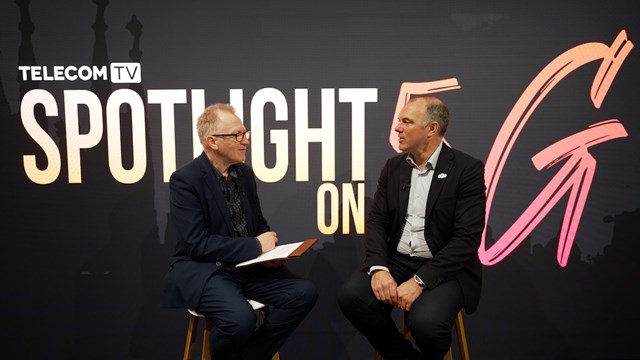
Okay, we are in Dublin at Fyuz 2025. I'm here with Ray Dolan, he's the chairman and CEO at Cohere Technologies. Ray, great to see you again. Thanks for joining us. Same here. Nice to see you, Ray. So a lot of people know Cohere for its Universal Spectrum multiplier or USM. Can you give us an update on USM in terms of the engagement with operators like Bell Canada and Vodafone and where you are with potential commercial engagements?
Ray Dolan, Cohere Technologies (00:32):
Sure. So as you say, we're in an advanced trial right now in Canada, sponsored by Bell Canada and one of their largest vendors, and we are now Interoperating with joint scheduling between us and that other vendor. So we're in the advanced stages and we anticipate going commercial early next year upon the success of that outcome. So little history of our journey. And I remember finally meeting you for the first time in this role. You were actually the first industry analyst person that I met in Barcelona in 2019. I told you where we were going. It's been a long journey. We're finally there. So that USM solution is a layer two, layer three solution. You can think of it as mostly at the scheduling layer. And we've spent five years building it by ourselves and we're now in the process of porting that to become embedded, if you will, in the genome B of some of the major leaders in the industry.
Ray Le Maistre, TelecomTV (01:23):
And so Bell Canada is hosting this trial, but other operators are kind of involved in the process, right?
Ray Dolan, Cohere Technologies (01:29):
Yeah. So Vodafone's looking over the shoulder, there are other operators in the US that are formally engaged in the trial. What we've tried to do each time in order to be efficient as a company, our size is to focus on one operator and one vendor partner, but ask those players to allow the industry to look at it. This is really an industry play. Our goal is to go global with every supplier in the industry, which means the addressable market. If we got our USM in one base station, our USM will be in 700 or maybe even a million base stations down the road. So this scales very, very fast upon the success of this outcome in Canada.
Ray Le Maistre, TelecomTV (02:05):
Okay, great. Well, I look forward to the announcements and news in the coming months as we lead up to MWC 26. It is coming up first, but there's other developments going on at cohere and you recently announced the launch of your Pulson technology business. Can you tell us about that and how that relates to the kind of six G planning that operators are really getting into right now?
Ray Dolan, Cohere Technologies (02:32):
Yeah, so with USM being at layer two, the pulson is at layer one. So it's at the physical layer, that's what people call it. And it is also what is standardized in three GPP is generally speaking layer one technology. So LTE or 5G and R would be 4G and 5G layer. One pulson is a candidate to become six G layer one, but Pulson is much more than that. The reason we gave Pulson the trademark name pulone is because it can be a pulse or a tone or both. And in the world where integrated sensing and communication has become quite the focus, if you will, of the killer app in six G, for lack of a better term, in order to integrate sensing and communication, you need to put a pulse and a tone together. And a pulse zone is in fact doing that. I'll go even further. A PULONE can actually render any waveform from TDMA to FDMA and everything in between. So it can render anything that has so far come out of three gpp. And anything that will come out of three GPP for six G can be rendered in software with our pulone. So we are already six G compliant.
Ray Le Maistre, TelecomTV (03:38):
Okay. Alright. I mean that's a good place to start in terms of the engagement, especially with the 3GPP where it is in the standards development process. So I guess you are quite engaged with the 3GPP?
Ray Dolan, Cohere Technologies (03:52):
We're very engaged and we're very passionate that the industry should move beyond the limitations of OFDM, which I happen to know a good bit about. Having been a co-founder at Flareon, which pioneered OFDM in a world where people wanted to stay with CDMA. So I'm quite familiar with and quite comfortable with the resistance that comes from disruptive ideas like at that time OFDM and now even the pulone. But if in fact the industry decides to stay with OFDM based architectures and iterate as opposed to really evolve and innovate, then we're capable of rendering that using our software solution. But we will also productize the full capabilities of our pulse zone because there are industries even beyond cellular that actually need the capabilities of integrated sensing and communication at scale. So while three GPP may evolve or may not, it may embrace pulse zone, it's not too late. But at the same time, if it doesn't, we're not going to drive a lot of controversy in the industry.
(04:47):
We're just going to conform to that. But we'll productize beyond that in areas like defense that want to track swarms of drones, not just one. And it's extremely vital before they issue authority to their war fighters to engage that they know the difference between a bird and a drone. So the industry is going to turn on things like resolution, the number targets can be tracked and the ability to sense both passively and actively. So this is not for the faint of heart. This is not a bolt-on solution where you add some sensing to your tone and do a little bit of isac. This is about revolutionizing to where you do sensing and communication in every resource up and down the stack.
Ray Le Maistre, TelecomTV (05:29):
Okay. Well I guess this is the time for that revolution. I mean, if it's not in 2030, it'll be too late. So now is the time. So you talked about integrated sensing and comms isac. That's obviously a big conversation around six G at the moment, and you also recently did a demo of a neural receiver that also ties in with that. Can you tell us about that demo?
Ray Dolan, Cohere Technologies (05:52):
Sure. The receiver is a critical part of the network architecture going forward, and it hasn't really evolved as much as it should. We, in partnership with Virginia Tech and Duke University have evolved some intellectual property that Virginia Tech explores for several years and we're now collaborating fully bringing that new receiver into a full blown cellular architecture. So last week at the Nvidia GTC conference in DC, we demonstrated on an NVIDIA platform our OTFS waveform working together with a neural receiver. Now a neural receiver is an AI element, if you will. It uses a large neural network, but unlike other approaches, this converges in less than a single symbol and it converges without any prior training. So it trains in line in real time extremely efficiently. Think of Duolingo being able to go to any country, not just because you trained it in all the languages that are spoken in that country, but it enters the country, discovers the language and trains in its symbol like the first syllable that comes out of someone's mouth.
(06:57):
It trains to their language. It's an amazing aspect. So if you're going to get to be a fully programmable control plane, and then you're going to be a fully dimension radio architecture and a PUL zone, you want a fully agile neural receiver. So now the world will be able to do anything. So war fighters will speak in private below the noise floor in languages only known to them. They'll actually change languages on the fly and the receiver will move with it and it'll be dimension by an OTFS waveform. And if cellular doesn't need those strenuous design parameters, then it can live with lesser technologies that will be built with the pulse zone software anyway.
Ray Le Maistre, TelecomTV (07:38):
Right.
Ray Dolan, Cohere Technologies (07:38):
And NTN will also address long delay spreads, long doppler spread, large doppler spreads, and a pulse zone will address the unique needs of an NTN. What we're seeing is an industry that deals with satellite technology with conventional terrestrial technology ends up getting a text message through a satellite network, right? Properly designed, you'll get the entire broadband experience through a satellite network. That's what the pole zone technology does.
Ray Le Maistre, TelecomTV (08:05):
Okay. Actually, well, I mean these are all developments that are right at the heart of what operators are planning for right now, not only in six G, but as 5G evolves as well. So really looking forward to finding out what Cohere has to share in the market in the next few months. Ray, great to speak to you as ever.
Ray Dolan, Cohere Technologies (08:26):
Great to speak to you too, Ray. We'll have lots more to say. At Mobile World Congress, we're working hard to make sure the operators are profitable and their entire supply chain can afford to innovate. Thanks Ray.
Please note that video transcripts are provided for reference only – content may vary from the published video or contain inaccuracies.
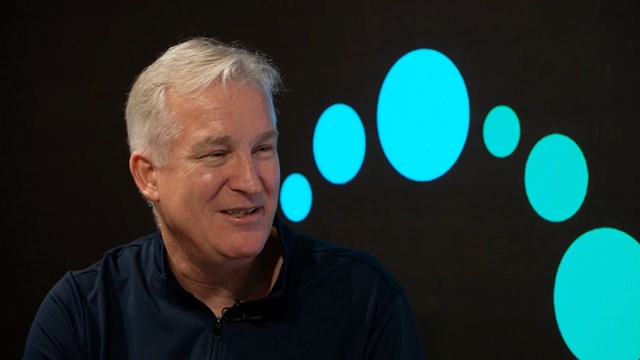
Ray Dolan, Chairman & CEO, Cohere Technologies
In an insightful discussion at Fyuz 2025 in Dublin, Ray Dolan, CEO of Cohere Technologies, shares updates on his company’s Universal Spectrum Multiplier (USM) trials with operators such as Bell Canada and Vodafone, and the anticipated commercial engagements for its USM platform. The CEO also discusses Cohere’s Pulsone Technology business, which aims to shape the future of 6G with its unique Layer 1 capabilities, and the company’s commitment to revolutionising telecom infrastructure with scalable and innovative solutions.
Recorded November 2025
Email Newsletters
Sign up to receive TelecomTV's top news and videos, plus exclusive subscriber-only content direct to your inbox.