Cloud, datacentres and the sovereignty question

By Ray Le Maistre
Dec 5, 2025
To embed our video on your website copy and paste the code below:
<iframe src="https://www.youtube.com/embed/0orvIjYtMw0?modestbranding=1&rel=0" width="970" height="546" frameborder="0" scrolling="auto" allowfullscreen></iframe>
Ray Le Maistre, TelecomTV (00:08):
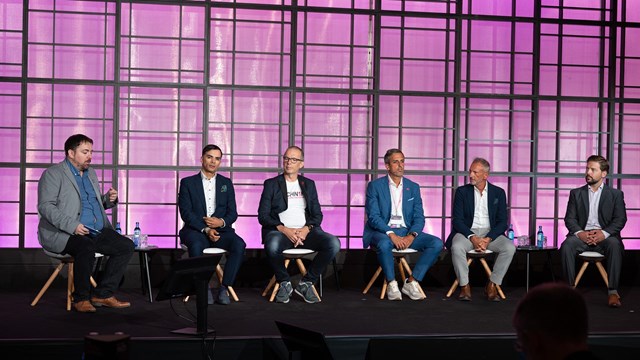
Okay, welcome back. As I've just been informed, I incorrectly called what? We just had a coffee break. I've been told it's a cake break that that is the more appropriate term. But welcome back at the third session of today cloud data centers and the sovereignty question. And here we're going to be looking at where data resides, who controls it and exploring the role of cloud computing, sovereign cloud initiatives and national data center strategy. So we have three specialist speakers here. So again, I'm just going to get them to introduce themselves before we get into their three minutes each. So Manish, we'll start with you. If you could introduce yourself and tell everybody where you're from and what you do.
Manish Singh, Dell Technologies (00:55):
Alright, thank you Ray. Good morning everyone. Or good afternoon. I should say Manish with Dell Technologies, part of the telecom systems business within Dell, five years in the making TSB within Dell with our exclusive focus on the telecom vertical, primarily the service providers and building a part ecosystem with network equipment providers. A big focus area for us is network cloud transformation and bringing AI to the telcos for autonomous networks to sovereign AI factories to edge AI and more. And last but not least recently, we've been obviously making significant investments and advancements around ai. Ran looking at that domain as well on unlocking the potential of AI at ram.
Ray Le Maistre, TelecomTV (01:55):
Okay, great, thank you.
Lasha Tabidze, VEON (01:58):
Thanks Ray. Good afternoon. My name is Lasha, I'm a group chief digital operations officer of VEON just shortly. VEON Group, we are a global digital operator and we run also like telecom networks in five countries in the world. It's Ukraine, Pakistan, Bangladesh, us, Pakistan, Kazakhstan, serving hundred 50 million telecom customers and more than 150 million digital customers in FinTech, e-commerce, AI domains and other businesses. So happy to be here and discuss the very important topic.
Ray Le Maistre, TelecomTV (02:34):
Okay, thank you Lasha and Rich.
Rich Stephens, Red Hat (02:36):
Hi. Yep, good afternoon everyone. So Rich Stevens, I'm the vice president for Telco in AMEA for Red Hat. So responsible for everything we do with telcos across the region. Relatively new, nine months in Red Hat. Previously spent 11 years running telco for Western Europe and Microsoft, so I guess cloud from both sides of the fence effectively. So yeah, I'm really great to be here. Thank you.
Ray Le Maistre, TelecomTV (03:03):
Okay, great. Well we're going to dive straight into the three minutes each and we're going to start with Manish, go to Rich and finish with Lasha. So Manish, your three minutes starts now.
Manish Singh, Dell Technologies (03:16):
Alright, thank you. Thank you Ray. I think the way I would probably frame this discussion I've been thinking about it is when it comes to data center and sovereignty, it all starts with data. And when we think about data, data has got certain properties to start with. Obviously data has got gravity, but there's questions around data security, data privacy, and of course the growing needs around data sovereignty as well. So I think that starts to frame the discussion in my mind in terms of how do we think about from a data center perspective enabling the data sovereignty. The other balancing side of the discussion then is the workload which is going to be accessing and working on this data. And if we think from a workload perspective and workload placement perspective, workloads will always find and gravitate to places where they can run most efficiently in the most secure way and reacting to the pull of the data gravity.
(04:41)
And I think if we take these two things and start to put the picture together, then we start to see what the role of sovereign data centers is probably going to be. Because one of the other balancing force in this dynamics is going to be efficiency, cost, economics of how do we get that right while we address the data sovereignty issue? And in that regard, our view is that the world is multi-cloud and will remain multi-cloud and workloads will find their ways either in the public clouds, private clouds, edge clouds, which are now becoming more and more important. And the balancing force in there is again data gravity in certain cases, even when we think from an edge cloud and edge AI perspective, it's the data that is pulling these workloads more towards the edge. So I think if we look at the world which is multi-cloud, balancing that out from an efficiency cost economics perspective and yet addressing the needs around data sovereignty in particular, that really answers down to what kind of data needs to be that is critical from a sovereignty perspective. And the location and the operational control of that data is in my view what's going to define what kind of sovereign clouds are needed, what kind of data sits in those sovereign clouds and how operationally that is managed and govern.
Ray Le Maistre, TelecomTV (06:33):
Okay, great. Thank you Manish. Great start, rich over to you for your three minutes.
Rich Stephens, Red Hat (06:39):
Okay, great, thanks. I think it's really interesting the conversations, we're talking about complexity, we're talking about multi-cloud and really I think red hat's conversation and the work that we do with the telcos and the operators around certainly around EMEA and globally in Europe and in the Middle East in my region specifically, is very much about how can we create consistency, flexibility of hybrid cloud open source. And we've had guys from other open source organizations on this morning as well. We talk about the open source really is the foundation. It gives the transparency, it gives the ability for control and local independence where necessary. But the big thing with Red Hat and our relationships with the hyperscalers is really to look at the ability to create a model that works across whether you are looking at a network workload, a B2B workload, an IT workload. And as operators with our experience start to bring their operating models, their cloud groups together under a single umbrella, I think it makes a lot of interesting conversations.
(07:47)
So for us it's very much about how do we empower the transformation from start to finish, how do we create simplicity and consistency across those pieces? I think we commissioned a report recently that went out a survey to around a thousand enterprise IT telco, IT leaders and sovereignty is clearly a very high factor for those individuals in terms of what keeps them awake at night. And I think they feed back into that report is very much about flexibility and transparency. So really putting open source at the core of what they're trying to do and giving them that control and that balance. And then I think we also then talk very much about how we take, how do we then take open source, which is inherently a global solution. Open source is open to the world, it's a global community, it's not EU limited, it's not US or Middle East Limited. And how do we then help and run and operate that effectively? So Red Hat has just launched an EU confirmed sovereign support environment, which is enabling our customers to be able to deliver a guaranteed EU based EU controlled solution under their own definition. And I think that becomes very important when we start talking about wider activities like the gigafactories that are being discussed across Europe and across the Middle East. And I think that's a very important thing for us as we go forward. And for Red Hat,
Ray Le Maistre, TelecomTV (09:25):
Sorry, I'm going to to step in there. Oh, three minutes. Okay,
Rich Stephens, Red Hat (09:29):
Fine. No worries. Thank you.
Ray Le Maistre, TelecomTV (09:31):
But we can come back to more in the questions but we need to move on to Lasha. So Lasha your time starts now. Thank you.
Lasha Tabidze, VEON (09:40):
Yeah, look, first of all, after all the sessions from today, which were very, very interesting, what I want to say is that sovereignty is not about the barriers. Sovereignty is about to build the digital confidence and in the countries we operate and I named them, so you can imagine from Kiev to Karachi or from Almaty going down to DACA like digital sovereignty and as Manish mentioned, it starts from data, then you speak about the data centers, then you speak about the multi-cloud where I fully agree and today morning it was said about the choice it has to still be there, but what about the data? This data which is stored sovereignly in the data centers and trained sovereignly and you touched on your presentation, very important topic. It's like sovereign AI and sovereign innovation. This is the most important for the countries and for the customers.
(10:35)
When you operate in, when citizens, when governments and when the businesses trust how their data is used, trained, and what products are built to create the real value for these markets, then the data sovereignty becomes a driver of the innovation. People innovate more, they innovate more freely, and governments are also very much engaged more and I can give you some of the examples very fast first, for example, digital. So entity and cloud in Ukraine you can imagine it's about resilience and it's very, very important in the country and in the same way, for example Pakistan's example, when we started sovereign cloud on-prem then created on the train data models, the FinTech which were launched in the market and are the biggest wallet in the market, government immediately started to partner with us to distribute the governmental money as a support to the citizens through the special programs within these platforms.
(11:38)
And then training these data and going into the AI like creating the ULLM, Kazak, LLM in Kazakhstan and just recently announced what we are doing as a foundation using Google Gamma. We are starting with digital in Ukraine to create Ukrainian LLM. And there is a huge difference when you do it on-prem, when all the data stays there, how this trusted data is transferred to you, then you create a real product to the market. So overall what I want to say is that it's not just about barriers, firewalls, policies or regulations, it's about what we can bring to the markets through the sovereign infrastructure, what can be built on top of this and how much people and the businesses and the governments can benefit from it.
Ray Le Maistre, TelecomTV (12:29):
Great, thank you. And that's why it's great to have a company like Von here today because you bring a perspective that can often get forgotten in the native English speaking world that actually the LLMs developed early doors are only of limited use to large parts of the world and great to see the work that's going on there at Fon. So great, three great starting perspectives there. We do have some sort of questions set up here, but any initial questions from the audience to any of our speakers? Okay, we've got one here. Yeah, if you want to start off Francis,
Francis Haysom (13:13):
Thank you for that one because it's always amazing when I see somebody from Ukraine talk about whether it's Open RAN or whatever is the thing immediately moves to innovation. Whereas I think the general conversation about in the EU and in the UK for example, it's about protecting things, not enabling things. A more general thing to the panel is how much do you think we need to shift our view of what sovereignty is about more as an enabling thing rather than seeing it protecting what we have and not having to change anything.
Rich Stephens, Red Hat (13:55):
I think so Francis, there's always going to be a good question from you to start, but I think one of the things I'm hopeful with is you see sovereignty as a way that the telco gets a differentiation in terms of the way it's able to operate. We talked think earlier about telco missing the cloud bubble and really being marginalized. I think we get to a point where I think sovereignty certainly in the B2B space gives delcos a very unique advantage and I think that's a key piece that can be taken to drive new solutions and actually to put us as an industry back in the middle of that conversation. And I think that takes us to a new place. I think that's really important. That's whether that's creating sovereign AI capabilities, whether that's providing sovereign data centers, whether that's providing and leveraging the hyperscalers, however it works. I think that's a key piece for us. So I do think that's something I'm hopeful for.
Lasha Tabidze, VEON (14:55):
Yeah, look, thanks for this question and definitely we do it in the countries we are because this is the only way to develop the future of the country. And just to make a link, as I've said, we are not just at Telco, we do lots of other businesses, but to the previous panel for example, we already did the deals about the D two C direct to sell with Starlink and we launched it in Ukraine. And just to give you example, just after the launch we hit the button for the launch, hundreds of thousands of people used direct to sell service and of course countries in a war and I don't want anywhere in the world to happen the same. But we have floods, we have revolutions, we have lots of problems around the world where connectivity is in gentlemen, it's really essential. Sometimes people need connectivity and to connect with someone more than bread or water, it's very important.
(15:50)
But if you think about what the question was and thank you for that, what we can build on this, that's why I've said sovereignty is not about barrier, it's about building the digital confidence of the nation and then you get everyone on board and that's how Vion is so successful in these countries because as I mentioned, we have the telco licenses, we run Thes biggest telcos, but we are biggest ones in financial services, right? Hailing, eHealth e-commerce and you name it. We go forward and forward and when created the first LLM, and as Ray mentioned, only seven languages in the world are high resource languages, which are LLMs are trained from the hyperscalers, but there are 7,000 plus languages and I'm not speaking about the dialects and even in Europe, look at the Barcelona super supercomputing center, what they're doing for Catalonian language and the same you can find in Italy or Germany or wherever else. So overall to your question, so first is changing the mindset, changing the environment, and most importantly working altogether. It's not about regulators do something different, government, something different and telcos or another business is something different. No, it has to be a common strategy where sovereignty is not about closing the door, but about creating the opportunity for the country to innovate and export the innovation to the world.
Manish Singh, Dell Technologies (17:19):
Yeah, I think a great set of points and great question. The way I'll put my thoughts forward is the way I think about it, it's sovereignty without silos in a way where if we think about from how do we achieve cloud scale with data control because if you think from what are the drivers, the fundamental drivers, all of these discussions, I mean there are many, but if I just pick the top two, one definitely centers around data, data privacy, data security, data sovereignty, and there are good reasons to think about how do we get to a cloud scale with data borders and how do we balance that. The other part is also equally important to your point around giving nations confidence is around supply chain, supply chain continuity and supply chain choice. We haven't talked much about that, but I think that also factors equally into this decision making that you have access to the access and flexibility in the supply chains that continues to maintain, evolve and scale your data infrastructure.
(18:45)
And so I think these are the forces that are forming this discussion, but I will equally say the answer is definitely not going to be closed ecosystems. I mean the idea of creating 200 closed cloud ecosystems, that is just not the right answer that anybody should be searching for. And the last thing I'll say is to the point that Rich made earlier, I think open ecosystems and open source even for that matter is going to play. And for that matter, even if you think from an AI model's perspective, open weight model, IE openness, open ecosystems, open weight models, open source, I think this open is going to be a key force that's going to be an enabler for the sovereign AI. We think about it, how to do it right and how to scale it. I think open has a key role to play to make this real.
Ray Le Maistre, TelecomTV (19:46):
Okay, fantastic. And there is a session dedicated to supply chain later on, so we'll be digging into that aspect a bit later on as well. I just wanted to come back rich to something you mentioned there about telcos and the opportunity in the B2B sector, particularly around sovereign and swing that back around and ask starting with you and come back along the panel. What kind of realistic role can telecom operators expect to play in delivering such services and in developing their own cloud platforms in markets that are pretty generally dominated by the hyperscalers?
Rich Stephens, Red Hat (20:33):
Yeah, I think that's a great question Ray. I think it's not something new, right? Telcos have been selling offering secure services to public sector, FSI, other organizations that are particularly concerned about security historically. But I think the momentum behind sovereignty and the government push and like you say we're talking as lashes said, it is very different country by country. So you not only have the concept of multi-cloud, you have the multi-country multi-region and it's being delivered and operated very differently and we see that across our relationships. But I think the role going forward is very much being if you're an enterprise, if you're an enterprise in a certain country and you're going to need to look to purchase or have built for you a sovereign service to run payments or to run your billing environment or to run a medical service for a hospital, I think telcos definitely already have very strong position and they're able to offer a capability with the right solutions, with the ability to bring the right AI models to make it affordable and deliver it in. And I think that's the key for me. You've seen the hyperscalers historically playing with building sovereign cloud specifically to go and address local markets and does the scale work potentially not when you looked at a lot of them have tried it and pulled back. You have Oracle offering disconnected clouds, you have different hyperscalers playing with different models, but I think telcos have the capability there to be able to get that flexibility and to really stamp pay, this is why you would buy from a telco versus buying from someone else.
Ray Le Maistre, TelecomTV (22:21):
And do telco's, Lasha, do telcos offer the option for companies to do the right thing but within budget?
Lasha Tabidze, VEON (22:30):
Yes, absolutely. And look like what Rich just mentioned, it's very valid and one thing I really want to add on top of this, look, sometimes all of us are really biased when we speak about hyperscaler solutions and I can give you examples and it's valid even in uk, Europe, west part of the world. So we always think as we are in this industry that everyone knows how to use the Microsoft Azure or other products and by this I mean medium and small businesses and believe me they don't. And everywhere in the world there is just difference. For example, in the western economies, MSEs are somewhere like 30, 35%, maybe 40. In other economies they are 60, 70%. But these small businesses who drive the economies, they simply don't know how to integrate, how to use it and even what services they're going to need for this.
(23:25)
Sometimes it's not just about that easy to access, it's about how to integrate into your systems and how to make it more efficient. Therefore like telcos roles with the experience plus partnering with the companies like Red Hat and many others, this is a real power, how to drive the small and medium businesses in the countries and how to really make the B two Bs in the country really more efficient and give them access or the solutions they need. Because sometimes you don't see the small business using just credit. They need some accounting systems based on AI and they don't need, for example, some hyperscaler solution or vice versa. They need something but they don't know how to use it. So it's a power, it's a moment right now where telcos can really step up and really help on that because telecoms in the markets have the biggest trust and this is a fact.
Manish Singh, Dell Technologies (24:19):
Yeah, I think a couple of thoughts on this one, and I'll start by saying not all telcos are created equal, nor are they in the same markets operating with same constraints and opportunities. The one thing I think that cuts across all telcos globally when we think from a data center perspectives and accessing data and providing services is edge. I think all telcos in my view have this very unique priceless real estate called the edge, which they need to find ways to unlock, especially as we get into the realm of AI and especially as physical AI and contextual AI is going to become more and more real because we need to bring AI closer to the data, to the data source, which is going to be out and about in the real world, whether it's your XR glass, whether it's your robot, whatever it is you're thinking from a physical AI perspective or near math.
(25:23)
So contextual AI, physical AI, these are all going to be driving forces that will need edge and I think telcos across the board have that opportunity. Then there are different markets and different dynamics. If you're an operator operating in North America or US in particular, well sovereignty is not really a driver there. And so for you to think you're going to do something against a hyperscaler that's different versus in certain markets where there is much more need for data sovereignty, then it creates the opportunity for you to think about can I participate in this where we already are seeing telcos moving, especially large parts of Asia. I will say some in Europe especially around sovereign AI factories, these are kind of sovereign clouds, but it's not just building sovereign AI factories. In this case, I think Laja gave the example, and I can expand on that.
(26:21)
We've seen the telcos bringing in local languages as a service and even building other frameworks on top of which you're thinking RAG and others as capabilities for long tail SMB markets to create these kind of services. So sovereign AI creates that opportunity. I think Edge AI is out there definitely for all the telcos to think about how unlock the value of the edge and participate in that. And then just broadly around sovereign data centers, I would say that's a mixed bag depending on the geos and what the regulations are or what the data requirements are and how you want to participate in there.
Ray Le Maistre, TelecomTV (27:00):
Okay, thank you. Let's come back to the audience, see if we've got any questions here. We have go there and we'll come back here.
Audience member (27:12):
So hi, I want to pick up on some of what Manishh was saying about data because I think one of the problems with data is that it's not clear in the market who owns it and who is responsible for it. And I think sovereignty is that heightens the problem. So I'd like to open that to the board to talk about is it the person who owns that data? Is it the company that's selling them services, Microsoft, red Hat, is it Amazon? Who knows?
Ray Le Maistre, TelecomTV (27:51):
So who owns it or who's responsible for both?
Audience member (27:55):
Both. Okay.
Ray Le Maistre, TelecomTV (27:58):
Anybody want to take that on?
Lasha Tabidze, VEON (28:01):
Yeah, look, it's a really great question, tough question and very heavy lifting and country by country, first of all, I will start who owns the data? Of course it's matter of policies and regulations and I personally believe that any person should be owner of the data and my own data should be also monetizable by me if I want to do it. It's like ideal world where I think we should come that I can earn some money on my data if I want to share it with someone. So this is first one, but of course like country by country it's heavily different, very different. So responsibility, this is more clear one, and I think especially on the sovereignty of the data, it should be very heavily controlled and assigned about the responsibility of the data security data exchange and how the data is trained or used. So I think the second part is easier to achieve, of course a hard path but much easier to achieve than the first one because first one I think is more philosophical question and that's why I answered myself how I see the real best future that each and every one of us owns our data, whatever we do, and each and everyone can decide whether it's another business model, how we can then trade with this currency, the name data.
Manish Singh, Dell Technologies (29:31):
Yeah, I'll just add a couple of quick thoughts on this on what Laia said. Just I think data, again, we need to parse this and I think we can have a whole session just on this in terms of what is data and what data are we talking about because data comes in many different forms. If you are talking about I or personally identifiable data and that has a certain set of regulations, plus there are certain set of drivers as well from a business entity perspective that are in play of how you access control, manage and maintain that data. And then there are obviously sovereignty now requirements also that are coming around PII as well, but not all data is PI. That's the other part of it. And so there are other data sets that we have to look at and say which of these data sets are becoming sovereign critical?
(30:31)
I mean clearly national infrastructure data, things of that nature. They're not i I data, but they are pretty sensitive data sets which have sovereignty constraints around that. And then there's broader set of data which including even public data sets that are available, which is fine and we can have, so my point is to your question, even in the world of data when we are talking about we have to parts what kind of data, and that is why I started the discussion with when we think about from a sovereign perspective, it's the data that drives the data center that drives the sovereign needs. And it could be i I or other kind of data on that.
Rich Stephens, Red Hat (31:19):
Yeah, I think those are good points. I think I would look at who owns data. I think it's clearly not the cloud provider, but it's certainly an application level or an individual. It doesn't mean that if government agencies, actors need to get access to data, they undoubtedly can enforce that situation. Whether that sits on a private cloud with an operator or whether it sits in a hyperscalers data center. I think the bit that sovereignty creates I think is the location of data and they guarantee that if you are in a multi-cloud, which we know we all will continue to exist forever in a multi-cloud environment where and how is your data sitting? Is it where you operating, where you think it is? Is the replication going on in places that breaks your sovereignty or doesn't serve that? But I think that sits with the service provider. I think that sits with in a wider model with the application provider. But I think it is a clear and critical point that we need to be very careful when we're building these solutions that you have the operating models and the architecture and the consistency of that architecture across wherever that wherever that application is going to run them for whichever market that is going to serve.
Ray Le Maistre, TelecomTV (32:31):
Okay. I had a question here and then we can come back as,
Audience member (32:34):
Okay, my question is to you Manish, but also related to what Lasha said about hosting almost like SMB applications on that operator data center. As we move from core to edge, big opportunity, maybe we'll have 100 times more data centers than today in the telco space, but as we move there we have volatile data and we have non-volatile, okay, is Dell going to help us to secure encrypt those two types of data so that the operator managing that data center will not be able to view the data about the gas company or about the drone company that will be using? There you go, a slice of that edge data center. That's an important question because if the telcos succeed to partition this edge data center across for example 50 SMBs in that city, then the business case will fly, but we'll be much harder to make the business case fly if it's only going to be the beyond workloads running on that edge data center. So I think Dell has a critical role to play here to ensure deep encryption of volatile and non-volatile data with different keys per SMB. Okay, what's your idea about this? Can you build us that deep encryption, that deep sovereignty for the data of all these SMBs in that city in Kazakhstan in Al?
Manish Singh, Dell Technologies (34:12):
Yeah, I'll answer your question even broader than Dell, I'm not, just to answer that question wouldn't limit it just to Dell. I think the question that you are raising, there are multiple layers in there. One is what's the role of, you have multiple operators operating different cloud platforms even on the edge side and you have different workloads coming in. How do you reduce the friction of bringing an application or workload across these different environments? And this today, even today without even edge remains one of the biggest friction points in terms of portability or workloads even in a multi-cloud environment. And the question there is, is there a role for either open source or a standard organization which really doesn't exist today in the shape of form that I would like to see that is really taking this problem head on and there is an opportunity area where how do you reduce the workload frictions of bringing this on different cloud frameworks and there are obvious enablers that potentially we can think about in terms of API standardization and more that can make that much, much easier.
(35:37)
So that's one. I think the second part of it in terms of data security, and I agree with you, I think that is absolutely critical both from volatile and non-volatile take you, I mean it's not that far out. Actually part of things that you are touching on are here and now in terms of confidential compute and all where you even are looking even in the cloud environments, that requirement exists where you have to have compute being made confidential to secure those data environments and extensions of that is what I see. Then probably you start to bring more towards in the edge environments.
Audience member (36:17):
Hint and trigger for my question is AMD is telling us that they have encrypted memory, Intel doesn't have it, right?
Manish Singh, Dell Technologies (36:24):
That's why I went to confidential and then now that's why I don't want to. So
Audience member (36:27):
Should we adopt that story? Should we believe in that? Is it important for
Manish Singh, Dell Technologies (36:31):
You? It is important for sure.
Lasha Tabidze, VEON (36:34):
If I may build on that, and of course I'm not competing now we have to do all the business. But look, if we stay in Almaty or any other city or any other country, first of all, local telecoms critical infrastructures, level of trust and security in the telecom environment within the countries is much higher than even world known brands. So that's a fact. So it's more of a choice. And I'm not saying you shouldn't raise that question, that question is very, very important. But what you just said at the end that I am being saying this, Intel is saying that and then it's Von who was there for last 30 years doing all the business. So that's the question. So where will be the trust into this edge computing coming to? Will it be like first the questions, will you be using a Dell a MD or whatever or it comes make me a business case, as you mentioned, I want drones like driving cars or whatever. Let's do it together, security levels, let's check it, let's do it. So my simple answer is that it'll be always as in any business, so who is your trusted partner? And then of course all these questions come today. Sure.
Audience member (37:53):
But you should also be afraid of insiders that will take a memory dump and sell this for Bitcoin inside beyond. Sorry, I fully agree. It happens in every organization. It happens inside us as well, right? It can happen to anyone. So then if we think about sovereignty, maybe we should put these hard barriers. Yeah, maybe we should believe that story that the memory shall be encrypted. Yeah,
Lasha Tabidze, VEON (38:16):
Absolutely agree. It's very good. But overall with the encryption, I just don't want to jump into another topic right now, but today I think it was already mentioned about the supercomputing coming in and all the encryptions we know now it's going away and all the countries including the country, country we are in now, everyone preparing for year 2030 exact year where everyone are preparing when the supercomputer will be decrypting everything and how are we going to overcome it,
Ray Le Maistre, TelecomTV (38:46):
Right? The quantum quantum.
Manish Singh, Dell Technologies (38:49):
But I'll just answer your question very quickly. I mean without even getting into the post quantum cryptography and all of that. The short answer to your question is the solutions exist today. Confidential compute is the answer and Dell can provide you the platform. I'll not tell you which silicon provider because we work with all of them, but we can provide you the platform. Yeah.
Ray Le Maistre, TelecomTV (39:10):
Cool. Rich, did you want to come in on this? Okay. Okay. Okay. We had question there and a question there. Yep.
Audience member (39:21):
How does the developer relations work for all this sudden shift to telco sovereign cloud? I mean, I remember having a conversation recently with someone who said there were 30 SaaS companies doing dental practice management software and the same thing for hotels. And there's going to be another 101 that do accounting and there's the local competitors of Eventbrite who goes to them and say, stop using the AWS tool set or the Azure tool set and develop your dental practice management software in Kazakhstan on the telco cloud with our tools and our sandboxes and our version of EC2 and whatever. And do you think telcos can do that
Lasha Tabidze, VEON (40:06):
First? Good question. Secondly, no one can force unless the law comes in and we've seen many these kind of laws coming in and even if we take into account now for example, us, if they find out you use deep seek, there are fines for anyone, even a person, but in practical way. So what we do in Kazakhstan, yeah, of course there are some services from Microsoft, AWS and et cetera. So firstly, there are no data centers for big hyperscalers and especially when we speak about ai, inference will be playing the biggest role. So the inference data centers will be the first trusting point for the local telecom. So build the inference data centers to run this ai, which we developed. Secondly, whenever we developed Kazak, LLM, we gave it free for every developer to develop the products on top of this ourselves. We developed for the schools, the AI tutors in Kazak, which is like performances several times higher than any world known LLM right now.
(41:11)
And we launched the AI tutor. We are working now with the medical institutions about that. But at the same time we gave it as an open source to the government and to everyone because the whole idea of developing this kind of tech locally is to engage the whole country, the best minds, entrepreneurs, developers into this. Otherwise it's a lost game. But with AWS or any other big examples, as I've said, you might have hundreds or thousands, but then you will have many, many others who never used anything from hyperscaler. And as I mentioned very openly, we are myself, including of course we are biased. We think that people in the countries, in the small businesses, they know how to launch their accounting system on Microsoft Azure. And please believe me, like eight out of 10 have no clue how to do it. So that's it, like data trust solution. And of course at the end of the day it's mirror price. And as I mentioned the inference data centers, which will be used for the ai right now it's enough if you have a data center in Saudi and you do something in Kazakhstan for that. But at the end of the day, the edge computing inference data centers in the countries will become crucial.
Manish Singh, Dell Technologies (42:31):
I think I'll just share a few thoughts, Dean on this with number one, as I said in my opening remarks, workloads have certain characteristics and one of the characteristics is they will find the best place to run themselves governed by data gravity governed by security and cost efficiency. These are all the drivers that just push where the workload should run. If you go back in time, and when we went through the big wave of the public cloud, we saw massive workload migrations to public clouds. And what we are seeing now, the state of market as we speak now, we are also seeing reverse. There have been massive workload repatriations that have happened from the public clouds into the enterprises. So to your question around the developer relations, those relationships exist. The telcos might not be the ones providing those relationships. That's a different question. But the workload repatriation on private clouds is already happening and it's actually accelerating because of economics.
(43:48)
As I said, the fundamental characteristics, economics, data, gravity, security, these are all the drivers that will define, I think edge is one thing that is starting to take shape. It hasn't it? We have talked about edge forever, mec, et cetera, et cetera. For the first time, I think edge is starting to take shape and I'll not sit here and say that's a given. There's a lot of work that needs to be done, but what's different this time is data gravity. Because as you start to see more and more data getting created out in the physical wall and the need to bring that workload closer to that data and improve the economics, I, that's the counterbalancing force that's now in favor of bringing things to the edge, to the edge AI. But there's body of work there to be done for sure. But workloads, repatriation, developers, bringing them on private clouds, I mean that's happening at scale.
Rich Stephens, Red Hat (44:55):
Yeah, I think to your point, Dean, about the developer community, I think the world of SaaS I think is being turned upside down and will continue to be turned upside down. The story recently, somebody recreated Slack in 30 hours using a agentic AI agent. I think there's a case there in the developer world, you are seeing as Manish, you're seeing people rebalance with their cloud uses and it's about finding the right workload in the right place. I think the local developer community, Red Hat launched an inference server, our own AI capability to help the open source community bring that through. And I hope that reduces barriers in certain countries that are more cost-sensitive, where you've got local businesses that want to be able to use open source, lms, want to be able to use more low cost. I think the challenge in the telco world is about how do you manage the scale? How do you then be able to deliver that? The hyperscalers are dominating the GPU environment. How do we manage to control and get our share? And as the market dynamics start to shift a little bit, how do we manage that as an industry would be my view.
Manish Singh, Dell Technologies (46:08):
To be fair, we've been in a training heavy market so far. Inferencing is still just starting to grow. So there's a lot of things that are yet to happen.
Ray Le Maistre, TelecomTV (46:21):
And I know there were some more questions, but we have reached the point where we do need to break for lunch, but lunch is the opportunity to ask questions face to face while the other person's eating, of course, which is always a pleasure. So we do have to close the session now. Lunch is outside, I think for an hour. I'm going to make sure yes, for an hour. So we start again at two o'clock. But great panel, great questions, great insights. Let's give a round of applause to our speaker.
Okay, welcome back. As I've just been informed, I incorrectly called what? We just had a coffee break. I've been told it's a cake break that that is the more appropriate term. But welcome back at the third session of today cloud data centers and the sovereignty question. And here we're going to be looking at where data resides, who controls it and exploring the role of cloud computing, sovereign cloud initiatives and national data center strategy. So we have three specialist speakers here. So again, I'm just going to get them to introduce themselves before we get into their three minutes each. So Manish, we'll start with you. If you could introduce yourself and tell everybody where you're from and what you do.
Manish Singh, Dell Technologies (00:55):
Alright, thank you Ray. Good morning everyone. Or good afternoon. I should say Manish with Dell Technologies, part of the telecom systems business within Dell, five years in the making TSB within Dell with our exclusive focus on the telecom vertical, primarily the service providers and building a part ecosystem with network equipment providers. A big focus area for us is network cloud transformation and bringing AI to the telcos for autonomous networks to sovereign AI factories to edge AI and more. And last but not least recently, we've been obviously making significant investments and advancements around ai. Ran looking at that domain as well on unlocking the potential of AI at ram.
Ray Le Maistre, TelecomTV (01:55):
Okay, great, thank you.
Lasha Tabidze, VEON (01:58):
Thanks Ray. Good afternoon. My name is Lasha, I'm a group chief digital operations officer of VEON just shortly. VEON Group, we are a global digital operator and we run also like telecom networks in five countries in the world. It's Ukraine, Pakistan, Bangladesh, us, Pakistan, Kazakhstan, serving hundred 50 million telecom customers and more than 150 million digital customers in FinTech, e-commerce, AI domains and other businesses. So happy to be here and discuss the very important topic.
Ray Le Maistre, TelecomTV (02:34):
Okay, thank you Lasha and Rich.
Rich Stephens, Red Hat (02:36):
Hi. Yep, good afternoon everyone. So Rich Stevens, I'm the vice president for Telco in AMEA for Red Hat. So responsible for everything we do with telcos across the region. Relatively new, nine months in Red Hat. Previously spent 11 years running telco for Western Europe and Microsoft, so I guess cloud from both sides of the fence effectively. So yeah, I'm really great to be here. Thank you.
Ray Le Maistre, TelecomTV (03:03):
Okay, great. Well we're going to dive straight into the three minutes each and we're going to start with Manish, go to Rich and finish with Lasha. So Manish, your three minutes starts now.
Manish Singh, Dell Technologies (03:16):
Alright, thank you. Thank you Ray. I think the way I would probably frame this discussion I've been thinking about it is when it comes to data center and sovereignty, it all starts with data. And when we think about data, data has got certain properties to start with. Obviously data has got gravity, but there's questions around data security, data privacy, and of course the growing needs around data sovereignty as well. So I think that starts to frame the discussion in my mind in terms of how do we think about from a data center perspective enabling the data sovereignty. The other balancing side of the discussion then is the workload which is going to be accessing and working on this data. And if we think from a workload perspective and workload placement perspective, workloads will always find and gravitate to places where they can run most efficiently in the most secure way and reacting to the pull of the data gravity.
(04:41)
And I think if we take these two things and start to put the picture together, then we start to see what the role of sovereign data centers is probably going to be. Because one of the other balancing force in this dynamics is going to be efficiency, cost, economics of how do we get that right while we address the data sovereignty issue? And in that regard, our view is that the world is multi-cloud and will remain multi-cloud and workloads will find their ways either in the public clouds, private clouds, edge clouds, which are now becoming more and more important. And the balancing force in there is again data gravity in certain cases, even when we think from an edge cloud and edge AI perspective, it's the data that is pulling these workloads more towards the edge. So I think if we look at the world which is multi-cloud, balancing that out from an efficiency cost economics perspective and yet addressing the needs around data sovereignty in particular, that really answers down to what kind of data needs to be that is critical from a sovereignty perspective. And the location and the operational control of that data is in my view what's going to define what kind of sovereign clouds are needed, what kind of data sits in those sovereign clouds and how operationally that is managed and govern.
Ray Le Maistre, TelecomTV (06:33):
Okay, great. Thank you Manish. Great start, rich over to you for your three minutes.
Rich Stephens, Red Hat (06:39):
Okay, great, thanks. I think it's really interesting the conversations, we're talking about complexity, we're talking about multi-cloud and really I think red hat's conversation and the work that we do with the telcos and the operators around certainly around EMEA and globally in Europe and in the Middle East in my region specifically, is very much about how can we create consistency, flexibility of hybrid cloud open source. And we've had guys from other open source organizations on this morning as well. We talk about the open source really is the foundation. It gives the transparency, it gives the ability for control and local independence where necessary. But the big thing with Red Hat and our relationships with the hyperscalers is really to look at the ability to create a model that works across whether you are looking at a network workload, a B2B workload, an IT workload. And as operators with our experience start to bring their operating models, their cloud groups together under a single umbrella, I think it makes a lot of interesting conversations.
(07:47)
So for us it's very much about how do we empower the transformation from start to finish, how do we create simplicity and consistency across those pieces? I think we commissioned a report recently that went out a survey to around a thousand enterprise IT telco, IT leaders and sovereignty is clearly a very high factor for those individuals in terms of what keeps them awake at night. And I think they feed back into that report is very much about flexibility and transparency. So really putting open source at the core of what they're trying to do and giving them that control and that balance. And then I think we also then talk very much about how we take, how do we then take open source, which is inherently a global solution. Open source is open to the world, it's a global community, it's not EU limited, it's not US or Middle East Limited. And how do we then help and run and operate that effectively? So Red Hat has just launched an EU confirmed sovereign support environment, which is enabling our customers to be able to deliver a guaranteed EU based EU controlled solution under their own definition. And I think that becomes very important when we start talking about wider activities like the gigafactories that are being discussed across Europe and across the Middle East. And I think that's a very important thing for us as we go forward. And for Red Hat,
Ray Le Maistre, TelecomTV (09:25):
Sorry, I'm going to to step in there. Oh, three minutes. Okay,
Rich Stephens, Red Hat (09:29):
Fine. No worries. Thank you.
Ray Le Maistre, TelecomTV (09:31):
But we can come back to more in the questions but we need to move on to Lasha. So Lasha your time starts now. Thank you.
Lasha Tabidze, VEON (09:40):
Yeah, look, first of all, after all the sessions from today, which were very, very interesting, what I want to say is that sovereignty is not about the barriers. Sovereignty is about to build the digital confidence and in the countries we operate and I named them, so you can imagine from Kiev to Karachi or from Almaty going down to DACA like digital sovereignty and as Manish mentioned, it starts from data, then you speak about the data centers, then you speak about the multi-cloud where I fully agree and today morning it was said about the choice it has to still be there, but what about the data? This data which is stored sovereignly in the data centers and trained sovereignly and you touched on your presentation, very important topic. It's like sovereign AI and sovereign innovation. This is the most important for the countries and for the customers.
(10:35)
When you operate in, when citizens, when governments and when the businesses trust how their data is used, trained, and what products are built to create the real value for these markets, then the data sovereignty becomes a driver of the innovation. People innovate more, they innovate more freely, and governments are also very much engaged more and I can give you some of the examples very fast first, for example, digital. So entity and cloud in Ukraine you can imagine it's about resilience and it's very, very important in the country and in the same way, for example Pakistan's example, when we started sovereign cloud on-prem then created on the train data models, the FinTech which were launched in the market and are the biggest wallet in the market, government immediately started to partner with us to distribute the governmental money as a support to the citizens through the special programs within these platforms.
(11:38)
And then training these data and going into the AI like creating the ULLM, Kazak, LLM in Kazakhstan and just recently announced what we are doing as a foundation using Google Gamma. We are starting with digital in Ukraine to create Ukrainian LLM. And there is a huge difference when you do it on-prem, when all the data stays there, how this trusted data is transferred to you, then you create a real product to the market. So overall what I want to say is that it's not just about barriers, firewalls, policies or regulations, it's about what we can bring to the markets through the sovereign infrastructure, what can be built on top of this and how much people and the businesses and the governments can benefit from it.
Ray Le Maistre, TelecomTV (12:29):
Great, thank you. And that's why it's great to have a company like Von here today because you bring a perspective that can often get forgotten in the native English speaking world that actually the LLMs developed early doors are only of limited use to large parts of the world and great to see the work that's going on there at Fon. So great, three great starting perspectives there. We do have some sort of questions set up here, but any initial questions from the audience to any of our speakers? Okay, we've got one here. Yeah, if you want to start off Francis,
Francis Haysom (13:13):
Thank you for that one because it's always amazing when I see somebody from Ukraine talk about whether it's Open RAN or whatever is the thing immediately moves to innovation. Whereas I think the general conversation about in the EU and in the UK for example, it's about protecting things, not enabling things. A more general thing to the panel is how much do you think we need to shift our view of what sovereignty is about more as an enabling thing rather than seeing it protecting what we have and not having to change anything.
Rich Stephens, Red Hat (13:55):
I think so Francis, there's always going to be a good question from you to start, but I think one of the things I'm hopeful with is you see sovereignty as a way that the telco gets a differentiation in terms of the way it's able to operate. We talked think earlier about telco missing the cloud bubble and really being marginalized. I think we get to a point where I think sovereignty certainly in the B2B space gives delcos a very unique advantage and I think that's a key piece that can be taken to drive new solutions and actually to put us as an industry back in the middle of that conversation. And I think that takes us to a new place. I think that's really important. That's whether that's creating sovereign AI capabilities, whether that's providing sovereign data centers, whether that's providing and leveraging the hyperscalers, however it works. I think that's a key piece for us. So I do think that's something I'm hopeful for.
Lasha Tabidze, VEON (14:55):
Yeah, look, thanks for this question and definitely we do it in the countries we are because this is the only way to develop the future of the country. And just to make a link, as I've said, we are not just at Telco, we do lots of other businesses, but to the previous panel for example, we already did the deals about the D two C direct to sell with Starlink and we launched it in Ukraine. And just to give you example, just after the launch we hit the button for the launch, hundreds of thousands of people used direct to sell service and of course countries in a war and I don't want anywhere in the world to happen the same. But we have floods, we have revolutions, we have lots of problems around the world where connectivity is in gentlemen, it's really essential. Sometimes people need connectivity and to connect with someone more than bread or water, it's very important.
(15:50)
But if you think about what the question was and thank you for that, what we can build on this, that's why I've said sovereignty is not about barrier, it's about building the digital confidence of the nation and then you get everyone on board and that's how Vion is so successful in these countries because as I mentioned, we have the telco licenses, we run Thes biggest telcos, but we are biggest ones in financial services, right? Hailing, eHealth e-commerce and you name it. We go forward and forward and when created the first LLM, and as Ray mentioned, only seven languages in the world are high resource languages, which are LLMs are trained from the hyperscalers, but there are 7,000 plus languages and I'm not speaking about the dialects and even in Europe, look at the Barcelona super supercomputing center, what they're doing for Catalonian language and the same you can find in Italy or Germany or wherever else. So overall to your question, so first is changing the mindset, changing the environment, and most importantly working altogether. It's not about regulators do something different, government, something different and telcos or another business is something different. No, it has to be a common strategy where sovereignty is not about closing the door, but about creating the opportunity for the country to innovate and export the innovation to the world.
Manish Singh, Dell Technologies (17:19):
Yeah, I think a great set of points and great question. The way I'll put my thoughts forward is the way I think about it, it's sovereignty without silos in a way where if we think about from how do we achieve cloud scale with data control because if you think from what are the drivers, the fundamental drivers, all of these discussions, I mean there are many, but if I just pick the top two, one definitely centers around data, data privacy, data security, data sovereignty, and there are good reasons to think about how do we get to a cloud scale with data borders and how do we balance that. The other part is also equally important to your point around giving nations confidence is around supply chain, supply chain continuity and supply chain choice. We haven't talked much about that, but I think that also factors equally into this decision making that you have access to the access and flexibility in the supply chains that continues to maintain, evolve and scale your data infrastructure.
(18:45)
And so I think these are the forces that are forming this discussion, but I will equally say the answer is definitely not going to be closed ecosystems. I mean the idea of creating 200 closed cloud ecosystems, that is just not the right answer that anybody should be searching for. And the last thing I'll say is to the point that Rich made earlier, I think open ecosystems and open source even for that matter is going to play. And for that matter, even if you think from an AI model's perspective, open weight model, IE openness, open ecosystems, open weight models, open source, I think this open is going to be a key force that's going to be an enabler for the sovereign AI. We think about it, how to do it right and how to scale it. I think open has a key role to play to make this real.
Ray Le Maistre, TelecomTV (19:46):
Okay, fantastic. And there is a session dedicated to supply chain later on, so we'll be digging into that aspect a bit later on as well. I just wanted to come back rich to something you mentioned there about telcos and the opportunity in the B2B sector, particularly around sovereign and swing that back around and ask starting with you and come back along the panel. What kind of realistic role can telecom operators expect to play in delivering such services and in developing their own cloud platforms in markets that are pretty generally dominated by the hyperscalers?
Rich Stephens, Red Hat (20:33):
Yeah, I think that's a great question Ray. I think it's not something new, right? Telcos have been selling offering secure services to public sector, FSI, other organizations that are particularly concerned about security historically. But I think the momentum behind sovereignty and the government push and like you say we're talking as lashes said, it is very different country by country. So you not only have the concept of multi-cloud, you have the multi-country multi-region and it's being delivered and operated very differently and we see that across our relationships. But I think the role going forward is very much being if you're an enterprise, if you're an enterprise in a certain country and you're going to need to look to purchase or have built for you a sovereign service to run payments or to run your billing environment or to run a medical service for a hospital, I think telcos definitely already have very strong position and they're able to offer a capability with the right solutions, with the ability to bring the right AI models to make it affordable and deliver it in. And I think that's the key for me. You've seen the hyperscalers historically playing with building sovereign cloud specifically to go and address local markets and does the scale work potentially not when you looked at a lot of them have tried it and pulled back. You have Oracle offering disconnected clouds, you have different hyperscalers playing with different models, but I think telcos have the capability there to be able to get that flexibility and to really stamp pay, this is why you would buy from a telco versus buying from someone else.
Ray Le Maistre, TelecomTV (22:21):
And do telco's, Lasha, do telcos offer the option for companies to do the right thing but within budget?
Lasha Tabidze, VEON (22:30):
Yes, absolutely. And look like what Rich just mentioned, it's very valid and one thing I really want to add on top of this, look, sometimes all of us are really biased when we speak about hyperscaler solutions and I can give you examples and it's valid even in uk, Europe, west part of the world. So we always think as we are in this industry that everyone knows how to use the Microsoft Azure or other products and by this I mean medium and small businesses and believe me they don't. And everywhere in the world there is just difference. For example, in the western economies, MSEs are somewhere like 30, 35%, maybe 40. In other economies they are 60, 70%. But these small businesses who drive the economies, they simply don't know how to integrate, how to use it and even what services they're going to need for this.
(23:25)
Sometimes it's not just about that easy to access, it's about how to integrate into your systems and how to make it more efficient. Therefore like telcos roles with the experience plus partnering with the companies like Red Hat and many others, this is a real power, how to drive the small and medium businesses in the countries and how to really make the B two Bs in the country really more efficient and give them access or the solutions they need. Because sometimes you don't see the small business using just credit. They need some accounting systems based on AI and they don't need, for example, some hyperscaler solution or vice versa. They need something but they don't know how to use it. So it's a power, it's a moment right now where telcos can really step up and really help on that because telecoms in the markets have the biggest trust and this is a fact.
Manish Singh, Dell Technologies (24:19):
Yeah, I think a couple of thoughts on this one, and I'll start by saying not all telcos are created equal, nor are they in the same markets operating with same constraints and opportunities. The one thing I think that cuts across all telcos globally when we think from a data center perspectives and accessing data and providing services is edge. I think all telcos in my view have this very unique priceless real estate called the edge, which they need to find ways to unlock, especially as we get into the realm of AI and especially as physical AI and contextual AI is going to become more and more real because we need to bring AI closer to the data, to the data source, which is going to be out and about in the real world, whether it's your XR glass, whether it's your robot, whatever it is you're thinking from a physical AI perspective or near math.
(25:23)
So contextual AI, physical AI, these are all going to be driving forces that will need edge and I think telcos across the board have that opportunity. Then there are different markets and different dynamics. If you're an operator operating in North America or US in particular, well sovereignty is not really a driver there. And so for you to think you're going to do something against a hyperscaler that's different versus in certain markets where there is much more need for data sovereignty, then it creates the opportunity for you to think about can I participate in this where we already are seeing telcos moving, especially large parts of Asia. I will say some in Europe especially around sovereign AI factories, these are kind of sovereign clouds, but it's not just building sovereign AI factories. In this case, I think Laja gave the example, and I can expand on that.
(26:21)
We've seen the telcos bringing in local languages as a service and even building other frameworks on top of which you're thinking RAG and others as capabilities for long tail SMB markets to create these kind of services. So sovereign AI creates that opportunity. I think Edge AI is out there definitely for all the telcos to think about how unlock the value of the edge and participate in that. And then just broadly around sovereign data centers, I would say that's a mixed bag depending on the geos and what the regulations are or what the data requirements are and how you want to participate in there.
Ray Le Maistre, TelecomTV (27:00):
Okay, thank you. Let's come back to the audience, see if we've got any questions here. We have go there and we'll come back here.
Audience member (27:12):
So hi, I want to pick up on some of what Manishh was saying about data because I think one of the problems with data is that it's not clear in the market who owns it and who is responsible for it. And I think sovereignty is that heightens the problem. So I'd like to open that to the board to talk about is it the person who owns that data? Is it the company that's selling them services, Microsoft, red Hat, is it Amazon? Who knows?
Ray Le Maistre, TelecomTV (27:51):
So who owns it or who's responsible for both?
Audience member (27:55):
Both. Okay.
Ray Le Maistre, TelecomTV (27:58):
Anybody want to take that on?
Lasha Tabidze, VEON (28:01):
Yeah, look, it's a really great question, tough question and very heavy lifting and country by country, first of all, I will start who owns the data? Of course it's matter of policies and regulations and I personally believe that any person should be owner of the data and my own data should be also monetizable by me if I want to do it. It's like ideal world where I think we should come that I can earn some money on my data if I want to share it with someone. So this is first one, but of course like country by country it's heavily different, very different. So responsibility, this is more clear one, and I think especially on the sovereignty of the data, it should be very heavily controlled and assigned about the responsibility of the data security data exchange and how the data is trained or used. So I think the second part is easier to achieve, of course a hard path but much easier to achieve than the first one because first one I think is more philosophical question and that's why I answered myself how I see the real best future that each and every one of us owns our data, whatever we do, and each and everyone can decide whether it's another business model, how we can then trade with this currency, the name data.
Manish Singh, Dell Technologies (29:31):
Yeah, I'll just add a couple of quick thoughts on this on what Laia said. Just I think data, again, we need to parse this and I think we can have a whole session just on this in terms of what is data and what data are we talking about because data comes in many different forms. If you are talking about I or personally identifiable data and that has a certain set of regulations, plus there are certain set of drivers as well from a business entity perspective that are in play of how you access control, manage and maintain that data. And then there are obviously sovereignty now requirements also that are coming around PII as well, but not all data is PI. That's the other part of it. And so there are other data sets that we have to look at and say which of these data sets are becoming sovereign critical?
(30:31)
I mean clearly national infrastructure data, things of that nature. They're not i I data, but they are pretty sensitive data sets which have sovereignty constraints around that. And then there's broader set of data which including even public data sets that are available, which is fine and we can have, so my point is to your question, even in the world of data when we are talking about we have to parts what kind of data, and that is why I started the discussion with when we think about from a sovereign perspective, it's the data that drives the data center that drives the sovereign needs. And it could be i I or other kind of data on that.
Rich Stephens, Red Hat (31:19):
Yeah, I think those are good points. I think I would look at who owns data. I think it's clearly not the cloud provider, but it's certainly an application level or an individual. It doesn't mean that if government agencies, actors need to get access to data, they undoubtedly can enforce that situation. Whether that sits on a private cloud with an operator or whether it sits in a hyperscalers data center. I think the bit that sovereignty creates I think is the location of data and they guarantee that if you are in a multi-cloud, which we know we all will continue to exist forever in a multi-cloud environment where and how is your data sitting? Is it where you operating, where you think it is? Is the replication going on in places that breaks your sovereignty or doesn't serve that? But I think that sits with the service provider. I think that sits with in a wider model with the application provider. But I think it is a clear and critical point that we need to be very careful when we're building these solutions that you have the operating models and the architecture and the consistency of that architecture across wherever that wherever that application is going to run them for whichever market that is going to serve.
Ray Le Maistre, TelecomTV (32:31):
Okay. I had a question here and then we can come back as,
Audience member (32:34):
Okay, my question is to you Manish, but also related to what Lasha said about hosting almost like SMB applications on that operator data center. As we move from core to edge, big opportunity, maybe we'll have 100 times more data centers than today in the telco space, but as we move there we have volatile data and we have non-volatile, okay, is Dell going to help us to secure encrypt those two types of data so that the operator managing that data center will not be able to view the data about the gas company or about the drone company that will be using? There you go, a slice of that edge data center. That's an important question because if the telcos succeed to partition this edge data center across for example 50 SMBs in that city, then the business case will fly, but we'll be much harder to make the business case fly if it's only going to be the beyond workloads running on that edge data center. So I think Dell has a critical role to play here to ensure deep encryption of volatile and non-volatile data with different keys per SMB. Okay, what's your idea about this? Can you build us that deep encryption, that deep sovereignty for the data of all these SMBs in that city in Kazakhstan in Al?
Manish Singh, Dell Technologies (34:12):
Yeah, I'll answer your question even broader than Dell, I'm not, just to answer that question wouldn't limit it just to Dell. I think the question that you are raising, there are multiple layers in there. One is what's the role of, you have multiple operators operating different cloud platforms even on the edge side and you have different workloads coming in. How do you reduce the friction of bringing an application or workload across these different environments? And this today, even today without even edge remains one of the biggest friction points in terms of portability or workloads even in a multi-cloud environment. And the question there is, is there a role for either open source or a standard organization which really doesn't exist today in the shape of form that I would like to see that is really taking this problem head on and there is an opportunity area where how do you reduce the workload frictions of bringing this on different cloud frameworks and there are obvious enablers that potentially we can think about in terms of API standardization and more that can make that much, much easier.
(35:37)
So that's one. I think the second part of it in terms of data security, and I agree with you, I think that is absolutely critical both from volatile and non-volatile take you, I mean it's not that far out. Actually part of things that you are touching on are here and now in terms of confidential compute and all where you even are looking even in the cloud environments, that requirement exists where you have to have compute being made confidential to secure those data environments and extensions of that is what I see. Then probably you start to bring more towards in the edge environments.
Audience member (36:17):
Hint and trigger for my question is AMD is telling us that they have encrypted memory, Intel doesn't have it, right?
Manish Singh, Dell Technologies (36:24):
That's why I went to confidential and then now that's why I don't want to. So
Audience member (36:27):
Should we adopt that story? Should we believe in that? Is it important for
Manish Singh, Dell Technologies (36:31):
You? It is important for sure.
Lasha Tabidze, VEON (36:34):
If I may build on that, and of course I'm not competing now we have to do all the business. But look, if we stay in Almaty or any other city or any other country, first of all, local telecoms critical infrastructures, level of trust and security in the telecom environment within the countries is much higher than even world known brands. So that's a fact. So it's more of a choice. And I'm not saying you shouldn't raise that question, that question is very, very important. But what you just said at the end that I am being saying this, Intel is saying that and then it's Von who was there for last 30 years doing all the business. So that's the question. So where will be the trust into this edge computing coming to? Will it be like first the questions, will you be using a Dell a MD or whatever or it comes make me a business case, as you mentioned, I want drones like driving cars or whatever. Let's do it together, security levels, let's check it, let's do it. So my simple answer is that it'll be always as in any business, so who is your trusted partner? And then of course all these questions come today. Sure.
Audience member (37:53):
But you should also be afraid of insiders that will take a memory dump and sell this for Bitcoin inside beyond. Sorry, I fully agree. It happens in every organization. It happens inside us as well, right? It can happen to anyone. So then if we think about sovereignty, maybe we should put these hard barriers. Yeah, maybe we should believe that story that the memory shall be encrypted. Yeah,
Lasha Tabidze, VEON (38:16):
Absolutely agree. It's very good. But overall with the encryption, I just don't want to jump into another topic right now, but today I think it was already mentioned about the supercomputing coming in and all the encryptions we know now it's going away and all the countries including the country, country we are in now, everyone preparing for year 2030 exact year where everyone are preparing when the supercomputer will be decrypting everything and how are we going to overcome it,
Ray Le Maistre, TelecomTV (38:46):
Right? The quantum quantum.
Manish Singh, Dell Technologies (38:49):
But I'll just answer your question very quickly. I mean without even getting into the post quantum cryptography and all of that. The short answer to your question is the solutions exist today. Confidential compute is the answer and Dell can provide you the platform. I'll not tell you which silicon provider because we work with all of them, but we can provide you the platform. Yeah.
Ray Le Maistre, TelecomTV (39:10):
Cool. Rich, did you want to come in on this? Okay. Okay. Okay. We had question there and a question there. Yep.
Audience member (39:21):
How does the developer relations work for all this sudden shift to telco sovereign cloud? I mean, I remember having a conversation recently with someone who said there were 30 SaaS companies doing dental practice management software and the same thing for hotels. And there's going to be another 101 that do accounting and there's the local competitors of Eventbrite who goes to them and say, stop using the AWS tool set or the Azure tool set and develop your dental practice management software in Kazakhstan on the telco cloud with our tools and our sandboxes and our version of EC2 and whatever. And do you think telcos can do that
Lasha Tabidze, VEON (40:06):
First? Good question. Secondly, no one can force unless the law comes in and we've seen many these kind of laws coming in and even if we take into account now for example, us, if they find out you use deep seek, there are fines for anyone, even a person, but in practical way. So what we do in Kazakhstan, yeah, of course there are some services from Microsoft, AWS and et cetera. So firstly, there are no data centers for big hyperscalers and especially when we speak about ai, inference will be playing the biggest role. So the inference data centers will be the first trusting point for the local telecom. So build the inference data centers to run this ai, which we developed. Secondly, whenever we developed Kazak, LLM, we gave it free for every developer to develop the products on top of this ourselves. We developed for the schools, the AI tutors in Kazak, which is like performances several times higher than any world known LLM right now.
(41:11)
And we launched the AI tutor. We are working now with the medical institutions about that. But at the same time we gave it as an open source to the government and to everyone because the whole idea of developing this kind of tech locally is to engage the whole country, the best minds, entrepreneurs, developers into this. Otherwise it's a lost game. But with AWS or any other big examples, as I've said, you might have hundreds or thousands, but then you will have many, many others who never used anything from hyperscaler. And as I mentioned very openly, we are myself, including of course we are biased. We think that people in the countries, in the small businesses, they know how to launch their accounting system on Microsoft Azure. And please believe me, like eight out of 10 have no clue how to do it. So that's it, like data trust solution. And of course at the end of the day it's mirror price. And as I mentioned the inference data centers, which will be used for the ai right now it's enough if you have a data center in Saudi and you do something in Kazakhstan for that. But at the end of the day, the edge computing inference data centers in the countries will become crucial.
Manish Singh, Dell Technologies (42:31):
I think I'll just share a few thoughts, Dean on this with number one, as I said in my opening remarks, workloads have certain characteristics and one of the characteristics is they will find the best place to run themselves governed by data gravity governed by security and cost efficiency. These are all the drivers that just push where the workload should run. If you go back in time, and when we went through the big wave of the public cloud, we saw massive workload migrations to public clouds. And what we are seeing now, the state of market as we speak now, we are also seeing reverse. There have been massive workload repatriations that have happened from the public clouds into the enterprises. So to your question around the developer relations, those relationships exist. The telcos might not be the ones providing those relationships. That's a different question. But the workload repatriation on private clouds is already happening and it's actually accelerating because of economics.
(43:48)
As I said, the fundamental characteristics, economics, data, gravity, security, these are all the drivers that will define, I think edge is one thing that is starting to take shape. It hasn't it? We have talked about edge forever, mec, et cetera, et cetera. For the first time, I think edge is starting to take shape and I'll not sit here and say that's a given. There's a lot of work that needs to be done, but what's different this time is data gravity. Because as you start to see more and more data getting created out in the physical wall and the need to bring that workload closer to that data and improve the economics, I, that's the counterbalancing force that's now in favor of bringing things to the edge, to the edge AI. But there's body of work there to be done for sure. But workloads, repatriation, developers, bringing them on private clouds, I mean that's happening at scale.
Rich Stephens, Red Hat (44:55):
Yeah, I think to your point, Dean, about the developer community, I think the world of SaaS I think is being turned upside down and will continue to be turned upside down. The story recently, somebody recreated Slack in 30 hours using a agentic AI agent. I think there's a case there in the developer world, you are seeing as Manish, you're seeing people rebalance with their cloud uses and it's about finding the right workload in the right place. I think the local developer community, Red Hat launched an inference server, our own AI capability to help the open source community bring that through. And I hope that reduces barriers in certain countries that are more cost-sensitive, where you've got local businesses that want to be able to use open source, lms, want to be able to use more low cost. I think the challenge in the telco world is about how do you manage the scale? How do you then be able to deliver that? The hyperscalers are dominating the GPU environment. How do we manage to control and get our share? And as the market dynamics start to shift a little bit, how do we manage that as an industry would be my view.
Manish Singh, Dell Technologies (46:08):
To be fair, we've been in a training heavy market so far. Inferencing is still just starting to grow. So there's a lot of things that are yet to happen.
Ray Le Maistre, TelecomTV (46:21):
And I know there were some more questions, but we have reached the point where we do need to break for lunch, but lunch is the opportunity to ask questions face to face while the other person's eating, of course, which is always a pleasure. So we do have to close the session now. Lunch is outside, I think for an hour. I'm going to make sure yes, for an hour. So we start again at two o'clock. But great panel, great questions, great insights. Let's give a round of applause to our speaker.
Please note that video transcripts are provided for reference only – content may vary from the published video or contain inaccuracies.
Panel Discussion
This panel explores the role of cloud computing, sovereign cloud initiatives and national datacentre strategies. How can telcos and cloud providers balance openness, efficiency and sovereignty in a highly globalised market?
Recorded December 2025
Participants

Lasha Tabidze
Group Chief Digital Operations Officer, VEON

Manish Singh
CTO, Telecom Systems Business, Dell Technologies

Rich Stephens
Vice President, EMEA Telecommunications, Red Hat