To embed our video on your website copy and paste the code below:
<iframe src="https://www.youtube.com/embed/Wx8AW6Cf0bE?modestbranding=1&rel=0" width="970" height="546" frameborder="0" scrolling="auto" allowfullscreen></iframe>
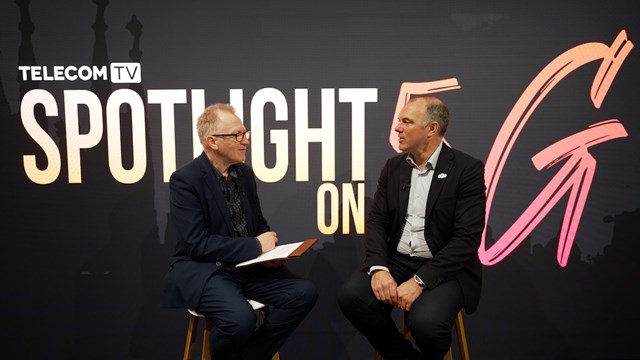
There's a lot of discussion right now about the impact that artificial intelligence can have on telco operations, but what does deploying AI actually look like for a network operator? Well, to get some answers, I'm talking today with Dennis Murphy, product manager for software networking at IBM. Dennis, thanks so much for joining us today. Now, the telecom industry has been promising network transformation for years, but some would argue that operators are treating AI as just another tool in an already complex stack. What's your perspective on why the industry seems stuck in this incremental improvement mindset and what needs to fundamentally change for AI to deliver the step function improvements that justify the investment?
Denis Murphy, IBM (01:00):
Yeah, thanks, Ray. So technology can and will do amazing things if we let it. So why aren't we letting it, I guess, and it's two things really. You mentioned mindset and also metrics. So let's start with metrics. So what needs to change I think is how did we define success Today? It's all about how fast can you fix what breaks, but I think that really leap comes when we start measuring how much something doesn't break at all, right? So that shift from reactive to more network intelligence to more predictive, it requires a rethink of how we look at the operating model and how we run our processes and operations and things like that. So that's more of the mindset piece and the real barrier really isn't necessarily technical. We've got a lot of new tech today. We've got a lot of new AI improvements, but operations teams and network teams have built a lot of their expertise by being firefighters.
(01:58):
They're incredibly good at diagnosing really complex problems, finding solutions under pressure, cross domain, cross vendor, multi-vendor, multiple systems, bringing all that data together. And if you think about it, and we're like this as well ourselves, is AI can threaten that core competency. So we got to kind of think about the operators are going to make real progress that I'm not the ones who are thinking how can AI improve my operation processes that I have today? Or how can AI improve my network management or my network planning? What would my process or what my operations look like if AI was the starting point? And that really requires a lot of leadership as well. It requires people to embrace it. And I think then that will open up a lot for us to know a lot of the unsolved problems that exist today. There is a lot of good tooling out there.
(02:53):
There is a lot of good automation out there that are solving a lot of the repeatable, the predictable problems, maybe 80% of the problems. But if we really tackled this successfully, we can go after those 20% of problems. The hard facts, a lot of the network fact of life is some of these problems will always happen. And we get into these war rooms at 3:00 AM and back to that heroic firefighting if you like. We come up with these solutions. Everybody wants to be the hero of the story, but these problems, if we can start preventing these problems in the first place happening, that will change the operating procedures and the operating manner here. And the other point of that is, the other side of that is a lot of these hard problems is it requires your most experienced engineers to help with them. So not only are they spending 80% of their time on those 20% of power problems, they're operating under extreme pressure. So if we can help them and avoid this heroic firefighting and getting ahead of the problem, I think that's where we can really get some technology advances and the technology to help us improve how we operate today.
Ray Le Maistre, TelecomTV (04:00):
Okay. So what are some of these hard problems that the operators are facing and what can AI actually solve as opposed to just optimize?
Denis Murphy, IBM (04:14):
Yeah, I mean a lot of these hard problems are the things that the cascading effects of a problem, for example, are intermittent issues. So those issues, as soon as you start to troubleshoot them, they kind of disappear, right? Think of NPS link failures that happen all the time. And even though the rerouting might take 20, 30, 40 seconds, there is still all of these customers impacted by jitter spikes and things like that. So hundreds of customer links are impacted and they're starting to see these service ions. However, if we can apply some of the technologies and some of the AI patterns, if we could start looking at patterns when these things are about to happen, look at link CIE latencies, start putting predictive measures in place like if capacity gets congested, we have this ready to go, things like that. So we can start analyzing patterns in the data that allow us then to get ahead of any of these problems.
(05:09):
It's really a shift from, it's not just having a better monitoring tool to solve these hard problems. It's moving towards more of a preventing or a network healing when these problems do eventually occur. And it's really replacing the manual incident workflow that heroic firefighting that I mentioned earlier with more of an AI driven machine led process if you like. And then I think these hard problems as they occur, the measure of success isn't going to be how quickly we fix them or how quickly we get these new alerts and things like that. It's going to be how often or how long it is between when these problems occur. So can we increase the time between when these difficult problems occur? So that's really around removing the incident entirely. That will open up then your experienced engineers and your experienced network operations folks to start looking at optimizing the network. So while these hard problems can be solved with preemptive action, these guys can start optimizing the network, looking at capacity planning, all these kind of optimizing proactive stuff they can do to the network.
Ray Le Maistre, TelecomTV (06:14):
So Dennis, you've described how AI can help to solve some of these hard problems, but getting from proof of concept to production deployment is notoriously difficult in networking. How should operators approach this?
Denis Murphy, IBM (06:34):
You're spot on Ray, so it's always been a problem for us, right? In the industry. So our approach is it's a use case driven approach, and it's really looking at the use cases in a couple of aspects. One, do people understand the use case? Is it really a hair and fire moment? Isn't an expensive problem that keeps happening, so that's important. Another challenge there is how often does it occur? Does this happen often enough so that when we do tackle the problem, we can see a return on investment, so bind the use case to maybe something like 90 days. We see some use cases where, or these problems that they happen and when they do happen, it could take 22 people in a war room for two days. So they're really critical problems. So focus the use cases on those really hard problems, focus use cases.
(07:22):
The problems are making a huge difference, things that have financial implications or reputational damage. And then also we need to focus on the use cases that can help us as we start to adapt these technologies like ai, et cetera. How can we build operational confidence in these techniques so that we move from AI being part of optimizing or being part of, so giving us quicker alerts or better insights, but it's actually a participant in the network. So moving from observing to participating in the network operations. So focusing on use cases that can demonstrate that across the spectrum is going to be really important. And I think as we do that, then it's not just about, like I said, getting better insights. We have different techniques now for finding better insights. We're using different AI models, we're using models that are built for network data. So that deterministic insight gives us the intelligence there, but also then leveraging the tooling that the ai, so what do we do about that?
(08:28):
So what are the remediation steps? What are the order of these steps that we need to take to go and fix this problem or resolve the problem or optimize? So bringing those two sides, you like what we call in IBM, we're calling it dual intelligence. So that left brain deterministic insights and then that more creative side of your brain, the right brain for the resolution of the remediation here, for bringing those two sides together to actually then go and make changes to the network. So the AI or the tooling in is allowed to participate in network as opposed to being an observer, helping the human with here's the alert or here's what you should do. So it's really becoming a participant in the network, I think. So that use gets driven approach then allows you to show value quickly, as I say, if you bind it to 90 days during the quarter. And then we've got to resist the temptation to try and solve everything at once, really focus on something that we can show value that people will get and that the business will understand that there's a benefit to this and then that we can expand from there.
Ray Le Maistre, TelecomTV (09:30):
And what about the actual technical capabilities of organizations with successful AI deployments? For example, they've already made that metrics and mindset shift that you talked about earlier. So they're not laying AI on top of existing tools, but they're how network intelligence actually works. What does this actually look like for an operator?
Denis Murphy, IBM (09:53):
So we really need to include ourselves and the humans involved in understanding why this is important, understanding what this opens up for us. So really embracing AI from an understanding what it can bring to the table. And a lot of this is around understanding. Traditionally we've got tons of data in the telco space, metrics, events, logs, and we brought it all together in these data lakes and we've applied some traditional machine learning to this. But what we're missing in that context from a technical perspective is that CPU utilization is 80%. That's different when it's for a Cisco router than it is for a load balance or when it's for an Ericson 5G core server or whatnot. So we've got to bring context to this, and I think that's important. That's kind of context to what are we actually, what does this data tell us in its native format, if you like, right?
(10:48):
So an example would be a 0.01% error on a Cisco A SR router might mean that, oh, there's an imminent failure or hardware failure here, whereas the same 80% metric, 80% CPU utilization metric or that error rather that 0.01% error on a Juniper MX router would signify it's just background noise. So that context is really important to help us understand what does that mean. I think the other important technical aspect is we need to be bi-directional, meaning, so we can get the telemetry, we can get the data and we can understand what to do with it, but the tooling also needs to be involved in allowing it to be, can it actually do something about it? Like I mentioned earlier, can I participate in the network operations as Andrew covered actually likes to say it's like omni potency. So do I have all the data that I need and Omni then can I actually be allowed participate in doing something about it?
(11:44):
So I think that's really important as well. I think another aspect of this is, and we're seeing hundreds and thousands of AI models out there, and it's like, what do I use? So I think an important aspect is using AI that's suitable for the condition. So in our case, in the world of network, it's network aware ai and that's really important as well. And that needs to be real time. So can we see these problems as they're happening? Can we prevent these problems before they happen? So that network aware, and it doesn't have to be big. A lot of talk in the industry around generative ai. We've got a point of view around these small foundational models that are network aware can give us these insights very, very quickly. And then of course, at the end of all that, we need trust and we need to be able to audit what we're saying, both the insights that are telling us what's happening on the network, but then equally, this is the proposal of how we're going to fix it or the changes we're going to make to the network.
(12:42):
So being that active participant then needs to be traceable and needs to be audit. So ultimately it's embracing AI and understanding it myself. I've started recently coding again with the help of AI as we define use cases for example, it doesn't mean I'm an expert coder, but it's enough for me to understand the benefit that it can bring as I prototype some tools and whatnot. Then allows me to think and allows our operators to think about allowing AI to become a key part of the network operations or allow the tooling to be key part of the network operations with as much human oversight as we allow it to. Then it starts becoming game changing, if you like. It's not just observing, it's not just giving us better insights or like you said, it's not just an enhancement to an existing tool. I think that's where we can fundamentally change the operating network operations day-to-day working life and is back to that mindset and the metrics that we spoke about earlier then.
Ray Le Maistre, TelecomTV (13:43):
Okay, great. Well, I mean so many considerations there and it's very clear then that, like you mentioned earlier, a lot of leadership is required here to be able to set in place what needs to happen and why it needs to happen. So really interesting insights. Dennis, thanks so much for joining today and look forward to speaking with you again in the future.
Denis Murphy, IBM (14:08):
Okay, thanks Ray. Thanks for the time. Appreciate it.
Please note that video transcripts are provided for reference only – content may vary from the published video or contain inaccuracies.
Denis Murphy, Product Manager – Software Networking, IBM
There’s a lot of discussion right now about the impact that AI can have on telco operations, but what does ‘deploying AI’ actually look like for a network operator? Denis Murphy, product manager for software networking at IBM, discusses how network operators need to think about AI and the broader considerations required as they become AI-native telcos.
Recorded October 2025
Find out more about the upcoming AI-Native Telco Forum, which takes place on 23-34 October in Düsseldorf, including the full agenda and registration details, here.
Email Newsletters
Sign up to receive TelecomTV's top news and videos, plus exclusive subscriber-only content direct to your inbox.