To embed our video on your website copy and paste the code below:
<iframe src="https://www.youtube.com/embed/0yzNt5RwQQE?modestbranding=1&rel=0" width="970" height="546" frameborder="0" scrolling="auto" allowfullscreen></iframe>
Tony Poulos, TelecomTV (00:06):
Hi, this is Tony Poulos at Mobile World Congress 2025 in Barcelona. Today I have with me Amajit Gupta, who is the group CEO and managing director of Light Storm. It. Great to catch up with you here. Firstly, tell me a little bit about Lightstorm.
Amajit Gupta, Lightstorm (00:21):
Thank you for inviting us to speak in this nice seminar. Lightstorm is actually a new company. It's just a 4-year-old company, but we are here to solve the problems of the cloud. We are a telecom company, but we connect the cloud and we solve the problem of enterprises connection to the cloud, which is quite different than most telecom companies solve for. So that's ensure the genesis of what we do.
Tony Poulos, TelecomTV (00:47):
And this conference is all about ai, but as a telco startup, how do you see it impacting the telecoms industry as a whole?
Amajit Gupta, Lightstorm (00:55):
Very interesting question, and that brings me to the topic of how topical bandwidth in telecom is. I'll jump back and point out that this show over here actually houses an industry which is about one and a half trillion dollars, but barely growing at about five, 6%. Whereas most of these sexy tech parts are growing at 30% plus and almost $2 trillion. AI for me is a ray of hope to revitalize this industry and its business model to be able to support longevity of this industry as well as support ai. For me, AI sits on three pillars. One is what you get talked about, which is about the learning models, the software skills with the big tech does. The second is actually infrastructure, and that brings me to the point of connectivity, telecoms and in particular what Light Storm does, which is about investment to run data centers.
(01:51):
Tourist still fiber and subsea fiber, but most importantly it also cries out for the urgent need to solve network as a service as opposed to network as a bespoke offering, which so far has been the norm. So nas, if you've heard of that term, which being used all over, is actually here to stay on the back of ai. So nas, the infrastructure piece as well as the learning models, in my opinion, forms the foundational elements of AI and telecom has a role to play at least in two of those foundational elements, much more deeply and intensely than ever before.
Tony Poulos, TelecomTV (02:26):
Well, there's a lot of trends happening at the moment. What are the most important ones that you are noticing?
Amajit Gupta, Lightstorm (02:32):
So one is of course the nature of telecom infrastructure and how it needs to change to be able to drive the cloud so far. And AI and I go out on a limb and say most of the infrastructure which was designed in telecom was built to last, which means they were billed to drive traffic, like phone calls, voice connect towers, which was not really the problem we are solving for cloud and ai. So the class of the infrastructure calls for a deep transformation, which is I think the first trend that I see. It calls for fresh capital, it calls for expertise and it talks of deep infrastructural skills. The second trend we see is around automation of the network. AI is as automatic as it gets. It almost thinks out several reasoning algorithms better than a human being in some cases. Now think of the network which supports that. That needs to be automated to be able to be and user controlled today. Sadly, most of the networks which support cloud do not support that. And that's really the opportunity and the trend that I see in this marketplace.
Tony Poulos, TelecomTV (03:43):
But how is light storm impacting or how is it being impacted by these trends?
Amajit Gupta, Lightstorm (03:49):
Our existential mission comes from the force of these trends, which essentially throws up an opportunity for fresh players to ride this inflection and actually level out the playing field for competition and entry into this market. And that's what we are counting on on the back of our deep technical expertise, our ability to react fast and actually flow the trends that come from AI and cloud. So light Storm really is existentially a company which is riding the growth of cloud and ai. And I want to underline, we are solving the problem where we think geographically that part of the world needs it most. And I'm referring to Asia Pacific and Middle East to an extent where there is a billion users unconnected, but the demographic actually calls for deep digital literate kids who actually love such technologies and therefore it's a perfect melting pot. A perfect storm and light storm is right in the middle of it.
Tony Poulos, TelecomTV (04:48):
Well, that's one of the problems you're trying to solve, but can you summarize other problems that you might be trying to solve?
Amajit Gupta, Lightstorm (04:53):
We are also trying to solve the problems in our little way of making the cloud and AI look prettier and ratify the deems that it really stands for today. There are, in ai, there's either a dystopian view or a utopian view. We believe the actualization of that stands in the middle, and the secret of this is in building AI-based infrastructure, which can cross the chasm and bring it to life. So that's really a problem which sits in the core of a large hyperscalers and tech companies. We like to think we are in a small way contributing to that
Tony Poulos, TelecomTV (05:28):
Amajit, thank you so much for giving us the background on Lightstorm and the trends in the industry. Thank you so much.
Amajit Gupta, Lightstorm (05:34):
Thank you for giving us the opportunity to speak to you.
Hi, this is Tony Poulos at Mobile World Congress 2025 in Barcelona. Today I have with me Amajit Gupta, who is the group CEO and managing director of Light Storm. It. Great to catch up with you here. Firstly, tell me a little bit about Lightstorm.
Amajit Gupta, Lightstorm (00:21):
Thank you for inviting us to speak in this nice seminar. Lightstorm is actually a new company. It's just a 4-year-old company, but we are here to solve the problems of the cloud. We are a telecom company, but we connect the cloud and we solve the problem of enterprises connection to the cloud, which is quite different than most telecom companies solve for. So that's ensure the genesis of what we do.
Tony Poulos, TelecomTV (00:47):
And this conference is all about ai, but as a telco startup, how do you see it impacting the telecoms industry as a whole?
Amajit Gupta, Lightstorm (00:55):
Very interesting question, and that brings me to the topic of how topical bandwidth in telecom is. I'll jump back and point out that this show over here actually houses an industry which is about one and a half trillion dollars, but barely growing at about five, 6%. Whereas most of these sexy tech parts are growing at 30% plus and almost $2 trillion. AI for me is a ray of hope to revitalize this industry and its business model to be able to support longevity of this industry as well as support ai. For me, AI sits on three pillars. One is what you get talked about, which is about the learning models, the software skills with the big tech does. The second is actually infrastructure, and that brings me to the point of connectivity, telecoms and in particular what Light Storm does, which is about investment to run data centers.
(01:51):
Tourist still fiber and subsea fiber, but most importantly it also cries out for the urgent need to solve network as a service as opposed to network as a bespoke offering, which so far has been the norm. So nas, if you've heard of that term, which being used all over, is actually here to stay on the back of ai. So nas, the infrastructure piece as well as the learning models, in my opinion, forms the foundational elements of AI and telecom has a role to play at least in two of those foundational elements, much more deeply and intensely than ever before.
Tony Poulos, TelecomTV (02:26):
Well, there's a lot of trends happening at the moment. What are the most important ones that you are noticing?
Amajit Gupta, Lightstorm (02:32):
So one is of course the nature of telecom infrastructure and how it needs to change to be able to drive the cloud so far. And AI and I go out on a limb and say most of the infrastructure which was designed in telecom was built to last, which means they were billed to drive traffic, like phone calls, voice connect towers, which was not really the problem we are solving for cloud and ai. So the class of the infrastructure calls for a deep transformation, which is I think the first trend that I see. It calls for fresh capital, it calls for expertise and it talks of deep infrastructural skills. The second trend we see is around automation of the network. AI is as automatic as it gets. It almost thinks out several reasoning algorithms better than a human being in some cases. Now think of the network which supports that. That needs to be automated to be able to be and user controlled today. Sadly, most of the networks which support cloud do not support that. And that's really the opportunity and the trend that I see in this marketplace.
Tony Poulos, TelecomTV (03:43):
But how is light storm impacting or how is it being impacted by these trends?
Amajit Gupta, Lightstorm (03:49):
Our existential mission comes from the force of these trends, which essentially throws up an opportunity for fresh players to ride this inflection and actually level out the playing field for competition and entry into this market. And that's what we are counting on on the back of our deep technical expertise, our ability to react fast and actually flow the trends that come from AI and cloud. So light Storm really is existentially a company which is riding the growth of cloud and ai. And I want to underline, we are solving the problem where we think geographically that part of the world needs it most. And I'm referring to Asia Pacific and Middle East to an extent where there is a billion users unconnected, but the demographic actually calls for deep digital literate kids who actually love such technologies and therefore it's a perfect melting pot. A perfect storm and light storm is right in the middle of it.
Tony Poulos, TelecomTV (04:48):
Well, that's one of the problems you're trying to solve, but can you summarize other problems that you might be trying to solve?
Amajit Gupta, Lightstorm (04:53):
We are also trying to solve the problems in our little way of making the cloud and AI look prettier and ratify the deems that it really stands for today. There are, in ai, there's either a dystopian view or a utopian view. We believe the actualization of that stands in the middle, and the secret of this is in building AI-based infrastructure, which can cross the chasm and bring it to life. So that's really a problem which sits in the core of a large hyperscalers and tech companies. We like to think we are in a small way contributing to that
Tony Poulos, TelecomTV (05:28):
Amajit, thank you so much for giving us the background on Lightstorm and the trends in the industry. Thank you so much.
Amajit Gupta, Lightstorm (05:34):
Thank you for giving us the opportunity to speak to you.
Please note that video transcripts are provided for reference only – content may vary from the published video or contain inaccuracies.
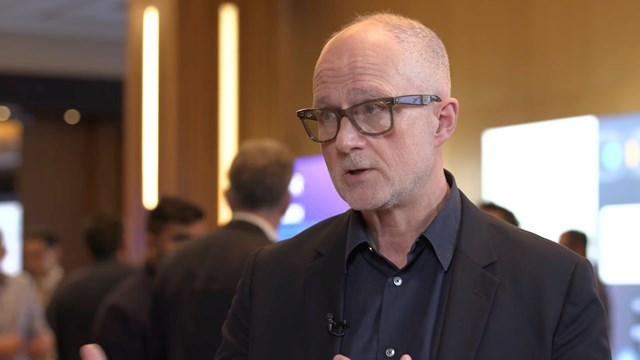
Amajit Gupta, Group CEO and Managing Director, Lightstorm
Amajit Gupta, CEO of Indian long-distance and international network operator Lightstorm, discusses the potential impact that AI and automation could have on the telecom sector, the important role of network operators in the AI infrastructure domain, and other key trends.
Recorded March 2025