What are the main challenges of the telco to techco journey?

By Tony Poulos
Mar 5, 2025
To embed our video on your website copy and paste the code below:
<iframe src="https://www.youtube.com/embed/zlwCIS2GSOU?modestbranding=1&rel=0" width="970" height="546" frameborder="0" scrolling="auto" allowfullscreen></iframe>
Tony Poulos, TelecomTV (00:07):
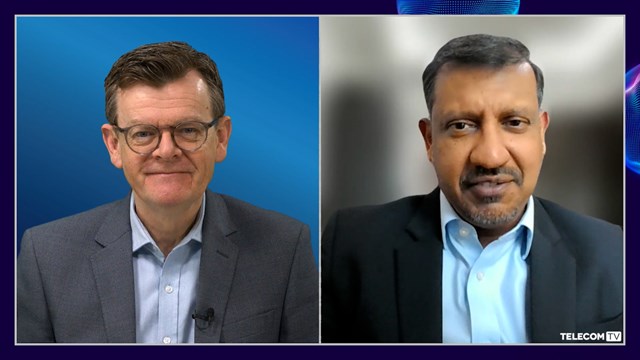
Hi, Tony Poulos here at Mobile World Congress in Barcelona. It's 2025 and the place is heaving. With me today is Niladri Dutta, who is the global telco industry consulting and solutions leader at Virtusa. Welcome Niladri. How are you?
Niladri Dutta, Virtusa (00:24):
Not too bad. Thank you very much.
Tony Poulos, TelecomTV (00:25):
Look, I really want to start with finding more about the story about the Telco to TechCo model and becoming A DSP in that journey. What do you observe as the major challenges that are facing telcos?
Niladri Dutta, Virtusa (00:38):
Great question. I think this has been going on for a while now. For the past two and a half years, we have been hearing the buzzword telco to TechCo or CSP to DSP. The fundamental change is the shift in the business model, which is largely driven by platform enablement. That's the strategy. But I think one of the major challenges is to integrate this business model into an operating model blueprint, and you need to have a common view where you need to integrate your business and operating model seamlessly and execute those strategies. Telcos will soon become TechCo, but the biggest challenge that they have is the organizational DNA shift and in terms of mindset shift that they need to have. Right at the top executive level,
Tony Poulos, TelecomTV (01:15):
How do you see telcos transitioning into the AI native journey from being a cloud native? I mean, AI is the talk of the whole town this week.
Niladri Dutta, Virtusa (01:25):
I do believe that AI has been changing the world or it's going to change the world in more ways than one. Of course, there's a lot been spoken about, not just in telecom industry per se, but across different sectors and industries. But what we really witness is more of AI washing than really about AI implementation. The way I look at telecom is there are three aspects of ai. When we largely look at telcos, there is a sovereign ai, which is largely focused on the enterprise functions of the telco. There is agent TKI, which is obviously the interface between the front office as well as the back office where you have these agents, whether they are in the front office or in the back office, especially in the contact center, in the network operation center, trying to resolve customer problems, user problems with the agreed s ls. That's the quick win that people are focused on, and you'll see many of boots going around here who are only implementing use cases around agent take ai, both in the front and the back office. And the third and the most important leg where you're going to witness a sea change in the next 24 months is the edge ai, where the network is going to be the future cloud. And a lot of these use cases that would roll out would be on over the top services supported by a smart network enabled by software defined.
Tony Poulos, TelecomTV (02:36):
Well, that sort of brings me to the point, what's the potential now of network as a service? Is it going to be optimizing 5G? We going to be able to monetize it. Even
Niladri Dutta, Virtusa (02:46):
5G monetization has been kind of a bottleneck for many CTOs and especially the C tios globally. It's not just in any specific market, so to speak. If you look at North America as a market, which has far more followed by Japan and the likes of South Korea, others, there have been excellent advancements over the past 18, 20 months. The challenge is scaling it up. There's always a one-off autonomous car, a one-off digital eHealth, a one-off smart factory. But the biggest challenge is the scaling up. And one of the reasons for that, if I may use that word, there was a lot of focus on the 5G radio side to brand the 5G game, but very few actually went from 5G core, which was non standalone to standalone. That is happening thick and fast now. So as that happens thick and fast, the commercialization of 5G would be at a massive scale. We are going to witness that over the next 18 to 24 months. I'm still very optimistic, however, I repeat again, the portfolio needs to change and it needs to be powered by catalysts and platform catalysts like ai, like automation, like analytics on top.
Tony Poulos, TelecomTV (03:52):
So what will the next gen operating models look like for telcos supporting all of these new digital initiatives?
Niladri Dutta, Virtusa (03:58):
First and foremost, the operating model needs to abide to beyond the classic dimensions of customer experience, people, process tech, organization, culture, KPIs, alliances, partners. IT needs to fundamentally look at the product portfolio and how does one align the new generation product portfolio. When you're not just looking at ias, cas or Pass or SaaS, you're actually trying to commoditize this, including the AI offerings that you have, the cloud offerings that you have to compliment each other. Well, you'll see, I work with global telcos. You see in the telcos of the West, they're trying to roll out SaaS as a potential part of the portfolio in the same vanilla connectivity service as a differentiated offering. So the segment needs to not be B2C, it needs to be B2B, or if I may use the word B2B two x. And I think that's the mantra for telcos to go forward. So operating model has to support the B2B and the B two, B two X rather than the vanilla B2C. That has always been over the long period of time.
Tony Poulos, TelecomTV (04:54):
And of course, something we don't always talk about is the need to focus on change management. How are we going to cope with that?
Niladri Dutta, Virtusa (04:59):
See, as I mentioned in my previous commentary, organizational culture has a great role to play, especially when you're looking to integrate fundamentally your platform business model with your operating model. The organization mindset needs to change from being a connectivity player to a TechCo player. And what I mean by TechCo is not being a product only company, but a product and a services mix, which will eventually give Levi to maybe a completely new plethora of services where you are envisaging the B two, B two X as a reality. So it's more of a mindset issue that I'm not going to be only selling SD WAN or ethernet or fixed line or fixed wireless. I'm going to top it up with a completely new next generation product portfolio, which would make me look like a ICT one stop shop
Tony Poulos, TelecomTV (05:43):
Niladri, it's been a pleasure being with you today, and thanks for the update.
Niladri Dutta, Virtusa (05:47):
Thank you very much. My pleasure.
Hi, Tony Poulos here at Mobile World Congress in Barcelona. It's 2025 and the place is heaving. With me today is Niladri Dutta, who is the global telco industry consulting and solutions leader at Virtusa. Welcome Niladri. How are you?
Niladri Dutta, Virtusa (00:24):
Not too bad. Thank you very much.
Tony Poulos, TelecomTV (00:25):
Look, I really want to start with finding more about the story about the Telco to TechCo model and becoming A DSP in that journey. What do you observe as the major challenges that are facing telcos?
Niladri Dutta, Virtusa (00:38):
Great question. I think this has been going on for a while now. For the past two and a half years, we have been hearing the buzzword telco to TechCo or CSP to DSP. The fundamental change is the shift in the business model, which is largely driven by platform enablement. That's the strategy. But I think one of the major challenges is to integrate this business model into an operating model blueprint, and you need to have a common view where you need to integrate your business and operating model seamlessly and execute those strategies. Telcos will soon become TechCo, but the biggest challenge that they have is the organizational DNA shift and in terms of mindset shift that they need to have. Right at the top executive level,
Tony Poulos, TelecomTV (01:15):
How do you see telcos transitioning into the AI native journey from being a cloud native? I mean, AI is the talk of the whole town this week.
Niladri Dutta, Virtusa (01:25):
I do believe that AI has been changing the world or it's going to change the world in more ways than one. Of course, there's a lot been spoken about, not just in telecom industry per se, but across different sectors and industries. But what we really witness is more of AI washing than really about AI implementation. The way I look at telecom is there are three aspects of ai. When we largely look at telcos, there is a sovereign ai, which is largely focused on the enterprise functions of the telco. There is agent TKI, which is obviously the interface between the front office as well as the back office where you have these agents, whether they are in the front office or in the back office, especially in the contact center, in the network operation center, trying to resolve customer problems, user problems with the agreed s ls. That's the quick win that people are focused on, and you'll see many of boots going around here who are only implementing use cases around agent take ai, both in the front and the back office. And the third and the most important leg where you're going to witness a sea change in the next 24 months is the edge ai, where the network is going to be the future cloud. And a lot of these use cases that would roll out would be on over the top services supported by a smart network enabled by software defined.
Tony Poulos, TelecomTV (02:36):
Well, that sort of brings me to the point, what's the potential now of network as a service? Is it going to be optimizing 5G? We going to be able to monetize it. Even
Niladri Dutta, Virtusa (02:46):
5G monetization has been kind of a bottleneck for many CTOs and especially the C tios globally. It's not just in any specific market, so to speak. If you look at North America as a market, which has far more followed by Japan and the likes of South Korea, others, there have been excellent advancements over the past 18, 20 months. The challenge is scaling it up. There's always a one-off autonomous car, a one-off digital eHealth, a one-off smart factory. But the biggest challenge is the scaling up. And one of the reasons for that, if I may use that word, there was a lot of focus on the 5G radio side to brand the 5G game, but very few actually went from 5G core, which was non standalone to standalone. That is happening thick and fast now. So as that happens thick and fast, the commercialization of 5G would be at a massive scale. We are going to witness that over the next 18 to 24 months. I'm still very optimistic, however, I repeat again, the portfolio needs to change and it needs to be powered by catalysts and platform catalysts like ai, like automation, like analytics on top.
Tony Poulos, TelecomTV (03:52):
So what will the next gen operating models look like for telcos supporting all of these new digital initiatives?
Niladri Dutta, Virtusa (03:58):
First and foremost, the operating model needs to abide to beyond the classic dimensions of customer experience, people, process tech, organization, culture, KPIs, alliances, partners. IT needs to fundamentally look at the product portfolio and how does one align the new generation product portfolio. When you're not just looking at ias, cas or Pass or SaaS, you're actually trying to commoditize this, including the AI offerings that you have, the cloud offerings that you have to compliment each other. Well, you'll see, I work with global telcos. You see in the telcos of the West, they're trying to roll out SaaS as a potential part of the portfolio in the same vanilla connectivity service as a differentiated offering. So the segment needs to not be B2C, it needs to be B2B, or if I may use the word B2B two x. And I think that's the mantra for telcos to go forward. So operating model has to support the B2B and the B two, B two X rather than the vanilla B2C. That has always been over the long period of time.
Tony Poulos, TelecomTV (04:54):
And of course, something we don't always talk about is the need to focus on change management. How are we going to cope with that?
Niladri Dutta, Virtusa (04:59):
See, as I mentioned in my previous commentary, organizational culture has a great role to play, especially when you're looking to integrate fundamentally your platform business model with your operating model. The organization mindset needs to change from being a connectivity player to a TechCo player. And what I mean by TechCo is not being a product only company, but a product and a services mix, which will eventually give Levi to maybe a completely new plethora of services where you are envisaging the B two, B two X as a reality. So it's more of a mindset issue that I'm not going to be only selling SD WAN or ethernet or fixed line or fixed wireless. I'm going to top it up with a completely new next generation product portfolio, which would make me look like a ICT one stop shop
Tony Poulos, TelecomTV (05:43):
Niladri, it's been a pleasure being with you today, and thanks for the update.
Niladri Dutta, Virtusa (05:47):
Thank you very much. My pleasure.
Please note that video transcripts are provided for reference only – content may vary from the published video or contain inaccuracies.
Niladri Dutta, Global Telco Industry Consulting & Solutions Leader, Virtusa
Virtusa’s Niladri Dutta outlines how telcos transition into AI native from cloud native, and the potential for network-as-a-service (NaaS) to act as an accelerator for 5G monetisation.
Recorded: March 2025
Email Newsletters
Sign up to receive TelecomTV's top news and videos, plus exclusive subscriber-only content direct to your inbox.