To embed our video on your website copy and paste the code below:
<iframe src="https://www.youtube.com/embed/ntxX_wCpuEw?modestbranding=1&rel=0" width="970" height="546" frameborder="0" scrolling="auto" allowfullscreen></iframe>
Tony Poulos, TelecomTV (00:08):
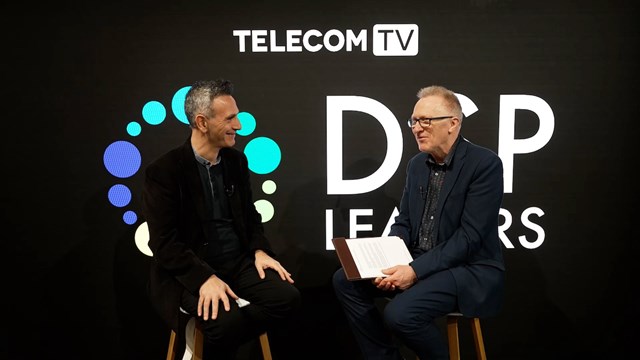
Hi, Tony Poulos here at MWC 2026 in Barcelona. And today I have with me Niladri Dutta, who is the global telco industry consulting and solutions leader for Virtusa. Niladri, welcome. Good to catch up again. Great to meet you again. It seems our annual event here to get together. Look really. What's your perspective on NaaS or network as a service? And do you think it's a viable proposition or a strategy for global telcos?
Niladri Dutta, Virtusa (00:34):
Absolutely, yes. Given the footfall that we have with regards to 5G and the acceleration of 5G monetisation, NaaS, or network as a service, is a business strategy which telcos are adopting thick and fast across the markets. I mean, there is no single telco who wouldn't say that NaaS is not a part of the strategy. Large part of that is because the connectivity kind of products are not really selling thick and fast as they should and generating the necessary ARPU. So you have to go for over-the-top services, which would deploy faster monetisation of the network, fast-tracking the exposure of network usage, so on and so forth. So NaaS across your product and portfolio stack is absolutely a business strategy, more than a tech strategy, so to speak.
Tony Poulos, TelecomTV (01:14):
Okay. Well, in your view, will NaaS actually accelerate or propel the 5G monetisation game the telcos are so fast struggling with?
Niladri Dutta, Virtusa (01:23):
Absolutely, yes. Because when you look at NaaS, it's not just about connectivity, it's also about connectivity plus. Often telcos are piloting NaaS with SD-WAN coupled with Ethernet or Ethernet coupled with SD-WAN, but it's going to go beyond that. It's going to go SD-WAN plus Ethernet plus FinTech or EduTech or any kind of Industry 4.0 or 5.0 use case coupled with it, which is going to basically overexpose the network, utilise and fast-track the network utilisation beyond 45% than what we are seeing. I mean, most of the telcos are unutilised. Can you imagine a global telco investing so much in CapEx? And so network as a service is going to transition that CapEx-based model into an OpEx-based model, faster at the acceleration, ensure that CTOs are happy answering to the CFOs for global telcos, and absolutely yes. NaaS is going to be a viable proposition for all global telcos going forward, not as I said earlier, not just as a tech strategy, but as a business strategy.
Tony Poulos, TelecomTV (02:17):
Look, in this age of AI, especially at this event, it's all over the place. And especially looking at edge and MEC, how will telcos look to go beyond connectivity services, which converts them into platform players or even techcos?
Niladri Dutta, Virtusa (02:32):
Right. So I'll take a step back while answering that question. When you look at NaaS overall, what's the fabric of NaaS? We need to understand that. NaaS comprises the hardware infrastructure, it comprises the software, it comprises the application, it comprises the operating system. It's a whole host of IaaS, CaaS, PaaS put together, integrated into one value proposition. So when you look at AI, what will AI essentially do? AI is going to fast-track that acceleration. How it's going to understand what does it take from reactive to proactive to predictive. And therefore, when you are looking at Connectivity Plus, you're looking at overexposing the network. Therefore, the availability of the network, the capacity of the network right at the lowest common denominator have to be absolutely perfect. In order to ensure that whatever SLAs you're committing to, you're not faltering on that. And AI is just going to assure and reassure that the service that you're proposing as part of the product portfolio gets rendered at the last mile.
(03:26):
That's where the AI proposition would significantly value add when it comes to NaaS and complement it.
Tony Poulos, TelecomTV (03:31):
But how do you see the role of
Niladri Dutta, Virtusa (03:32):
AI
Tony Poulos, TelecomTV (03:33):
In autonomous
Niladri Dutta, Virtusa (03:34):
Networks, for example? Exactly. So autonomous networks is basically the last mile, so to speak, at the resource layer. It's not at the business layer or the service layer. It's right at the resource layer where you're looking at operations, where you're looking at automating everything with zero touch, zero latency, ensuring that it's a seamless experience that you're providing to your customers. That's where autonomous network will basically accelerate the last mile of what you value propose in terms of overall network as a service. Autonomous network would always be facilitated with part of cognitive, part of human intelligence built in with a closed loop automation. That's going to differentiate between the experience that you render from an assurance perspective, meeting your SLAs and OLAs and commitments of the complex services that you rather envisage at the last mile as well. So autonomous networks for me is a complementary portfolio or a catalyst or an accelerator towards the value proposition of NaaS.
Tony Poulos, TelecomTV (04:29):
Well, is there a correlation between an autonomous network and say NaaS? If yes, how does Virtusa as a company see this?
Niladri Dutta, Virtusa (04:37):
Absolutely, yes. Because as I said, it's a top-down approach. Most telcos are adopting a hybrid approach because NaaS can act as a co-creator. You can be a co-creator in NaaS, you can be an aggregator in NaaS. Most telcos, if you see, start with a co-creator model where you want to look for essentially softwarising the network through a bunch of APIs, which are either CAMARA compliant or TM Forum compliant and accelerate the services as API-isation of the network, so to speak. And this is happening because of the software-defined network. The other aspect of it is not just the API-isation game, but ensuring that you are an aggregator, which means you become the aggregator as a one-stop shop where you are not just the software engineering hub and rolling out those APIs. You also act as a single, in a way, a service rendering proposition or a service tendering one-stop shop to your end client.
(05:26):
That's a difficult proposition to do because most telcos are still very much banking on connectivity, especially in Europe, if you would like to see that's the challenge they have. So my suggestion would be when you look at a hybrid, look at it from top down, look at the product catalogue, look at the services layer on top, and then look at the resource infrastructure.
Tony Poulos, TelecomTV (05:44):
But how do you see connectivity playing a role in the evolved telco as Industry 5.0 use cases become a reality?
Niladri Dutta, Virtusa (05:52):
See, with 6G not far from now, I mean, obviously it's fully cloud native and 6G has a human component of intelligence built into it, which is AI. So when you look at the difference between 5G and 6G, it's really the AI part of it. You will still continue to have URLLC, you will still continue to have mMTC, you will still continue to have mIoT, mMTC, what we call our eMBB or enhanced mobile broadband. They are the same pillars that today exist in 5G. The only difference is the human intelligence or the AI component. Now what would happen is when you look at Industry 5.0, how is it different? It is different based on the human intelligence that we have or the AI efficacation of these services that are going to come up. And it's not easy because you're going from reactive to proactive to predictive.
(06:38):
And imagine that an alarm is generated even when the event has not happened and the engineer is seeing that it's going to happen in one week's time and he's better prepared. Imagine the pseudo sci-fi reality that is going to come to play. So in my view, what would happen is it's not going to be anything different from Industry 4.0. The only difference here would be the cognitive intelligence that gets built into it. And I'm pretty confident that with the OEMs, with the network integrators, with the system integrators, all are all part of the value chain to make this a grand success and Industry 5.0 use cases will become a reality when the active 5G monetisation happens at a large scale and we transition from 5G commoditisation to 6G. I can't wait.
Tony Poulos, TelecomTV (07:23):
Niladri, thanks very much for being here. Thank you.
Niladri Dutta, Virtusa (07:25):
Pleasure.
Hi, Tony Poulos here at MWC 2026 in Barcelona. And today I have with me Niladri Dutta, who is the global telco industry consulting and solutions leader for Virtusa. Niladri, welcome. Good to catch up again. Great to meet you again. It seems our annual event here to get together. Look really. What's your perspective on NaaS or network as a service? And do you think it's a viable proposition or a strategy for global telcos?
Niladri Dutta, Virtusa (00:34):
Absolutely, yes. Given the footfall that we have with regards to 5G and the acceleration of 5G monetisation, NaaS, or network as a service, is a business strategy which telcos are adopting thick and fast across the markets. I mean, there is no single telco who wouldn't say that NaaS is not a part of the strategy. Large part of that is because the connectivity kind of products are not really selling thick and fast as they should and generating the necessary ARPU. So you have to go for over-the-top services, which would deploy faster monetisation of the network, fast-tracking the exposure of network usage, so on and so forth. So NaaS across your product and portfolio stack is absolutely a business strategy, more than a tech strategy, so to speak.
Tony Poulos, TelecomTV (01:14):
Okay. Well, in your view, will NaaS actually accelerate or propel the 5G monetisation game the telcos are so fast struggling with?
Niladri Dutta, Virtusa (01:23):
Absolutely, yes. Because when you look at NaaS, it's not just about connectivity, it's also about connectivity plus. Often telcos are piloting NaaS with SD-WAN coupled with Ethernet or Ethernet coupled with SD-WAN, but it's going to go beyond that. It's going to go SD-WAN plus Ethernet plus FinTech or EduTech or any kind of Industry 4.0 or 5.0 use case coupled with it, which is going to basically overexpose the network, utilise and fast-track the network utilisation beyond 45% than what we are seeing. I mean, most of the telcos are unutilised. Can you imagine a global telco investing so much in CapEx? And so network as a service is going to transition that CapEx-based model into an OpEx-based model, faster at the acceleration, ensure that CTOs are happy answering to the CFOs for global telcos, and absolutely yes. NaaS is going to be a viable proposition for all global telcos going forward, not as I said earlier, not just as a tech strategy, but as a business strategy.
Tony Poulos, TelecomTV (02:17):
Look, in this age of AI, especially at this event, it's all over the place. And especially looking at edge and MEC, how will telcos look to go beyond connectivity services, which converts them into platform players or even techcos?
Niladri Dutta, Virtusa (02:32):
Right. So I'll take a step back while answering that question. When you look at NaaS overall, what's the fabric of NaaS? We need to understand that. NaaS comprises the hardware infrastructure, it comprises the software, it comprises the application, it comprises the operating system. It's a whole host of IaaS, CaaS, PaaS put together, integrated into one value proposition. So when you look at AI, what will AI essentially do? AI is going to fast-track that acceleration. How it's going to understand what does it take from reactive to proactive to predictive. And therefore, when you are looking at Connectivity Plus, you're looking at overexposing the network. Therefore, the availability of the network, the capacity of the network right at the lowest common denominator have to be absolutely perfect. In order to ensure that whatever SLAs you're committing to, you're not faltering on that. And AI is just going to assure and reassure that the service that you're proposing as part of the product portfolio gets rendered at the last mile.
(03:26):
That's where the AI proposition would significantly value add when it comes to NaaS and complement it.
Tony Poulos, TelecomTV (03:31):
But how do you see the role of
Niladri Dutta, Virtusa (03:32):
AI
Tony Poulos, TelecomTV (03:33):
In autonomous
Niladri Dutta, Virtusa (03:34):
Networks, for example? Exactly. So autonomous networks is basically the last mile, so to speak, at the resource layer. It's not at the business layer or the service layer. It's right at the resource layer where you're looking at operations, where you're looking at automating everything with zero touch, zero latency, ensuring that it's a seamless experience that you're providing to your customers. That's where autonomous network will basically accelerate the last mile of what you value propose in terms of overall network as a service. Autonomous network would always be facilitated with part of cognitive, part of human intelligence built in with a closed loop automation. That's going to differentiate between the experience that you render from an assurance perspective, meeting your SLAs and OLAs and commitments of the complex services that you rather envisage at the last mile as well. So autonomous networks for me is a complementary portfolio or a catalyst or an accelerator towards the value proposition of NaaS.
Tony Poulos, TelecomTV (04:29):
Well, is there a correlation between an autonomous network and say NaaS? If yes, how does Virtusa as a company see this?
Niladri Dutta, Virtusa (04:37):
Absolutely, yes. Because as I said, it's a top-down approach. Most telcos are adopting a hybrid approach because NaaS can act as a co-creator. You can be a co-creator in NaaS, you can be an aggregator in NaaS. Most telcos, if you see, start with a co-creator model where you want to look for essentially softwarising the network through a bunch of APIs, which are either CAMARA compliant or TM Forum compliant and accelerate the services as API-isation of the network, so to speak. And this is happening because of the software-defined network. The other aspect of it is not just the API-isation game, but ensuring that you are an aggregator, which means you become the aggregator as a one-stop shop where you are not just the software engineering hub and rolling out those APIs. You also act as a single, in a way, a service rendering proposition or a service tendering one-stop shop to your end client.
(05:26):
That's a difficult proposition to do because most telcos are still very much banking on connectivity, especially in Europe, if you would like to see that's the challenge they have. So my suggestion would be when you look at a hybrid, look at it from top down, look at the product catalogue, look at the services layer on top, and then look at the resource infrastructure.
Tony Poulos, TelecomTV (05:44):
But how do you see connectivity playing a role in the evolved telco as Industry 5.0 use cases become a reality?
Niladri Dutta, Virtusa (05:52):
See, with 6G not far from now, I mean, obviously it's fully cloud native and 6G has a human component of intelligence built into it, which is AI. So when you look at the difference between 5G and 6G, it's really the AI part of it. You will still continue to have URLLC, you will still continue to have mMTC, you will still continue to have mIoT, mMTC, what we call our eMBB or enhanced mobile broadband. They are the same pillars that today exist in 5G. The only difference is the human intelligence or the AI component. Now what would happen is when you look at Industry 5.0, how is it different? It is different based on the human intelligence that we have or the AI efficacation of these services that are going to come up. And it's not easy because you're going from reactive to proactive to predictive.
(06:38):
And imagine that an alarm is generated even when the event has not happened and the engineer is seeing that it's going to happen in one week's time and he's better prepared. Imagine the pseudo sci-fi reality that is going to come to play. So in my view, what would happen is it's not going to be anything different from Industry 4.0. The only difference here would be the cognitive intelligence that gets built into it. And I'm pretty confident that with the OEMs, with the network integrators, with the system integrators, all are all part of the value chain to make this a grand success and Industry 5.0 use cases will become a reality when the active 5G monetisation happens at a large scale and we transition from 5G commoditisation to 6G. I can't wait.
Tony Poulos, TelecomTV (07:23):
Niladri, thanks very much for being here. Thank you.
Niladri Dutta, Virtusa (07:25):
Pleasure.
Please note that video transcripts are provided for reference only – content may vary from the published video or contain inaccuracies.
Niladri Dutta, Global Telco Industry Consulting & Solutions Leader, Virtusa
Speaking at MWC26, Virtusa’s global telco industry consulting and solutions leader, Niladri Dutta, discusses how network-as-a-service (NaaS) has evolved from a technology strategy to a business imperative for global telcos. He also explores the role of AI in autonomous networks and how the transition from 5G to 6G will incorporate human intelligence components to enable Industry 5.0 use cases.
Recorded March 2026
Email Newsletters
Sign up to receive TelecomTV's top news and videos, plus exclusive subscriber-only content direct to your inbox.