To embed our video on your website copy and paste the code below:
<iframe src="https://www.youtube.com/embed/NfoX-IYZOqw?modestbranding=1&rel=0" width="970" height="546" frameborder="0" scrolling="auto" allowfullscreen></iframe>
Ray Le Maistre, TelecomTV (00:07):
We are in Barcelona. It's MWC24. I'm here with Benji Coetzee. She is the Chief Strategy and Growth Officer at KPN. Benji, thanks very much for taking time out of your agenda to join us. Great to see you.
Benji Coetzee, KPN (00:20):
Great to be here.
Ray Le Maistre, TelecomTV (00:22):
So KPN recently unveiled an update to its Connect, Activate and Grow strategy. How is that plan progressing? What's working well and perhaps not working out as planned?
Benji Coetzee, KPN (00:35):
Well, first of all, it's always a tricky thing to give a market an interim update on your strategy. We first originally launched in November 2024 and we're exactly halfway through. And that's also a very good moment, I believe, to update the markets on are you actually, is your plan on point? Should your plan be adjusted? But so far it's going really well. So with the Connect Activate Grow, short for CAGR, very nerdy, of course. Big influencer of our CFO there, if you can imagine. But basically the framework there is 3% service revenue growth from 2024 to 2027, 3% on EBITDA and 7% free cash flow. And how we're tracking on that, well, on point. Service revenues are now 5.8 billion at the end of 2025. EBITDA is just over 2.5 to 2.6 billion. Our free cash flow is at a very healthy 950 million.
(01:29):
And we're on track also with our fibre strategy, which is to reach more than 85% by 2030, with a lot of dynamics in terms of the rollout being managed. What is difficult maybe in the strategy? Things that we cannot control without our influence. Well, it is within our influence, but not fully. As a competitive landscape has really become very, very aggressive, but that is also healthy. It keeps us sharp. It keeps us innovative. Yet there we see definitely on the mobile side, a lot more aggression on price. Stimulated typically more within the NoFools brand where customers are a little bit less sensitive to, or have a bit less of an appetite for premium products because mobile has become a bit of a commodity, especially if you have one of the best mobile networks in the world and the other operators also have superior networks and superior experience, the customer is a little bit spoiled.
(02:33):
Therefore, why pay for more when you already get the best? So that's what we see in mobile. In terms of more challenges, of course, I see it more as an opportunity than a challenge is how do you really absorb and implement and change the intelligence that is coming our way? We call it artificial. It's no longer artificial. It is a reality. And that's really a narrative that we want to embrace and enjoy with our teams.
Ray Le Maistre, TelecomTV (03:00):
Okay. Yeah. I mean, even within days or weeks, it's throwing people of course, I guess, with the developments that are coming out from outside the telecom sphere and coming in and having an impact. It must be really hard to plan in many ways, but you can only do what you can do. Now, one thing obviously that you have to always have in mind is the customer. What are the key demands and concerns of customers that KPN needs to address in 2026 and beyond? It looks like there's a growing emphasis on cybersecurity in your strategy.
Benji Coetzee, KPN (03:40):
Yeah. So therefore, the focus on security for us has been fundamental for a few years even before our current strategy. It has been fundamentally embedded into how we operate, how we design, how we develop our architecture, everything. Security has always been so structurally a first priority that now that it's even more prevalent with the proliferation of open access points or agentic agents or bots or everything being automated. Yeah, of course that poses an incredible concern for all operators
(04:16):
That we are, I'm fortunate to be able to say that KPN has invested so much early on to be prepared, but we are not complacent because things change so fast. And that is both on the network side, the architecture side, the security positioning of ours, but because it's more about what package you offer the customer or what value added service they can activate on their mobile device or on their home network. Of course, we also do that. And sometimes we give it to you for free. Sometimes you pay for it because of course you value something a bit more if you pay for it than when you get it for free. But we do believe that having a network, your licence to operate is ensuring that network is safe and secure for your customer. That said, you cannot control your customer's behaviour.
(05:02):
And just as much responsibility sits with us, sits with the customer on how they use the internet, where they go, how they share their data, where they save their data, how they encrypt their data, how they save which passwords. It's so much also their behaviour. We can only go so far and that part we're doing and I'd rather overinvest than ever under deliver in that area. So there, we also believe that the future in an intelligent world, and I call it intelligent world for a reason, is that security and trust is truly our game changer. It is our responsibility as operators. And it's also the differentiator that we have versus big tech versus other players outside of telco because we are your trusted provider and we should be. And we should take that role very seriously as operators, which we always have. But alongside governments, we really are the critical provider of economic growth.
(06:03):
The data has never, ever been such a valuable currency. And I'm not talking about the data that you have or data I have, even though we're very, very interesting individuals with very interesting data, but it's more that the data currency, everything is connected. Everything moves by connectivity. No matter which country you go to, some of the most underdeveloped countries are going everything hyper connected. Why? Because it creates efficiencies, it creates clarity, it creates transparency. So ensuring that those data networks that are safe, secure, and true, reflective of reality, society can't work without it any longer. It's as important as water.
Ray Le Maistre, TelecomTV (06:44):
Yeah, no, absolutely. And you mentioned trust there, and obviously that's always been a strong point of the service providers, but that's really starting to come up and be used. Now that word is being used in strategic directives, et cetera. And that's also linked to another one of the trends that's really emerged in the last couple of years, which is sovereign digital services. And that's a major topic in and of course beyond the telecom sector. Is the provision of sovereign services part of KPN strategy? Well,
Benji Coetzee, KPN (07:19):
It's always been part of how we work, right? So we're a national operator. We operate local infrastructure, local data centres, local applications, store data locally. So we've always been a sovereign player and always been a sovereign supporter. We just never positioned it always that way. So from that perspective, we welcome the opportunity to be recognised as a sovereign player and we welcome the European position on what sovereignty actually means. It does not mean that we do not partner or work with international companies, et cetera, but how and where you put your platforms, your products, your portfolio, your customer's data also based on their preferences is very, very, very important.
Ray Le Maistre, TelecomTV (08:00):
The
Benji Coetzee, KPN (08:01):
Definition of sovereign is also a little bit still fluid depending on which parts you speak to, but we take an extremely conservative approach to sovereignty in terms of European soil, European locality, ideally everything in the Netherlands. However, there is a spectrum of sovereignty and on which architecture, which platform, which product, which portfolio for which customer. But overall, we are a sovereign player and we intend to keep such a pure play as far as possible. Of course, caveats, what is economically viable, which still gives you access to the right technological innovations because there you do need international partners to a large degree,
Ray Le Maistre, TelecomTV (08:41):
But
Benji Coetzee, KPN (08:42):
It does not mean that you cannot offer a really pure play position for a customer depending on their needs and not everyone's needs are the same.
Ray Le Maistre, TelecomTV (08:50):
No, absolutely. Now, this is really sort of bubbled up in Europe in particular, the sovereign topic. At the same time as regulations are being updated and changed and impacting lots of strategies in the way that enterprises and individuals think about things, have the recent European Commission announcements regarding the Digital Networks Act, the DNA and the Cybersecurity Act had any impact on your plans as that kind of organisation? Oh,
Benji Coetzee, KPN (09:23):
It's a great tailwind. It's a great tailwind, actually. Because of course, we've been rolling out fibre infrastructure and investing heavily in our 5G and our edge facilities, in our data centre facilities, and our metro core facilities. We did an Infraco transaction last year in the joint venture as well. So we've really taken an infrastructure investment group perspective on we would like to ensure that our infrastructure that we own, operate, or maintain is obviously local, is safe or secure. So whatever we have done in our strategy has actually been complemented largely by the adjustments or new introductions of certain regulations. Of course, we need to adjust a little bit more in some instances than others, but overall, we've been on the right track without needing too much compliance regulation to police us. We've been doing it inherently already. So to us, it's a little bit of a tailwind to say, well, we own and operate our infrastructure, it's clean how we've set it up.
(10:25):
Of course, in the architecture, also certain of the hardware, there's some changes that we still need to do over time. Not everything is just a ABC, black and white, but overall we're fully in line and it's quite comforting to know that we don't have big shocks coming our way, which was some difficult decisions earlier,
Ray Le Maistre, TelecomTV (10:47):
But
Benji Coetzee, KPN (10:48):
It just happens to complement where a lot of the policy is going. Not all of the policy. Of course, there are some things that we're like, oh, that's going to be a little bit painful or that's going to limit our innovation or limit Europe's innovation by taking that kind of position. But overall, it's really a tailwind in our strategy. So I don't see any key adjustments. Only add on some little bit more diamonds in that ring, but still the same ring.
Ray Le Maistre, TelecomTV (11:14):
Okay. Excellent. I'm not sure that your perspective there is shared by every operator in Europe. I think that's fair to say, but it's good to hear that perspective from KPN. Now, you mentioned earlier on the competitive landscape. How is that shaping up for KPN and the Netherlands and how tough is it to attract and retain customers and drive organic growth in what's a saturated market where all of the service providers are very well known and there's not a lot of movement to be had?
Benji Coetzee, KPN (11:54):
Yeah. So the Netherlands is a little bit of a washing machine market. So of course we don't have so much subscriber share growth overall. And we have an operator market where all operators offer great service, great connectivity, not all the same, but very similar. And therefore, if you are a little bit all of the same colour scheme, what do you offer the customer? What does the customer perceive is price. And none of us want to be in a price dynamic market, but at the end of the day, how do you combine price perception with value reality? And that's where we see that our differentiation on security, on best networks in both mobile and fixed steadiness, our consistency that we are a trusted operator, that we are the operator of the Netherlands, that when compliance or regulations change, we are already in line with that even ahead of the game.
(12:57):
We are just one of those operators that are a very well behaved, steady, but good and constant. And there's nothing wrong with that, actually great in this industry. And customers start to recognise that.
Ray Le Maistre, TelecomTV (13:10):
Providing certainty actually is a very positive
Benji Coetzee, KPN (13:12):
Thing. In a world of uncertainty, being the consistent, trusted, little bit boring telco is actually what customers need in these days of change. And of course, the other operators in our market, we see there's been several announcements over the last few weeks from our one competitor, VodafoneZiggo, Liberty Global, going to be buying the Vodafone share, aiming for an IPO, Odido themselves also aiming for an IPO. Those dynamics leading up to an IPO of course creates certain behaviours of both the operators to attract and retain customers to ensure that their numbers look good. And that obviously has an impact on us because it changes short-term tactics in the market versus long-term outcomes.
(14:01):
But we will stick to our plan. We will not be reactive. We will weather the storm, whatever winds come from that. And then of course, the dynamics, unfortunately, of what happened last week of the major hack on our competitors. It's very unfortunate what happened there for them. Of course, none of us operators wish that on any of each other because it's a terrible, terrible incident both for them, but also especially for their customers that reduces and dilutes the trust of all of us operators to customers. And we are all exposed to this kind of thing. None of us are always overly prepared. You cannot be complacent about it, like I mentioned before, but I truly hope that the Netherlands will find peace and quiet again and the trust and the data of where their data sits, where their data goes. And yeah, let the games begin.
Ray Le Maistre, TelecomTV (14:59):
Well, I mean, it's a relatively small market, but it's a great one to watch. Like you said, I guess there's lots of different factors, but the quality of the services, the rollout of new or next generation networks, it's always fascinating to watch and see how those dynamics play in the market. So great to hear KPN's perspective, great to hear what's going on from your particular job as well. And look forward to catching up again at some point this year and finding out how things have evolved. So thank you for making the time.
Benji Coetzee, KPN (15:36):
Thank you for having me and enjoy the rest of MWC. I mean, it is after all the Coachella of telecom, right? So look at us festival goers. Wow.
Ray Le Maistre, TelecomTV (15:46):
With the party to touch as well. Absolutely. Great to see you, Benji. Thank you.
Benji Coetzee, KPN (15:50):
Thank you.
We are in Barcelona. It's MWC24. I'm here with Benji Coetzee. She is the Chief Strategy and Growth Officer at KPN. Benji, thanks very much for taking time out of your agenda to join us. Great to see you.
Benji Coetzee, KPN (00:20):
Great to be here.
Ray Le Maistre, TelecomTV (00:22):
So KPN recently unveiled an update to its Connect, Activate and Grow strategy. How is that plan progressing? What's working well and perhaps not working out as planned?
Benji Coetzee, KPN (00:35):
Well, first of all, it's always a tricky thing to give a market an interim update on your strategy. We first originally launched in November 2024 and we're exactly halfway through. And that's also a very good moment, I believe, to update the markets on are you actually, is your plan on point? Should your plan be adjusted? But so far it's going really well. So with the Connect Activate Grow, short for CAGR, very nerdy, of course. Big influencer of our CFO there, if you can imagine. But basically the framework there is 3% service revenue growth from 2024 to 2027, 3% on EBITDA and 7% free cash flow. And how we're tracking on that, well, on point. Service revenues are now 5.8 billion at the end of 2025. EBITDA is just over 2.5 to 2.6 billion. Our free cash flow is at a very healthy 950 million.
(01:29):
And we're on track also with our fibre strategy, which is to reach more than 85% by 2030, with a lot of dynamics in terms of the rollout being managed. What is difficult maybe in the strategy? Things that we cannot control without our influence. Well, it is within our influence, but not fully. As a competitive landscape has really become very, very aggressive, but that is also healthy. It keeps us sharp. It keeps us innovative. Yet there we see definitely on the mobile side, a lot more aggression on price. Stimulated typically more within the NoFools brand where customers are a little bit less sensitive to, or have a bit less of an appetite for premium products because mobile has become a bit of a commodity, especially if you have one of the best mobile networks in the world and the other operators also have superior networks and superior experience, the customer is a little bit spoiled.
(02:33):
Therefore, why pay for more when you already get the best? So that's what we see in mobile. In terms of more challenges, of course, I see it more as an opportunity than a challenge is how do you really absorb and implement and change the intelligence that is coming our way? We call it artificial. It's no longer artificial. It is a reality. And that's really a narrative that we want to embrace and enjoy with our teams.
Ray Le Maistre, TelecomTV (03:00):
Okay. Yeah. I mean, even within days or weeks, it's throwing people of course, I guess, with the developments that are coming out from outside the telecom sphere and coming in and having an impact. It must be really hard to plan in many ways, but you can only do what you can do. Now, one thing obviously that you have to always have in mind is the customer. What are the key demands and concerns of customers that KPN needs to address in 2026 and beyond? It looks like there's a growing emphasis on cybersecurity in your strategy.
Benji Coetzee, KPN (03:40):
Yeah. So therefore, the focus on security for us has been fundamental for a few years even before our current strategy. It has been fundamentally embedded into how we operate, how we design, how we develop our architecture, everything. Security has always been so structurally a first priority that now that it's even more prevalent with the proliferation of open access points or agentic agents or bots or everything being automated. Yeah, of course that poses an incredible concern for all operators
(04:16):
That we are, I'm fortunate to be able to say that KPN has invested so much early on to be prepared, but we are not complacent because things change so fast. And that is both on the network side, the architecture side, the security positioning of ours, but because it's more about what package you offer the customer or what value added service they can activate on their mobile device or on their home network. Of course, we also do that. And sometimes we give it to you for free. Sometimes you pay for it because of course you value something a bit more if you pay for it than when you get it for free. But we do believe that having a network, your licence to operate is ensuring that network is safe and secure for your customer. That said, you cannot control your customer's behaviour.
(05:02):
And just as much responsibility sits with us, sits with the customer on how they use the internet, where they go, how they share their data, where they save their data, how they encrypt their data, how they save which passwords. It's so much also their behaviour. We can only go so far and that part we're doing and I'd rather overinvest than ever under deliver in that area. So there, we also believe that the future in an intelligent world, and I call it intelligent world for a reason, is that security and trust is truly our game changer. It is our responsibility as operators. And it's also the differentiator that we have versus big tech versus other players outside of telco because we are your trusted provider and we should be. And we should take that role very seriously as operators, which we always have. But alongside governments, we really are the critical provider of economic growth.
(06:03):
The data has never, ever been such a valuable currency. And I'm not talking about the data that you have or data I have, even though we're very, very interesting individuals with very interesting data, but it's more that the data currency, everything is connected. Everything moves by connectivity. No matter which country you go to, some of the most underdeveloped countries are going everything hyper connected. Why? Because it creates efficiencies, it creates clarity, it creates transparency. So ensuring that those data networks that are safe, secure, and true, reflective of reality, society can't work without it any longer. It's as important as water.
Ray Le Maistre, TelecomTV (06:44):
Yeah, no, absolutely. And you mentioned trust there, and obviously that's always been a strong point of the service providers, but that's really starting to come up and be used. Now that word is being used in strategic directives, et cetera. And that's also linked to another one of the trends that's really emerged in the last couple of years, which is sovereign digital services. And that's a major topic in and of course beyond the telecom sector. Is the provision of sovereign services part of KPN strategy? Well,
Benji Coetzee, KPN (07:19):
It's always been part of how we work, right? So we're a national operator. We operate local infrastructure, local data centres, local applications, store data locally. So we've always been a sovereign player and always been a sovereign supporter. We just never positioned it always that way. So from that perspective, we welcome the opportunity to be recognised as a sovereign player and we welcome the European position on what sovereignty actually means. It does not mean that we do not partner or work with international companies, et cetera, but how and where you put your platforms, your products, your portfolio, your customer's data also based on their preferences is very, very, very important.
Ray Le Maistre, TelecomTV (08:00):
The
Benji Coetzee, KPN (08:01):
Definition of sovereign is also a little bit still fluid depending on which parts you speak to, but we take an extremely conservative approach to sovereignty in terms of European soil, European locality, ideally everything in the Netherlands. However, there is a spectrum of sovereignty and on which architecture, which platform, which product, which portfolio for which customer. But overall, we are a sovereign player and we intend to keep such a pure play as far as possible. Of course, caveats, what is economically viable, which still gives you access to the right technological innovations because there you do need international partners to a large degree,
Ray Le Maistre, TelecomTV (08:41):
But
Benji Coetzee, KPN (08:42):
It does not mean that you cannot offer a really pure play position for a customer depending on their needs and not everyone's needs are the same.
Ray Le Maistre, TelecomTV (08:50):
No, absolutely. Now, this is really sort of bubbled up in Europe in particular, the sovereign topic. At the same time as regulations are being updated and changed and impacting lots of strategies in the way that enterprises and individuals think about things, have the recent European Commission announcements regarding the Digital Networks Act, the DNA and the Cybersecurity Act had any impact on your plans as that kind of organisation? Oh,
Benji Coetzee, KPN (09:23):
It's a great tailwind. It's a great tailwind, actually. Because of course, we've been rolling out fibre infrastructure and investing heavily in our 5G and our edge facilities, in our data centre facilities, and our metro core facilities. We did an Infraco transaction last year in the joint venture as well. So we've really taken an infrastructure investment group perspective on we would like to ensure that our infrastructure that we own, operate, or maintain is obviously local, is safe or secure. So whatever we have done in our strategy has actually been complemented largely by the adjustments or new introductions of certain regulations. Of course, we need to adjust a little bit more in some instances than others, but overall, we've been on the right track without needing too much compliance regulation to police us. We've been doing it inherently already. So to us, it's a little bit of a tailwind to say, well, we own and operate our infrastructure, it's clean how we've set it up.
(10:25):
Of course, in the architecture, also certain of the hardware, there's some changes that we still need to do over time. Not everything is just a ABC, black and white, but overall we're fully in line and it's quite comforting to know that we don't have big shocks coming our way, which was some difficult decisions earlier,
Ray Le Maistre, TelecomTV (10:47):
But
Benji Coetzee, KPN (10:48):
It just happens to complement where a lot of the policy is going. Not all of the policy. Of course, there are some things that we're like, oh, that's going to be a little bit painful or that's going to limit our innovation or limit Europe's innovation by taking that kind of position. But overall, it's really a tailwind in our strategy. So I don't see any key adjustments. Only add on some little bit more diamonds in that ring, but still the same ring.
Ray Le Maistre, TelecomTV (11:14):
Okay. Excellent. I'm not sure that your perspective there is shared by every operator in Europe. I think that's fair to say, but it's good to hear that perspective from KPN. Now, you mentioned earlier on the competitive landscape. How is that shaping up for KPN and the Netherlands and how tough is it to attract and retain customers and drive organic growth in what's a saturated market where all of the service providers are very well known and there's not a lot of movement to be had?
Benji Coetzee, KPN (11:54):
Yeah. So the Netherlands is a little bit of a washing machine market. So of course we don't have so much subscriber share growth overall. And we have an operator market where all operators offer great service, great connectivity, not all the same, but very similar. And therefore, if you are a little bit all of the same colour scheme, what do you offer the customer? What does the customer perceive is price. And none of us want to be in a price dynamic market, but at the end of the day, how do you combine price perception with value reality? And that's where we see that our differentiation on security, on best networks in both mobile and fixed steadiness, our consistency that we are a trusted operator, that we are the operator of the Netherlands, that when compliance or regulations change, we are already in line with that even ahead of the game.
(12:57):
We are just one of those operators that are a very well behaved, steady, but good and constant. And there's nothing wrong with that, actually great in this industry. And customers start to recognise that.
Ray Le Maistre, TelecomTV (13:10):
Providing certainty actually is a very positive
Benji Coetzee, KPN (13:12):
Thing. In a world of uncertainty, being the consistent, trusted, little bit boring telco is actually what customers need in these days of change. And of course, the other operators in our market, we see there's been several announcements over the last few weeks from our one competitor, VodafoneZiggo, Liberty Global, going to be buying the Vodafone share, aiming for an IPO, Odido themselves also aiming for an IPO. Those dynamics leading up to an IPO of course creates certain behaviours of both the operators to attract and retain customers to ensure that their numbers look good. And that obviously has an impact on us because it changes short-term tactics in the market versus long-term outcomes.
(14:01):
But we will stick to our plan. We will not be reactive. We will weather the storm, whatever winds come from that. And then of course, the dynamics, unfortunately, of what happened last week of the major hack on our competitors. It's very unfortunate what happened there for them. Of course, none of us operators wish that on any of each other because it's a terrible, terrible incident both for them, but also especially for their customers that reduces and dilutes the trust of all of us operators to customers. And we are all exposed to this kind of thing. None of us are always overly prepared. You cannot be complacent about it, like I mentioned before, but I truly hope that the Netherlands will find peace and quiet again and the trust and the data of where their data sits, where their data goes. And yeah, let the games begin.
Ray Le Maistre, TelecomTV (14:59):
Well, I mean, it's a relatively small market, but it's a great one to watch. Like you said, I guess there's lots of different factors, but the quality of the services, the rollout of new or next generation networks, it's always fascinating to watch and see how those dynamics play in the market. So great to hear KPN's perspective, great to hear what's going on from your particular job as well. And look forward to catching up again at some point this year and finding out how things have evolved. So thank you for making the time.
Benji Coetzee, KPN (15:36):
Thank you for having me and enjoy the rest of MWC. I mean, it is after all the Coachella of telecom, right? So look at us festival goers. Wow.
Ray Le Maistre, TelecomTV (15:46):
With the party to touch as well. Absolutely. Great to see you, Benji. Thank you.
Benji Coetzee, KPN (15:50):
Thank you.
Please note that video transcripts are provided for reference only – content may vary from the published video or contain inaccuracies.
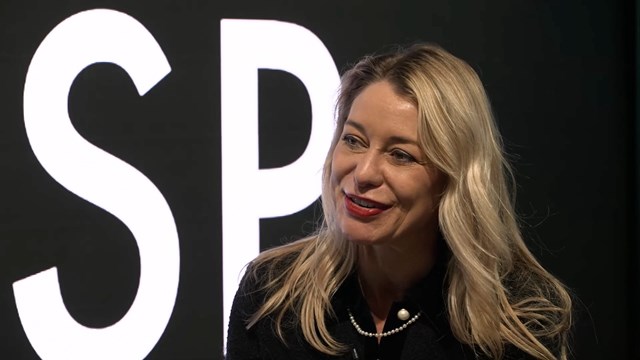
Benji Coetzee, Chief Strategy and Growth Officer, KPN
Benji Coetzee, Chief Strategy and Growth Officer at KPN, discusses the Dutch national operator’s strategic update, the telco’s ongoing focus on cybersecurity and the provision of sovereign services, and why trust is such a big deal for the operator and its customers.
Recorded March 2026
Email Newsletters
Sign up to receive TelecomTV's top news and videos, plus exclusive subscriber-only content direct to your inbox.