Kenya's tech envoy outlines AI strategy for developing nations

By Tony Poulos
Mar 9, 2026
To embed our video on your website copy and paste the code below:
<iframe src="https://www.youtube.com/embed/w2xvbyS0dOg?modestbranding=1&rel=0" width="970" height="546" frameborder="0" scrolling="auto" allowfullscreen></iframe>
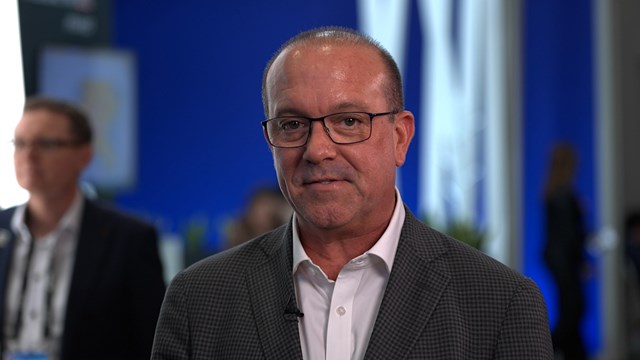
Tony Poulos here at Huawei's Digital Inclusion Forum, which is at the Mobile World Congress in Barcelona. Today, I'm thrilled to have with me one of the keynote speakers, Ambassador Philip Thigo, who is Kenya's special envoy for technology. Phil, welcome.
Philip Thigo, Special Envoy for Technology, Kenya (00:23):
Thank you for having me.
Tony Poulos, TelecomTV (00:24):
Look, as a developing country, how does Kenya embark on this new AI journey and how is it different from developed countries and what are the opportunities like?
Philip Thigo, Special Envoy for Technology, Kenya (00:35):
I think if you think about a developing country for us, it's understanding that we are coming from behind. And in most of the development process around technology, we've been playing either catch up or leapfrog. With artificial intelligence it's a little bit different. So it means years of leapfrogging and catch up has actually built some what we call rails from digital public infrastructure, which is connectivity, skilling our population, improving our energy capability, ensuring that people actually use this technology for solving real problems. And so that's really been our approach. How we are different from other developed countries is that we don't have legacy infrastructure. Secondly, we're a very young population, which means everybody's talking about sovereignty, but I think for us sovereignty starts with our talent. We have a median age of 20, we have a very young innovative population. And so I think for us going forward, it simply means how do we augment the previous leapfrogging culture?
(01:30):
How do we leverage on our talent and innovativeness, but also how do we ensure that we build for the future? Because I think you have to have a future-ready population for this intelligent age.
Tony Poulos, TelecomTV (01:40):
Well, of course, for all this to work, connectivity is absolutely critical for creating AI solutions, as well as for those using it, whether in government, enterprises, individuals, even education. How is Kenya working to address these connectivity requirements and thus ensure the wide use of and access to AI?
Philip Thigo, Special Envoy for Technology, Kenya (01:58):
Like any other developing country, of course, we have a lot of challenges around this. As I mentioned previously, we are about 46% connected to the internet right now. But I think for us, it's not about those who get connected. It's about what we do with the connectivity. And so as I mentioned previously, 46% connectivity, but number one use of ChatGPT. 46% connectivity, but number one use of social media per day, time spent online, which is about four hours and 13 minutes more than any other population in the world. So we've shown that we have a captive audience in terms of use. And so how do we basically, for us, begin to upskill our young people in a way that they use connectivity meaningfully to drive our economic growth for public services to ensure that we have last mile to deliver public services. And what we've done, for example, is digitise about 22,000 services across the stack, which is health, education, judicial, in terms of access to justice, especially for indigenous.
(02:55):
And I think for me, that's what matters in the future. It's not about building the rails, it's building the trains. And the trains is very much around capability.
Tony Poulos, TelecomTV (03:04):
But how do you as a tech envoy and champion for Kenya in the international arena? How are you getting Kenya a voice internationally?
Philip Thigo, Special Envoy for Technology, Kenya (03:11):
Well, it's a heavy lift. As I've mentioned, I'm the only tech envoy in Africa. So it speaks to the wisdom of my president, but then I cannot speak about Kenya only. I have to speak about Africa. And so tech envoy is basically around ensuring that in this age of intelligence, you actually negotiate
(03:26):
for not just for voice, but for opportunity, because in this era, if you're not on the table, as we say, you're on the menu. And so basically I do not want to be somebody's food in this particular instance. So I think for us it's been very much around governance of AI. Engaging companies around like here, how do you ensure that there's just not a voice, but investments are very deliberate and intentional around the global majority because as we know, we are adamant at the lab. We may not be necessarily giving you the current ROI, but we are definitely a stock you want to invest in future. So that's the case I try to make.
Tony Poulos, TelecomTV (03:59):
How are you preparing for AI?
Philip Thigo, Special Envoy for Technology, Kenya (04:02):
For us, for example, as I said, we are interesting for us, and this is what I always say. We don't have a lot of blue collar jobs. So 85% of our economy is informal. So it means in those areas that are still in the rough, food, the food systems, farm to fork, farm to cup, farm to plate, that's a big, big opportunity for AI. So we are preparing a lot for that. When it comes to healthcare, for example, a lot of our data is still not digitised. When it comes to creative economy, a lot of our data is not digitised and it's just not digitised. Our data is not text. It's oral, it's visual, it's creative. So that's the AI opportunity, and that's where we are preparing our economy for.
Tony Poulos, TelecomTV (04:39):
Quite a challenge. But how is the government preparing its citizens, rural and/or urban for the digital literacy that you talk about and upskilling them for AI?
Philip Thigo, Special Envoy for Technology, Kenya (04:48):
I think for us it's been very clear. So I think for Kenya, unlike any other country, first of all, is to make sure it's green. So 95% of our energy is green. So ensuring that we're investing in renewable energy and the entire energy mix, hydro, geothermal, solar, that's one. And ensure that it's affordable because if you cannot charge your devices that's something else. Secondly, it's to build entire stack. Investing in compute, and we are working with all companies and it's everybody, to ensure that Kenyans have access to the compute stack because we know it's expensive. The third part is talent. How do you ensure that K1 to K12, tertiary universities have access to some form of AI skilling, public sector and leadership, because AI is not a tech issue, it's a society issue. So we are skilling cabinet. We are skilling the entire leadership around understanding how to lead in an era of intelligence.
(05:37):
And finally, investing in use cases. Use cases, you have to invest so that you know how AI either creates jobs or what are the risks or what are the missed opportunities. In fact, for us, we say it's misuse, misuse and misuse. How do you ensure that the three are covered?
Tony Poulos, TelecomTV (05:53):
Now we're at Huawei's Digital Inclusion Forum. How is Huawei contributing in your endeavours?
Philip Thigo, Special Envoy for Technology, Kenya (06:00):
I think for us, if you see a lot of it is being, as I said, being rugged and rough. So part of what needs to be invested in, especially in developing economies is not clean. It has to be rugged. It has to be frugal. And I think that's what I see Huawei doing, especially with the digitals. Part of it is go where others have not gone before, so kind of Star Trek mantra. And so I think that's where I see this. And part of it I think for me is trust. So how do you build trust with a company that understands part of the investments will only pay in the next couple of years. And I think that's what we're really next.
Tony Poulos, TelecomTV (06:32):
It's great meeting with you today and speaking with you. Thanks so much.
Philip Thigo, Special Envoy for Technology, Kenya (06:36):
Thank you so much. It's been a pleasure.
Please note that video transcripts are provided for reference only – content may vary from the published video or contain inaccuracies.
Mr. Philip Thigo, Special Envoy for Technology, Kenya
Speaking at Huawei’s Digital Inclusion Forum during Mobile World Congress, Kenya’s special envoy for technology, Ambassador Philip Thigo, outlines how developing nations can approach AI differently from developed countries. With a median age of 20 and 46% internet connectivity, Kenya is focusing on meaningful use of technology rather than just connection rates. The country has digitised 22,000 government services and runs 95% of its energy from renewable sources. Thigo emphasises the importance of building digital public infrastructure, upskilling the population, and investing in use cases that address real problems in sectors like agriculture and healthcare where much data remains undigitised.
Recorded March 2026
Email Newsletters
Sign up to receive TelecomTV's top news and videos, plus exclusive subscriber-only content direct to your inbox.