- South Korean operator KT has developed its own quantum key distribution (QKD) system
- It generates 300,000 encryption keys per second and can supply them to more than 70,000 encryption devices every minute
- Home-grown Korean technology either matches or exceeds the performance of equipment from global manufacturers, reckons KT
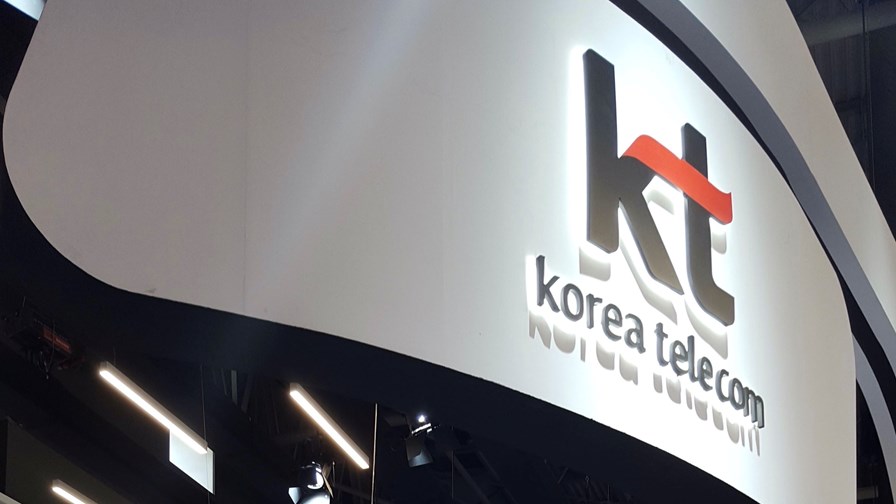
South Korean telco KT Corp says its scientists have independently developed the country’s fastest quantum key distribution (QKD) system. KT says the home-grown new system can generate 300,000 encryption keys per second, twice its previous rate, and is a major step forward in quantum communication technology.
A company spokesperson commented, “This is the fastest QKD system developed using domestic [Korean] technology. Once deployed, it can supply quantum keys to more than 70,000 encryption devices every minute.”
With cybersecurity threats increasingly pervasive and dangerous, and with the era of available and reliable quantum computers now on the horizon, the public key cryptography currently used to protect sensitive data will soon be rendered inherently insecure.
Quantum-safe networking (QSN) is the solution to this massive problem and QKD enables it. The technology is a method of distributing quantum-secure encryption keys between parties and, rather than relying on mathematical computations, it applies the quantum properties of photons, including polarisation and entanglement, to generate secure random keys for encrypting and decrypting data.
A QKD system comprises a transmitter (usually a laser), a receiver (photon detectors) and a quantum channel (commonly a fibre optic cable). Such a system ensures that QKD-protected transmissions cannot be intercepted and decrypted by bad actor attacks – even if made with their own quantum computers. Because simply observing a particle instantly alters its quantum state, QKD detects any attempts to interfere with data, rendering the information defunct whilst revealing the presence of an intruder and alerting the authorised users. In essence, the properties of quantum mechanics exploited by QKD systems make the duplication of cryptographic key distribution impossible on physical lines (as far as we are currently aware).
KT is proud that its quantum cryptographic communication technology not only provides the fastest speed among quantum key distribution systems made with Korean domestic technology but also matches the performance of equipment from global manufacturers.
Photons are the fundamental units of light and they are immensely sensitive to dispersion and scattering. Even then, most minor disturbances can cause the collapse of quantum states and so negate the encryption processes. That’s why KT has developed its own error-reduction filter and a timing control system to manage photon generation and detection. What’s more, its new QKD model generates 300,000 encryption keys a second, massively improving performance, reducing ‘noise’ whilst improving synchronisation, and maintaining the operational stability of the system, and thus solving a major problem that has bedevilled attempts by other companies to increase generation speeds.
The head of KT’s network R&D laboratory, Lee Jong-sik, says the company will continue to advance its in-house quantum communication capabilities and broaden technology transfer efforts. He commented: “Based on sustained development and transfer of our quantum technologies, we will contribute to the growth of the domestic quantum industry. We will also continue efforts to secure future quantum internet technologies.”
The Korea Herald reports that late in 2025, KT conducted technology verification tests with domestic quantum cryptographic communication technology development and certification organisations, including South Korea’s Telecommunications Technology Association (TTA), the Electronics and Telecommunications Research Institute (ETRI), and the National Information Society Agency (NIA). It also conducted joint verification with the research team of Professor Heo Jun at Korea University’s Communication and Information Systems Laboratory, which specialises in quantum cryptographic communication technology. KT’s error-reduction filters and systems are expected to become an integral component in the quantum internet as it develops.
Quantum batteries store energy and recharge themselves just by being exposed to light
Elsewhere on the quantum front, research continues into sustainable quantum energy, and in particular quantum batteries, a notion first postulated in 2013.
Such devices store energy and recharge themselves simply by being exposed to a stream of photons (i.e. light itself). When quantum batteries are connected to the quantum processing components of a quantum computer, entanglement occurs and a quantum link is established. Meanwhile, the battery will be perpetually recharged by the quantum machine itself as it recycles energy within its system.
It is claimed that quantum battery-operated systems will generate a lot less heat, require less wiring and associated components and fit more qubits into the same physical space. A qubit (quantum bit) is the basic unit of information in quantum computing. It represents a two-state system that can exist as a 0, a 1, or both simultaneously via the phenomenon of superposition. That state continues until it is measured, at which point the superposition collapses into a single, definite state.
In a new paper published in Physical Review X, a team of scientists from the Australian government’s national science agency, CSIRO (the Commonwealth Scientific and Industrial Research Organisation), the University of Queensland and the Okinawa Institute of Science and Technology (OIST) in Japan reports that, theoretically at least, tiny quantum batteries could power a quantum computer and provide a fourfold increase in its number of qubits. The model indicates architecture, including quantum batteries, could increase computational speed via the concept known as quantum super-extensivity, whereby increasing the number of qubits in a machine results in faster overall performance because by inextricably interlinking the battery and the device it is powering via quantum entanglement, the particles charge simultaneously rather than individually as the size of the battery grows.
The total energy and, therefore, work that can be undertaken by a quantum battery is called ergotropy. We’ll all be hearing and reading that word again.
Quantum – it makes you think, doesn’t it?
– Martyn Warwick, Editor in Chief, TelecomTV
Email Newsletters
Sign up to receive TelecomTV's top news and videos, plus exclusive subscriber-only content direct to your inbox.