TIP chairman Rob Soni on the evolution of networks

By Ray Le Maistre
Nov 10, 2025
To embed our video on your website copy and paste the code below:
<iframe src="https://www.youtube.com/embed/AvldUgZDNCE?modestbranding=1&rel=0" width="970" height="546" frameborder="0" scrolling="auto" allowfullscreen></iframe>
Ray Le Maistre, TelecomTV (00:05):
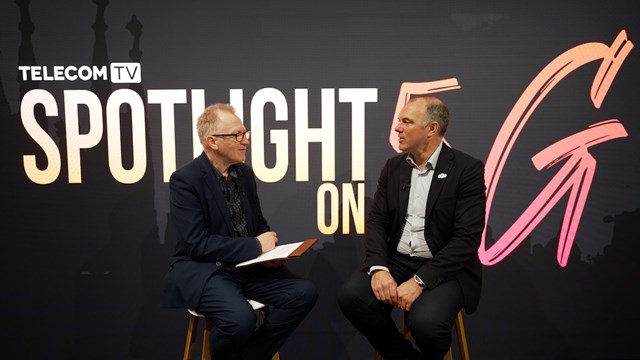
So we are back in Dublin. It's the 2025 edition of FYUZ. I'm here with Rob Soni. He is chairman of TIP, the telecom Infra project, and FYUZ is the TIP event and also VP of RAN technology at AT&T. But we're here to talk about TIP now and the progress there. So I noticed recently when Rakuten's Symphony joined TIP as a member, it stated that it was joining at a time when the TIP board was reigniting its mission, which I thought was an interesting statement. Has the mission been reignited? Did it need to be reignited? What's going on at TIP?
Rob Soni, TIP & AT&T (00:46):
So a couple of things. We have some several new key members to the board and to the community overall in driving things in a slightly different direction. Myself included, I'm literally on the board for a little over a year and a half. Christian and I have worked together with the rest of the board and the leadership to really focus TIP on the things that we think are high impact and high value. I think the message is very clear now, and for those who didn't know what TIP was or what TIP was doing, and we lost our significant sponsor a couple of years ago, and they're still involved, but not at that level. And the consequences that, okay, where can TIP really have an influence? And also what is also evolving. So a lot of the plumbing, if you will, was in place to support, and I talked about it this morning in my welcome, just about to support Open wifi to support Open Transport, to support Open ran, to support Open Land.
(01:48):
But now what is progressing is we're moving into that software layer so it's appropriate coming from him. In particular, Rakuten works quite closely with my employer at t on a software suite called IWM, which helps us for provisioning and managing cell sites. They see the evolution of the software downstream as an opportunity for them to now be part of the larger ecosystem of software providers, third party applications that help optimize and automate the network. So from that perspective, whether he sees what's happening technology wise from an at t perspective or other operators, or he sees what's happening with overall with TIP, this move towards open the implementation of the plumbing and infrastructure that's required to support Open and programmable is a significant shift. The new layer, agen AI on top of it, and we had this fantastic hackathon yesterday sponsored by the AWS team, a new entrant, a new involve specifically in what we do.
(02:48):
In TIP, they demonstrated that folks, students who have limited telco backgrounds could directly contribute and build frameworks for based on Agentic, whether it was for testing and testing automation or specifically for network performance and performance optimization or even outage compensation, many of which had never been exposed to RAN or ran problems before. But the complexity of building that overlay layer and building it in such a way that it's fully automated and takes immediate action as opposed to the old frameworks that we had before where things weren't necessarily open is significant. So I think this is really an exciting time for a lot of new entrants and for people who aren't necessarily 10, 15 years in the business or some significantly longer, 25, 30 years in the business to be able to contribute and bring new ideas, especially on the software layer.
Ray Le Maistre, TelecomTV (03:40):
Okay, interesting. Now of course, at the end of the day, what TIP is aiming to do is deliver something useful to the network operator community. So what does TIP's work actually mean to network operators and in turn what those network operators can do for their customers. Because at the end of the day, that's why everybody's here, I guess, isn't it?
Rob Soni, TIP & AT&T (04:05):
Yeah, I think it's very clear, and I think I mentioned at least this morning that there is an opportunity to consume things that wouldn't exist frankly without TIP. Open wifi really driven open land, really driven, and now you hear about 500,000 access points going to a million. Still relatively small number in the grand scheme of things, but those types of things become material in both hardware and software per operators to consume. Operators have often been challenged with the wifi ecosystem, the way that it gets managed and deployed where it wasn't open and there was so much stickiness. Everything is a hundred percent dependent. You can't mix and match access points in a deployment. And different access points are useful for different things, whether it's large venue or small venue which blend together. But at the same time, I think the reality is that operators can look to continue the things that they've done for a while, badging and certification.
(04:57):
And admittedly for an operator the size and the scale of at and t, we're going to certify our own gear. We're still going to go through the process to test and validate. I think there was a lot of debate about how much can they play in the open ran space. And I think that there are a lot of labs out there of which I'm part of a couple, that we try to actually drive that mission separately and we wonder, okay, is that really the right place to invest your energy? But badging and certification still becomes important, especially for the tier two and tier three operators because then they can right away, see there's a level of maturity associated with the hardware and software, but the blueprint architectures, the coagulation of use cases and requirements that are meaningful to tier twos and tier threes as well as to the tier ones, it starts to drive the industry in the right direction. And then I think fundamentally now we've seen a shift of more larger operators becoming more directly engaged in TIP. You see the strong presence from Erickson now from Nokia and several others that are starting to really attention to what we're doing here because they see this as a voice which is coherent.
(06:01):
It's a voice which is organized. And of course, I think people love this venue and this forum of, it's an intimate setting where they can immediately see decision makers from major operators walking the floor. It's not the kind of craziness of Barcelona with speed dating and inability to really connect with people
Ray Le Maistre, TelecomTV (06:19):
And operators that have actually already taken the first steps and can inform what others can do. Now on the media side, I've always been told follow the money because that's where the action is. And if you follow the money these days, it leads you to AI infrastructure. And in the telco world increasing, it leads you to the network infrastructure that connects data centers, AI factories, and other AI infrastructure developments. What can TIP do to help the telcos that are looking at the opportunities around AI factories and better connecting those kind of facilities? Because this must be a real opportunity for those.
Rob Soni, TIP & AT&T (07:08):
For sure, for sure. And you can start with the basic interconnect and that layer of interconnection and tying it into our backbone network, which carries more than just our traffic. So yeah, there's real opportunity there to, especially because of our presence, to be able to interconnect the data centers and the AI factories that will be built really to drive towards IT requirements on latency and presence. So there's a serious amount of energy invested there. How does TIP actually benefit from that? I think we start to think about how is OPT sort of positioning towards that in particular on the transport side and how that sort of makes transport either more flexible, more programmable, or makes it more available, whether it's on the optical side or it's on the packet side specifically. I think AI will induce new requirements specifically on very high data rate solutions. But at the same time, especially if you start think of data sovereignty and specifically AI foundries for smaller units, they're going to wand hardware and gear that is TCO advantaged.
(08:14):
They're not necessarily going to be in the space where they may have spent all of their money with a particular provider and then trying to figure out how are they going to best interconnect it. So they're going to try to optimize the TCO based on the networking layer, which will be interesting to see how it plays out. I think what the thing that they should think about is not to focus so much on the TCO, but really on the end 10 experience that they can offer by interconnecting. And then finally what network programmability can offer in terms of improving that experience. But AI is a touching every part of the network. So you think about the opportunities of, and we expect that AI will generate huge volumes of data, whether through wifi or through cellular access. So we expect that whether it a roboto TAXII streaming data back to a centralized cloud unit or an AI factory for training, or it is somebody who's connected via wifi to a set of AI goggles, again, there's going to be pressure, strong pressure to optimize spectrum efficiency on those links to optimize latency on those links.
(09:13):
So from that perspective, operators should be thinking already about what is that intensity that uplink intensity going to do to their networks? And so then what should they be doing to optimize their networks to handle variable traffic traffic, which can come from three different sources. We generally think about, we think of it as a living intelligence layer. Think of robots in factories or robots in homes. Think of XR and VR goggles. So think of augmentation from humans into the network, or finally the last category, which is the automated kinds of things, automated vehicles, robot, robot, taxis, Waymo, et cetera. As they now push traffic, uplink traffic specifically into the network, how do you handle that? What types of applications overlay both for automation to offer those new services as well as what can you do to optimize spectrum efficiency? These are key. I mean, we're spending an at t, at least a decent amount of energy on trying to do that. And we think the application space is where we will invest a lot to make sure that we're ready to handle this potential. Huge variability in traffic, but unknown variability in traffic. So as opposed to thinking of, well, geez, I'm going to statically dimension for 20 gigabytes a day from a robot, I can't do that. So I have to think about how can I intelligently manage that and also provide disposable APIs to them. So again, it all comes back to the central thesis
Ray Le Maistre, TelecomTV (10:35):
And something that I guess if you were to stick with a traditional black box or closed system architecture, it's going to be almost impossible to handle and adapt, right?
Rob Soni, TIP & AT&T (10:50):
Yeah. And I think the biggest thing is the more that you open, the more you open your ability to handle dynamic capacity and dynamic traffic needs. Otherwise, with a black box, we tend to do static capacity and traffic analysis.
Ray Le Maistre, TelecomTV (11:01):
Yeah. Okay. Excellent. Well that's great to see the debates going on here and great to see the focus. So many people, I think they hear TIP and they think, oh, the open ran people, but it's about so much more than that. And great involvements, like you said in the open land, open wifi, optical, and also neutral hosts. So thanks so much for joining us, Rob, and giving us an update and look forward to the rest of the show. Thank you. Thank you so much.
So we are back in Dublin. It's the 2025 edition of FYUZ. I'm here with Rob Soni. He is chairman of TIP, the telecom Infra project, and FYUZ is the TIP event and also VP of RAN technology at AT&T. But we're here to talk about TIP now and the progress there. So I noticed recently when Rakuten's Symphony joined TIP as a member, it stated that it was joining at a time when the TIP board was reigniting its mission, which I thought was an interesting statement. Has the mission been reignited? Did it need to be reignited? What's going on at TIP?
Rob Soni, TIP & AT&T (00:46):
So a couple of things. We have some several new key members to the board and to the community overall in driving things in a slightly different direction. Myself included, I'm literally on the board for a little over a year and a half. Christian and I have worked together with the rest of the board and the leadership to really focus TIP on the things that we think are high impact and high value. I think the message is very clear now, and for those who didn't know what TIP was or what TIP was doing, and we lost our significant sponsor a couple of years ago, and they're still involved, but not at that level. And the consequences that, okay, where can TIP really have an influence? And also what is also evolving. So a lot of the plumbing, if you will, was in place to support, and I talked about it this morning in my welcome, just about to support Open wifi to support Open Transport, to support Open ran, to support Open Land.
(01:48):
But now what is progressing is we're moving into that software layer so it's appropriate coming from him. In particular, Rakuten works quite closely with my employer at t on a software suite called IWM, which helps us for provisioning and managing cell sites. They see the evolution of the software downstream as an opportunity for them to now be part of the larger ecosystem of software providers, third party applications that help optimize and automate the network. So from that perspective, whether he sees what's happening technology wise from an at t perspective or other operators, or he sees what's happening with overall with TIP, this move towards open the implementation of the plumbing and infrastructure that's required to support Open and programmable is a significant shift. The new layer, agen AI on top of it, and we had this fantastic hackathon yesterday sponsored by the AWS team, a new entrant, a new involve specifically in what we do.
(02:48):
In TIP, they demonstrated that folks, students who have limited telco backgrounds could directly contribute and build frameworks for based on Agentic, whether it was for testing and testing automation or specifically for network performance and performance optimization or even outage compensation, many of which had never been exposed to RAN or ran problems before. But the complexity of building that overlay layer and building it in such a way that it's fully automated and takes immediate action as opposed to the old frameworks that we had before where things weren't necessarily open is significant. So I think this is really an exciting time for a lot of new entrants and for people who aren't necessarily 10, 15 years in the business or some significantly longer, 25, 30 years in the business to be able to contribute and bring new ideas, especially on the software layer.
Ray Le Maistre, TelecomTV (03:40):
Okay, interesting. Now of course, at the end of the day, what TIP is aiming to do is deliver something useful to the network operator community. So what does TIP's work actually mean to network operators and in turn what those network operators can do for their customers. Because at the end of the day, that's why everybody's here, I guess, isn't it?
Rob Soni, TIP & AT&T (04:05):
Yeah, I think it's very clear, and I think I mentioned at least this morning that there is an opportunity to consume things that wouldn't exist frankly without TIP. Open wifi really driven open land, really driven, and now you hear about 500,000 access points going to a million. Still relatively small number in the grand scheme of things, but those types of things become material in both hardware and software per operators to consume. Operators have often been challenged with the wifi ecosystem, the way that it gets managed and deployed where it wasn't open and there was so much stickiness. Everything is a hundred percent dependent. You can't mix and match access points in a deployment. And different access points are useful for different things, whether it's large venue or small venue which blend together. But at the same time, I think the reality is that operators can look to continue the things that they've done for a while, badging and certification.
(04:57):
And admittedly for an operator the size and the scale of at and t, we're going to certify our own gear. We're still going to go through the process to test and validate. I think there was a lot of debate about how much can they play in the open ran space. And I think that there are a lot of labs out there of which I'm part of a couple, that we try to actually drive that mission separately and we wonder, okay, is that really the right place to invest your energy? But badging and certification still becomes important, especially for the tier two and tier three operators because then they can right away, see there's a level of maturity associated with the hardware and software, but the blueprint architectures, the coagulation of use cases and requirements that are meaningful to tier twos and tier threes as well as to the tier ones, it starts to drive the industry in the right direction. And then I think fundamentally now we've seen a shift of more larger operators becoming more directly engaged in TIP. You see the strong presence from Erickson now from Nokia and several others that are starting to really attention to what we're doing here because they see this as a voice which is coherent.
(06:01):
It's a voice which is organized. And of course, I think people love this venue and this forum of, it's an intimate setting where they can immediately see decision makers from major operators walking the floor. It's not the kind of craziness of Barcelona with speed dating and inability to really connect with people
Ray Le Maistre, TelecomTV (06:19):
And operators that have actually already taken the first steps and can inform what others can do. Now on the media side, I've always been told follow the money because that's where the action is. And if you follow the money these days, it leads you to AI infrastructure. And in the telco world increasing, it leads you to the network infrastructure that connects data centers, AI factories, and other AI infrastructure developments. What can TIP do to help the telcos that are looking at the opportunities around AI factories and better connecting those kind of facilities? Because this must be a real opportunity for those.
Rob Soni, TIP & AT&T (07:08):
For sure, for sure. And you can start with the basic interconnect and that layer of interconnection and tying it into our backbone network, which carries more than just our traffic. So yeah, there's real opportunity there to, especially because of our presence, to be able to interconnect the data centers and the AI factories that will be built really to drive towards IT requirements on latency and presence. So there's a serious amount of energy invested there. How does TIP actually benefit from that? I think we start to think about how is OPT sort of positioning towards that in particular on the transport side and how that sort of makes transport either more flexible, more programmable, or makes it more available, whether it's on the optical side or it's on the packet side specifically. I think AI will induce new requirements specifically on very high data rate solutions. But at the same time, especially if you start think of data sovereignty and specifically AI foundries for smaller units, they're going to wand hardware and gear that is TCO advantaged.
(08:14):
They're not necessarily going to be in the space where they may have spent all of their money with a particular provider and then trying to figure out how are they going to best interconnect it. So they're going to try to optimize the TCO based on the networking layer, which will be interesting to see how it plays out. I think what the thing that they should think about is not to focus so much on the TCO, but really on the end 10 experience that they can offer by interconnecting. And then finally what network programmability can offer in terms of improving that experience. But AI is a touching every part of the network. So you think about the opportunities of, and we expect that AI will generate huge volumes of data, whether through wifi or through cellular access. So we expect that whether it a roboto TAXII streaming data back to a centralized cloud unit or an AI factory for training, or it is somebody who's connected via wifi to a set of AI goggles, again, there's going to be pressure, strong pressure to optimize spectrum efficiency on those links to optimize latency on those links.
(09:13):
So from that perspective, operators should be thinking already about what is that intensity that uplink intensity going to do to their networks? And so then what should they be doing to optimize their networks to handle variable traffic traffic, which can come from three different sources. We generally think about, we think of it as a living intelligence layer. Think of robots in factories or robots in homes. Think of XR and VR goggles. So think of augmentation from humans into the network, or finally the last category, which is the automated kinds of things, automated vehicles, robot, robot, taxis, Waymo, et cetera. As they now push traffic, uplink traffic specifically into the network, how do you handle that? What types of applications overlay both for automation to offer those new services as well as what can you do to optimize spectrum efficiency? These are key. I mean, we're spending an at t, at least a decent amount of energy on trying to do that. And we think the application space is where we will invest a lot to make sure that we're ready to handle this potential. Huge variability in traffic, but unknown variability in traffic. So as opposed to thinking of, well, geez, I'm going to statically dimension for 20 gigabytes a day from a robot, I can't do that. So I have to think about how can I intelligently manage that and also provide disposable APIs to them. So again, it all comes back to the central thesis
Ray Le Maistre, TelecomTV (10:35):
And something that I guess if you were to stick with a traditional black box or closed system architecture, it's going to be almost impossible to handle and adapt, right?
Rob Soni, TIP & AT&T (10:50):
Yeah. And I think the biggest thing is the more that you open, the more you open your ability to handle dynamic capacity and dynamic traffic needs. Otherwise, with a black box, we tend to do static capacity and traffic analysis.
Ray Le Maistre, TelecomTV (11:01):
Yeah. Okay. Excellent. Well that's great to see the debates going on here and great to see the focus. So many people, I think they hear TIP and they think, oh, the open ran people, but it's about so much more than that. And great involvements, like you said in the open land, open wifi, optical, and also neutral hosts. So thanks so much for joining us, Rob, and giving us an update and look forward to the rest of the show. Thank you. Thank you so much.
Please note that video transcripts are provided for reference only – content may vary from the published video or contain inaccuracies.
Rob Soni, Chairman, TIP & VP, RAN Technology, AT&T
Rob Soni, who is chairman of the Telecom Infra Project (TIP) as well AT&T’s VP of RAN technology, discusses the evolving nature of communications network infrastructure models as AI factories and cloud-based platforms play an ever greater role in telco strategies.
Recorded October 2025