To embed our video on your website copy and paste the code below:
<iframe src="https://www.youtube.com/embed/jNZAVq6kJb0?modestbranding=1&rel=0" width="970" height="546" frameborder="0" scrolling="auto" allowfullscreen></iframe>
Guy Daniels, TelecomTV (00:24):
Hello, you're watching the Next Gen Telco Infra Summit part of our year-Round DSP Leaders Coverage, and it's time now for our live Q and A show. I'm Guy Daniels and this is the second of two q and a shows. It's your final chance to ask questions on all aspects of infrastructure, including of course the impact of AI workloads and traffic. Now, as part of today's summit, we featured a panel discussion on how telcos can support AI and the emergence of AI factories, and if you miss the panel, don't worry because we will rebroadcast it straight after this live q and a program or you can watch it anytime you want on demand. We've already received a number of questions from you, but if you haven't yet sent in one, then please do so now and use the q and a form that you'll find on the website.
(01:24):
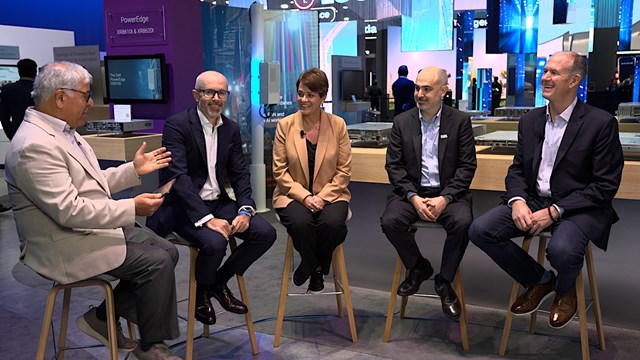
I'm pleased to say that joining me live on the program today are Eugina Jordan, who is Chief Marketing Officer for the Telecom Infra Project Tip Grant Lenahan, who is partner and principal analyst of Apple Door Research, and Susan James DSP Leaders, counselor. Hello everyone. It's really good to see you all. Welcome back to Live show, Susan and hello to Grant, who's stepping in for Francis and to Gina who arrives fresh from last week's Fyuz event in Dublin. Great to see you all. Let's get straight to our first audience question because as I say, all these questions are coming from our viewers and the first question we've got here, let me read this out to you. How do we plan for NextGen Telco infra when we don't know exactly how our networks will be used in the future or what the service mix will be? Do we end up making educated guesses or do we instead have to over-engineer to allow for all possibilities? Interesting. First question and Grant, I'm going to come to you first for comments. What would you say?
Grant Lenahan, Appledore Research (02:37):
I think we really need to start with the market to understand that and to understand the market. We have to distinguish between different kinds of AI influenced workloads since a lot of this is really about what is AI going to do to our networks. In some cases, telecom networks are supporting ai, for example, the incredible traffic between, well both inferencing but even more training centers and distributed workloads. And then there are the other cases where we are supporting AI directly within the network potentially, which is right within in often things like the edge. We're probably going to talk a little bit later as we get into it about how to do that, but I think the first thing we need to recognize is that there's a great deal of uncertainty in the timing and the magnitude of these workloads. And the quick answer is we should be very cautious. We should be watching these markets play out, but we should also be not thinking about them as massive aggregated markets, but we need to look at the individual demands that are going to be placed on it and say, are those really materializing? And for example, in the case of AI training and will that be a bubble or will that continue at the same level for years and years and years? So there's a huge financial difference in what you invest in your network to support it.
Guy Daniels, TelecomTV (04:10):
Great. Thanks very much. Grant. I should say that there's a lot of questions there and it must make planning and investment decisions incredibly difficult. Susan, let's come across to you next. What are your thoughts?
Susan James, DSP Councillor (04:22):
I think we know what the financial situation of most of the telcos are, so there's no capability there today to invest in capacity that they don't know that's going to turn up. So I think it's really important that we all understand they're not going to over dimension networks, so it is going to be based on educated guesses. Now that's where the challenge is of course in understanding where the market is going, but there is really no spare change lying around that allows us to invest in over provisioning networks.
Guy Daniels, TelecomTV (04:57):
Yes, absolutely. Investment is tight at the moment, isn't it? Eugina, let's come across to you. I mean it is a really good question. There was so much talk of AI in particular at the moment, what it may or may not do to the network and the capabilities of the network and demands of the network. How on earth does the telco go about planning for this?
Eugina Jordan, TIP (05:19):
Great question, and the way I'm going to answer it is not with AI because who knows how AI is going to be deployed there, different types of ai and we're going to be discussing it later in the program. I'm going to encourage mobile operators to think from the end user and the use case perspective. It's not 2007 anymore when the iPhone was introduced and networks started being overloaded, people already bought the wireless devices they wanted. So the ARPU is not going to increase know how many users going to be on your network, how many new use cases you want to support, and that's where you need to think about because many of those use cases, especially if it's a healthcare, it's a manufacturing, they will have edge devices. So instead of overbuilding in your data center and hoping that AI workloads will run in the data center, think about your end users and the edge devices that you will be deploying for the different use cases and plan for those use cases and your end users because don't hope that if you build, they will come plan for who will be coming on your network.
Guy Daniels, TelecomTV (06:45):
Okay, great. Thanks for that advice Eugina, and thanks everyone for those opening comments and I'm sure we will get questions specifically related to AI later in the show. So please everyone keep the questions coming into us. The next question we have here, this was one that was sent in very late yesterday. We didn't make it until yesterday's show, but let me read this one out to you. Is public edge computing eventually going to be a commercial reality and if so, how long will it take? Does private edge such as Amazon outposts cover enough of the needs of enterprise customers for public edge to be no longer relevant? Susan, are you able to start us off with some of your thoughts please?
Susan James, DSP Councillor (07:33):
Absolutely. Most enterprises don't just use OneCloud provider, so the answer is do I think something like Outpost or Azure Edge Stack or different edge specific stacks, I don't think they're going to be enough because it's not just enterprises don't have one cloud provider, most of them have more than one, so I think it's going to be based on the applications it's going to be on, as Eugina said, the workloads that you're trying to run and that's going to require multi-cloud if you like. So I do see absolutely a role for Edge Cloud that is an environment where you have multiple clouds running on that edge. I also think there's both a push and a pull in that your centralized data centers are going to get very full, very fast, and the cost of getting into those really multi-cloud meet me kind of rooms is going to be increasingly going up and those workloads are going to get pushed out to the edge. And then what we talked about for years in is those low latency edge use cases will come. So I think there will be a combination of factors that create this need to have a edge cloud that is actually going to be a multi edge cloud.
Guy Daniels, TelecomTV (08:57):
Thanks very much Susan. So both public and private, then a mix of the two. And Grant, what are your thoughts on this?
Grant Lenahan, Appledore Research (09:06):
Yeah, I'd like to pick up on where Susan was going about starting with the application and the diversity of places things can run. I'd like to start with thoughts about different types of AI workloads, right? There are AI workloads that are for training and these are the ones we're hearing a lot about today where there are just enormous data centers being used to work on large corpuses of data, either the public pile or a private set of data for more proprietary uses, and those are likely going to run in first of all very large data centers that can handle them. Little known fact is most of these models are far too big to go in into any one processor. And so one of the key things is having dozens, hundreds, even thousands of giant NVIDIA or a MD or whoever your flavor du jour is processors linked by very, very quick connectivity to chunk these problems.
(10:06):
Now there's the second issue which is inferencing. And inferencing is a much more constrained, smaller problem, but occurs millions, maybe hundreds of millions of times at some point in the future across the network, very, very different workloads. I personally think the opportunity for telcos is in two places, one interconnecting the large data centers, but that's a transport, almost a WAN type of problem. And then the other opportunity is where we get to this edge idea and that is for inferencing, but now you need to ask where is that going to occur and it's going to occur in the place that first of all has the right level of aggregation. Are you inferencing on one set of data, for example, one user or are you inferencing across tens of thousands of users to gain market visibility? Well, one you can do very close to the edge.
(11:05):
The other you need to bring it back to an aggregation point and the cheapest place to do things is going to be one of two places. It's either going to be deep within the network and actually in a data center where you can get cheap space and very efficient operations or it's going to be on the inferencing chips that are being built into almost all new devices. I mean all the new Apple chips, all the new Qualcomm chips, which by the way are also being more or less private labeled for Microsoft, have significant neural processors in them to do this inferencing. So the question is what is going to be left for the telco edge? I believe there will be a market, but again to the earlier question, we've got to be really careful about not wishing for a market but observing a real market need that needs to be farther into the network than the device itself, but not all the way back to a giant data center where probably space power and other things are going to be the cheapest.
Guy Daniels, TelecomTV (12:05):
Yeah, great. Thanks very much Grant. And I think the industry's been guilty of wishing for markets too often in the pastina. Let's come across to you because the question asks there quite simply, is public edge computing eventually going to be a commercial reality or is private edge going to be sufficient for most enterprise users? What are your thoughts on this topic?
Eugina Jordan, TIP (12:29):
Great question, and I'm going to build on what Susan and Grant were saying. So I'm going to pick low latency from what Susan was saying and workloads and workload types from what Grant was saying, and I'm going to tie it in with the types of AI operators will be running. So there is ai, predictive AI for your network, it's your son, it's your R on the ram, and that AI can become eventually gigantic, meaning it's going to make autonomous decisions and it needs to act on the edge with low latency. There's also another type of ai which is generative ai, and at the edge it'll be placed on devices and low latency will be a key factor for those devices to make decisions. And then the third type of ai, it's conversational ai. It's probably going to be running from the data center. So it is important to understand what type of AI you are deploying and where you want to run those workloads because as we all know, generative AI requires low latency. So the question is not is edge going to be deployed, it's what type of AI workloads going to be running at the public or private edge.
Guy Daniels, TelecomTV (14:07):
Great, thanks very much Eugina. And certainly the issue of egen AI is one to keep an eye on how that's developing. We do have another question here which is very related to the one we've just answered and let me read this one out to you. We have heard some very bold claims recently about the revenue potential of running AI inference services within the ran, and I think the view is referring to the Nvidia SoftBank news a couple of weeks ago about the AI ran and what it may enable for operators and the viewer goes on to ask what is the industry doing collectively to evaluate such opportunities and should telcos take these claims seriously? Well, if you go online, you'll see a lot of skepticism about some of the revenue claims for this, but it's a very interesting area, very dynamic area. Eugina, I'm going to come back to you. What are your thoughts about this? Because potentially there's certainly a interesting market within the RAN for AI services and it's all going to affect infrastructure. Is the industry doing anything collectively now to look at this or should it be
Eugina Jordan, TIP (15:28):
Absolutely. But my question is back to mobile operators and viewers of the show. Why talking and thinking about AI in Duran only because represents just one part of the network. There's also transport. There are core services. So instead of talking about just AI and the ran, you need to look at end implementation of AI services because let's look realistically, if you AI services, you implement the most perfect AI and it runs fantastic, but then your transport chokes, then the end user experience is not going to be optimal. Enterprise experience is not going to be optimal. Your SLAs are not going to be optimal. So it's not just AI in the ran, it's end to end ai. But to answer the second part of the question, if we're looking at AI in the ran, there are new components that were introduced in the network by or alliance like R and SMO, so those components, the near real time R and non-real time R will help to train and then also unleash the models to bring automation and operational efficiency. So yes, yes and yes.
Guy Daniels, TelecomTV (17:02):
Triple yes. Thanks very much Eugina. And I think that's where the work is going, isn't it using AI to free up a lot of the workload capability of the RAN to then theoretically offer those to customers. Let's come to the guests as well, but Susan, I'm going to start with you.
Susan James, DSP Councillor (17:20):
I have to say I'm a bit of a skeptic on this particular one and the reason being is that, again, this comes back to what type of applications that you're actually talking about and there's no guarantee that that's going to be running over a mobile network. You're going to have people coming over fiber, you're going to have people coming over radio networks network, and if you don't have that same capability on all network interfaces, then I think that it's going to be very, very difficult to be able to monetize that. Are the application providers willing to pay more for that? Are the mobile operators able to monetize that? And I think that's been the real challenge that we've seen with all of the APIs and capabilities on the mobile network. People typically have not been willing to pay for quality of service or additional capabilities on that network if they're not willing to pay it on other networks. The end users don't really care what kind of access point they're on, they just want it to work. So I think it's going to be very difficult to monetize.
Guy Daniels, TelecomTV (18:25):
Yeah, absolutely. Thanks Susan. The willingness to pay is always an issue there. Grant, let's come across to you and get your thoughts as well.
Grant Lenahan, Appledore Research (18:33):
Yeah, so I'd like to come back actually to the answer I gave to the last question because I think they're really, really tightly related and I want to remind everybody the question was about the AI inferencing services in the RAN for a revenue generating service for CSPs. And I agree with Susan's comments that first of all, we've got to be very careful about this. I'll come back to why in a moment. I also agree with Susan that we need to be very careful that we don't think just about the ran because if you have a capability that's available to users that are connecting wirelessly but not to users that are connecting via normal broadband, do you have a ubiquitous consistent service that can be counted on? And I think her point was no. So that's not really a great way to think about it, but I want to come back to something I said before.
(19:29):
The cheapest place to do this is on the user's device because they're paying for it. So anything that can be pushed to the user's device will the second cheapest place to do this is deep, deep into the core, probably in a third party data center. So anything that can't be done on the device and can be pushed there will. So the question is what is left? And to EU Eugina's comments, it's things that have characteristics of needing collective aggregation and low latency at the same time that sort of intersection. Now the industry someone asked about has done things in this direction, Nvidia and others, they have an announcement out with Nokia, they have their own solution out ways to put inferencing engines into the distributed disaggregated ran edge so that this capability can be sold as a service. But again, we got to get beyond saying we could do it.
(20:29):
Yes, technically we can. The question is why is someone going to pay the industry for what will be premium real estate very far out in the RAN where it may be in a remote location or in a central city and not done on the device itself? That to me is the really big question. I think I'm optimistic in that I believe such use cases will occur, but we've got to again be very, very clear about finding the ones that cannot be satisfied somewhere else just as well and cheaper. And if you can't answer that question, we don't have for market.
Guy Daniels, TelecomTV (21:06):
Yeah, thanks very much Grant. And I think it's a really good point and often overlooked push as much as possible to the user and their device. They're expensive devices, a lot of capabilities, they're paying for it already and we perhaps you don't hear enough about that. Thank you very much for those comments to that question. Before we look at our next viewer question though, it is time to check in on our audience poll for the next gen telco infra summit. And the question we have been asking you this week is what are the most important investment areas to create a future proof telco infrastructure? And you can see the real time votes here to my right. Well if changed slightly from yesterday, service-based architecture still in the lead there and decentralized intelligence to the edge, surprisingly taking the bottom spot at the moment. Although service orchestration platform that's moving up quite rapidly. Well look, if you have yet to vote, you are running out of time. The polls are open only until the end of the week. We will then analyze the results and my colleague RAI matra will reveal the final figures during next week's extra shot program.
(22:28):
So do have your say vote in the poll please. Right. We still have time for some more questions. Here is our next question that we've received from a viewer and I will read this out to you. What are the advantages and disadvantages of open networking when it comes to upgrading and evolving telco infrastructure and data centers? The open networking question again, grant, I'm going to start with you if I can. What are your thoughts here?
Grant Lenahan, Appledore Research (22:57):
Well, open needs, once again, I'm going to sound like a broken record. Open needs to be defined. There's open as in open ran where the radio, the distributed unit, the centralized unit, some of the management interfaces and interfaces to open APIs like on the RIC are open. And then there is the disaggregated cloud ramp. And that's another level of openness that I think provides a lot of opportunity and can be synergistic with open ramp because when you start breaking a radio network or ON network for that matter down into its constituent parts, it becomes much easier in a continuous innovation, continuous deployment, continuous test scenario to add functionality or upgrade as you need it. And in fact, it becomes easier for an innovator to introduce new technologies. You don't have to sort of balance. Well, supplier A has fantastic radios, but I don't like their centralized unit as well. You can have the best from each, at least in theory. And then with disaggregation you can go one level down more. So I do believe there is a significant opportunity from taking open in a very broad and generic sense and driving it into our infrastructure, not for the superficial reason of, oh, it's cheaper. Oh, we can use commodity hardware, but because it gives you a lot of opportunity to innovate and to make very surgical upgrades and changes to your network and not wait, say for the next quote G. That's my think.
Guy Daniels, TelecomTV (24:38):
Great. Thanks very much Grant. Still useful then especially when it comes to innovation. Unless we've got other comments on this one. We'll move along to our next question. We have a couple more questions to get through our next one. Is the telco infrastructure sector progressively being taken over by other players such as hyperscalers? And if so, what can telcos do to counter this increasing global competition? Well, Susan, I'll put that one to you first if I may. Is the infrastructure sector being taken over by stealth, by the hyperscalers?
Susan James, DSP Councillor (25:21):
I think the answer to that is absolutely not so much on their consumer market. I think the challenge there has that ship has sailed some time ago that when we look at the services that are being provided to that telcos are providing if you like, I don't see that certainly that mobile phone coverage is going to stay there. What they're providing to enterprises from a communication perspective has certainly decreased as the world has changed. So obviously other players like the hyperscalers are coming in there. They have sales teams in every country around the world. And when you look at the percentage of revenues coming from those enterprises for communications and IT services, of course they're going up and up and up.
(26:15):
When you analyze why that happened, a lot of it is because hyperscalers are essentially global. They can sell to everyone and the telcos are not because their spectrum is country specific. A lot of the services that they need to provide their audience has been country specific in their consumer if you like. So it's been very difficult for them to redefine what their role is in towards the enterprise and how do they provide those services and grow those services to the enterprise because that's where the growth is. Most countries now have a hundred percent penetration from a mobile subscriber perspective, the fiber has been rolled out to the vast majority of places that it's profitable to roll fiber out to. So then you need to go back and look at the enterprise market and over the last 10 to 15 years, if not more, the percentage of revenues coming from enterprise towards telco has been declining.
(27:23):
Partly that is driven by bring your own device, but the telcos aren't the first company you call now when you actually have complex problem that you want to have solved. And I think we've talked about a lot that connectivity now is more of a hygiene factor. So I think it has to be what is their vision for the future and be very clear about what value do they bring, what do they do really well? And managing networks, providing really reliable networks is something that very few do better than the telcos and this is still a need that is there across the board, particularly in different industries you see that need. And I think being as customer focused as someone like an Amazon where they talk about this passion for their customer and really being customer driven is something that the telcos need to take a look at of where is the customer base that they can grow with and how can they create solutions at scale that they can then go after those customers with.
Guy Daniels, TelecomTV (28:34):
Yeah, thanks very much Susan. There's a lot to unpack there. And as you say, the hyperscalers have scale and they've got clouds, they've got financial cloud, they've got vision as well, haven't they? Eugina, let's come across to you and this question's all about whether or not the telco infrastructure market's losing out to the other players and what can telcos do about it?
Eugina Jordan, TIP (28:59):
Fantastic question, and I'm going to answer it building on what the previous speakers said. The first one is what is the differentiator? If we look at Amazon, any other hyperscaler and mobile operator, both own data centers, both can have different network assets, can provide enterprise solutions. The difference is, as Susan said, is spectrum hyperscalers don't own spectrum. So it's an asset that mobile operators have and they build in the last decades, they've built really good networks. Look at 4G networks, look at 5G networks that currently being underutilized and unfortunately the penetration of mobile devices is at its peak. So the revenue is not going to come from selling more devices. Everyone has iPad or cell phones. Enterprise services are declining, why are they declining? And I've been taking notes and Grant been saying cheaper cost, cheaper cost. So why would people buy companies, enterprises service from Amazon or any other hyperscaler because it's cheaper And if we look at the public or private cloud, if mobile operators should go with their own cloud or go with Hyperscaler cloud, that is the question, is it going to be cheaper and more efficient for me to run those services in my own cloud or partner with the hyperscaler so I can provide better service and utilize my spectrum assets better?
(31:04):
That's the question. And what mobile operators need to realize because of the penetration of devices and 5G revenues not investments not being realized yet they're becoming a utility. So what they need to do is they need to think as a utility and reduce their cost and deliver operational efficiency to themselves so they can provide the best service that their customers and users or enterprises will want to pay for.
Guy Daniels, TelecomTV (31:43):
Yeah, thanks very much Eugina for those comments and we're going to go back to Susan in a moment, but Grant, let's come to you next.
Grant Lenahan, Appledore Research (31:50):
Yeah, I agree with everything Eugina just said, but I want to add just a couple of details to that and you have to start with an old adage that the money in telecom is in the poles and the holes and to that we have to add the towers and the radios, but the idea is it's out in the boring civil infrastructure of the access, whether it's wireless access or broadband fixed access, and those are places that competitors the hyperscalers and others don't have assets. It's more than just spectrum. I mean again, Eugina is right on it with the comment on spectrum, but it's right of way of all types and simply the fact that they have manholes and poles and conduit and sites in church steeples to put up radios, that gives them a tremendous advantage and those can't be competed with directly by others. I think in understanding where is the competition, it's really separating running the core network and or services that run on the network where there can be real competition versus the other 85 or 95% of network costs which are as we go out into the skinnier and skinnier ran and broadband loop including a lot of, by the way, the X fall for 5G future generations of ran where it's totally impractical to put it in a data center because the data center's 75 miles away. It's really that simple.
Guy Daniels, TelecomTV (33:27):
Yeah, it is. Thanks very much Grant. And Susan, let's come back to you for some extra comments on this.
Susan James, DSP Councillor (33:33):
Yeah, so one thing I wanted to go back is just there is a myth that the cloud is going to be cheaper. And let's be clear, putting workloads on a cloud is not cheaper. What it does do is allow you to stop doing a lot of things that you may not have the right staff for. So you're effectively outsourcing all your hardware management, you're outsourcing the operation of keeping your stack up and running and it allows you to buy applications that are already integrated. So cloud is easier, it is not cheaper. And I think the other thing from a cloud perspective is that you have such a massive choice of applications because people are not buying connectivity for the sake of connectivity. Yes, they'll buy a pipe into their business and then they're buying something that is a solution to their problem, which is usually some piece of software running an application, whether that be a CRM system or whatever it is that is the answer to their problem if you like.
(34:34):
And those are coming through the marketplaces in the cloud. So that I think is why you see the main shift from that value if you has moved from the telcos to the cloud players. The other thing is that if the telcos accept that they're going to become a utility, then there's no way they're going to be able to generate enough money to be able to continue to invest at the rates that they have. I mean you've seen the power industry over the last 20 to 30 years if not longer, right on the back of investments that have been there and been there and been there. And the grids globally are probably in some of the worst condition that they've been in many, many years. And it's only since we've seen a crisis in Europe that we've started to see a lot more money flowing into green energy and reinvesting in networks. But literally in the US you see huge problems in the power network. Many, many countries are having challenges there. So I absolutely think that the telcos cannot have a utility strategy if they want to actually see growth in their share price and be able to generate the capital that they will need to continue to invest in their networks to provide the capacity for the workloads going forward. So I just wanted to add those two things as well.
Guy Daniels, TelecomTV (35:53):
Yeah, well worth adding Susan, some big dangers there. Well look, thanks everyone for those comments. We've got another existential question coming in and it's just arrived in about a few minutes ago, so I really want to slip this one in because it's linked to what we've just been talking about. I think it's coming directly based on what we've been talking about. And Grant, I might put you on the spot if I can, and put this to you first. I think this is up your street. Lemme read this one out to you. Do you expect moves towards local cloud AI inferencing are going to lead to smaller, perhaps even federated content providers to the extent that mobile network operators may be under threat of their very existence? Any initial thoughts on this one? As I say, it's just come in based on what we've been talking about about edge and inferencing and AI inferencing there. May we see more local cloud AI inferencing new players come up into the market to compete
Grant Lenahan, Appledore Research (36:57):
Well, I mean that may well happen. I'm not sure why that's existential to Iran. Once again, you still need to get from whatever content or cloud facility to the user and that requires owning spectrum and having towers and building backhaul and all of those things. Now could everyone build their own? Yeah, it sounds tremendously inefficient and it's not what they do and they'd need to bid on spectrum. I don't see that as a problem. I see that as an enablement and it's why I think I have a slightly different perspective than Susan did on whether telcos can make money being utilities. I think they have to make money being utilities. There's nothing that says utilities aren't profitable. You just have to get your costs in line with your revenues. Some of the most profitable companies in the world are kind of utility or even commodity providers, oil and gas for one.
(38:00):
It's just a different business model. The other thing that I will say though is if those companies do start providing more out in the field inferencing and content, they're going to start looking like the Akamai of the world, which already exist and already coexist very nicely with telcos by reducing the amount of data that transits the network and back hauls. And those are in fact the ones that are a threat for the local inferencing market, which we analyzed to death earlier in this discussion. So I don't want to go back there though. Happy to answer questions if one pops up.
Guy Daniels, TelecomTV (38:44):
Great, thanks very much. Grant. As I say, these questions are coming in from viewers as we speak and they all seem to come in the second half of the show as well. So thanks for addressing that question for us. And I've got another follow-up question based on the public edge question we asked and answered hopefully earlier on. And Susan, I know you were active on that response and Mike just put this one to you, it's a really, really short one and the follow-up is, might we see smaller public edge nodes distributed geographically in this model?
Susan James, DSP Councillor (39:19):
I think it comes back to something Grant said before, if the workloads demand it, I mean your device is getting more and more powerful. And the great thing about putting things on a device is that it can take into account the type of access that you're coming from and then the experience that you get is based on the capability of the phone. So it doesn't change depending on what access type you're on. And as a user you don't expect it to change if you're using it on wifi and you move into the mobile network. So I think from an application provider perspective, you want to have control of your experience and you want it to be the same. So what you can put on the device, you're absolutely going to put on the device. And then the question is how much can you afford to push out?
(40:14):
I mean when you look at the environmental regulations around data centers, you don't get as much efficiency on running edge data centers as you do larger data centers simply just due to the fact of scale of energy and cooling and these sorts of things. And I think we covered that in the AI factory discussion. So there will be a sweet spot if you like. And then the question is how much demand for that sweet spot of being in the edge will there be? And I think the applications aren't really there yet that actually demand it. I think as I said before, right now it's more of a push out of the major data centers rather than a pull from the edge applications.
Guy Daniels, TelecomTV (41:00):
Great. Well thank you for addressing that one for us Susan. And it's really great that we're getting these late questions in from our audience. They're showing they're very engaged with our discussion. Well looking at the time, we've got just about time for one final question. So let me ask you this one, and Eugina, I'm going to come to you first on this if I may. And the question is, the startup market for Telco infra is famously perilous. Will we therefore continue to be reliant upon major vendors to commercialize innovation either themselves or via acquisitions or can startups successfully engage directly with telcos? So what do you thinka? Do we have to rely on the big vendors or is there a chance and capability for smaller startups to compete?
Eugina Jordan, TIP (41:56):
Great question. And it's the question that very dear to my heart. I've done multiple startups in my life, I'm coming back from fers and we had two sessions where startups pitched a product that will reside on top of the rig. We had startups, pitching ops and Arabs. So it'll be a very hot area for seeing new innovations and startups because it requires very low investment. It's not like when you want to develop a new radio, it's millions and millions and millions of dollars. And that's why though open ran market in 2015, when I started in it, it started with thinking we're going to build a better radio that hope fizzled because of the investment. So what we are seeing right now, there is a lot of ops and Arab startups coming on the market and because they innovate so much faster, big vendors like Ericsson and Nokia, they opening up their platforms because they want access to that innovation.
(43:16):
And also what we're seeing is because large and smaller mobile operators, they already have those platforms implemented in their system. They can bring those startups directly onto their networks with Xop and Arup. And it's also, it's not a big risk because if you bring a new radio vendor and your whole network goes down, that's a big risk with X Ops and AOPs, you're not going to take your network down and get in trouble. And the other interesting part, it's not just big vendors that are interesting to onboarding their new startups on their risks, on their real time and near real time rigs, but it's also governments, the DOD here in the us, they actually run a program for security accepts and Arabs and they were willing to give grants for startups to develop those tarps apps. And then in the UK they've been for the last three to four years, they've been running competitions for startups as well for ops and AOPs. So yes, the startup ecosystem is vibrant, big vendors are interested, mobile operators are interested to working directly with those startups and there is large government investment happening.
Guy Daniels, TelecomTV (44:52):
Right. That's encouraging news from you. Eugina, thank you very much for those comments. We'll come to Grant in a moment, but Susan, we'll come to you next.
Susan James, DSP Councillor (45:01):
I'm glad that Eugina is so positive. I have to say I'm a little bit more skeptical. I think it will really depend on the telcos and it's not so much their network. I think that's the challenge. I would say typically when small businesses have tried to work with telcos, it's probably a two year cycle to go from when they're having their first conversations to actually getting something out the door if they can get something out the door if not longer. So the question is, if you have the telco as your primary market, are you able to survive long enough until you see a revenue stream? And I think that that is where most of them actually fail. The other area that they typically fail is that most of these companies are too small for telcos to actually write agreements with them and they're not willing to write agreements with companies that small.
(45:57):
They're then looking for a bigger company that will then grandfather them in because they then have the ability to write contracts that have the kind of liquidated damages and performance requirements that they typically require. So I think depending on who they're contracting, whether they're contracting with the telcos or if they're able to then create more of a marketplace model where they're able to contract with, not with the telco but use the telco as a platform, potentially maybe that will be successful. But I have to say I don't see the telcos moving that fast in actually changing that behavior.
Guy Daniels, TelecomTV (46:36):
No, they haven't so far have the Susan and there's great differentiation there between that, the direct approach in the marketplace approach. Grant, let's come across to you for your comments.
Grant Lenahan, Appledore Research (46:46):
Well, first of all, I agree with both the speakers. I believe technically we are getting to the point where there is more feasibility to introduce capabilities into a system where the major components may come from a big vendor. And that's what the tip does. I mean that's why they're here. But Susan's point is telcos are very, very risk averse. Is that bad? I don't know. They're running very critical infrastructure for tens of millions of users. They probably need to be somewhat risk averse, but they're probably more cautious and a little less adventurous than they need to be. So I believe back to some things I mentioned before. The first thing is there are real advantages to open both in the case of open ran and open in the sense of disaggregated, rans and non rans that make it technically possible. When you have that along with real C-I-C-D-C-T infrastructure, which to be clear, nobody's as mature, right?
(47:55):
That is not really feasible and mature at scale at the moment. So they need to get there at that point. The technical possibility opens up that you can put something in and to the risk aversion, and if it all goes backward on you, you can undo it very quickly with low overhead as opposed to sort of the mass upgrade scenarios that we have now that are very, very resource intensive of. But to Susan's point, it's something they have to be prepared for. They have to be willing to have a different set of operating metrics for vendors and probably a different set of operating metrics and procedures internally so that you can take a risk but really contain its impact. And a lot of that I think is around continuous test, which is an area we're beginning to stick our nose into, understand better and look at the state of the industry. And it's very complicated and very much a work in progress is kind of the short answer.
Guy Daniels, TelecomTV (49:00):
Great. Thanks very much, grant. And let's go back to you, Gina, for some additional comments.
Eugina Jordan, TIP (49:05):
So all I want to say that we might be surprised what might happen in the next few months or the upcoming year and how some mobile operators will directly get involved with the smaller ops and startups because that's the only way they can innovate. They're going to remove the middle men out, be it bigger vendor or whatnot, because they want to do two things, get their hands on the innovation and control their destiny. So I'm very optimistic and time will tell. So let's meet in a year, have the same conversation and see what happens in 2025.
Guy Daniels, TelecomTV (49:58):
Okay, Gina, we'll hold you to that. You've got 12 months to change the world and we'll be back here, same time, same place, and we'll compare our notes. In fact, there's a lot of things we want to take checks on over the next 12 months. It's going to be very, very interesting 12 months for infrastructure, but we are out of time now. Thank you all so much for taking part in joining us for this live program, and that's a wrap for this year's next Gen Telco Infra Summit. I also want to thank all of those who submitted questions. We've tried to cover as many as possible in the limited time we had available. Now you can watch all of the programs from this year's summit on demand from our website and they feature all of these industry experts. Thank you also to our speakers and sponsors and viewers for supporting the DSP Leaders Summit series.
(50:53):
We will be back next week for our special extra shot program when I will be joined by telecom TV's Ray La Mara. And we'll take one final look at the highlights from the summit, the main talking points, the key takeaways, and of course the final poll analysis. And for those viewers watching us live, we are going to broadcast today's panel discussion immediately after this program. So stay with us. There are no more summits until February next year. However, we do have two in-person events for you in December, both of which you can watch on telecom tv, our telcos and AI event returns, as does the annual Great Telco debate. And you can find full details of both of those on our website. But for now, thank you so much for watching and goodbye.
Hello, you're watching the Next Gen Telco Infra Summit part of our year-Round DSP Leaders Coverage, and it's time now for our live Q and A show. I'm Guy Daniels and this is the second of two q and a shows. It's your final chance to ask questions on all aspects of infrastructure, including of course the impact of AI workloads and traffic. Now, as part of today's summit, we featured a panel discussion on how telcos can support AI and the emergence of AI factories, and if you miss the panel, don't worry because we will rebroadcast it straight after this live q and a program or you can watch it anytime you want on demand. We've already received a number of questions from you, but if you haven't yet sent in one, then please do so now and use the q and a form that you'll find on the website.
(01:24):
I'm pleased to say that joining me live on the program today are Eugina Jordan, who is Chief Marketing Officer for the Telecom Infra Project Tip Grant Lenahan, who is partner and principal analyst of Apple Door Research, and Susan James DSP Leaders, counselor. Hello everyone. It's really good to see you all. Welcome back to Live show, Susan and hello to Grant, who's stepping in for Francis and to Gina who arrives fresh from last week's Fyuz event in Dublin. Great to see you all. Let's get straight to our first audience question because as I say, all these questions are coming from our viewers and the first question we've got here, let me read this out to you. How do we plan for NextGen Telco infra when we don't know exactly how our networks will be used in the future or what the service mix will be? Do we end up making educated guesses or do we instead have to over-engineer to allow for all possibilities? Interesting. First question and Grant, I'm going to come to you first for comments. What would you say?
Grant Lenahan, Appledore Research (02:37):
I think we really need to start with the market to understand that and to understand the market. We have to distinguish between different kinds of AI influenced workloads since a lot of this is really about what is AI going to do to our networks. In some cases, telecom networks are supporting ai, for example, the incredible traffic between, well both inferencing but even more training centers and distributed workloads. And then there are the other cases where we are supporting AI directly within the network potentially, which is right within in often things like the edge. We're probably going to talk a little bit later as we get into it about how to do that, but I think the first thing we need to recognize is that there's a great deal of uncertainty in the timing and the magnitude of these workloads. And the quick answer is we should be very cautious. We should be watching these markets play out, but we should also be not thinking about them as massive aggregated markets, but we need to look at the individual demands that are going to be placed on it and say, are those really materializing? And for example, in the case of AI training and will that be a bubble or will that continue at the same level for years and years and years? So there's a huge financial difference in what you invest in your network to support it.
Guy Daniels, TelecomTV (04:10):
Great. Thanks very much. Grant. I should say that there's a lot of questions there and it must make planning and investment decisions incredibly difficult. Susan, let's come across to you next. What are your thoughts?
Susan James, DSP Councillor (04:22):
I think we know what the financial situation of most of the telcos are, so there's no capability there today to invest in capacity that they don't know that's going to turn up. So I think it's really important that we all understand they're not going to over dimension networks, so it is going to be based on educated guesses. Now that's where the challenge is of course in understanding where the market is going, but there is really no spare change lying around that allows us to invest in over provisioning networks.
Guy Daniels, TelecomTV (04:57):
Yes, absolutely. Investment is tight at the moment, isn't it? Eugina, let's come across to you. I mean it is a really good question. There was so much talk of AI in particular at the moment, what it may or may not do to the network and the capabilities of the network and demands of the network. How on earth does the telco go about planning for this?
Eugina Jordan, TIP (05:19):
Great question, and the way I'm going to answer it is not with AI because who knows how AI is going to be deployed there, different types of ai and we're going to be discussing it later in the program. I'm going to encourage mobile operators to think from the end user and the use case perspective. It's not 2007 anymore when the iPhone was introduced and networks started being overloaded, people already bought the wireless devices they wanted. So the ARPU is not going to increase know how many users going to be on your network, how many new use cases you want to support, and that's where you need to think about because many of those use cases, especially if it's a healthcare, it's a manufacturing, they will have edge devices. So instead of overbuilding in your data center and hoping that AI workloads will run in the data center, think about your end users and the edge devices that you will be deploying for the different use cases and plan for those use cases and your end users because don't hope that if you build, they will come plan for who will be coming on your network.
Guy Daniels, TelecomTV (06:45):
Okay, great. Thanks for that advice Eugina, and thanks everyone for those opening comments and I'm sure we will get questions specifically related to AI later in the show. So please everyone keep the questions coming into us. The next question we have here, this was one that was sent in very late yesterday. We didn't make it until yesterday's show, but let me read this one out to you. Is public edge computing eventually going to be a commercial reality and if so, how long will it take? Does private edge such as Amazon outposts cover enough of the needs of enterprise customers for public edge to be no longer relevant? Susan, are you able to start us off with some of your thoughts please?
Susan James, DSP Councillor (07:33):
Absolutely. Most enterprises don't just use OneCloud provider, so the answer is do I think something like Outpost or Azure Edge Stack or different edge specific stacks, I don't think they're going to be enough because it's not just enterprises don't have one cloud provider, most of them have more than one, so I think it's going to be based on the applications it's going to be on, as Eugina said, the workloads that you're trying to run and that's going to require multi-cloud if you like. So I do see absolutely a role for Edge Cloud that is an environment where you have multiple clouds running on that edge. I also think there's both a push and a pull in that your centralized data centers are going to get very full, very fast, and the cost of getting into those really multi-cloud meet me kind of rooms is going to be increasingly going up and those workloads are going to get pushed out to the edge. And then what we talked about for years in is those low latency edge use cases will come. So I think there will be a combination of factors that create this need to have a edge cloud that is actually going to be a multi edge cloud.
Guy Daniels, TelecomTV (08:57):
Thanks very much Susan. So both public and private, then a mix of the two. And Grant, what are your thoughts on this?
Grant Lenahan, Appledore Research (09:06):
Yeah, I'd like to pick up on where Susan was going about starting with the application and the diversity of places things can run. I'd like to start with thoughts about different types of AI workloads, right? There are AI workloads that are for training and these are the ones we're hearing a lot about today where there are just enormous data centers being used to work on large corpuses of data, either the public pile or a private set of data for more proprietary uses, and those are likely going to run in first of all very large data centers that can handle them. Little known fact is most of these models are far too big to go in into any one processor. And so one of the key things is having dozens, hundreds, even thousands of giant NVIDIA or a MD or whoever your flavor du jour is processors linked by very, very quick connectivity to chunk these problems.
(10:06):
Now there's the second issue which is inferencing. And inferencing is a much more constrained, smaller problem, but occurs millions, maybe hundreds of millions of times at some point in the future across the network, very, very different workloads. I personally think the opportunity for telcos is in two places, one interconnecting the large data centers, but that's a transport, almost a WAN type of problem. And then the other opportunity is where we get to this edge idea and that is for inferencing, but now you need to ask where is that going to occur and it's going to occur in the place that first of all has the right level of aggregation. Are you inferencing on one set of data, for example, one user or are you inferencing across tens of thousands of users to gain market visibility? Well, one you can do very close to the edge.
(11:05):
The other you need to bring it back to an aggregation point and the cheapest place to do things is going to be one of two places. It's either going to be deep within the network and actually in a data center where you can get cheap space and very efficient operations or it's going to be on the inferencing chips that are being built into almost all new devices. I mean all the new Apple chips, all the new Qualcomm chips, which by the way are also being more or less private labeled for Microsoft, have significant neural processors in them to do this inferencing. So the question is what is going to be left for the telco edge? I believe there will be a market, but again to the earlier question, we've got to be really careful about not wishing for a market but observing a real market need that needs to be farther into the network than the device itself, but not all the way back to a giant data center where probably space power and other things are going to be the cheapest.
Guy Daniels, TelecomTV (12:05):
Yeah, great. Thanks very much Grant. And I think the industry's been guilty of wishing for markets too often in the pastina. Let's come across to you because the question asks there quite simply, is public edge computing eventually going to be a commercial reality or is private edge going to be sufficient for most enterprise users? What are your thoughts on this topic?
Eugina Jordan, TIP (12:29):
Great question, and I'm going to build on what Susan and Grant were saying. So I'm going to pick low latency from what Susan was saying and workloads and workload types from what Grant was saying, and I'm going to tie it in with the types of AI operators will be running. So there is ai, predictive AI for your network, it's your son, it's your R on the ram, and that AI can become eventually gigantic, meaning it's going to make autonomous decisions and it needs to act on the edge with low latency. There's also another type of ai which is generative ai, and at the edge it'll be placed on devices and low latency will be a key factor for those devices to make decisions. And then the third type of ai, it's conversational ai. It's probably going to be running from the data center. So it is important to understand what type of AI you are deploying and where you want to run those workloads because as we all know, generative AI requires low latency. So the question is not is edge going to be deployed, it's what type of AI workloads going to be running at the public or private edge.
Guy Daniels, TelecomTV (14:07):
Great, thanks very much Eugina. And certainly the issue of egen AI is one to keep an eye on how that's developing. We do have another question here which is very related to the one we've just answered and let me read this one out to you. We have heard some very bold claims recently about the revenue potential of running AI inference services within the ran, and I think the view is referring to the Nvidia SoftBank news a couple of weeks ago about the AI ran and what it may enable for operators and the viewer goes on to ask what is the industry doing collectively to evaluate such opportunities and should telcos take these claims seriously? Well, if you go online, you'll see a lot of skepticism about some of the revenue claims for this, but it's a very interesting area, very dynamic area. Eugina, I'm going to come back to you. What are your thoughts about this? Because potentially there's certainly a interesting market within the RAN for AI services and it's all going to affect infrastructure. Is the industry doing anything collectively now to look at this or should it be
Eugina Jordan, TIP (15:28):
Absolutely. But my question is back to mobile operators and viewers of the show. Why talking and thinking about AI in Duran only because represents just one part of the network. There's also transport. There are core services. So instead of talking about just AI and the ran, you need to look at end implementation of AI services because let's look realistically, if you AI services, you implement the most perfect AI and it runs fantastic, but then your transport chokes, then the end user experience is not going to be optimal. Enterprise experience is not going to be optimal. Your SLAs are not going to be optimal. So it's not just AI in the ran, it's end to end ai. But to answer the second part of the question, if we're looking at AI in the ran, there are new components that were introduced in the network by or alliance like R and SMO, so those components, the near real time R and non-real time R will help to train and then also unleash the models to bring automation and operational efficiency. So yes, yes and yes.
Guy Daniels, TelecomTV (17:02):
Triple yes. Thanks very much Eugina. And I think that's where the work is going, isn't it using AI to free up a lot of the workload capability of the RAN to then theoretically offer those to customers. Let's come to the guests as well, but Susan, I'm going to start with you.
Susan James, DSP Councillor (17:20):
I have to say I'm a bit of a skeptic on this particular one and the reason being is that, again, this comes back to what type of applications that you're actually talking about and there's no guarantee that that's going to be running over a mobile network. You're going to have people coming over fiber, you're going to have people coming over radio networks network, and if you don't have that same capability on all network interfaces, then I think that it's going to be very, very difficult to be able to monetize that. Are the application providers willing to pay more for that? Are the mobile operators able to monetize that? And I think that's been the real challenge that we've seen with all of the APIs and capabilities on the mobile network. People typically have not been willing to pay for quality of service or additional capabilities on that network if they're not willing to pay it on other networks. The end users don't really care what kind of access point they're on, they just want it to work. So I think it's going to be very difficult to monetize.
Guy Daniels, TelecomTV (18:25):
Yeah, absolutely. Thanks Susan. The willingness to pay is always an issue there. Grant, let's come across to you and get your thoughts as well.
Grant Lenahan, Appledore Research (18:33):
Yeah, so I'd like to come back actually to the answer I gave to the last question because I think they're really, really tightly related and I want to remind everybody the question was about the AI inferencing services in the RAN for a revenue generating service for CSPs. And I agree with Susan's comments that first of all, we've got to be very careful about this. I'll come back to why in a moment. I also agree with Susan that we need to be very careful that we don't think just about the ran because if you have a capability that's available to users that are connecting wirelessly but not to users that are connecting via normal broadband, do you have a ubiquitous consistent service that can be counted on? And I think her point was no. So that's not really a great way to think about it, but I want to come back to something I said before.
(19:29):
The cheapest place to do this is on the user's device because they're paying for it. So anything that can be pushed to the user's device will the second cheapest place to do this is deep, deep into the core, probably in a third party data center. So anything that can't be done on the device and can be pushed there will. So the question is what is left? And to EU Eugina's comments, it's things that have characteristics of needing collective aggregation and low latency at the same time that sort of intersection. Now the industry someone asked about has done things in this direction, Nvidia and others, they have an announcement out with Nokia, they have their own solution out ways to put inferencing engines into the distributed disaggregated ran edge so that this capability can be sold as a service. But again, we got to get beyond saying we could do it.
(20:29):
Yes, technically we can. The question is why is someone going to pay the industry for what will be premium real estate very far out in the RAN where it may be in a remote location or in a central city and not done on the device itself? That to me is the really big question. I think I'm optimistic in that I believe such use cases will occur, but we've got to again be very, very clear about finding the ones that cannot be satisfied somewhere else just as well and cheaper. And if you can't answer that question, we don't have for market.
Guy Daniels, TelecomTV (21:06):
Yeah, thanks very much Grant. And I think it's a really good point and often overlooked push as much as possible to the user and their device. They're expensive devices, a lot of capabilities, they're paying for it already and we perhaps you don't hear enough about that. Thank you very much for those comments to that question. Before we look at our next viewer question though, it is time to check in on our audience poll for the next gen telco infra summit. And the question we have been asking you this week is what are the most important investment areas to create a future proof telco infrastructure? And you can see the real time votes here to my right. Well if changed slightly from yesterday, service-based architecture still in the lead there and decentralized intelligence to the edge, surprisingly taking the bottom spot at the moment. Although service orchestration platform that's moving up quite rapidly. Well look, if you have yet to vote, you are running out of time. The polls are open only until the end of the week. We will then analyze the results and my colleague RAI matra will reveal the final figures during next week's extra shot program.
(22:28):
So do have your say vote in the poll please. Right. We still have time for some more questions. Here is our next question that we've received from a viewer and I will read this out to you. What are the advantages and disadvantages of open networking when it comes to upgrading and evolving telco infrastructure and data centers? The open networking question again, grant, I'm going to start with you if I can. What are your thoughts here?
Grant Lenahan, Appledore Research (22:57):
Well, open needs, once again, I'm going to sound like a broken record. Open needs to be defined. There's open as in open ran where the radio, the distributed unit, the centralized unit, some of the management interfaces and interfaces to open APIs like on the RIC are open. And then there is the disaggregated cloud ramp. And that's another level of openness that I think provides a lot of opportunity and can be synergistic with open ramp because when you start breaking a radio network or ON network for that matter down into its constituent parts, it becomes much easier in a continuous innovation, continuous deployment, continuous test scenario to add functionality or upgrade as you need it. And in fact, it becomes easier for an innovator to introduce new technologies. You don't have to sort of balance. Well, supplier A has fantastic radios, but I don't like their centralized unit as well. You can have the best from each, at least in theory. And then with disaggregation you can go one level down more. So I do believe there is a significant opportunity from taking open in a very broad and generic sense and driving it into our infrastructure, not for the superficial reason of, oh, it's cheaper. Oh, we can use commodity hardware, but because it gives you a lot of opportunity to innovate and to make very surgical upgrades and changes to your network and not wait, say for the next quote G. That's my think.
Guy Daniels, TelecomTV (24:38):
Great. Thanks very much Grant. Still useful then especially when it comes to innovation. Unless we've got other comments on this one. We'll move along to our next question. We have a couple more questions to get through our next one. Is the telco infrastructure sector progressively being taken over by other players such as hyperscalers? And if so, what can telcos do to counter this increasing global competition? Well, Susan, I'll put that one to you first if I may. Is the infrastructure sector being taken over by stealth, by the hyperscalers?
Susan James, DSP Councillor (25:21):
I think the answer to that is absolutely not so much on their consumer market. I think the challenge there has that ship has sailed some time ago that when we look at the services that are being provided to that telcos are providing if you like, I don't see that certainly that mobile phone coverage is going to stay there. What they're providing to enterprises from a communication perspective has certainly decreased as the world has changed. So obviously other players like the hyperscalers are coming in there. They have sales teams in every country around the world. And when you look at the percentage of revenues coming from those enterprises for communications and IT services, of course they're going up and up and up.
(26:15):
When you analyze why that happened, a lot of it is because hyperscalers are essentially global. They can sell to everyone and the telcos are not because their spectrum is country specific. A lot of the services that they need to provide their audience has been country specific in their consumer if you like. So it's been very difficult for them to redefine what their role is in towards the enterprise and how do they provide those services and grow those services to the enterprise because that's where the growth is. Most countries now have a hundred percent penetration from a mobile subscriber perspective, the fiber has been rolled out to the vast majority of places that it's profitable to roll fiber out to. So then you need to go back and look at the enterprise market and over the last 10 to 15 years, if not more, the percentage of revenues coming from enterprise towards telco has been declining.
(27:23):
Partly that is driven by bring your own device, but the telcos aren't the first company you call now when you actually have complex problem that you want to have solved. And I think we've talked about a lot that connectivity now is more of a hygiene factor. So I think it has to be what is their vision for the future and be very clear about what value do they bring, what do they do really well? And managing networks, providing really reliable networks is something that very few do better than the telcos and this is still a need that is there across the board, particularly in different industries you see that need. And I think being as customer focused as someone like an Amazon where they talk about this passion for their customer and really being customer driven is something that the telcos need to take a look at of where is the customer base that they can grow with and how can they create solutions at scale that they can then go after those customers with.
Guy Daniels, TelecomTV (28:34):
Yeah, thanks very much Susan. There's a lot to unpack there. And as you say, the hyperscalers have scale and they've got clouds, they've got financial cloud, they've got vision as well, haven't they? Eugina, let's come across to you and this question's all about whether or not the telco infrastructure market's losing out to the other players and what can telcos do about it?
Eugina Jordan, TIP (28:59):
Fantastic question, and I'm going to answer it building on what the previous speakers said. The first one is what is the differentiator? If we look at Amazon, any other hyperscaler and mobile operator, both own data centers, both can have different network assets, can provide enterprise solutions. The difference is, as Susan said, is spectrum hyperscalers don't own spectrum. So it's an asset that mobile operators have and they build in the last decades, they've built really good networks. Look at 4G networks, look at 5G networks that currently being underutilized and unfortunately the penetration of mobile devices is at its peak. So the revenue is not going to come from selling more devices. Everyone has iPad or cell phones. Enterprise services are declining, why are they declining? And I've been taking notes and Grant been saying cheaper cost, cheaper cost. So why would people buy companies, enterprises service from Amazon or any other hyperscaler because it's cheaper And if we look at the public or private cloud, if mobile operators should go with their own cloud or go with Hyperscaler cloud, that is the question, is it going to be cheaper and more efficient for me to run those services in my own cloud or partner with the hyperscaler so I can provide better service and utilize my spectrum assets better?
(31:04):
That's the question. And what mobile operators need to realize because of the penetration of devices and 5G revenues not investments not being realized yet they're becoming a utility. So what they need to do is they need to think as a utility and reduce their cost and deliver operational efficiency to themselves so they can provide the best service that their customers and users or enterprises will want to pay for.
Guy Daniels, TelecomTV (31:43):
Yeah, thanks very much Eugina for those comments and we're going to go back to Susan in a moment, but Grant, let's come to you next.
Grant Lenahan, Appledore Research (31:50):
Yeah, I agree with everything Eugina just said, but I want to add just a couple of details to that and you have to start with an old adage that the money in telecom is in the poles and the holes and to that we have to add the towers and the radios, but the idea is it's out in the boring civil infrastructure of the access, whether it's wireless access or broadband fixed access, and those are places that competitors the hyperscalers and others don't have assets. It's more than just spectrum. I mean again, Eugina is right on it with the comment on spectrum, but it's right of way of all types and simply the fact that they have manholes and poles and conduit and sites in church steeples to put up radios, that gives them a tremendous advantage and those can't be competed with directly by others. I think in understanding where is the competition, it's really separating running the core network and or services that run on the network where there can be real competition versus the other 85 or 95% of network costs which are as we go out into the skinnier and skinnier ran and broadband loop including a lot of, by the way, the X fall for 5G future generations of ran where it's totally impractical to put it in a data center because the data center's 75 miles away. It's really that simple.
Guy Daniels, TelecomTV (33:27):
Yeah, it is. Thanks very much Grant. And Susan, let's come back to you for some extra comments on this.
Susan James, DSP Councillor (33:33):
Yeah, so one thing I wanted to go back is just there is a myth that the cloud is going to be cheaper. And let's be clear, putting workloads on a cloud is not cheaper. What it does do is allow you to stop doing a lot of things that you may not have the right staff for. So you're effectively outsourcing all your hardware management, you're outsourcing the operation of keeping your stack up and running and it allows you to buy applications that are already integrated. So cloud is easier, it is not cheaper. And I think the other thing from a cloud perspective is that you have such a massive choice of applications because people are not buying connectivity for the sake of connectivity. Yes, they'll buy a pipe into their business and then they're buying something that is a solution to their problem, which is usually some piece of software running an application, whether that be a CRM system or whatever it is that is the answer to their problem if you like.
(34:34):
And those are coming through the marketplaces in the cloud. So that I think is why you see the main shift from that value if you has moved from the telcos to the cloud players. The other thing is that if the telcos accept that they're going to become a utility, then there's no way they're going to be able to generate enough money to be able to continue to invest at the rates that they have. I mean you've seen the power industry over the last 20 to 30 years if not longer, right on the back of investments that have been there and been there and been there. And the grids globally are probably in some of the worst condition that they've been in many, many years. And it's only since we've seen a crisis in Europe that we've started to see a lot more money flowing into green energy and reinvesting in networks. But literally in the US you see huge problems in the power network. Many, many countries are having challenges there. So I absolutely think that the telcos cannot have a utility strategy if they want to actually see growth in their share price and be able to generate the capital that they will need to continue to invest in their networks to provide the capacity for the workloads going forward. So I just wanted to add those two things as well.
Guy Daniels, TelecomTV (35:53):
Yeah, well worth adding Susan, some big dangers there. Well look, thanks everyone for those comments. We've got another existential question coming in and it's just arrived in about a few minutes ago, so I really want to slip this one in because it's linked to what we've just been talking about. I think it's coming directly based on what we've been talking about. And Grant, I might put you on the spot if I can, and put this to you first. I think this is up your street. Lemme read this one out to you. Do you expect moves towards local cloud AI inferencing are going to lead to smaller, perhaps even federated content providers to the extent that mobile network operators may be under threat of their very existence? Any initial thoughts on this one? As I say, it's just come in based on what we've been talking about about edge and inferencing and AI inferencing there. May we see more local cloud AI inferencing new players come up into the market to compete
Grant Lenahan, Appledore Research (36:57):
Well, I mean that may well happen. I'm not sure why that's existential to Iran. Once again, you still need to get from whatever content or cloud facility to the user and that requires owning spectrum and having towers and building backhaul and all of those things. Now could everyone build their own? Yeah, it sounds tremendously inefficient and it's not what they do and they'd need to bid on spectrum. I don't see that as a problem. I see that as an enablement and it's why I think I have a slightly different perspective than Susan did on whether telcos can make money being utilities. I think they have to make money being utilities. There's nothing that says utilities aren't profitable. You just have to get your costs in line with your revenues. Some of the most profitable companies in the world are kind of utility or even commodity providers, oil and gas for one.
(38:00):
It's just a different business model. The other thing that I will say though is if those companies do start providing more out in the field inferencing and content, they're going to start looking like the Akamai of the world, which already exist and already coexist very nicely with telcos by reducing the amount of data that transits the network and back hauls. And those are in fact the ones that are a threat for the local inferencing market, which we analyzed to death earlier in this discussion. So I don't want to go back there though. Happy to answer questions if one pops up.
Guy Daniels, TelecomTV (38:44):
Great, thanks very much. Grant. As I say, these questions are coming in from viewers as we speak and they all seem to come in the second half of the show as well. So thanks for addressing that question for us. And I've got another follow-up question based on the public edge question we asked and answered hopefully earlier on. And Susan, I know you were active on that response and Mike just put this one to you, it's a really, really short one and the follow-up is, might we see smaller public edge nodes distributed geographically in this model?
Susan James, DSP Councillor (39:19):
I think it comes back to something Grant said before, if the workloads demand it, I mean your device is getting more and more powerful. And the great thing about putting things on a device is that it can take into account the type of access that you're coming from and then the experience that you get is based on the capability of the phone. So it doesn't change depending on what access type you're on. And as a user you don't expect it to change if you're using it on wifi and you move into the mobile network. So I think from an application provider perspective, you want to have control of your experience and you want it to be the same. So what you can put on the device, you're absolutely going to put on the device. And then the question is how much can you afford to push out?
(40:14):
I mean when you look at the environmental regulations around data centers, you don't get as much efficiency on running edge data centers as you do larger data centers simply just due to the fact of scale of energy and cooling and these sorts of things. And I think we covered that in the AI factory discussion. So there will be a sweet spot if you like. And then the question is how much demand for that sweet spot of being in the edge will there be? And I think the applications aren't really there yet that actually demand it. I think as I said before, right now it's more of a push out of the major data centers rather than a pull from the edge applications.
Guy Daniels, TelecomTV (41:00):
Great. Well thank you for addressing that one for us Susan. And it's really great that we're getting these late questions in from our audience. They're showing they're very engaged with our discussion. Well looking at the time, we've got just about time for one final question. So let me ask you this one, and Eugina, I'm going to come to you first on this if I may. And the question is, the startup market for Telco infra is famously perilous. Will we therefore continue to be reliant upon major vendors to commercialize innovation either themselves or via acquisitions or can startups successfully engage directly with telcos? So what do you thinka? Do we have to rely on the big vendors or is there a chance and capability for smaller startups to compete?
Eugina Jordan, TIP (41:56):
Great question. And it's the question that very dear to my heart. I've done multiple startups in my life, I'm coming back from fers and we had two sessions where startups pitched a product that will reside on top of the rig. We had startups, pitching ops and Arabs. So it'll be a very hot area for seeing new innovations and startups because it requires very low investment. It's not like when you want to develop a new radio, it's millions and millions and millions of dollars. And that's why though open ran market in 2015, when I started in it, it started with thinking we're going to build a better radio that hope fizzled because of the investment. So what we are seeing right now, there is a lot of ops and Arab startups coming on the market and because they innovate so much faster, big vendors like Ericsson and Nokia, they opening up their platforms because they want access to that innovation.
(43:16):
And also what we're seeing is because large and smaller mobile operators, they already have those platforms implemented in their system. They can bring those startups directly onto their networks with Xop and Arup. And it's also, it's not a big risk because if you bring a new radio vendor and your whole network goes down, that's a big risk with X Ops and AOPs, you're not going to take your network down and get in trouble. And the other interesting part, it's not just big vendors that are interesting to onboarding their new startups on their risks, on their real time and near real time rigs, but it's also governments, the DOD here in the us, they actually run a program for security accepts and Arabs and they were willing to give grants for startups to develop those tarps apps. And then in the UK they've been for the last three to four years, they've been running competitions for startups as well for ops and AOPs. So yes, the startup ecosystem is vibrant, big vendors are interested, mobile operators are interested to working directly with those startups and there is large government investment happening.
Guy Daniels, TelecomTV (44:52):
Right. That's encouraging news from you. Eugina, thank you very much for those comments. We'll come to Grant in a moment, but Susan, we'll come to you next.
Susan James, DSP Councillor (45:01):
I'm glad that Eugina is so positive. I have to say I'm a little bit more skeptical. I think it will really depend on the telcos and it's not so much their network. I think that's the challenge. I would say typically when small businesses have tried to work with telcos, it's probably a two year cycle to go from when they're having their first conversations to actually getting something out the door if they can get something out the door if not longer. So the question is, if you have the telco as your primary market, are you able to survive long enough until you see a revenue stream? And I think that that is where most of them actually fail. The other area that they typically fail is that most of these companies are too small for telcos to actually write agreements with them and they're not willing to write agreements with companies that small.
(45:57):
They're then looking for a bigger company that will then grandfather them in because they then have the ability to write contracts that have the kind of liquidated damages and performance requirements that they typically require. So I think depending on who they're contracting, whether they're contracting with the telcos or if they're able to then create more of a marketplace model where they're able to contract with, not with the telco but use the telco as a platform, potentially maybe that will be successful. But I have to say I don't see the telcos moving that fast in actually changing that behavior.
Guy Daniels, TelecomTV (46:36):
No, they haven't so far have the Susan and there's great differentiation there between that, the direct approach in the marketplace approach. Grant, let's come across to you for your comments.
Grant Lenahan, Appledore Research (46:46):
Well, first of all, I agree with both the speakers. I believe technically we are getting to the point where there is more feasibility to introduce capabilities into a system where the major components may come from a big vendor. And that's what the tip does. I mean that's why they're here. But Susan's point is telcos are very, very risk averse. Is that bad? I don't know. They're running very critical infrastructure for tens of millions of users. They probably need to be somewhat risk averse, but they're probably more cautious and a little less adventurous than they need to be. So I believe back to some things I mentioned before. The first thing is there are real advantages to open both in the case of open ran and open in the sense of disaggregated, rans and non rans that make it technically possible. When you have that along with real C-I-C-D-C-T infrastructure, which to be clear, nobody's as mature, right?
(47:55):
That is not really feasible and mature at scale at the moment. So they need to get there at that point. The technical possibility opens up that you can put something in and to the risk aversion, and if it all goes backward on you, you can undo it very quickly with low overhead as opposed to sort of the mass upgrade scenarios that we have now that are very, very resource intensive of. But to Susan's point, it's something they have to be prepared for. They have to be willing to have a different set of operating metrics for vendors and probably a different set of operating metrics and procedures internally so that you can take a risk but really contain its impact. And a lot of that I think is around continuous test, which is an area we're beginning to stick our nose into, understand better and look at the state of the industry. And it's very complicated and very much a work in progress is kind of the short answer.
Guy Daniels, TelecomTV (49:00):
Great. Thanks very much, grant. And let's go back to you, Gina, for some additional comments.
Eugina Jordan, TIP (49:05):
So all I want to say that we might be surprised what might happen in the next few months or the upcoming year and how some mobile operators will directly get involved with the smaller ops and startups because that's the only way they can innovate. They're going to remove the middle men out, be it bigger vendor or whatnot, because they want to do two things, get their hands on the innovation and control their destiny. So I'm very optimistic and time will tell. So let's meet in a year, have the same conversation and see what happens in 2025.
Guy Daniels, TelecomTV (49:58):
Okay, Gina, we'll hold you to that. You've got 12 months to change the world and we'll be back here, same time, same place, and we'll compare our notes. In fact, there's a lot of things we want to take checks on over the next 12 months. It's going to be very, very interesting 12 months for infrastructure, but we are out of time now. Thank you all so much for taking part in joining us for this live program, and that's a wrap for this year's next Gen Telco Infra Summit. I also want to thank all of those who submitted questions. We've tried to cover as many as possible in the limited time we had available. Now you can watch all of the programs from this year's summit on demand from our website and they feature all of these industry experts. Thank you also to our speakers and sponsors and viewers for supporting the DSP Leaders Summit series.
(50:53):
We will be back next week for our special extra shot program when I will be joined by telecom TV's Ray La Mara. And we'll take one final look at the highlights from the summit, the main talking points, the key takeaways, and of course the final poll analysis. And for those viewers watching us live, we are going to broadcast today's panel discussion immediately after this program. So stay with us. There are no more summits until February next year. However, we do have two in-person events for you in December, both of which you can watch on telecom tv, our telcos and AI event returns, as does the annual Great Telco debate. And you can find full details of both of those on our website. But for now, thank you so much for watching and goodbye.
Please note that video transcripts are provided for reference only – content may vary from the published video or contain inaccuracies.
Live Q&A Discussion
This live Q&A show was broadcast at the end of day two of the Next-Gen Telco Infra summit. TelecomTV’s Guy Daniels was joined by industry guest panellists for this question and answer session. Among the questions raised by our audience were:
- How do we plan for next-gen telco infra when we don't know exactly how our networks will be used in the future? Do we end up making educated guesses, or do we instead have to over-engineer to allow for all possibilities?
- Is public edge computing eventually going to be a commercial reality, or does private edge cover most of the needs of enterprise customers?
- Will there really be revenue opportunities for running AI inference services within the RAN, as recent announcements claim, and what is the industry doing collectively to evaluate such opportunities?
- What are the advantages and disadvantages of open networking when it comes to upgrading telco infrastructure and datacentres?
- Is the telco infrastructure sector progressively being taken over by other players, such as hyperscalers? If so, what can telcos do?
- Will moves towards local cloud/AI inferencing lead to smaller, even federated, content providers, to the extent that mobile network operators (MNOs) are under threat?
- Might we see smaller public edge nodes distributed geographically or will we have to wait to see if more use cases justify new investment?
- The start-up market for telco infra is famously perilous. Is it even possible for startups to successfully engage directly with telcos?
Recorded November 2024

Eugina Jordan
Chief Marketing Officer, Telecom Infra Project (TIP)

Grant Lenahan
Partner and Principal Analyst, Appledore Research

Susan James
DSP Leaders Councillor