- Ericsson and Telstra deep dive on autonomous networks
- Major UK fibre M&A deal looks sunk
- Veon bulks up with MNO acquisition
In today’s industry news roundup: Ericsson announces in-depth engagements with Telstra and Singtel as it explores multiple ways in which AI can help telcos become more efficient; Nexfibre’s £2bn acquisition of FTTP altnet Netomnia looks dead in the water; Veon adds spectrum and a 5G SA network with a strategic acquisition in Uzbekistan; and much more!
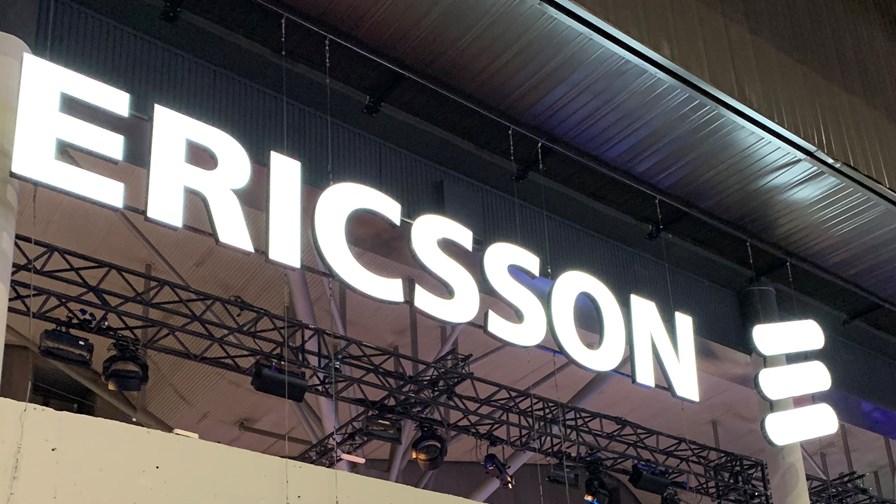
To mark the start of its two-day customer event focused on its OSS and BSS portfolio, Ericsson has announced an expanded collaboration with Australian operator Telstra that is focused on the “knowledge, trust and governance foundations needed to support the next stages of network autonomy”. The announcement comes a year after the companies announced a “collaboration programme to advance the telecom industry’s shift to autonomous networks”. Now the pair will convene and co-lead a joint working group (which aims to share its fundings with the industry via organisations such as the TM Forum) that will focus on three key areas of collaboration all linked to the concept of a ‘knowledge plane’: A common knowledge taxonomy; knowledge exchange and composition; and knowledge-grounded agency. Mark Sanders, Telstra’s chief architect, stated: “Autonomous networks require more than the automation of individual tasks. They depend on a shared understanding of what the network is, what it is expected to do and how much confidence can be placed in the knowledge supporting each decision. By working with Ericsson on common approaches to knowledge and trusted agency, we can help address these foundational challenges and contribute to the industry’s progress towards more interoperable and dependable network autonomy.”
The Swedish vendor has also struck a five-year strategic partnership agreement with Singtel to “advance Singapore’s 5G capabilities, accelerate the adoption of AI-native applications and deliver more reliable, intelligent connectivity for businesses and consumers”. The partners recently “made progress in applying AI to improve network performance,” noted Ericsson, explaining that “a live-network trial of AI-powered radio access network capabilities demonstrated a 19% improvement in throughput, highlighting the potential for AI to optimise network resources and manage growing traffic demands more efficiently.” Singtel Singapore’s CEO, Ng Tian Chong, noted: "We’ve built a strong 5G foundation for Singapore and turned advanced network capabilities into services that benefit our customers. But the demands on connectivity are changing rapidly. As AI becomes more embedded in how we live and work, networks will need to support far more complex applications, from autonomous machines and real-time analytics to the AI tools people use every day. Our priority is to make these capabilities more widely accessible and commercially viable, while continuing to strengthen the reliability, security and performance of our network. Through this partnership we’re ensuring Singapore’s connectivity infrastructure continues to evolve alongside the needs of its people and businesses, supporting new opportunities for innovation and growth in the AI era.”
In addition, Ericsson also announced that it has teamed up with researchers from two of the world’s most renowned engineering institutions – Sweden’s Royal Institute of Technology (KTH) and Nanyang Technological University, Singapore (NTU Singapore) – for a research and innovation initiative that will explore new positioning technologies and solutions enabled by AI and 6G.
The proposed £2bn takeover of fibre altnet Netomnia (aka Substantial) by Nexfibre – the fibre access network joint venture between Virgin Media O2’s parent companies, Liberty Global and Telefónica, and private equity firm InfraVia Capital – looks to have hit a brick wall and seems very unlikely to happen. At the start of October, and following an initial review of the deal, the UK’s competition watchdog, the Competition and Markets Authority (CMA), reported that the acquisition could result in a “substantial lessening of competition (SLC)”, and gave Nexfibre the chance to submit any remedies that might make the CMA reconsider its position. Since then, though, BT has announced a deal to acquire the assets of struggling broadband service provider TalkTalk in a deal that looks set to be given the green light as it is regarded as the only way to save jobs and enable a continuation of service for TalkTalk’s customers: That deal incensed almost every other broadband network operator in the UK, including Nexfibre. Now, Nexfibre’s owners have essentially flicked two fingers at the CMA and the regulatory environment in general and said they aren’t going to bother submitting any remedies. In a statement sent to the media, InfraVia, Liberty Global and Telefónica stated: “The CMA’s Interim Report is fundamentally flawed. Its conclusions rely on counterfactuals that do not reflect the commercial and financial reality of the UK fibre market. In particular, the assumption that CityFibre will acquire Netomnia is not a credible basis on which to judge this transaction. Nor is the assumption that the billions of pounds of investment enabled by this deal would simply happen anyway. Since the Interim Report was published, that position has become even harder to sustain. BT’s acquisition of TalkTalk is shrinking the available wholesale market, while CityFibre’s latest accounts and debt restructuring raise further questions about its financial viability. The market has moved on and the CMA’s analysis must move with it. We engaged in good faith on potential remedies, including commitments on investment and wholesale access. But there is no remedies package that can address the CMA’s current counterfactuals, and on that basis we have not submitted one. The UK now faces a stark choice: A real, funded plan to unlock £3.5bn of investment and develop a scaled and sustainable challenger to Openreach, or a fantasy future that will never come. We remain ready to engage constructively with CMA once the counterfactuals reflect the reality of the market.” The ball is very firmly back in the CMA’s court, but it seems unlikely that it will be lobbed back with flowers to Nexfibre’s owners… All of which leaves Netomnia in a tricky situation and the UK’s fibre broadband sector in even greater turmoil, with BT and its wholesale division, Openreach, the only real beneficiaries.
Veon has bolstered its operations and assets in Uzbekistan, a country of 40 million people in Central Asia, with the acquisition of Rubicon Wireless, better known by its brand Perfectum, in a deal valued at $207m (including $93m of debt): Regulatory approval for the deal has already been given, with the purchase set to close before the end of this month, noted Veon in this announcement. Veon will integrate Perfectum with its existing operation in the country, Beeline Uzbekistan, which is the largest mobile operator in the country with 7.7 million mobile customers, 12.1 million users of its digital services, and an annual revenue run rate of about $340m. While Perfectum has only 300,000 mobile users to add to Beeline’s customer base, its assets include 115 MHz of spectrum across the 850 MHz and 3,800 MHz bands, as well as a 5G standalone (5G SA) network built using Nokia equipment (Beeline is yet to launch its own 5G services). “The transaction is expected to increase Beeline Uzbekistan’s spectrum holdings by approximately 50%, providing additional resources to enhance network coverage and capacity and support its roadmap for 5G and fixed wireless access services,” noted Veon. Kaan Terzioglu, Veon’s group CEO, stated: “Uzbekistan is one of Veon’s core growth markets, and this acquisition reflects our confidence in its digital future. By combining complementary spectrum and network assets, we can deliver better connectivity and expand access to the digital services people and businesses use every day. Our focus is to turn this investment into stronger customer experiences, more efficient network investment and sustainable growth.” Yevgeniy Nastradin, CEO of Beeline Uzbekistan, added: “Perfectum’s spectrum complements our existing holdings and will support our plans to strengthen coverage and capacity, introduce 5G services and expand wireless broadband for homes and businesses.”
Still with Veon… The operator, which has operations in five markets (Bangladesh, Kazakhstan, Pakistan, Ukraine and Uzbekistan), says 11 million customers across three of its markets (Bangladesh, Kazakhstan and Ukraine) have used the direct-to-device (D2D) service it offers in those countries in partnership with Starlink Mobile during the past 12 months. Veon’s CEO Terzioglu noted in this announcement: “In less than a year, more than 11 million people have taken out their own phone, with no signal anywhere in sight, and connected through a Starlink Mobile satellite overhead. A family in eastern Ukraine, a herder on the Kazakh steppe, a fisherman in the Bay of Bengal. This is American space technology changing lives in real time. And we are just getting started. We intend to put it in every hand, in every corner of every market we serve.”
Deutsche Telekom has deployed the VoiceAI Connect platform developed by Israeli communications software vendor Audiocodes to underpin its Voice AI Notes Mobile service for small and medium-sized businesses. “Voice AI Notes Mobile automatically records, transcribes and summarises business phone calls, helping employees spend less time on administrative tasks and more time focusing on customers and core business activities,” noted Audiocodes in this announcement, adding that its VoiceAI Connect system, which has been deployed in the telco’s T Cloud environment, “provides the real-time connectivity and orchestration layer between any voice network and AI services”. Claudia Buhne, VP of portfolio/business communication & collaboration at Deutsche Telekom Geschäftskunden, stated: “AudioCodes has been a trusted technology partner of Deutsche Telekom for many years, supporting our business communications services with reliable voice and data connectivity. VoiceAI Connect extends this collaboration into AI by seamlessly integrating and orchestrating our mobile network with Mistral AI services, while giving us the flexibility to bring new AI-powered capabilities to our customers quickly.”
Tele2’s CEO Nicholas Högberg has highlighted the growing value of AI to the north European operator in his third-quarter earnings letter to shareholders. “AI is creating significant value for us, in administration and network operations as well as customer relations,” noted Högberg. “The vast majority of the customer queries we receive are simple questions that AI can resolve with no waiting time, much appreciated by our customers. NPS [net promoter score] for our voice bot Anna is rising steadily, and she frees up time for our senior agents to handle the complex cases where customers want and need to talk to a person. We are also closely following the development of personal AI agents, which will change how customers compare and buy services. Whether the customer is a person or an AI agent, we need to be the best choice, giving customers more reasons to stay through a high-quality network, strong service and brands people love. Making it much easier to become and stay our customer has been a focus since the beginning of our transformation, and it will only become more important. We are not here to defend ourselves against AI. We are here to win more because of it.” His statement came as the operator, which has about 6.2 million consumer mobile customers across its operations in Sweden, Estonia, Lithuania and Latvia, reported a 2% year-on-year increase in service revenues to 5.7bn Swedish krona (SEK) ($576m) and a 3% increase in “underlying” EBITDA after leases of SEK3.1bn ($313m) “driven by end-user service revenue growth and continued sharp cost control across all operations”.
– The staff, TelecomTV
Email Newsletters
Sign up to receive TelecomTV's top news and videos, plus exclusive subscriber-only content direct to your inbox.