To embed our video on your website copy and paste the code below:
<iframe src="https://www.youtube.com/embed/2mh27KOc_pU?modestbranding=1&rel=0" width="970" height="546" frameborder="0" scrolling="auto" allowfullscreen></iframe>
Guy Daniels, TelecomTV (00:05):
Hello, you are watching TelecomTV. I'm Guy Daniels, and today we are going to look at how telcos can overcome the core data challenges hindering the journey towards truly autonomous networks. And joining me now to discuss the practical steps operators can take is Jai Rajaraman, who is APAC head of analytics, AI, and monetization at Nokia. Hello Jai, really good to see you. Let me start off by asking you what are the core data challenges that hinder telcos from really truly harnessing their data, especially when they're striving for more autonomous operations?
Jai Rajaraman, Nokia (00:49):
Okay, thank you Guy for having me here. That's a good question to start. And as we are seeing this move for telecom operators moving towards autonomous network levels four and five as defined by the TM forum, the management of data becomes one of the critical points for them to tackle before they can get into a fully autonomous mode of operation on any part of their network. Now, there are some fundamental challenges that need to be overcome when we talk about data. The first one is that telecom networks have typically grown organically and you find that data is still very siloed within organizations, both from a technology perspective as well as from a business logic perspective in terms of ownership and governance. Now, the volume and velocity of data that you are going to have when we talk about a 5G network is so much that if we do not have the ability to fundamentally have good clean data driving these autonomous network applications, you find that you are not able to harness the power of AI and truly achieve complete control for automation within a network through ai.
(02:16):
And that becomes the biggest challenge that we have seen our customers facing even in advanced markets like Korea, Japan, to some extent, Australia as well. And one of the things that we have also seen is that all of these networks are necessarily multi-vendor in nature. Customers have always gone for best of breed solutions and no longer monolithic kind of siloed architectures. But that also means that the ability to manage data across multiple types of vendor systems, multiple types of applications needs to be seamless. And the ability to collect that data and curate it and provide it for usage across other applications in the network needs to be seamless. Doing all this at scale in real time across multiple vendors becomes hugely challenging from an operational perspective for any of these operators as they traverse that journey towards an autonomous network, whether it's level four or five.
Guy Daniels, TelecomTV (03:25):
Thanks Jai. Well, let's pick up on the role of ai. How critical is it to overcome these data challenges for the journey towards truly autonomous networks and effectively leverage ai? And what role does data play in accelerating telco ai?
Jai Rajaraman, Nokia (03:42):
An autonomous network absolutely needs AI and machine learning to become real in the true sense of the work. Now all AI and machine learning applications and the evolution of networks towards autonomous networks level five requires that the approach is completely data driven. And in order to drive that, we need to basically understand how AI ML applications will be designed for the networks. The first and most critical point is training the models. You need to have extremely clean data that is well organized, well curated, so that the models do not elicit and you are not going to have anomalous issues that pop up when you are trying to manage autonomously a critical infrastructure such as a telecoms network.
(04:39):
The second point is we have to move from reactive analytics to predictive analytics where we're able to start picking up on issues on the network at a technology level, but also we have to move onwards towards cognitive analytics where you're able to start understanding patterns, trends, behavior, both from a network perspective as well as from a customer perspective in order to truly then understand what is it that you are going to automate and how do you ensure that you are able to act in such a way that you nip problems in the bud before they actually occur. Now to be able to deliver these levels of business outcomes, you need to have an understanding not just of the technology itself in terms of how the network is orchestrated in an autonomous fashion, but also use these AI ML models to look at business priorities and understand how you would help deliver critical applications like network slicing, like managing energy consumption and creating greater energy efficiencies across the network.
(05:54):
And fundamentally, being able to do all this in a telecoms network requires you to correlate this data across multiple domains, and that is across the radio, across the core, across different applications across the transport network. And to be able to do that seamlessly for any AI ML model, they need to be able to handle data that is coming from all of these multi-variate sources in real time and be able to then respond accurately to an operational request for automation by understanding these patterns and understanding what they have been trained with in terms of clean data.
Guy Daniels, TelecomTV (06:40):
That's very interesting. Jai, can we look at this in some more detail? I'd like to ask you what practical steps that operators can take to address these challenges and build this consumable data layer moving from their current state to a more data-driven operational model?
Jai Rajaraman, Nokia (06:56):
I like the way you said that to actually decouple the data layer because that's precisely the first step that needs to happen. All operators need to decouple the data layer from the applications in order to ensure that they are then able to create data as elemental sources of truth that can then be exposed and consumed by higher order applications, whatever those may be. Now, in order to do that, there are two fundamental structures to that architecture. The first one is a data mesh architecture, understanding how to federate data that is coming across different domains within the network and being able to understand its lineage, being able to understand its ownership, being able to understand where it's coming from and where it's going to be stored. And as a result of that, being able to provide the governance necessary as this data is being classified and organized within the network.
(08:08):
And that includes understanding, personally identifiable information if anything is private or needs to be secured before it's consumed by other applications, understanding ownership and stewardship and picking up issues in terms of data quality and consistency before the data is exposed to other functions and other applications within the network. Now this data mesh architecture will then automatically feed into what we call a data catalog strategy, which is essentially like a catalog of all the data that is there within the network that we are able to observe, that we are able to play with, that we're able to compose, that we're able to curate coate correlate and expose towards the rest of the organization or indeed even to other third party enterprises through application interface. So this becomes the fundamental strategy of building that data layer. The second part of the strategy is to actually ensure that the data itself is present as atomic elemental sources of truth within this organization.
(09:28):
And this becomes a bit like with Lego, I guess you will be able to then compose, reuse these data products as we call it, and be able to organize them, link them together, enrich this data with other sources of information like say for example, geolocation information in order to make it more useful and more rational towards other applications that want to get a sense of what is going on on the network, either from a service level perspective or from a customer perspective. And we can do this either in aggregate or we could do it at a very, very granular per subscriber level in order to understand the quality of experience or the quality of service for a particular customer. Now building that decoupled data layer and building that unified data platform necessarily means that we need to have the adaptations of available or ingesting the data across multiple domains because the AI ML models that drive automation on the network are truly powerful only when they are able to understand the quality of experience across the entire data pipeline.
(10:48):
And that necessarily means ingesting data from multiple vendor sources across multiple domains like I mentioned, radio or transport services, and being able to stitch a holistic data pipeline and a holistic view of what is happening in real time for that service as it is being provided across that entire network. And being able to manage that at scale is something that is the ultimate goal for all of these telecom operators today as they traverse this journey towards a fully autonomous network, observe, understand, and then act in order to ensure that you do not lose the fidelity and you do not lose the quality of experience that is necessary today in order to make these telco operators even more relevant for their customers.
Guy Daniels, TelecomTV (11:52):
Great insights into the decoupling model there, Jay, and why telcos should do this. But I'd like to ask a final question to you. How exactly does Nokia help operators to implement these solutions and overcome these data hurdles that will transform their data into a strategic asset for autonomous operations? Autonom,
Jai Rajaraman, Nokia (12:12):
We walk the talk and what we have done is embark upon a data management strategy that allows our customers to accelerate their journey towards a completely autonomous network. Now, the way we have approached this from a data management perspective is to actually fundamentally treat data as a product. And productizing data means fundamentally looking at this data mesh architecture where we consider metadata of all the data that is there on the network, understand its provenance, build a data pipeline with governance quality metrics built in, and ensure that this data is organized in a way that allows it to be reused, but allows it to be composed, to be curated, to be mashed, if you will, into specific applications or specific use cases that a customer might want. So fundamentally, building the data mesh architecture within a customer as well as organizing their data as data products becomes the structure with which the data management strategy that Nokia has adopted comes to the fore.
(13:39):
Now, Nokia has always believed in providing our customers the choice of became the best of breed across their network, and we are multi-vendor compatible and we pride ourselves on that. We have support for all of the standards in the telecoms industry, whether that is coming from two GPP, it's coming from TM Forum, it F if you name it. And what we ensure is that we have the adaptations ready out of the box for any of our customers using a whole host of different types of vendors and be able to handle the data that is coming from vendor systems on the core network vendor systems or network when the system's on the radio, on the transport, and all kinds of different applications as well. And we believe that this provides the best mix of both flexibility to our customers as well as the speed and the time to market in order for our customers to actually realize a fast return on investment on all of that money that they have spent in building up their AI/ML capabilities as they move towards an autonomous network.
(14:54):
And at the end of the day, we encapsulate all of this into our product, which is called the data suite, and we help customers with out of the box data products that are relevant from a telecoms industry perspective so that they can move very, very quickly. And we accelerate the rate of deploying AI ML applications for business logic. We have so much that development of something commercial moves from months to weeks and we are very proud of what we are doing and we continue to work and innovate in this particular space in order to ensure that for closed loop automation to truly happen, we are able to provide that data management observability and next best actions layer that will drive the second half of how these actions will be implemented in a completely autonomous fashion for all networks, whether it's 4G or it's 5G and six G.
Guy Daniels, TelecomTV (16:04):
Great. Jai, thanks very much indeed. But we must leave it there for now. Really good talking with you and thanks so much for sharing your views with us today.
Jai Rajaraman, Nokia (16:12):
It was a real pleasure. Thank you very much Guy.
Hello, you are watching TelecomTV. I'm Guy Daniels, and today we are going to look at how telcos can overcome the core data challenges hindering the journey towards truly autonomous networks. And joining me now to discuss the practical steps operators can take is Jai Rajaraman, who is APAC head of analytics, AI, and monetization at Nokia. Hello Jai, really good to see you. Let me start off by asking you what are the core data challenges that hinder telcos from really truly harnessing their data, especially when they're striving for more autonomous operations?
Jai Rajaraman, Nokia (00:49):
Okay, thank you Guy for having me here. That's a good question to start. And as we are seeing this move for telecom operators moving towards autonomous network levels four and five as defined by the TM forum, the management of data becomes one of the critical points for them to tackle before they can get into a fully autonomous mode of operation on any part of their network. Now, there are some fundamental challenges that need to be overcome when we talk about data. The first one is that telecom networks have typically grown organically and you find that data is still very siloed within organizations, both from a technology perspective as well as from a business logic perspective in terms of ownership and governance. Now, the volume and velocity of data that you are going to have when we talk about a 5G network is so much that if we do not have the ability to fundamentally have good clean data driving these autonomous network applications, you find that you are not able to harness the power of AI and truly achieve complete control for automation within a network through ai.
(02:16):
And that becomes the biggest challenge that we have seen our customers facing even in advanced markets like Korea, Japan, to some extent, Australia as well. And one of the things that we have also seen is that all of these networks are necessarily multi-vendor in nature. Customers have always gone for best of breed solutions and no longer monolithic kind of siloed architectures. But that also means that the ability to manage data across multiple types of vendor systems, multiple types of applications needs to be seamless. And the ability to collect that data and curate it and provide it for usage across other applications in the network needs to be seamless. Doing all this at scale in real time across multiple vendors becomes hugely challenging from an operational perspective for any of these operators as they traverse that journey towards an autonomous network, whether it's level four or five.
Guy Daniels, TelecomTV (03:25):
Thanks Jai. Well, let's pick up on the role of ai. How critical is it to overcome these data challenges for the journey towards truly autonomous networks and effectively leverage ai? And what role does data play in accelerating telco ai?
Jai Rajaraman, Nokia (03:42):
An autonomous network absolutely needs AI and machine learning to become real in the true sense of the work. Now all AI and machine learning applications and the evolution of networks towards autonomous networks level five requires that the approach is completely data driven. And in order to drive that, we need to basically understand how AI ML applications will be designed for the networks. The first and most critical point is training the models. You need to have extremely clean data that is well organized, well curated, so that the models do not elicit and you are not going to have anomalous issues that pop up when you are trying to manage autonomously a critical infrastructure such as a telecoms network.
(04:39):
The second point is we have to move from reactive analytics to predictive analytics where we're able to start picking up on issues on the network at a technology level, but also we have to move onwards towards cognitive analytics where you're able to start understanding patterns, trends, behavior, both from a network perspective as well as from a customer perspective in order to truly then understand what is it that you are going to automate and how do you ensure that you are able to act in such a way that you nip problems in the bud before they actually occur. Now to be able to deliver these levels of business outcomes, you need to have an understanding not just of the technology itself in terms of how the network is orchestrated in an autonomous fashion, but also use these AI ML models to look at business priorities and understand how you would help deliver critical applications like network slicing, like managing energy consumption and creating greater energy efficiencies across the network.
(05:54):
And fundamentally, being able to do all this in a telecoms network requires you to correlate this data across multiple domains, and that is across the radio, across the core, across different applications across the transport network. And to be able to do that seamlessly for any AI ML model, they need to be able to handle data that is coming from all of these multi-variate sources in real time and be able to then respond accurately to an operational request for automation by understanding these patterns and understanding what they have been trained with in terms of clean data.
Guy Daniels, TelecomTV (06:40):
That's very interesting. Jai, can we look at this in some more detail? I'd like to ask you what practical steps that operators can take to address these challenges and build this consumable data layer moving from their current state to a more data-driven operational model?
Jai Rajaraman, Nokia (06:56):
I like the way you said that to actually decouple the data layer because that's precisely the first step that needs to happen. All operators need to decouple the data layer from the applications in order to ensure that they are then able to create data as elemental sources of truth that can then be exposed and consumed by higher order applications, whatever those may be. Now, in order to do that, there are two fundamental structures to that architecture. The first one is a data mesh architecture, understanding how to federate data that is coming across different domains within the network and being able to understand its lineage, being able to understand its ownership, being able to understand where it's coming from and where it's going to be stored. And as a result of that, being able to provide the governance necessary as this data is being classified and organized within the network.
(08:08):
And that includes understanding, personally identifiable information if anything is private or needs to be secured before it's consumed by other applications, understanding ownership and stewardship and picking up issues in terms of data quality and consistency before the data is exposed to other functions and other applications within the network. Now this data mesh architecture will then automatically feed into what we call a data catalog strategy, which is essentially like a catalog of all the data that is there within the network that we are able to observe, that we are able to play with, that we're able to compose, that we're able to curate coate correlate and expose towards the rest of the organization or indeed even to other third party enterprises through application interface. So this becomes the fundamental strategy of building that data layer. The second part of the strategy is to actually ensure that the data itself is present as atomic elemental sources of truth within this organization.
(09:28):
And this becomes a bit like with Lego, I guess you will be able to then compose, reuse these data products as we call it, and be able to organize them, link them together, enrich this data with other sources of information like say for example, geolocation information in order to make it more useful and more rational towards other applications that want to get a sense of what is going on on the network, either from a service level perspective or from a customer perspective. And we can do this either in aggregate or we could do it at a very, very granular per subscriber level in order to understand the quality of experience or the quality of service for a particular customer. Now building that decoupled data layer and building that unified data platform necessarily means that we need to have the adaptations of available or ingesting the data across multiple domains because the AI ML models that drive automation on the network are truly powerful only when they are able to understand the quality of experience across the entire data pipeline.
(10:48):
And that necessarily means ingesting data from multiple vendor sources across multiple domains like I mentioned, radio or transport services, and being able to stitch a holistic data pipeline and a holistic view of what is happening in real time for that service as it is being provided across that entire network. And being able to manage that at scale is something that is the ultimate goal for all of these telecom operators today as they traverse this journey towards a fully autonomous network, observe, understand, and then act in order to ensure that you do not lose the fidelity and you do not lose the quality of experience that is necessary today in order to make these telco operators even more relevant for their customers.
Guy Daniels, TelecomTV (11:52):
Great insights into the decoupling model there, Jay, and why telcos should do this. But I'd like to ask a final question to you. How exactly does Nokia help operators to implement these solutions and overcome these data hurdles that will transform their data into a strategic asset for autonomous operations? Autonom,
Jai Rajaraman, Nokia (12:12):
We walk the talk and what we have done is embark upon a data management strategy that allows our customers to accelerate their journey towards a completely autonomous network. Now, the way we have approached this from a data management perspective is to actually fundamentally treat data as a product. And productizing data means fundamentally looking at this data mesh architecture where we consider metadata of all the data that is there on the network, understand its provenance, build a data pipeline with governance quality metrics built in, and ensure that this data is organized in a way that allows it to be reused, but allows it to be composed, to be curated, to be mashed, if you will, into specific applications or specific use cases that a customer might want. So fundamentally, building the data mesh architecture within a customer as well as organizing their data as data products becomes the structure with which the data management strategy that Nokia has adopted comes to the fore.
(13:39):
Now, Nokia has always believed in providing our customers the choice of became the best of breed across their network, and we are multi-vendor compatible and we pride ourselves on that. We have support for all of the standards in the telecoms industry, whether that is coming from two GPP, it's coming from TM Forum, it F if you name it. And what we ensure is that we have the adaptations ready out of the box for any of our customers using a whole host of different types of vendors and be able to handle the data that is coming from vendor systems on the core network vendor systems or network when the system's on the radio, on the transport, and all kinds of different applications as well. And we believe that this provides the best mix of both flexibility to our customers as well as the speed and the time to market in order for our customers to actually realize a fast return on investment on all of that money that they have spent in building up their AI/ML capabilities as they move towards an autonomous network.
(14:54):
And at the end of the day, we encapsulate all of this into our product, which is called the data suite, and we help customers with out of the box data products that are relevant from a telecoms industry perspective so that they can move very, very quickly. And we accelerate the rate of deploying AI ML applications for business logic. We have so much that development of something commercial moves from months to weeks and we are very proud of what we are doing and we continue to work and innovate in this particular space in order to ensure that for closed loop automation to truly happen, we are able to provide that data management observability and next best actions layer that will drive the second half of how these actions will be implemented in a completely autonomous fashion for all networks, whether it's 4G or it's 5G and six G.
Guy Daniels, TelecomTV (16:04):
Great. Jai, thanks very much indeed. But we must leave it there for now. Really good talking with you and thanks so much for sharing your views with us today.
Jai Rajaraman, Nokia (16:12):
It was a real pleasure. Thank you very much Guy.
Please note that video transcripts are provided for reference only – content may vary from the published video or contain inaccuracies.
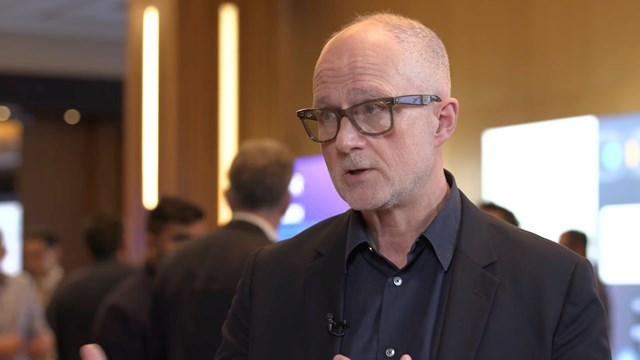
Jai Rajaraman, APAC Head of Analytics, AI and Monetisation, Nokia
What are the core data challenges hindering telcos from achieving true autonomous operations and leveraging AI? Jai Rajaraman discusses the critical steps operators can take to build a consumable data layer and transition to a data-driven model, and explains how Nokia is helping transform data into a strategic asset for the future of telco networks.
Recorded November 2025
Email Newsletters
Sign up to receive TelecomTV's top news and videos, plus exclusive subscriber-only content direct to your inbox.