Protecting the intelligent network: Security for SMO, RAN and beyond

By Guy Daniels
Oct 28, 2026
To embed our video on your website copy and paste the code below:
<iframe src="https://www.youtube.com/embed/KwPGrnRoi_A?modestbranding=1&rel=0" width="970" height="546" frameborder="0" scrolling="auto" allowfullscreen></iframe>
Guy Daniels, TelecomTV (00:32):
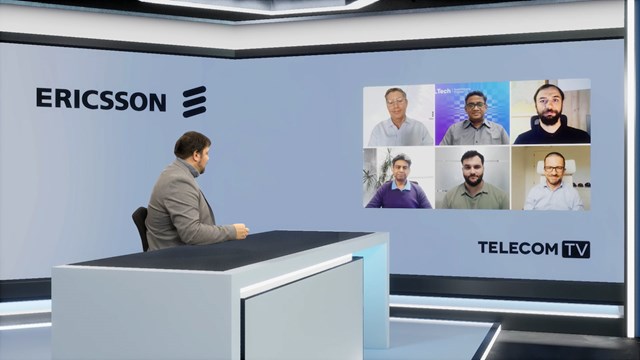
Hello, you're watching TelecomTV and our special programme on protecting the intelligent network - security for SMO, RAN and beyond. I'm Guy Daniels, and today's discussion will examine the critical role of the service management and orchestration framework, SMO, for secure RAN automation. We will explore the complexities of open ecosystems and rApps, and we'll also discuss advanced strategies for securing autonomous networks well beyond traditional boundaries. And joining me now to discuss how to protect the intelligent network are Amy Zwarico, who is cybersecurity expert at AT&T, Hans-Rudolf Steiger, who is system and security architect with Swisscom, Dmitrii Krovnin, who is security product manager for Ericsson, and Scott Poretsky, who is director of security policy and standards also with Ericsson. Hello, everyone. It is good to see you all. Thanks so much for taking part in our programme today. So let me start by asking Amy. Amy, what new types of attacks are you now seeing and preparing for?
Amy Zwarico, AT&T (01:57):
The first one is the harvest now decrypt later, which is related to PQC. The advent of practical quantum computers is quickly approaching, so we need to have all the ciphers updated so that we're not vulnerable to those types of attacks. The second one is the big news of 2026 in the security world, and that's the advent of frontier models that are able to not only discover existing and new vulnerabilities in our applications, but also take those vulnerabilities and chain them together into practical exploits. We need to be able to get in and fix the vulnerabilities in the code and get ourselves prepared for wider use of frontier models by attackers.
Guy Daniels, TelecomTV (02:51):
Wow, thanks very much, Amy. It's a huge task. It seems to be getting more and more complex all the time. Scott, what are you seeing now? Anything new that you are preparing for?
Scott Poretsky, Ericsson (03:05):
Yeah, Guy, and it is a huge task. There's post-quantum cryptography as Amy just spoke of. There's advanced persistent threats. We have the frontier AI such as the Mythos model that's revealed itself and Amy spoke to that. And then also we have agentic AI now being introduced into our networks for intelligent automation. The frontier AI and AI agents can be exploited and weaponised by nation state actors conducting their advanced persistent threats. With AI, APTs can create a chain of exploitations of known vulnerabilities, misconfigurations, and stolen credentials to facilitate the lateral movement that they have exhibited inside of our networks. Salt Typhoon was not the first APT and it won't be the last APT, but now with AI-driven attacks, we will see more and greater impact with advanced persistent threats. Fortunately, we have the security frameworks, best practices and industry standards to defend against these attacks, and our defences will become increasingly AI-enabled with greater intelligence and automation.
(04:48):
This is where the SMO, the service management and orchestration, plays a very key role in the security of our networks.
Guy Daniels, TelecomTV (04:57):
Scott, thanks very much indeed. And we will talk further at more length about agentic AI later in the programme. But Amy, I'm going to come back to you now and look specifically at mobile networks. How do you think the requirements are evolving on the security posture for mobile networks?
Amy Zwarico, AT&T (05:16):
So first off, the vulnerability management is evolving and that's going to continue to evolve so that it meets this need for managing the cyber risk at the exposure layer, not at the prioritisation layer. The second one, and Scott touched on this, was really around the use of traditional and agentic AI. And what's going to have to happen there is the guardrails are going to have to be developed for both traditional and agentic AI that's being used in the mobile networks.
Guy Daniels, TelecomTV (05:53):
Okay, thanks Amy. And I'd also like to ask the same question to Hans-Rudolf. Hans-Rudolf, what are you seeing here specifically for mobile networks? How are the requirements evolving?
Hans-Rudolf Steiger, Swisscom (06:06):
So yeah, security needs to be part of our daily operations. Automation is essential and AI will play an increasing role. The important thing is to find the right balance between automation and human oversight. So the change from static compliance to continuously verified security - as the networks become more cloud-native and API-driven, operators need to have this end-to-end visibility with strong identity and secure configuration to operate the network.
Guy Daniels, TelecomTV (06:41):
Okay, thanks Hans-Rudolf. And I'm going to come straight back to you now because I'd like to pick up actually with both of you. Are there points of the architecture or the network or the systems themselves that you see as being more targeted or more exposed than others? And Hans-Rudolf, we'll start with you.
Hans-Rudolf Steiger, Swisscom (06:59):
Yeah, the biggest risks are usually where systems have a lot of visibility and control, but I think it's important to look at the network end-to-end. We should not just focus on one part. Some older components may be harder to secure because they don't get frequent updates anymore, and an end-to-end view helps us to identify the critical points and focus our mitigation efforts where they have the most effect.
Guy Daniels, TelecomTV (07:32):
Great. And Amy, we just heard there about the importance of the end-to-end view, but are there any areas that are more targeted or exposed than others that you see?
Amy Zwarico, AT&T (07:41):
So I think that what's going to happen is that the lingering vulnerabilities that are sitting there - and Hans-Rudolf touched on this with things that are more difficult to upgrade - those are going to be points of attack, and that's going to be exacerbated by the use of these frontier models to develop attacks. The second one is that the guardrails around agentic and traditional AI are still evolving, meaning that there are going to be gaps there. That's another place that attackers are going to be looking to leverage and put in APTs and other types of attacks.
Guy Daniels, TelecomTV (08:19):
Okay, thanks very much, Amy. Well, Hans-Rudolf, I'll come back to you again because I'd like to ask how you see the role of SMO in the bigger context of security for the networks.
Hans-Rudolf Steiger, Swisscom (08:34):
So I see two sides of the SMO. First, the SMO itself must be protected because it's a very important part at the heart of the network. It has access to different elements in the network. Second, the SMO can help improve security. It provides visibility, automation, and that central approach of managing all the components. If it's properly secured, the SMO can help detect problems faster, enforce policies and automate security functions. The open ecosystems of rApps and xApps creates many new possibilities, but that also means we need to have strong controls, monitoring, and governance over the SMO.
Guy Daniels, TelecomTV (09:24):
Great. Thanks very much. And let's bring in Dmitrii to the conversation as well. Dmitrii, how do you see the role of SMO in this context of security for the entire network?
Dmitrii Krovnin, Ericsson (09:35):
Yes, absolutely. And maybe just building on what Hans-Rudolf said, I would add another perspective. SMO was originally introduced in the O-RAN as a platform for managing and automating the radio networks, but actually we see its role evolving beyond radio networks. We are extending it as a concept at Ericsson to support the core domain as well with so-called xOps. So ultimately SMO will provide intelligence and automation, I would say, for multiple network domains - RAN and core. In practice, it means providing visibility across RAN and core networks, collecting and correlating data and providing intelligent automation through the applications like rApps and xApps sitting on top of the platform. At the same time, as Hans-Rudolf just said, it's extremely important to secure the platform itself.
(10:39):
If I look at O-RAN standards, I think we have a comprehensive list of security controls on how to protect O-RAN networks and the platform itself. We should follow the principle of least privilege, right? We should not allow applications to touch the data that they're not supposed to touch. And I think an important point here that we'll touch on later as well is openness - since rApps, xApps, and also network functions may come from different vendors, also from the operator itself or third-party companies. And from my point of view, it's exactly the openness that changes the game and changes the security model. As we introduce more vendors, we introduce more applications, we introduce more APIs - especially across multiple domains - we cannot assume that every component should be equally trusted or have the same level of access. So I think SMO needs to become a security control point for the whole system, and it's extremely important to protect the platform itself.
(11:54):
And also I think vulnerability management is becoming key here. So we need to ensure that vulnerabilities are detected in a timely manner, that vulnerabilities are prioritised in terms of risk level and also remediated. So we need to ensure that all critical - and these days also medium - vulnerabilities are remediated quickly. So I think SMO evolves from managing just RAN towards providing intelligence and automation for multiple domains, RAN and core, and security of course needs to evolve with it.
Guy Daniels, TelecomTV (12:33):
Okay, thanks so much Dmitrii. It's an interesting evolution and as you just touched on that, let's talk about openness now because as we create more APIs, as we create more points of access and open ecosystems, are open networks becoming more vulnerable? And if so, what are the mitigations here? Scott, can we come to you first on this one? What are your views on this?
Scott Poretsky, Ericsson (12:58):
Yeah, sure. It's an interesting question, Guy, because I consider the debate about open networks versus closed networks being more secure than the other to be over. That debate is over, and that's because experience now has shown us that both open networks and closed networks have their own unique security risks that need to be mitigated by product vendors and network operators. The O-RAN Alliance has publicly acknowledged that Open RAN has an expanded attack surface because of the larger number of internal interfaces and the wider ecosystem that it creates. So now we need to take what's called a zero trust architecture - ZTA - approach. This is a transition or an evolution from the traditional approach of protecting at the perimeter, enhancing it by also protecting internal to the network on internal interfaces. The SMO plays a very important part here because the SMO can also be built as a multi-vendor function with its rApps, and it's communicating across internal O-RAN interfaces with other network functions that may also come from other vendors.
(14:38):
For that reason, it's important we take that ZTA approach where we secure not only our external-facing interfaces, but also those internal interfaces inside the network. And then we also complement that with internal authentication and authorisation and we put protection on the data in transit on our internal interfaces. Specific to the rApps, those must also be built with secure internal interfaces and support of the right protocols on those internal interfaces so that data in transit is secure. In addition, with rApps, we also need to have strong supply chain security because the rApps can come from third parties. Ericsson's rApps ecosystem provides a security certification that ensures third parties are securely building their rApps and delivering them securely as well.
Guy Daniels, TelecomTV (15:51):
Okay, Scott, this is good. Let's go across to Amy next and let me ask Amy, are open networks becoming more vulnerable and do we have the mitigations in place to handle this?
Amy Zwarico, AT&T (16:05):
I really agree with everything that Scott has said on this topic. From my perspective, open or proprietary, it really doesn't matter. There's still going to be vulnerabilities in there that could be exploited. What we really need to move to is getting both the vendors and the operators exceptional at doing security fundamentals - your access control, the hardening, patching - I'm going to probably say patching 12 times because of the advent of the new frontier models. And finally, monitoring. We've got to have monitoring in real time and at scale.
Guy Daniels, TelecomTV (16:47):
So we're really calling to raise the bar here. Thanks, Amy. Hans-Rudolf, I'll come across to you and ask you the same question on whether you see open networks as becoming more vulnerable.
Hans-Rudolf Steiger, Swisscom (16:59):
Yeah, I agree with what everyone has said, and the key here is also to have this fast software cycle. So we are not able to wait for three releases every year - there needs to be a change in how software is delivered, how fast it is rolled out, just to keep up with the pace AI will bring and also the openness itself. As soon as something will be known, it will be used against us. So we need to have our basics in place to have a strong and fast delivery pipeline available.
Guy Daniels, TelecomTV (17:44):
Thank you very much, Hans-Rudolf. Well, it does seem that agents and agentic AI are taking over much of the AI conversation. We've all discussed AI and agentic AI in some depth already, but Dmitrii, let me come across to you on this one first. How do you see this new model, this paradigm of agent-driven automation from the security point of view?
Dmitrii Krovnin, Ericsson (18:08):
And I think it's a very important topic these days, but the first thing to say - and I think Amy said this as well - is that agentic AI is still quite new in telecom, especially when we talk about real autonomous network operations at scale. Today, in many cases, we actually see gen AI systems or copilots, and for sure they help ourselves and engineers analyse network data, troubleshoot issues, even give some recommended actions, but humans make the final decision and execute the change. And I think for such AI systems or copilots, the security requirements are quite familiar to us as security specialists. We still need strong identity, access control, protection of data, least privilege, audit logging, vulnerability management, and so on. And I think the real agentic AI changes the game because agentic AI can actually act. As we know, an AI agent has a goal, it understands the environment, it can create a plan and execute actions even without a human in the loop.
(19:22):
And I think it will become increasingly important for telecom going forward, and we hear ambitions from our customers that they plan to move to higher levels of autonomous network operations. But I think to achieve that kind of autonomy, we need to move beyond AI as simple assistants to something more like agentic AI and closed-loop operations. And this will create a lot of challenges and risks and of course new demands from a security perspective. If an agent can change network configuration or optimise thousands of network nodes, it's not enough just to authenticate the agent and encrypt all communications. We need to control and validate what the agent is actually allowed to do. And if I connect it back to the SMO, I think the future role of SMO will be not only hosting and managing and interacting with agents, but also providing a trusted control layer for agent operations.
(20:33):
If I take a simple example - if we imagine an agent that can detect a capacity problem and decides the best action is to change configuration across several hundred sites or cells - the SMO shouldn't simply execute whatever the agent proposes. It should check whether the agent is authorised to perform this action, validate the proposed configuration change, and potentially test, dry run, or simulate the impact before execution. And I think this level of control should also be based on risk. So SMO should provide some framework to assess the risk of each and every operation. And if this is a small, reversible action from the agent, probably we can allow the agent to execute it autonomously. But if an agent wants to make a large-scale network change with thousands of nodes, cells and sites impacted, of course we need human approval.
(21:48):
And of course we need to apply all the security controls that we discussed before, like traceability, audit logging, and even identity propagation throughout the workflow - to know not only which agent performs the action, but also on whose behalf. So I think this will definitely change the nature of security. Security will evolve, since today we're mainly focusing on security of applications or static AI systems, but tomorrow we'll also need to secure AI as autonomous agents in the network.
Guy Daniels, TelecomTV (22:27):
Fantastic. Thanks very much, Dmitrii. And Amy, do you want to add any comments on agent-driven automation?
Amy Zwarico, AT&T (22:35):
Yes. I think that in order to have this agent-driven automation, what we have to have is the ability to execute the security controls at machine speed. We've got to really focus on defining guardrails on agents such as - and Dmitrii pointed it out, as did Scott - least privilege. We can't leave agents open to say, "Well, yeah, maybe they'll need to do this." Really define the least privilege, get those roles scoped out really tightly. We have to monitor agentic effects at the end points - so that would be the radios, the baseband units. Make sure that you know what's happening, and you've got the appropriate alarms in place to say, "This looks wrong." And then the final thing is, and this is going to probably be one of the most difficult things to do, is how do you strategically insert humans into the loop? Because what you're saying is, "I need to do all of this at machine speed, but yet I need humans there." Humans don't work at machine speed.
(23:45):
Part of what's going to happen with getting more and more automation is your pool of humans actually available to do the network operations is going to decrease. So we're going to have to strategically think about how you can put humans into the loop in a way that makes sense and can catch when things are going wrong, and also to be able to really understand how to take those humans and use them in a proactive way to prevent things from happening in the first place.
Guy Daniels, TelecomTV (24:23):
Ooh, there's a lot to think about here. Thanks very much, Amy. And Hans-Rudolf, I'll come to you as well. How do you see this model of agent-driven automation from the security perspective?
Hans-Rudolf Steiger, Swisscom (24:35):
Yeah, control and visibility become critical here, as has been mentioned quite a few times now. So we really need to understand what agents are doing and track their actions and make sure they operate within clearly defined boundaries. So I assume we will have some agent policies restricting them to the part which they should do in our network. And then of course we need this closed loop to continuously watch the changes and raise alarms if anything seems to be going in the wrong direction. As mentioned, with the human in the loop, we kind of lose all the speed and then of course the big benefit from agents.
Guy Daniels, TelecomTV (25:28):
Great. Well, thanks so much everyone for helping us with that question. I want to move on now to something Dmitrii spoke about earlier. Dmitrii talked about O-RAN. And Scott, you are very much involved in the O-RAN Alliance Security Working Group as well as other industry alignment bodies. What topics are driving the security conversation in these organisations?
Scott Poretsky, Ericsson (25:54):
Many of the topics that we've been discussing here are the focus of the work that we're doing in O-RAN Alliance Work Group 11 to standardise O-RAN security. So we've talked about PQC, AI agent security, also SMO itself. All of this work is going on right now, including zero trust architecture. All of the work we're doing is founded on the principles of zero trust architecture. Operators and vendors are expecting that our 6G standards will have ZTA-enabling security controls specified in the industry standards. So we're working towards that goal now. The O-RAN Alliance has adopted the ZTA - zero trust architecture - and we've applied the principles to all of the network functions and to the service management and orchestration, the SMO itself, which needs to be built with a ZTA. We're now also working on AI agent security and conflict mitigation. And this is really important in the SMO where you can have a multi-vendor deployment just within the SMO framework due to rApps.
(27:26):
And here AI can be producing multiple decisions and taking actions that could potentially conflict with each other because it is a multi-vendor environment. We need to have the security guardrails in place to ensure that we have conflict mitigation and there is no compromise to our security posture as these decisions are being made. The security standardisation at the O-RAN Alliance is being led by Ericsson and AT&T. What we produce for these security standards will be applicable to 5G and 6G deployments.
Guy Daniels, TelecomTV (28:10):
Fantastic. Thanks very much, Scott. And the O-RAN Alliance does tremendous work here. And Amy, you are also involved in the security working group there. What are the main issues that you are hearing through your conversations in the group?
Amy Zwarico, AT&T (28:24):
So I want to emphasise what Scott said about zero trust. The foundational principle when Work Group 11 began - which has gone through many name changes - but the security principle behind it was that the RAN was a zero trust environment. And as such, we needed to adopt the zero trust architecture in order to really secure the RAN and to secure O-RAN. In terms of what we're doing now - Scott touched on things, he mentioned AI. We've produced a good number of requirements around securing what I'll call traditional AI, and we're now working on what are those controls we need to secure agentic AI, because we know that's going to be used in the environment.
(29:17):
Scott mentioned the PQC. We've actually worked quite a lot on that and understand what the PQC requirements are, and we're actually partnering with 3GPP on that. Two other areas that we're looking at are the need for continuous security monitoring - and I mentioned that already earlier - because in order to have all of this automation in the network, you simply have to have the ability to monitor that in real time at a very detailed level. And then the third piece we're looking at is certificate management and what it will take to get that fully automated within a RAN. Certificate management is tied very closely to both encryption and to authentication, and it is really a foundational piece of the security of the RAN to get that fully automated so that we can use PKI techniques to do all of our authentication within the RAN.
Guy Daniels, TelecomTV (30:19):
Thanks so much, Amy. And AT&T has already made a lot of progress - great progress - in open networks and open automation platforms. Are there any learnings that you can share with other CSPs in the security area?
Amy Zwarico, AT&T (30:33):
So it's really a very short one. If you're going to be able to be exceptional at securing our network, we have to have a very close partnership with all of the vendors we work with in our RAN. There's no way to do it without that partnership.
Guy Daniels, TelecomTV (30:48):
Absolutely. Partnership is so, so important. Thank you, Amy. And finally, Hans-Rudolf, let me come to you because Swisscom's got a long history of tight integration of its IT and network platforms, and security plays a major role there. Is there anything you can share from your experience?
Hans-Rudolf Steiger, Swisscom (31:09):
Yes, absolutely. So of course AI is here - the new AI we know, with all the models - and it's here to stay, both as a threat and as a tool to help us defend and operate our networks. So more than ever, it highlights the importance of strong security fundamentals. So - identify and protect. That means cloud-native and declarative platforms that integrate into existing environments and provide a consistent way of operating across different vendors. As it's very hard to keep track if everyone is bringing their own tool stack, we need to operate it in a very simple and consistent way. Then the detect part - as we've heard, good logging, tracing and observability is essential and will always be essential. We need to detect drift, unexpected changes and suspicious behaviour. We will have more components and things running in our network, changing things.
(32:19):
So it's the basis to detect anything. And then as the third part, we need to respond and recover. Faster and smaller software deliveries - as we are used to in the IT world - combined with automation allow us to react in minutes instead of hours. So deployments, whether in IT stacks or anywhere else, need to be completed in under two minutes with minimal service impact. So whether it was automation yesterday, or AI agents today, or autonomous networks tomorrow, the fundamentals remain the same. We need to know our assets, understand the inputs, maintain the visibility and be ready to respond. The concepts are quite simple, but doing them across a large network is actually a real challenge.
Guy Daniels, TelecomTV (33:21):
Absolutely. Great advice. Thanks very much indeed. Well, we must leave it there for now because that is all the time we have. Thank you all for taking part in the programme today. And for further information on the topics covered in this programme and to watch other videos in our One Vision Multiple Views series, please click and follow the links in the text below. For now though, thank you for watching and goodbye.
Please note that video transcripts are provided for reference only – content may vary from the published video or contain inaccuracies.
Overview
In this cross-industry panel discussion, experts from AT&T, Swisscom and Ericsson examine the critical role of the service management and orchestration (SMO) framework in secure radio access network (RAN) automation. They discuss the new wave of threats, such as post-quantum ‘harvest now, decrypt later’, how security requirements are evolving for open, multivendor networks, why a zero-trust architecture is now essential and much more.
Featuring:
- Amy Zwarico, Expert, Cybersecurity, AT&T
- Dmitrii Krovnin, Security Product Manager, Ericsson
- Hans-Rudolf Steiger, System & Security Architect, Swisscom
- Scott Poretsky, Director of Security Policy and Standards, Ericsson
First Broadcast live: October 2026