To embed our video on your website copy and paste the code below:
<iframe src="https://www.youtube.com/embed/wUUaMJjx7C0?modestbranding=1&rel=0" width="970" height="546" frameborder="0" scrolling="auto" allowfullscreen></iframe>
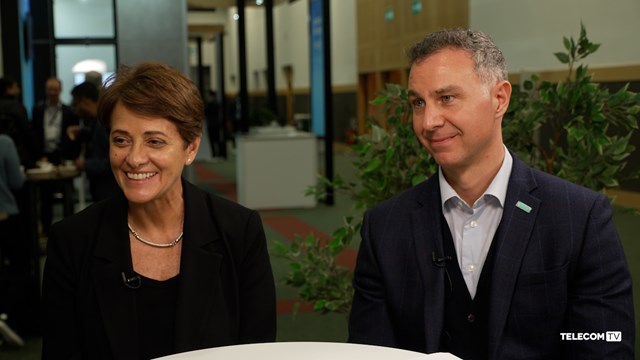
Hello, you are watching TelecomTV and our special program on intelligent RAN automation. I'm Guy Daniels and today's discussion looks at the journey from SON - self-organizing networks, towards rApps and SMO - service management and orchestration. We'll explore why legacy SON is reaching its limits and how the shift to SMO and rApps is empowering Swisscom to deliver a seamless customer experience through open, AI-driven architecture. And I'm delighted to say that joining me on the program are: Francesco Pellegrini, who is Radio Network Optimization product owner with Swisscom and Felipe Romero who is strategic product manager at Ericsson. Hello, it's good to see you both. Thanks so much for taking part in today's discussion. Francesco, before we get into a lot of technical detail, what is Swisscom's approach to network excellence and the customer experience.
Francesco Pellegrini, Swisscom (01:29):
At Swisscom, our main commitment is to deliver the best network to our customer, providing them the best customer experience. This year, we received a really good and impressive result. We won the overall Connect test for the ninth times in a row and also we received an amazing result with the 983 point as a score that is the highest ever score received in the Switzerland and also in the DACH region. That region is including also Germany and Austria. But of course we cannot stop here, because the telecom arena is changing fast and the competition, the competition in our countries is getting tougher and tougher. The network complexity is increasing, but our customers don't care about this complexity. They just and simply want to have the best network, to have the best customer experience. So it's our job to keep up, and maybe to do even better. And to do that, we need to keep changing and of course automation is one of the keys to achieve that.
Guy Daniels, TelecomTV (02:53):
Well, absolutely Francesco. So tell me more about your RAN automation journey. What's the motivation for this and what have been the highlights so far?
Francesco Pellegrini, Swisscom (03:04):
We, in Swisscom, this automation, rather natural optimization has been a long journey, which become many years ago. And in 2017 we implement the first SON-OM closed-loop use case that was this electrical tip optimization in Fortinet. We introduced the use case with Ericsson through the SON-OM platform from Ericsson. And at that time our main goal was really to move revenue optimization from, let me say a totally manual approach that we had that time to really start to leverage an automation to really change the approach how we are optimizing our network. After this first use case, we introduce other use cases also with Ericsson's SON-OM platform. We introduced for example the vault optimization use case. We also introduced the ACOM, the automated cell outage management use case. And immediately after we also, we wanted to do more and thanks to the SDK capability on the SON-OM platform, we start to develop our use case built on this SON-OM platform.
(04:28):
And then we introduced several use cases working on mobility in SRVCC and so on. But it was not enough because a certain point in time we realized that in order to really leverage on all our data source that we start to have in our data lake, we need to do something more. We need to do something more as a complimentary of SON-OM platform. So at that time we decide to develop our SON-OM platform and in order to start to develop our own use case in a more flexible way, as I said before, leverage on all the data that we have in our data lake. And in this way we really were able to enlarge the number of use case and also it was important we complement those use case with the ones coming from the SON-OM from Ericsson. So we complement the two platform in order to, let me say, to implement more use case we need to using all the data that we have and also in order to match the network needs that are changing every year. So that was our journey and of course this journey is not finished yet.
Guy Daniels, TelecomTV (05:53):
Okay. Thank you very much Francesco and Felipe, turning to you obviously a long history with automation and Swisscom there, but if we look beyond Swisscom, what are you seeing in the wider telecoms community?
Felipe Romera, Ericsson (06:07):
Thank you. I think it's quite aligned with what Francesco has explained because we see that different customers all over the world where they have SON platform they have developed by themselves, use cases that as I think Francesco rightly pointed, are not related or maybe require more data than the SON vendor can provide. Typically this is regions of data that is in the operator's data lake that can help to create very customized use cases that are very important for them and their customers. At the same time, the SON vendor still provides some more technology driven use cases that are more generic and can be used by different customers all over the world. So this tendency is seen in the major customers as well. Right. So totally agree with Francesco's comment.
Guy Daniels, TelecomTV (07:01):
Good, good to hear. Thank you Felipe. And Francesco, if we move beyond technology, what's the importance of competence development and evolution within this journey?
Francesco Pellegrini, Swisscom (07:12):
Yes, exactly. Because to make this transformation possible, it was not all about technology. It was about changing the mindset of the engineer and improving and developing their competencies. As a first step, we had to, let me say, to acquire some new skill in data, in big data management. For example, coding and AI and this enabled, let me say, to really change the mindset of the engineer. So the engineers start, thanks to this competence development, start to see automation as a resource and not as an issue. And this really make the difference because yes, they start to think from the beginning of the developer use case, they start to really start to think in automation as a standard and not just an evolution of some use case that they are developing. And let me also highlight that it was not enough only to add one or two data science in the radio engineering team. It was more to really integrate this new skill within the team because only in this way you can use this new skill, this new capability in a real concrete use case. Otherwise it remained, let me say, at academic level and it was not possible to really leverage on all the benefit of this new skill and technology. So technology for sure is an enable, it's important, but without change the mindset of the engineer and to increase their competence, it cannot succeed for sure.
Guy Daniels, TelecomTV (09:17):
Yeah, this is a really interesting aspect of the automation journey. And Felipe, what supporting role does Ericsson play here.
Felipe Romera, Ericsson (09:25):
In Ericsson, we are perfectly aware that when we are introducing new concepts right to the operators such as cloud native, AI, a transformation process needs to happen in parallel. And that is why we have services that support operators doing. So for example, we have a service that we call "adoption" that is to adapt how the new rApps can be linked with the way that the operator works, or what transformations needs to be done. So it's a journey that we don't do on ourselves, for Ericsson, it's something that we need to engage with the different customers, understand what is the reality and see how can we adapt that reality into the use of the rApps that we are providing because we understand that we are having some disruptive technologies such as AI that requires some learning curve that requires the support from the developer that in this case it'll be us.
Guy Daniels, TelecomTV (10:23):
Great, thanks so much Felipe. Let me move on and ask you both more about self-organizing networks. And Felipe, if I can start with you first. We know that telcos have been deploying SON for a decade or so, but has SON now reached its limits and what are the challenges of the SON approach?
Felipe Romera, Ericsson (10:45):
Okay, so first of all, I would like to reflect on what you said that the SON technology was built several years ago with important promises on automation. And while this promises has been, I would say partially fulfilled, we still believe that there are some room for improvement, some enhancement that we can do. Typically we can say that when the SON architecture was defined, the concepts that we are working with today such as AI or cloud native technologies, were not just there. So the platforms that were designed at that moment, were not just prepared for this. On top of that, we had a lot of vendor lock-in because if we as Ericsson or other SON vendor develop their own platform, it's very linked to the roadmap that this vendor provides. Meaning that if we have a clear roadmap that we cannot accommodate customer requirements, then it's very difficult for the CSP or the network operator to find an alternative without swapping the whole platform, which is always very complicated, right.
(11:54):
And on top of that, we can also refer to the multi-vendor, right? While SON has been multi-vendor, I would say that up to a limited scope because what we see, and I want to link that with the first point that we discussed about operators being able to develop use cases using SDK, we see that many of the SON use cases provided by the vendor, were, I would say simple for example, ANR or PCI, which are something that is easy to be portable to multi-vendor and it's something that doesn't require a super complex logic to succeed. But on the other hand, we see how many network operators develop their own automations using SDK. So as a result you have two different tracks: the one that is provided to the vendor, which is typically simpler than the one that we see in the operators that we see more advanced and more customized and leveraging of the richness of data that they have in the data lakes. So I would say that this, in a nutshell, is the limitations that we are seeing today and we have seen during the past years and we are now in a time where we have the technology ready and not only the technology, also the willingness because we see that the standards are evolving towards that direction. So we believe it's now time to move to the next step.
Guy Daniels, TelecomTV (13:19):
Sure, thank you Felipe. Good analysis of where we are today. And Francesco, any thoughts from yourself about the challenges of the SON approach?
Francesco Pellegrini, Swisscom (13:27):
Totally agree with Felipe and yes, this lack, I cannot add that maybe this lack of flexibility of the legacy SON platform. It was one of the main reasons now that we needed to develop something from our side. So again, as Felipe said, at certain point we need to do some customized use case that are better fitting our network needs. And of course it's not always possible to select use case from the SON and vendor portfolio. So this means we need to do something from our home and flexibility to integrate the SON-OM with the specific process and tool from the CSP. This was a limitation that we found. We overcome this limitation developing something, a simple SON framework from our own. But again, this was because again, there was a limitation in the SON platform because it was, as Felipe says, it was developed some years ago and maybe at that time there was not a specific need of that. And also he also mentioned AI, that's another reason. So if we need to really scale and we need to really move the use case in a more complex environment then we need AI capability, of course, that the SON-OM platform was not designed for that.
Guy Daniels, TelecomTV (14:59):
So Francesco, if we need to consider a new approach to RAN automation, given everything you've said, what are the most important drivers for this change?
Francesco Pellegrini, Swisscom (15:09):
Yes, let's connect with what we say here now. So for sure I see in my opinion two main drivers, one openness and one is flexibility. Openness because as I said, we need an open platform able to be integrated in our Swisscom ecosystem. So this means process and tool to manage the transition because of course it's not possible to switch on the new RAN automation platform and switch off what we have now. So we need to manage this transition and integrate this new platform in our current ecosystem is one of the most important drivers that we need. The second is flexibility. Flexibility to choose use case from different perspectives. So for sure we want to select use case from the vendor portfolio from Ericsson. And we also want of course, and for what we said here now, we want to develop our use case and why not if we have an open standard system, maybe we can select in the future use case from third parties and all the use case has to work together, work together in the same platform to be coordinated together. So this, from my point of view, openness and flexibility are the key drivers if we want to move on from SON legacy platform.
Guy Daniels, TelecomTV (16:41):
Okay. And Felipe, what would you say are the most important drivers for this new approach?
Felipe Romera, Ericsson (16:49):
I would say three of them. The first one was already commented by Francesco or that would rephrase as a freedom of choice, meaning that as he commented in the SMO concept, network operator or CSP can develop their own rApp. We as software vendor, rApp vendor Ericsson, we can develop ours, but we also have an open ecosystem and Ericsson has the widest and biggest ecosystem in the market where not only our rApps are there, but from other third parties. So the freedom of choice is very important for the network operator. Then the second one would be, we touched a little bit upon this before, is the AI capabilities that the rApps can offer as opposed to what SON had, right? Typically SON was born to manage 2G, 3G 4G most, right? But now with the 5G, we have more complexity. We have all these technologies, but then we have new features that are coming, traffic patterns that changes, mobility patterns that changes, and we need to be able to adapt to that.
(17:59):
And a rule-based approach may not be valid anymore. So that is why AI is very important. And the third point is a reflection, right? We may be tempted to think, "okay, if I have today my SON platform, can I upgrade or can I create the required interface towards to be compliant with the O-RAN specification?" My view is that we shouldn't do that, right? We should not do that because at the end of the day, we want to leverage a platform that is scalable and is prepared to that. And it is not a matter of reshuffling the letters from SON: S-O-N, right? It is SMO what we want to do. So it's not a matter of reshuffling the platform or creating shortcuts is more to make a bold movement to the right platform that is future proof and horizontally scalable that we will be able to host the AI that we have in the rApps and this ecosystem. That is very important.
Guy Daniels, TelecomTV (19:01):
Okay. This is really interesting. So let me ask you both a follow-up question here. Why are we now looking at SMO and rApps for this approach? What new possibilities do these offer? And Felipe, I'll stay with you for the first answer.
Felipe Romera, Ericsson (19:18):
Okay, when we talk about the new possibilities. I think I reflected a little bit on managing the ever-growing complexity that we have in our networks. So it's not a matter of creating threshold based decisions. The decision needs to be adaptive, needs to be predictive and not reactive. So this shift is, to me, one of the main triggers that we can address with the new architecture of SMO and rApps, right? Also, as we have an open ecosystem, this will foster the innovation, meaning that we are not Ericsson, we are not the only one developing rApps, right? CSPs can develop their own, or the ecosystem. So the best rApp will be the one that will be used in the network and this will increase the competition and will make us develop better rApps at the end of the day, with improved automation.
Guy Daniels, TelecomTV (20:15):
And Francesco, let me ask that question to you as well. What new possibilities do you see SMO and rApps offering?
Francesco Pellegrini, Swisscom (20:24):
Yes, again, my point of view is really to have the flexibility to choose what we need, to choose what we need, not only from one perspective or from different perspectives. So really to have tomorrow really a wider portfolio and to choose use cases that the most fit our network needs. And again, to be able one platform in which we can develop our automation use case we can leverage of the vendor scale and expertise and at the same time see what the ecosystem, what the market offer also thanks to this competition from the third party and maybe select also use case from them. So to widen the possibility that we have to implement use cases that keep our network as the best network.
Guy Daniels, TelecomTV (21:23):
And Francesco, what lessons have you learned so far from the SMO and rApps journey in Swisscom?
Francesco Pellegrini, Swisscom (21:30):
Yes, as I said, it is a journey. It is a journey at the moment, I can say that one of the lessons learned and it focuses on integration. Again, I repeat this concept, but it's really important because this is a journey, is a long journey. It's not something that you implement, you change the approach to RAN automation in one or two months. It's a long journey that takes months or years. So you need to be sure that from the beginning what you are implementing in the network as a new platform is really integrated with the process and tools that at Swisscom we have, but other operators have also. So this is really important because, as I say is a journey, it's a transformation, it's a journey that has to be done in a steps, in a step-by-step approach. And to do that we need, of course, during this journey, during this time, we need to continue to deliver to our customer the best network.
(22:29):
We cannot stop to do that. So we need to continue to operate our network as the best at the same time not manage this transformation. So integration is really, really a focus. And of course, this is what I said at the beginning, we need to continue to change the mindset of the people to this new completed linear approach. And also competence because as I said before, to make this SON-OM transformation we had to increase our competencies and skills, but also to move on to where rApp's work, we need to really continue to improve our knowledge and maybe we need other competencies in the same team that is maybe software development and not only AI and data science. So this is something we need to take into account. So just to summarize, focus on integration is a must and also continue with learning and competence development.
Guy Daniels, TelecomTV (23:31):
Great. And Felipe, this is indeed a journey. Are you seeing similar approaches and results elsewhere?
Felipe Romera, Ericsson (23:39):
Absolutely. We see this in the leading operators in the world. Swisscom, of course, of them with one of the best networks all over the world. But we're also seeing other operators in the Americas that are doing this transition from a legacy SON to SMO and rApps. Also an important customer in Asia Pacific is also having the same or starting to run the same journey and a customer in the Europe/Middle East as well. They were having the legacy SON from us in this case from Ericsson. And they are convinced to this change, right? Because at the end they see the possibilities and the benefits that this new approach will bring. And they are all for that. I can briefly comment that we have tested some of these rApps with the customer in America where we have run the rApp concept on top of an previous area optimized by the SON.
(24:35):
It's not our SON, it's another company SON. And we run our rApp on top and we got important improvements, right, because the area was already optimized. So we managed to improve the RF shaping, right? So we want to optimize the cell shapes and we improved the volume in quality by 8% and improve the doubling throughput by 3%, right? So I think it's a very remarkable achievement knowing that the network was previously optimized. So this is one of the advantages of the AI that lets you test different configurations in a simulated way so that you can apply the best one. And on top of that, we discussed with the customer and tried to quantify the operational efficiency gains and we have joint analysis and assessment where we conclude that up to 75% of the operational work could be improved by this new approach. So we believe this is very exciting and we are encouraging everybody to run this way because I think it'll be worth it.
Guy Daniels, TelecomTV (25:38):
Well these are certainly encouraging developments. Francesco, are there any other recent adoption cases that you want to highlight?
Francesco Pellegrini, Swisscom (25:45):
Yes, I can mention that with Ericsson we start in the previous months, the first implementation in the network of some first rApp in the cell anomaly detection and uplink interferon detector. Also using this new AI based anomaly root cause explainer that we expect good result to improve our efficiency in optimize the network. And also coming in the first month of 2026, we also start the validation of this red cell shaper for 4G and 5G networks. We're working with Ericsson to really see in action the first rApps.
Guy Daniels, TelecomTV (26:33):
Great, thanks Francesco and Felipe, any further specific adoption cases that you should mention?
Felipe Romera, Ericsson (26:40):
No, I mean I think I want to reflect on the one that Francesco has commented in Swisscom because it's very important for us. I would like first of all to say thank you to Swisscom because thanks to the help and the collaboration we are having, we have been able to evolve the rApps very fast and take them to a very mature state. Therefore, we are making this kind of announcement because we feel ready for that. So to me, I think the journey we have started with Swisscom and still we need to finish, but I think it's a very interesting use case and reference case that is important for us.
Guy Daniels, TelecomTV (27:17):
Thanks Felipe. So we've heard many times that this is a journey, we're on this journey. Francesco, what does Swisscom have planned and what developments do you want to see next?
Francesco Pellegrini, Swisscom (27:30):
Yeah, now the next milestone is to really see in action. The first rApp, we invest a lot of time and effort. As I said before, it is a journey. We start some months ago. We are pioneers with Ericsson in this area and as all pioneers we know, there has been and still are hard challenges in front of us, but we need to outcome on this and really, really looking forward to see in the next months, really the first rApp in action delivering benefits, delivering result in the Swisscom network. This is the first milestone. And of course in parallel we also start to evaluate other kind of rApps because maybe we didn't mention, but this SMO is not only radio network optimization, it's RAN automation. So we want to also start to explore with Ericsson portfolio, other kind of rApps in other areas like radio network operation or maybe slice or energy saving. So yeah, again, first let's start to have the first rApp in place, working in the network, not in production. And then at the same time, we also start to evaluate other kind of rApps in other areas.
Guy Daniels, TelecomTV (28:59):
Great. And we look forward to hearing further developments in the near future. Felipe, final thoughts from you on what's been a really good conversation here?
Felipe Romera, Ericsson (29:09):
To me it's more I would like to convey a call for action, right? Because I know and I reflect on a leverage on what Francesco said, right? The path may be challenging at the beginning. We are talking here with the pioneers, but it is absolutely worth it and it's worth it because if you don't do that now, it'll be way more difficult to do it later because this is something that has come and will stay. We cannot dismiss the importance cloud native platforms, AI powered applications, and open ecosystem. So this is something that the sooner we start to work on, the better it'll be in the near and mid future. So to me that is my message. To convey a call for action for this.
Guy Daniels, TelecomTV (29:59):
Great message too. Thanks very much, Felipe. We must leave it there though. Felipe and Francesco, thank you both very much for taking part in our discussion and for further information on the topics covered in this program, please click and follow the links in the text below. But now though, thank you so much for watching and goodbye.
Please note that video transcripts are provided for reference only – content may vary from the published video or contain inaccuracies.
Panel Discussion
Swisscom and Ericsson explore the critical evolution of network automation, from legacy self-organising networks (SON) to a flexible, AI-driven future powered by service management and orchestration (SMO) and rApps. The discussion highlights Swisscom’s strategic focus on customer experience, examining the technical shift towards open standards and the necessary cultural changes in workforce competence, ultimately revealing how these next-generation technologies enable scalable, multivendor innovation for superior network performance.
For more information on Ericsson Intelligent RAN Automation, click here.
Participants

Felipe Romera
Strategic Product Manager, Ericsson
Francesco Pellegrini
Radio Network Optimization Product Owner, Swisscom